
The Shadow of the Torturer
by Gene Wolfe (Author), Ted Naifeh (Illustrator)
The Book of the New Sun (01), Solar Cycle (01 (New Sun 01))
On This Page
Description
In a distant future where civilization has crumbled and remnants of ancient technology linger as myth, a young man is raised within a guild dedicated to torture and execution. Trained to be devoid of compassion, one moment of mercy causes him to break a sacred rule, leading to his exile from the only home he's ever known. Carrying a legendary sword and haunted by memories of his transgression, he embarks on a perilous journey through decaying cities where reality and illusion intertwine. show more Along the way, he encounters formidable foes, enigmatic allies, and mysteries that challenge his understanding of himself. His fate becomes intertwined with the fate of a dying world, the promise of a renewed age, and the elusive truth of a waning sun. show lessTags
Recommendations






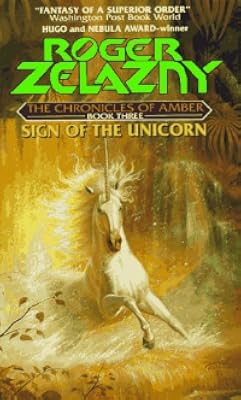
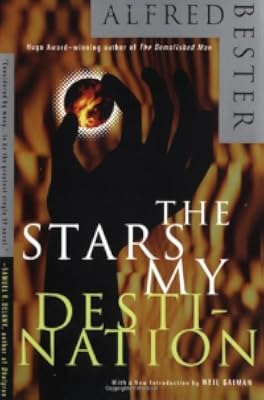
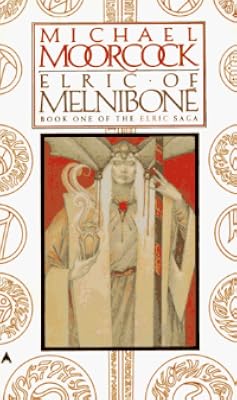
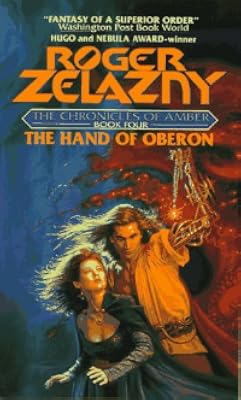



Member Recommendations


Member Reviews
I tried to read this about two years ago and didn’t make it past the first few chapters. I picked it up again recently and couldn’t put it down. Because of that, I feel almost obligated to add a warning that as much as I find this to be an incredible book now, I would only recommend it to a very specific branch of readers; those that value the writing itself above everything, and the plot, or romance, or whatever else existing only to provide the means for the author to write more.
With that out of the way, this is a masterpiece. The plot meandered, and this is stylistically something that won’t resonate with many different types of readers, but I found it quite possibly one of the—if not the—greatest book I’ve yet read. The show more world you’re thrown into is unexplained and intrinsically odd, with the reader being left to pick out meaning from terms and cultural expressions that almost align with a futuristic parallel of some humanities future (take “Urth” in place of Earth). I loved that, and therefore loved this book, but can see how polarizing and unapproachable that may be to a casual reader. This is something that should live on any fantasy reader’s shelf, in perfect reach for when the right moment and right mood align, even if that’s years from when it’s originally purchased. show less
With that out of the way, this is a masterpiece. The plot meandered, and this is stylistically something that won’t resonate with many different types of readers, but I found it quite possibly one of the—if not the—greatest book I’ve yet read. The show more world you’re thrown into is unexplained and intrinsically odd, with the reader being left to pick out meaning from terms and cultural expressions that almost align with a futuristic parallel of some humanities future (take “Urth” in place of Earth). I loved that, and therefore loved this book, but can see how polarizing and unapproachable that may be to a casual reader. This is something that should live on any fantasy reader’s shelf, in perfect reach for when the right moment and right mood align, even if that’s years from when it’s originally purchased. show less
When this book first appeared back in the early 1980s, I disregarded it, as fantasy wasn't my thing and this definitely looked like fantasy. But then a number of people whose opinions I respected said that it was worth reading, and so I relented. And of course, it isn't fantasy, but a story set in a distant future when the sun is dying and human civilizations have lost all sense of time. We don't find this out immediately, but Wolfe's world-building is so clever that he gradually gives us clues as to where we are, both in space and time. Humanity has been to the stars and come back, and mainly forgotten what it did out there. So despite what looks like a classic fantasy setting, despite there being figures with swords and archaic show more speech, the reader has to keep alert, because references to 'pistols' almost certainly mean energy weapons, and 'ship' may refer to a vessel on the water or one travelling to distant suns.
The first time I read it, I seem to remember not really grasping the objective of the book, and the power and achievement of the author only sank in as I progressed through its sequels in the series making up 'The Book of the New Sun'. But that was more than 35 years ago. Recently, I was browsing some back issues of an academic journal and came across a series of papers on Gene Wolfe and his novels; and I thought perhaps I'd better revisit these books, and catch up with what else he'd written in the same universe later, whilst I still had time. Think of this as a bucket list read, then.
So what do we have here? On the face of it, a simple story. Severian is an apprentice torturer, of the Guild of Torturers in the great Citadel in the city of Nessus, which may be somewhere in South America or possibly South Africa. He may be destined for high office in the Guild, until the day he betrays the Guild and allows one of those committed to them to be subjected to excruciations to take her own life and thus escape her fate. For this, he is expelled from the Guild; but it is politically convenient for him to be sent to the distant city of Thrax, where he would take up his duties as their resident torturer and so expiate his guilt to the Guild. This first book tells Severian's story up to the point where he reaches the gate in the city wall of Nessus.
You will gather from that description that we are not looking at a high-powered, thrill-a-minute adventure story. Neither are we talking about a novel of horror, despite the title, though there are accounts of Severian's trade which discuss the calling of torturer with some degree of professional detachment. Rather, we are shown the society of the city of Nessus, its inhabitants, and get an insight into what living in such a society might be like. Along the way, we have the benefit of Severian's inner musings; he is telling his tale in hindsight, reflecting on his history. Severian is not a cruel man - indeed, if he were, he would not have been allowed to become a torturer, for torturers are not allowed to take pleasure in their work - but he gives clues that he may be an unreliable witness.
But if there is little action (though the story does advance in terms of the people Severian meets and the situations he gets into - fighting a duel, falling in love, carrying out an execution and starring in a play), the description of the setting is memorable. The city seems huge to Severian and its ways strange, he having been sequestered in the Citadel for most of his life; so he is something of an innocent abroad, and everything is new to him. And above all that, the dying sun casts its feeble light. The descriptions of the scenes and settings are reminiscent of Mervyn Peake's 'Gormenghast', but this is a sombre setting, its colours and shadows reminiscent of the English painter Joseph Wright, renowned for his canvasses of contrast between light and shade.
I enjoyed this start to my re-read, and am looking forward to the next volume in the series, 'The Claw of the Conciliator'. show less
The first time I read it, I seem to remember not really grasping the objective of the book, and the power and achievement of the author only sank in as I progressed through its sequels in the series making up 'The Book of the New Sun'. But that was more than 35 years ago. Recently, I was browsing some back issues of an academic journal and came across a series of papers on Gene Wolfe and his novels; and I thought perhaps I'd better revisit these books, and catch up with what else he'd written in the same universe later, whilst I still had time. Think of this as a bucket list read, then.
So what do we have here? On the face of it, a simple story. Severian is an apprentice torturer, of the Guild of Torturers in the great Citadel in the city of Nessus, which may be somewhere in South America or possibly South Africa. He may be destined for high office in the Guild, until the day he betrays the Guild and allows one of those committed to them to be subjected to excruciations to take her own life and thus escape her fate. For this, he is expelled from the Guild; but it is politically convenient for him to be sent to the distant city of Thrax, where he would take up his duties as their resident torturer and so expiate his guilt to the Guild. This first book tells Severian's story up to the point where he reaches the gate in the city wall of Nessus.
You will gather from that description that we are not looking at a high-powered, thrill-a-minute adventure story. Neither are we talking about a novel of horror, despite the title, though there are accounts of Severian's trade which discuss the calling of torturer with some degree of professional detachment. Rather, we are shown the society of the city of Nessus, its inhabitants, and get an insight into what living in such a society might be like. Along the way, we have the benefit of Severian's inner musings; he is telling his tale in hindsight, reflecting on his history. Severian is not a cruel man - indeed, if he were, he would not have been allowed to become a torturer, for torturers are not allowed to take pleasure in their work - but he gives clues that he may be an unreliable witness.
But if there is little action (though the story does advance in terms of the people Severian meets and the situations he gets into - fighting a duel, falling in love, carrying out an execution and starring in a play), the description of the setting is memorable. The city seems huge to Severian and its ways strange, he having been sequestered in the Citadel for most of his life; so he is something of an innocent abroad, and everything is new to him. And above all that, the dying sun casts its feeble light. The descriptions of the scenes and settings are reminiscent of Mervyn Peake's 'Gormenghast', but this is a sombre setting, its colours and shadows reminiscent of the English painter Joseph Wright, renowned for his canvasses of contrast between light and shade.
I enjoyed this start to my re-read, and am looking forward to the next volume in the series, 'The Claw of the Conciliator'. show less
The Shadow of the Torturer is a masterpiece of fantasy, a dark and lyrical journey of honor and betrayal. Severian is an apprentice torturer in the Citadel, a boy being inculcated into the mysteries of his guild and the service due their "clients" when he falls in love with the nobly born Thelca. Just after his ascension to the rank of Journeyman, the young Severian makes a key decision, forclosing the torture due his love by handing her a knife. Dishonored, he is sent out into the world with the legendary sword Terminus Est to make his way to the far city of Thrax where he will take up the profession of headsman. He meets strange and dangerous people along the way, falls in love, fights, is betrayed, and so on.
Proper fantasy seems show more defined by a certain sense of unreality, the idea that "so above so below", and Wolfe's language captures the dreamlike sense that the story is a psychological mirror of his protagonist, while also maintaining the dense detritus of the post-apocalyptic, high-tech, dying Earth setting. There's a particularly gripping moment where Severian finds himself facing a picture of a man wearing a golden helm, a gray desert reflecting in it, and you realize this is a photo from the Apollo program, reduced to nothing more than myth. It's beautiful, and strange, and terrifying. show less
Proper fantasy seems show more defined by a certain sense of unreality, the idea that "so above so below", and Wolfe's language captures the dreamlike sense that the story is a psychological mirror of his protagonist, while also maintaining the dense detritus of the post-apocalyptic, high-tech, dying Earth setting. There's a particularly gripping moment where Severian finds himself facing a picture of a man wearing a golden helm, a gray desert reflecting in it, and you realize this is a photo from the Apollo program, reduced to nothing more than myth. It's beautiful, and strange, and terrifying. show less
What wonderful strangeness! As if Gormenghast was the seed from which Urth grew.
This is a peyote dream of a world. One so strange, described in such Hallucinatory detail, that Gormenghast could live here. Plot and character are only slight concerns in this book and secondary characters are often more interesting than the viewpoint character. This is a book of wonder not story.
Wolfe revels in archaic and obscure words. He is skilled enough that exotic words can be interpreted from context but if a reader is interested in words and curious trivia, reading this with an ereader or tablet that can easily access dictionaries and Wikipedia is entertaining for its own sake.
This is a peyote dream of a world. One so strange, described in such Hallucinatory detail, that Gormenghast could live here. Plot and character are only slight concerns in this book and secondary characters are often more interesting than the viewpoint character. This is a book of wonder not story.
Wolfe revels in archaic and obscure words. He is skilled enough that exotic words can be interpreted from context but if a reader is interested in words and curious trivia, reading this with an ereader or tablet that can easily access dictionaries and Wikipedia is entertaining for its own sake.
This is at least my fourth read of The Shadow of the Torturer and I am, once again, convinced that it forms part of one of the greatest works of fiction - I would say "of literature", but that is a decision for posterity - of the 20th Century. Wolfe's prose is both beautiful and precise, flowing like a river that you can be carried along by, or pause to peer at the levels of meaning beneath the glittering surface. Much of this, or course, would not be apparent on a first reading, as part of the beauty of this story is the construction of plot, an intricate Escher-like loop that twists back upon itself more than once, and yet never seems forced.
The magnificent exoticism of the setting, the grandeur of the writing and the use of mythic show more archetypes gives the whole the feeling and solidity of ancient legend - although it is undoubtedly science fiction, the appendix making clear that the use of archaic or 20th Century words for the technologies and creatures are conveniences for translation from "a tongue which has not yet achieved existence", it very much feels to be the case of a world that has long forgotten how its machines work and that they are to most people, in Clarke's famous phrase, indistinguishable from magic. Although perhaps that in itself is not so far from the present day. show less
The magnificent exoticism of the setting, the grandeur of the writing and the use of mythic show more archetypes gives the whole the feeling and solidity of ancient legend - although it is undoubtedly science fiction, the appendix making clear that the use of archaic or 20th Century words for the technologies and creatures are conveniences for translation from "a tongue which has not yet achieved existence", it very much feels to be the case of a world that has long forgotten how its machines work and that they are to most people, in Clarke's famous phrase, indistinguishable from magic. Although perhaps that in itself is not so far from the present day. show less
I was awash in strange expectations and assumptions before picking up this book, and after coming out the other side, I'm happy to say that this thoughtful novel pleased me.
It didn't wow me, but it certainly pleased me. I was very worried it wouldn't because the period of the late seventies and early eighties was a time of Fantasy that I just never really liked.
What? But this novel is SF!
Yes it is, and I loved all the old incorporation of alien life, our dying sun, quantum physics extrapolations and Odd Reality, but at its heart, the novel reads just like a Fantasy.
The apprentice must face a difficult choice, is engaged with wise old men, must suffer the consequences of his heroic and/or compassionate actions, and is thus expelled to show more make a way into the wide and difficult world carrying a sword and a complex menagerie of companions.
Sound familiar?
I might have balked at such a blatant use of tropes for an SF novel had it not also been full of characters I truly liked. What a relief! Plus, I'm a freaking sucker for libraries and book-talk, even when the books and philosophies entertained are of a far-off time and "supposedly" alien to us.
In point of fact, this far-off time feels more like a feudal dark-ages and I really got into the novel by the point it felt like a shadow of [b:A Canticle for Leibowitz|164154|A Canticle for Leibowitz|Walter M. Miller Jr.|https://d.gr-assets.com/books/1450516880s/164154.jpg|250975]. It didn't end there, by far, but that was the point it grabbed me and didn't let go. :)
The rest of the adventure and the discussions of love and affection and sex, even with the societal ick of institutionalized sex-work, was somewhat hit-and-miss for me, though, but I couldn't help but be charmed by Severain's puppydog-outlook. It might annoy others, but it felt like some of the most genuine parts of the novel.
Lastly, I loved the world-building. It was all understated and slipped in so gently that we the readers were delightfully focused upon the characters long enough to be surprised by the full weight of the world. It didn't hit me over the head. Instead, it charmed. :)
I don't think I'm going to have any issues reading the rest of these novels, and that's a real surprise for me! Like I said, I have had a lot of bad experiences with Fantasy during this time period. But then, that begs the question, doesn't it? Maybe I'm simply freer with praise and lax criticism because it is, ostensibly, SF?
I admit I might be influenced by my expectations in both directions, but it doesn't change the fact that I liked the novel. :) show less
It didn't wow me, but it certainly pleased me. I was very worried it wouldn't because the period of the late seventies and early eighties was a time of Fantasy that I just never really liked.
What? But this novel is SF!
Yes it is, and I loved all the old incorporation of alien life, our dying sun, quantum physics extrapolations and Odd Reality, but at its heart, the novel reads just like a Fantasy.
The apprentice must face a difficult choice, is engaged with wise old men, must suffer the consequences of his heroic and/or compassionate actions, and is thus expelled to show more make a way into the wide and difficult world carrying a sword and a complex menagerie of companions.
Sound familiar?
I might have balked at such a blatant use of tropes for an SF novel had it not also been full of characters I truly liked. What a relief! Plus, I'm a freaking sucker for libraries and book-talk, even when the books and philosophies entertained are of a far-off time and "supposedly" alien to us.
In point of fact, this far-off time feels more like a feudal dark-ages and I really got into the novel by the point it felt like a shadow of [b:A Canticle for Leibowitz|164154|A Canticle for Leibowitz|Walter M. Miller Jr.|https://d.gr-assets.com/books/1450516880s/164154.jpg|250975]. It didn't end there, by far, but that was the point it grabbed me and didn't let go. :)
The rest of the adventure and the discussions of love and affection and sex, even with the societal ick of institutionalized sex-work, was somewhat hit-and-miss for me, though, but I couldn't help but be charmed by Severain's puppydog-outlook. It might annoy others, but it felt like some of the most genuine parts of the novel.
Lastly, I loved the world-building. It was all understated and slipped in so gently that we the readers were delightfully focused upon the characters long enough to be surprised by the full weight of the world. It didn't hit me over the head. Instead, it charmed. :)
I don't think I'm going to have any issues reading the rest of these novels, and that's a real surprise for me! Like I said, I have had a lot of bad experiences with Fantasy during this time period. But then, that begs the question, doesn't it? Maybe I'm simply freer with praise and lax criticism because it is, ostensibly, SF?
I admit I might be influenced by my expectations in both directions, but it doesn't change the fact that I liked the novel. :) show less
The setting, the events, the writing - all worthwhile. I just don't understand the motivation to keep reading - the main character isn't fleshed out with a driving desire, he isn't accomplishing his externally motivated tasks (he got sidetracked on the way to his new posting about a hundred pages in and never gets back on track) and the main thread relating to a woman he loved doesn't really get tugged very often. I feel lost in a swamp of possibly-relevant chapters. Maybe this is why this book and the next one are often lumped into the same volume, I'll circle back if the story is more compelling after reading the second book.
Members
- Recently Added By
Lists

Best Science Fiction Novels
816 works; 430 members

Best Fantasy Novels
821 works; 359 members

Larry McCaffery's 20th Century Greatest Hits: 100 English-Language Books
103 works; 12 members
Speculative Fiction to Read
706 works; 32 members

Character-driven SF
59 works; 1 member

the ultimate desert island list
14 works; 2 members

Books Read in 2002
197 works; 8 members

Books Read in 2017
4,249 works; 130 members

infjsarah's wishlist
408 works; 2 members

Books Read in 2025
4,091 works; 97 members

1980 great books
63 works; 1 member

An evolving science fiction novel canon
50 works; 2 members
Talk Discussions
Past Discussions
Looking for Centipede Press Shadow of the Torturer in Fine Press Forum (December 2018)
The Shadow of the Torturer in The Weird Tradition (December 2012)
The Book of the New Sun Vol 1 - The Shadow of the Torturer in Group Reads - Sci-Fi (September 2008)
Author Information

Gene Wolfe was born in New York City on May 7, 1931. He dropped out of Texas A&M University during his junior year and was drafted into the Army to fight in the Korean War. After the war, he received a degree in mechanical engineering from the University of Houston. He worked as an industrial engineer for Procter and Gamble, where he developed the show more machine that cooks the dough used to make Pringles potato chips. He was an editor of the trade journal Plant Engineering from 1972 to 1984 before retiring to become a full-time writer. He wrote more than 30 books during his lifetime including The Fifth Head of Cerberus, Peace, The Book of the New Sun, and The Land Across. He received the Campbell Memorial Award, the Edward E. Smith Memorial Award, the Locus Award four times, and the Nebula Award and the World Fantasy Award two times each. In 1996, he was given the World Fantasy Award for Lifetime Achievement. He was inducted into the Science Fiction Hall of Fame in 2007 and was named a Grand Master by the Science Fiction and Fantasy Writers of America in 2012. He died after a long battle with heart disease on April 14, 2019 at the age of 87. (Bowker Author Biography) show less

Some Editions
Awards and Honors
Awards
Distinctions
Notable Lists
Series


Belongs to Publisher Series
Work Relationships
Is contained in
Common Knowledge
- Canonical title
- The Shadow of the Torturer
- Original title
- The Shadow of the Torturer
- Original publication date
- 1980; 1991-07
- People/Characters
- Severian; Roche; Drotte; Eata; Master Gurloes; Master Palaemon (show all 15); Master Malrubius; Thecla; Vodalus; Thea; Baldanders; Dr. Talos; Dorcas; Agia; Agilus
- Important places
- Urth; Nessus
- Epigraph
- A thousand ages in thy sight
Are like an evening gone;
Short as the watch that ends the night
Before the rising sun - First words
- It is possible I already had some presentiment of my future.
To those who have preceded me in the study of the posthistoric world, and particularly to those collectors - too numerous to name here - who have permitted me to examine artifacts surviving so many centuries of futurity, and ... (show all)most especially to those who have allowed me to visit and photograph the era's few extant buildings, I am truly grateful. G.W. (Appendix) - Quotations
- That we are capable only of being what we are remains our unforgivable sin.
All of which is only to say that there exists between them [beast handlers] and the animals they bring to the pits a bond much like that between our clients and ourselves. Now I have traveled much farther from our tower, but ... (show all)I have found always that the pattern of our guild is repeated mindlessly [...] in the societies of every trade, so that they are all of them torturers, just as we. His quarry stands to the hunter as our clients to us; those who buy to the tradesman; the enemies of the Commonwealth to the soldier; the governed to the governors; men to women. All love that which they destroy. [32]
"But now, dear friends," he rose and dusted his trousers, "now we are come to the place, as some poet aptly puts it, where men are pulled apart by their destinations." [Dr Talos, 377] - Last words
- (Click to show. Warning: May contain spoilers.)Here I pause. If you wish to walk no further with me, reader, I cannot blame you. It is no easy road.
- Blurbers
- Disch, Thomas M.; Williamson, Jack; Bishop, Michael; Ellison, Harlan; Dozois, Gardner; Rozmin, Michael
- Disambiguation notice
- This is the novel, complete in one volume. Please do not combine with comics or graphic novel adaptations.
Classifications
- Genres
- Fiction and Literature, Science Fiction, Fantasy
- DDC/MDS
- 813.54 — Literature & rhetoric American literature in English American fiction in English 1900-1999 1945-1999
- LCC
- PZ4 .W85615 .S — Language and Literature Fiction and juvenile belles lettres Fiction and juvenile belles lettres Fiction in English
- BISAC
Statistics
- Members
- 3,100
- Popularity
- 5,664
- Reviews
- 96
- Rating
- (3.81)
- Languages
- 15 — Czech, Danish, Dutch, English, Finnish, French, German, Greek, Hungarian, Italian, Polish, Portuguese, Spanish, Swedish, Turkish
- Media
- Paper, Audiobook, Ebook
- ISBNs
- 35
- ASINs
- 30