On This Page
Description
It is the 29th century and the universe of the Human Hegemony is under threat. Invasion by the warlike Ousters looms, and the mysterious schemes of the secessionist AI TechnoCore bring chaos ever closer. On the eve of disaster, with the entire galaxy at war, seven pilgrims set fourth on a final voyage to the legendary Time Tombs on Hyperion, home to the Shrike, a lethal creature, part god and part killing machine, whose powers transcend the limits of time and space. The pilgrims have show more resolved to die before discovering anything less than the secrets of the universe itself. show lessTags
Recommendations
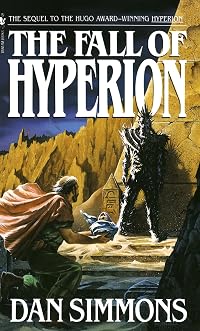
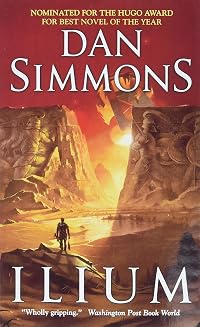

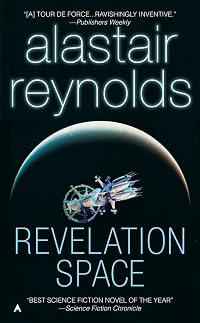
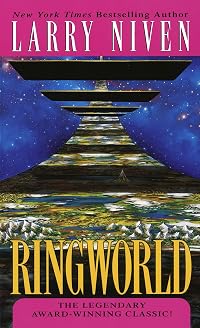

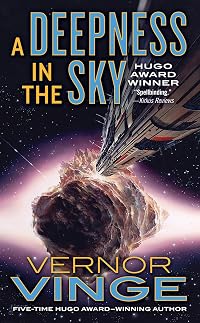
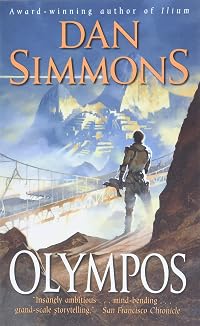
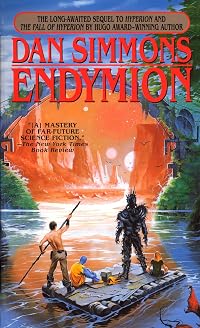
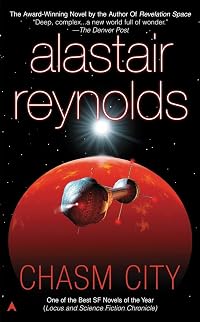
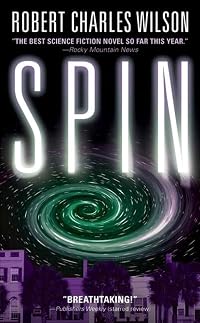
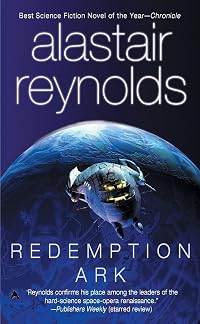
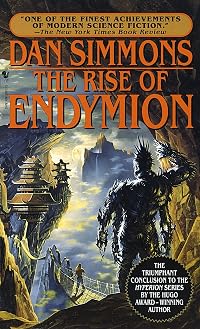

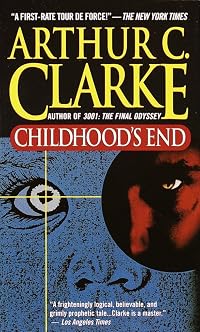
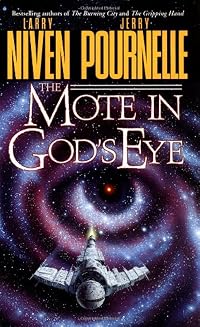
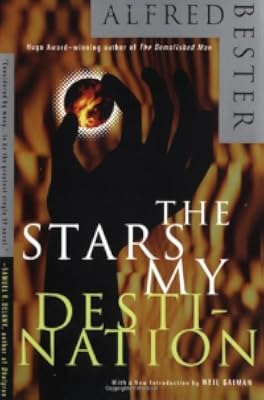
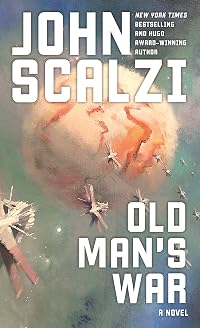
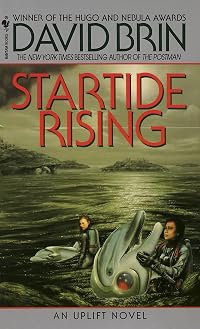
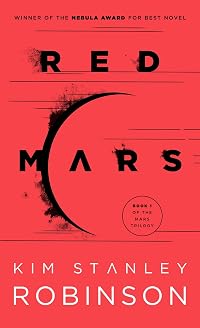
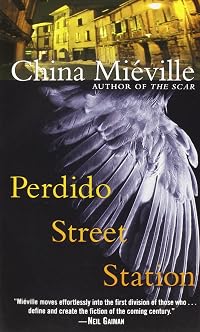
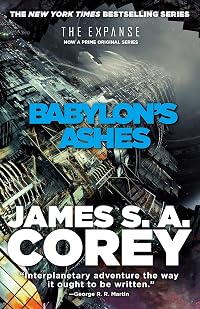
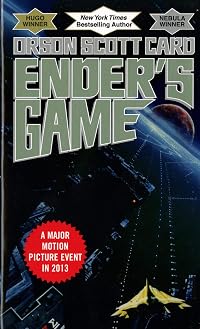
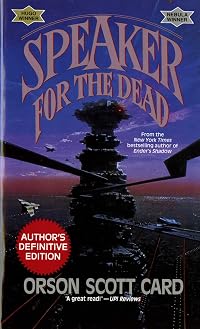
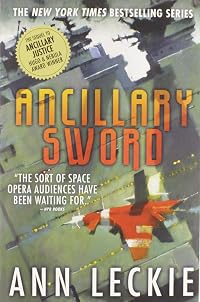
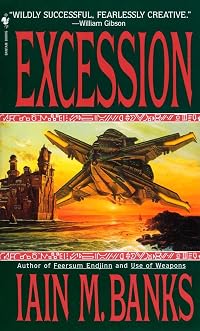
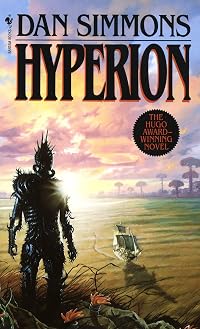
Member Recommendations
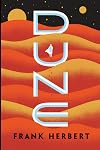
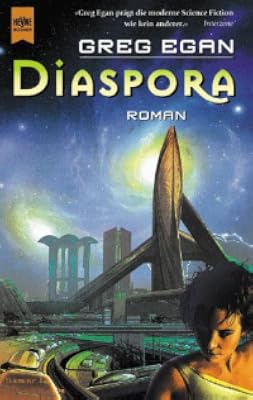
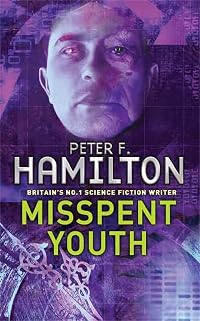
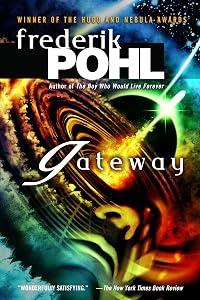
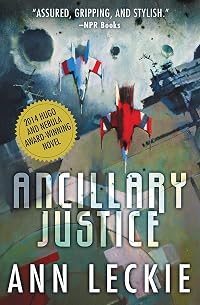
corporate_clone It is difficult not to compare Dune and Hyperion, even though both series have major differences in terms of tone, style and philosophy. Those are two long, epic, elaborate and very ambitious sci-fi masterpieces where religion plays a key role. I would highly recommend the fans of one to check out the other.
150

Member Reviews
'Hyperion' is one of the SF Masterworks series that I somehow didn't get round to during my teenage years. Multiple friends have recommended it to me over the years, and I've enjoyed several of Simmons' other novels. However, both my experience of [b:Ilium|3973|Ilium (Ilium, #1)|Dan Simmons|https://i.gr-assets.com/images/S/compressed.photo.goodreads.com/books/1390894862l/3973._SY75_.jpg|3185401] & [b:Olympos|3972|Olympos (Ilium, #2)|Dan Simmons|https://i.gr-assets.com/images/S/compressed.photo.goodreads.com/books/1388216654l/3972._SY75_.jpg|1537178] and my friends' advice agree: Simmons has fantastic ideas but struggles to stick the landing. I was therefore pre-warned that the sequels to 'Hyperion' are not of equally high quality. show more That's especially disappointing because the novel sets up such a complicated, fascinating world full of mysteries and dangers, then ends on an absolute cliff-hanger. As I continued reading and noted how many pages remained, it became clear this would be the case. It frustrated me, as on its own merits 'Hyperion' would be a five star sci-fi novel with a brilliant structure.
It borrows from The Canterbury Tales (which I was forced to read at school and disliked) by setting a small cast of strangers on a pilgrimage and having them all tell a story from their life. Each story is a brilliant flight of imagination and together they cover so many overlapping and intersecting themes, including colonialism, nostalgia, artistic inspiration, war, religion, and the nature of time. While explaining how the character telling it ended up on a pilgrimage to Hyperion, successive tales paint a picture of instability and conflict between different groups of humans and artificial intelligences a few hundred years in the future. They also dart between genres, sometimes within one story. Noir mystery, cyberpunk, family tragedy, body horror, decadent drama, and political machinations are all juggled adeptly. There are some fantastic action scenes and genuinely frightening moments. Thinking back, it's astonishing that the narrative retains coherence, yet everything manages to revolve around the planet Hyperion and the deadly monster living there: the Shrike. It was perhaps a masterstroke to recount multiple terrifying encounters with the Shrike without explaining it at all.
Yet the final scene, in which the pilgrims approach the Time Tombs after watching a space battle that seemingly strands them on Hyperion, left me on tenterhooks to an annoying extent. I have so many questions and it's a shame that the answers aren't likely to be satisfactory. I'll read the sequels at some point, perhaps once libraries return again. 'Hyperion' is excellent, but the reader cannot really enjoy it as a standalone novel. show less
It borrows from The Canterbury Tales (which I was forced to read at school and disliked) by setting a small cast of strangers on a pilgrimage and having them all tell a story from their life. Each story is a brilliant flight of imagination and together they cover so many overlapping and intersecting themes, including colonialism, nostalgia, artistic inspiration, war, religion, and the nature of time. While explaining how the character telling it ended up on a pilgrimage to Hyperion, successive tales paint a picture of instability and conflict between different groups of humans and artificial intelligences a few hundred years in the future. They also dart between genres, sometimes within one story. Noir mystery, cyberpunk, family tragedy, body horror, decadent drama, and political machinations are all juggled adeptly. There are some fantastic action scenes and genuinely frightening moments. Thinking back, it's astonishing that the narrative retains coherence, yet everything manages to revolve around the planet Hyperion and the deadly monster living there: the Shrike. It was perhaps a masterstroke to recount multiple terrifying encounters with the Shrike without explaining it at all.
This is a favorite I have to say. I read this all the way back in the 90's and was completely bowled over. How could I not be, I love classic lit. The writing top notch, and even though it's fairly long I breezed though it. I love the shift in style with each story, and he really does shift his style for each story. There are likeable and unlikeable characters. They are nuanced and change and feel alive. The various sights are unique and feel lived in. Most of the stories are referential and they feel like a love letter to the genre that they refer to. Highly recommended!
Hyperion is an enticingly original sci-fi story with parallels to Chaucer's Canterbury Tales and to the life of John Keats. Allusions to the passion-indeed to the life force-of John Keats are seeded throughout the story in the most intricate manner. However, setting aside Simmons' background in English literature, Hyperion is a book that every science fiction lover should read. Enthrall your imagination while 7 pilgrims on a mission to visit the deadly Shrike relate their stories one-by-one. Simmons displays amazing creative talents as he endears each character (even the most annoying of them) to the fascinated readers. The turn of events is completely unexpected. Simmons keeps you guessing until the very end. Unfortunately, he doesn't show more end the story here, though. In order to find out what happens to the new found friends, the reader must buy the next book in the series: The Fall of Hyperion (which DOES finish the story). Despite the disappointment and frustration I felt at the end when I had to get my boyfriend to fly a copy of the sequel to me from half-way across the country, I understand the reason for Simmons' unsatisfying conclusion-the ending of the story IS another story. show less
4/5
The story of the seven last pilgrims sent to the Time Tombs on the mysterious and far-away world of Hyperion, where the metal instrument of death known as the Shrike prowls. As every other review of Hyperion has already said, it's told in the style of The Canterbury Tales, something that I've never read myself. Each of the pilgrims, in turn, tell the story about why they were personally selected for the journey, and the events surrounding their connection with the planet or with the Shrike. In my opinion, this style of storytelling is one of the strongest elements of the novel. It's just an engaging way to read a story. However, not all of the stories are created equal.
The first story, the priests tale, is one of the best novellas show more that I've ever read, one of the best SF stories I've read. It's the major reason that Hyperion is getting a high score from me. It's something that could totally be read independently from the rest of the text, so at least there's that. The writing is stellar. Simmons shows that he can craft prose that is not only beautiful, but also engages the reader and tells them about the world at the same time. There's a palpable sense of dread, and horror as the story plays itself out, and a high strung tension that made me completely incapable of putting it down. Simmons is especially fond of and good at describing lighting, including sunsets, light shafts in building, and the diffused quality of twilight. It's also incredibly memorable. The main character, the tesla trees, the cruciform, the Shrike himself. I only wish that the quality of this first tale continued into the rest of the book.
Some of the other tales are good to passable in quality, and while they aren't nearly as good as the first, they are at least good enough to deserve a place in the novel. The scholar(a father/daughter story), the consul(an environmental and colonization themed love story) , and the solider(a historical fiction action love story) all fit into this category to me. Sometimes they were a little bit on the nose, overly saccharine, sometimes even cringy, but they were fine for the most part. If nothing else, they were good ways to see glimpses into the larger world of the hegemony. I appreciate that the world of the hegemony feels expansive. I'm also glad that Simmons made an attempt to create historical events that took place between our known history, and the time of the book, something that I think is sorely missing from a lot of SF epics.
Unfortunately, both the scholars tale and the detectives tale were sore thumbs compared to the rest. The story of the scholars tale was interesting, and I think could have been passable, but the scholar himself is so annoying that he ruined the story. Some of this annoyance even bleeds out into the interstitial material in between the tales. Why make him so annoying to read? It seems to serve no purpose to the story or the character. If you don't find his character so annoying, I'm sure that his tale would be more palatable. The detectives tale was by far the worst. At times I was astounded that it was written by the same person who wrote the priests tale. Not only is the quality far lower than the rest, but the tone clashes with the rest as well. Maybe I just don't like detective stories, but Jesus, I think it's objectively bad.
Finally, I'd like to talk about the ending. It sucked. It's a total non-ending. I've talked about my opinion on books that are written with a sequel in mind, and they aren't favorable. I think the reader deserves some sort of closure after reading such a lengthy novel. As it is, Hyperion ends not just without an ending, but without a climax entirely. It's the literary form of spiteful edging. 500 pages of build up to an event that doesn't even happen. Now, I'll also note that I like a story that ends with some form of ambiguity, something that keeps you curious and thinking about it afterwards. If you've given enough pieces of puzzle to the reader, you can let them forms those last pieces themselves, entertaining multiples ways in which things fit together. This is not the case with Hyperion. Simmons gives you all of the edge pieces of the puzzle, with the middle completely missing, flips you off, and says "Guess you'll have to read the next one, dickhead".
This is probably the most negative review I've ever had for a book that I've rated so highly, and that speaks to how good the priests tale is. God, if only Simmons could've kept that same quality throughout. Or at least finished the book with some sort of conclusion. As it stands, Hyperion has some of the largest wasted potential I've ever seen. It could've been one of the gold standards of the genre, which I guess it still is for lots of folks. I still find myself struggling to reconcile these diametrically opposed feelings I have towards it. Ultimately though, I think that's a point in it's favor. At least it elicits strong opinions, in both directions. Hyperion is easy to talk about passionately. There's a lot of things you can say about it, but hey, at least it doesn't fall into the doldrums of mediocrity. show less
The story of the seven last pilgrims sent to the Time Tombs on the mysterious and far-away world of Hyperion, where the metal instrument of death known as the Shrike prowls. As every other review of Hyperion has already said, it's told in the style of The Canterbury Tales, something that I've never read myself. Each of the pilgrims, in turn, tell the story about why they were personally selected for the journey, and the events surrounding their connection with the planet or with the Shrike. In my opinion, this style of storytelling is one of the strongest elements of the novel. It's just an engaging way to read a story. However, not all of the stories are created equal.
The first story, the priests tale, is one of the best novellas show more that I've ever read, one of the best SF stories I've read. It's the major reason that Hyperion is getting a high score from me. It's something that could totally be read independently from the rest of the text, so at least there's that. The writing is stellar. Simmons shows that he can craft prose that is not only beautiful, but also engages the reader and tells them about the world at the same time. There's a palpable sense of dread, and horror as the story plays itself out, and a high strung tension that made me completely incapable of putting it down. Simmons is especially fond of and good at describing lighting, including sunsets, light shafts in building, and the diffused quality of twilight. It's also incredibly memorable. The main character, the tesla trees, the cruciform, the Shrike himself. I only wish that the quality of this first tale continued into the rest of the book.
Some of the other tales are good to passable in quality, and while they aren't nearly as good as the first, they are at least good enough to deserve a place in the novel. The scholar(a father/daughter story), the consul(an environmental and colonization themed love story) , and the solider(a historical fiction action love story) all fit into this category to me. Sometimes they were a little bit on the nose, overly saccharine, sometimes even cringy, but they were fine for the most part. If nothing else, they were good ways to see glimpses into the larger world of the hegemony. I appreciate that the world of the hegemony feels expansive. I'm also glad that Simmons made an attempt to create historical events that took place between our known history, and the time of the book, something that I think is sorely missing from a lot of SF epics.
Unfortunately, both the scholars tale and the detectives tale were sore thumbs compared to the rest. The story of the scholars tale was interesting, and I think could have been passable, but the scholar himself is so annoying that he ruined the story. Some of this annoyance even bleeds out into the interstitial material in between the tales. Why make him so annoying to read? It seems to serve no purpose to the story or the character. If you don't find his character so annoying, I'm sure that his tale would be more palatable. The detectives tale was by far the worst. At times I was astounded that it was written by the same person who wrote the priests tale. Not only is the quality far lower than the rest, but the tone clashes with the rest as well. Maybe I just don't like detective stories, but Jesus, I think it's objectively bad.
Finally, I'd like to talk about the ending. It sucked. It's a total non-ending. I've talked about my opinion on books that are written with a sequel in mind, and they aren't favorable. I think the reader deserves some sort of closure after reading such a lengthy novel. As it is, Hyperion ends not just without an ending, but without a climax entirely. It's the literary form of spiteful edging. 500 pages of build up to an event that doesn't even happen. Now, I'll also note that I like a story that ends with some form of ambiguity, something that keeps you curious and thinking about it afterwards. If you've given enough pieces of puzzle to the reader, you can let them forms those last pieces themselves, entertaining multiples ways in which things fit together. This is not the case with Hyperion. Simmons gives you all of the edge pieces of the puzzle, with the middle completely missing, flips you off, and says "Guess you'll have to read the next one, dickhead".
This is probably the most negative review I've ever had for a book that I've rated so highly, and that speaks to how good the priests tale is. God, if only Simmons could've kept that same quality throughout. Or at least finished the book with some sort of conclusion. As it stands, Hyperion has some of the largest wasted potential I've ever seen. It could've been one of the gold standards of the genre, which I guess it still is for lots of folks. I still find myself struggling to reconcile these diametrically opposed feelings I have towards it. Ultimately though, I think that's a point in it's favor. At least it elicits strong opinions, in both directions. Hyperion is easy to talk about passionately. There's a lot of things you can say about it, but hey, at least it doesn't fall into the doldrums of mediocrity. show less
Is Hyperion a novel? These are the kind of questions I irritated my Modern Novel class with. There are two potential objections you can make, I think. The first is that it's actually a series of short stories. The second is that the story doesn't actually end: Hyperion is really only the first half of a novel that ends in The Fall of Hyperion. (These are, I guess, mutually exclusive objections.)
Yet, I would argue, Hyperion stands on its own. Fall is a vastly different book with a different focus; it picks up what was begun here, but the focus on character and genre that motivates Hyperion is gone. And Hyperion comes to a perfectly satisfying conclusion in its own way. But I'm getting ahead of myself there.
Like so many of the stories I show more like, Hyperion is a story about stories. Its format is self-consciously literary from the moment someone in the book actually points out that you're reading The Canterbury Tales in space (p. 25). This is brought to the forefront in chapter 3, the Poet's Tale: "Hyperion Cantos." Martin Silenus asks, "Haven’t you ever harbored the secret thought that somewhere Huck and Jim are—at this instant—poling their raft down some river just beyond our reach, so much more real are they than the shoe clerk who fitted us just a forgotten day ago?" (180-81). I suspect this is an Adam Bede reference; in that novel, the narrator complains that people identify too much with fictional characters: "It is more needful that I should have a fibre of sympathy connecting me with that vulgar citizen who weighs out my sugar in a vilely assorted cravat and waistcoat, than with the handsomest rascal in red scarf and green feathers—more needful that my heart should swell with loving admiration at some trait of gentle goodness in the faulty people who sit at the same hearth with me, or in the clergyman of my own parish [...], than at the deeds of heroes whom I shall never know except by hearsay." You'll note that for George Eliot, having more sympathy for fictional characters than for real salesmen is a negative, whereas Silenus seems to revel in it. But then, Silenus is an ass.
I doubt he would have been into Hyperion, but I think there's a sense in which Henry James agreed more with Dan Simmons than George Eliot when he wrote "The Art of the Novel." According to James, "It is still expected, though perhaps people are ashamed to say it, that a production which is after all only a 'make believe' [...] shall be in some degree apologetic—shall renounce the pretension of attempting really to compete with life. This, of course, any sensible wide-awake story declines to do, for it quickly perceives that the tolerance granted to it on such a condition is only an attempt to stifle it, disguised in the form of generosity. [...] The only reason for the existence of a novel is that it does compete with life." Now, Hyperion does make that confession that James says fiction should not, but I think it does so in order to compete with life. James wanted literature to compete with history by pretending to be history: "if it [fiction] will not give itself away, [...] it must speak with assurance, with the tone of the historian." But for Simmons, literature wins by unabashedly being literature.
This Hyperion does. It has a profound sense of history, yet at the same time, it is conscious of its fiction. Hyperion is okay with competing with reality-- and possibly even beating reality-- because Simmons, like James, knows that we need stories to make sense of the universe: "history viewed from the inside is always a dark, digestive mess, far different from the easily recognizable cow viewed from afar by historians" (Hyperion 190). Without stories, we won't know we're in a cow, we'll only perceive a dark, digestive mess. But, on the other hand, perhaps the cow is lie, for Silenus says that words "are also pitfalls of deceit and misperception. Words bend our thinking to infinite paths of self-delusion, and the fact that we spend most of our mental lives in brain mansions built of words means that we lack the objectivity necessary to see the terrible distortion of reality which language brings" (191). This is what's happened to all the characters in Hyperion: they are all locked in the prisons of the stories they have told about themselves.
But that's the reason Hyperion spans seven different genres: because each genre supplies a different truth about the world, building up our composite picture. When the Hyperion pilgrims tell each other their tales, they are set free because they are able to see all the other possible stories. They have gone from having a cow to having seven possible explanations for the dark, digestive mass that is life.
And this is why Hyperion actually is a novel. It may be made up of seven different stories, and it may continue into a second book, but it does have a conclusion and a resolution: having told their own stories, and having heard those of the others, the Hyperion pilgrims achieve a measure of self-acceptance, and walk off into the unknown, singing "We're Off to See the Wizard." Reading it, I got the shivers. A group of broken people has achieved peace at last.
Hyperion lets us step outside of our stories and histories, remove ourselves from our prisons, by showing them to us in a new context: it lets us reevaluate faith by imagining we live in a world where faith can literally be proved, or lets us imagine what it means to be a parent sacrificing a child by imagining a world where God literally contacts someone to get him to do this, or lets us contemplate how we build God by showing us computers literally trying to build God, or lets us explore the relationship between sex and violence by giving us a being that is literally sex and violence.
At the same time, these people hear the disparate stories, and step outside their own prisons. No matter what happens in Fall, they've escaped their prisons and so have we, through the art of the novel. show less
Yet, I would argue, Hyperion stands on its own. Fall is a vastly different book with a different focus; it picks up what was begun here, but the focus on character and genre that motivates Hyperion is gone. And Hyperion comes to a perfectly satisfying conclusion in its own way. But I'm getting ahead of myself there.
Like so many of the stories I show more like, Hyperion is a story about stories. Its format is self-consciously literary from the moment someone in the book actually points out that you're reading The Canterbury Tales in space (p. 25). This is brought to the forefront in chapter 3, the Poet's Tale: "Hyperion Cantos." Martin Silenus asks, "Haven’t you ever harbored the secret thought that somewhere Huck and Jim are—at this instant—poling their raft down some river just beyond our reach, so much more real are they than the shoe clerk who fitted us just a forgotten day ago?" (180-81). I suspect this is an Adam Bede reference; in that novel, the narrator complains that people identify too much with fictional characters: "It is more needful that I should have a fibre of sympathy connecting me with that vulgar citizen who weighs out my sugar in a vilely assorted cravat and waistcoat, than with the handsomest rascal in red scarf and green feathers—more needful that my heart should swell with loving admiration at some trait of gentle goodness in the faulty people who sit at the same hearth with me, or in the clergyman of my own parish [...], than at the deeds of heroes whom I shall never know except by hearsay." You'll note that for George Eliot, having more sympathy for fictional characters than for real salesmen is a negative, whereas Silenus seems to revel in it. But then, Silenus is an ass.
I doubt he would have been into Hyperion, but I think there's a sense in which Henry James agreed more with Dan Simmons than George Eliot when he wrote "The Art of the Novel." According to James, "It is still expected, though perhaps people are ashamed to say it, that a production which is after all only a 'make believe' [...] shall be in some degree apologetic—shall renounce the pretension of attempting really to compete with life. This, of course, any sensible wide-awake story declines to do, for it quickly perceives that the tolerance granted to it on such a condition is only an attempt to stifle it, disguised in the form of generosity. [...] The only reason for the existence of a novel is that it does compete with life." Now, Hyperion does make that confession that James says fiction should not, but I think it does so in order to compete with life. James wanted literature to compete with history by pretending to be history: "if it [fiction] will not give itself away, [...] it must speak with assurance, with the tone of the historian." But for Simmons, literature wins by unabashedly being literature.
This Hyperion does. It has a profound sense of history, yet at the same time, it is conscious of its fiction. Hyperion is okay with competing with reality-- and possibly even beating reality-- because Simmons, like James, knows that we need stories to make sense of the universe: "history viewed from the inside is always a dark, digestive mess, far different from the easily recognizable cow viewed from afar by historians" (Hyperion 190). Without stories, we won't know we're in a cow, we'll only perceive a dark, digestive mess. But, on the other hand, perhaps the cow is lie, for Silenus says that words "are also pitfalls of deceit and misperception. Words bend our thinking to infinite paths of self-delusion, and the fact that we spend most of our mental lives in brain mansions built of words means that we lack the objectivity necessary to see the terrible distortion of reality which language brings" (191). This is what's happened to all the characters in Hyperion: they are all locked in the prisons of the stories they have told about themselves.
But that's the reason Hyperion spans seven different genres: because each genre supplies a different truth about the world, building up our composite picture. When the Hyperion pilgrims tell each other their tales, they are set free because they are able to see all the other possible stories. They have gone from having a cow to having seven possible explanations for the dark, digestive mass that is life.
And this is why Hyperion actually is a novel. It may be made up of seven different stories, and it may continue into a second book, but it does have a conclusion and a resolution: having told their own stories, and having heard those of the others, the Hyperion pilgrims achieve a measure of self-acceptance, and walk off into the unknown, singing "We're Off to See the Wizard." Reading it, I got the shivers. A group of broken people has achieved peace at last.
Hyperion lets us step outside of our stories and histories, remove ourselves from our prisons, by showing them to us in a new context: it lets us reevaluate faith by imagining we live in a world where faith can literally be proved, or lets us imagine what it means to be a parent sacrificing a child by imagining a world where God literally contacts someone to get him to do this, or lets us contemplate how we build God by showing us computers literally trying to build God, or lets us explore the relationship between sex and violence by giving us a being that is literally sex and violence.
At the same time, these people hear the disparate stories, and step outside their own prisons. No matter what happens in Fall, they've escaped their prisons and so have we, through the art of the novel. show less
4.5 stars. I really liked this one. What a great book, probably the most thoughtful and provocative science fiction novel I've read in a long, long time, and written in such a style and with such care that I wouldn't hesitate to call it a work of art. Influenced and inspired by classic English literature, history and themes (Keats, obviously, will be a recurring figure), it's definitely not one of my usual sci-fi fluff reads. Simmons also adds some his mind-blowing twists on the idea of time and time travel.
Hyperion is a "frame story", its structure is loosely similar to Geoffrey Chaucer's Canterbury Tales and Giovanni Boccaccio's Decameron. As the universe teeters on the edge of intergalactic war, seven pilgrims travel to a planet show more called Hyperion to make a request of the demon-gold called the Shrike. With this setting as a backdrop, each pilgrim tells his or her story of why they are going to see the Shrike. Each story is like a puzzle piece, answering questions and filling in more of the time frame and plot.
I loved that about this book, but it's also the only reason I didn't rate this a full 5 stars. You have about half a dozen stories from each of the pilgrims, each with its own mini-plot, theme, mood, style, symbolism and voice. They were all very well done, but obviously a few of them appealed to me more than others. Without giving away any spoilers, I just want to make a few comments on each individual story, as it's just easier this way for me to express why I enjoyed this book so much.
The Priest's Tale: Traveling to Hyperion, the pilgrims all wake up from their cryogenic storage state on a treeship and meet each other for the first time. To pass the time, they decide to tell each other their stories, and of course no one wants to go first. I mean, would you want to share your deepest secrets and most personal memories with a roomful of strangers? So they sort of draw numbers to determine the order in which they will go and the priest Father Hoyt draws the short straw. And, wow. Just wow. What a great story he has to tell, and what a perfect opener hitting the reader like a freaking gut punch. With hints of horror, it will disturb you and leave you with more than a few uncomfortable questions.
The Soldier's Tale: I am not so very impressed with Colonel Kassad's story, mostly because the theme is love (albeit a twisted, messed up kind of love) and here I find Simmons is a bit weak in describing relationships (yes, even the twisted, messed up kind) and intimate feelings. The revelation between the lovers is mind-boggling though, and I have to applaud his cleverness and vision.
The Poet's Tale:: It probably actually speaks well of the author that I was actually quite annoyed with Martin Silenus' tale, because while the poet is hilarious, he's also foul-mouthed, arrogant, irritatingly loquacious, and constantly using big words and quoting literature in a pretentious way. Admittedly, the fact Simmons is able to maintain the voice of that blowhard and make it convincing throughout his entire story is quite the feat. I just didn't really like the character, but he was written extremely well.
The Scholar's Tale: Sol Weintraub, the Jewish professor traveling to Hyperion with his infant daughter Rachel, has the most heartbreaking story of all. And it's probably my favorite out of all of them. It's a gut-punch too, but in a whole different way.
The Detective's Tale: Brawne Lamia's tale is detective/noir-ish, and if I'm not mistaken contains quite a few cyberpunk tropes. I'm often lost in stories dealing with such themes, which could explain why I found the least enjoyment in reading her backstory.
The Consuls's Tale: The story that seeks to tie everything together and bring a close to the first volume of this Hyperion Cantos. In this tale I once again get the feeling that Simmons struggles a bit in writing the subtle nuances between couples in this kind of Romeo and Juliet story that ends in war and hatred and bitterness.
As you can see, the stories are quite varied, resulting in a little bit of everything in this novel, thus my interest shifted accordingly. But on the whole, I thought this was one brilliant book. Hyperion and the next book Fall of Hyperion is meant to be one work in two volumes, so I'm definitely going to be picking it up soon for the conclusion. show less
Hyperion is a "frame story", its structure is loosely similar to Geoffrey Chaucer's Canterbury Tales and Giovanni Boccaccio's Decameron. As the universe teeters on the edge of intergalactic war, seven pilgrims travel to a planet show more called Hyperion to make a request of the demon-gold called the Shrike. With this setting as a backdrop, each pilgrim tells his or her story of why they are going to see the Shrike. Each story is like a puzzle piece, answering questions and filling in more of the time frame and plot.
I loved that about this book, but it's also the only reason I didn't rate this a full 5 stars. You have about half a dozen stories from each of the pilgrims, each with its own mini-plot, theme, mood, style, symbolism and voice. They were all very well done, but obviously a few of them appealed to me more than others. Without giving away any spoilers, I just want to make a few comments on each individual story, as it's just easier this way for me to express why I enjoyed this book so much.
The Priest's Tale: Traveling to Hyperion, the pilgrims all wake up from their cryogenic storage state on a treeship and meet each other for the first time. To pass the time, they decide to tell each other their stories, and of course no one wants to go first. I mean, would you want to share your deepest secrets and most personal memories with a roomful of strangers? So they sort of draw numbers to determine the order in which they will go and the priest Father Hoyt draws the short straw. And, wow. Just wow. What a great story he has to tell, and what a perfect opener hitting the reader like a freaking gut punch. With hints of horror, it will disturb you and leave you with more than a few uncomfortable questions.
The Soldier's Tale: I am not so very impressed with Colonel Kassad's story, mostly because the theme is love (albeit a twisted, messed up kind of love) and here I find Simmons is a bit weak in describing relationships (yes, even the twisted, messed up kind) and intimate feelings. The revelation between the lovers is mind-boggling though, and I have to applaud his cleverness and vision.
The Poet's Tale:: It probably actually speaks well of the author that I was actually quite annoyed with Martin Silenus' tale, because while the poet is hilarious, he's also foul-mouthed, arrogant, irritatingly loquacious, and constantly using big words and quoting literature in a pretentious way. Admittedly, the fact Simmons is able to maintain the voice of that blowhard and make it convincing throughout his entire story is quite the feat. I just didn't really like the character, but he was written extremely well.
The Scholar's Tale: Sol Weintraub, the Jewish professor traveling to Hyperion with his infant daughter Rachel, has the most heartbreaking story of all. And it's probably my favorite out of all of them. It's a gut-punch too, but in a whole different way.
The Detective's Tale: Brawne Lamia's tale is detective/noir-ish, and if I'm not mistaken contains quite a few cyberpunk tropes. I'm often lost in stories dealing with such themes, which could explain why I found the least enjoyment in reading her backstory.
The Consuls's Tale: The story that seeks to tie everything together and bring a close to the first volume of this Hyperion Cantos. In this tale I once again get the feeling that Simmons struggles a bit in writing the subtle nuances between couples in this kind of Romeo and Juliet story that ends in war and hatred and bitterness.
As you can see, the stories are quite varied, resulting in a little bit of everything in this novel, thus my interest shifted accordingly. But on the whole, I thought this was one brilliant book. Hyperion and the next book Fall of Hyperion is meant to be one work in two volumes, so I'm definitely going to be picking it up soon for the conclusion. show less
This book is a trap. Don't start reading it until you have the sequel lined up next to it on your table; madness that way lies.
Hyperion is also the finest piece of science fiction I have read in a good long time. I haven't had sufficient time to let it sink in and work on me, but I would say it certainly ranks in the top 20 books I have ever read, and given time to travel around my head a few more times, it seems likely to rise yet higher.
This book appeared twice in the last few weeks on the side tables and library shelves of two people the opinions of I respect. It was a funny little coincidence, but I take that seriously, so I picked it up off the library shelf and I took it with me to Hawaii. That in itself was a but of a coincidence show more too, in that one of the locations of import in the book is a place called Maui-Covenant (true, I wasn't on Maui, but I'll call it close enough for Science Fiction). Synchronicity is important to me, and I felt like this book came along at just the right moment. It is about travelling, and the essence of humanity, how we tell each other our stories, and how doing so binds us together.
It is also a very classic post-Earth space epoch. All the standard science fiction structures are there; the seemingly benevolent interstellar empire trying to recreate the best about Old Earth and move past the mistakes seemed to spring from her soil. The fantastic but feasible technology that allows the diaspora of mankind to spread past all human reckoning. The pervasive and piebald mysticism that arises in the face of phenomenon beyond human experience and understanding. Each of these is deftly executed and remarkably robust. In fact that is what makes this novel so extremely satisfying; while it contains each of these standard elements, it treats each as its own critical part not to be neglected in favor of anything else.
Rare indeed is the author who can manage to generate a palpable fear and an equally compelling eroticism. To pair a moving sense of the mystic and a convincing technical vernacular. To give each character a distinct and evocative voice while maintaining a gripping continuity. Not only are these seldom found together in pairs, I have never encountered each and all together in such measure and balance as in this book. Dan Simmon has created nothing less than a masterpiece in this novel by his ability to do so with such grace and artistry.
Hyperion is a planet at the center of a mystery the known universe have been unable to fathom. Phenomenon that defy all of man's learning and the best of its efforts to unfold persist on this far flung world that has resisted all efforts to bring it into the fold of the Hegemony. Time works in ways that cannot be explained and a creature known as the Shrike, a four armed creature covered in metal spikes with glowing red eyes roams the outlands leaving death in his wake. Now on the verge on an intergalactic war, seven pilgrims are selected to make a final pilgrimage to the Shrike who, legend says, will grant either a final wish or death.
Each pilgrim seems an unlikely choice in their way, and with no discernible connection either to each other or the Shrike. As the journey begins and their tales unfold, we begin to see the ways in which a priest, a warrior, a scholar, a ship captain, a poet, a mercenary, and a diplomat are all deeply bound to both Hyperion and each other. Each character speaks in a distinct and wholly convincing voice. Simmons switches effortlessly between the male and female characters and persuades entirely with both.
To give away more would spoil the pleasure of letting the reader sink into this excellent tale unhampered by expectation. Suffice it to say I found it utterly engrossing and totally satisfying. Funny, moving, horrifying and sexy. It is the best of all that literature has to offer, if you will allow yourself to submit to the Shrike's dangerous embrace.
Highly Recommended show less
Hyperion is also the finest piece of science fiction I have read in a good long time. I haven't had sufficient time to let it sink in and work on me, but I would say it certainly ranks in the top 20 books I have ever read, and given time to travel around my head a few more times, it seems likely to rise yet higher.
This book appeared twice in the last few weeks on the side tables and library shelves of two people the opinions of I respect. It was a funny little coincidence, but I take that seriously, so I picked it up off the library shelf and I took it with me to Hawaii. That in itself was a but of a coincidence show more too, in that one of the locations of import in the book is a place called Maui-Covenant (true, I wasn't on Maui, but I'll call it close enough for Science Fiction). Synchronicity is important to me, and I felt like this book came along at just the right moment. It is about travelling, and the essence of humanity, how we tell each other our stories, and how doing so binds us together.
It is also a very classic post-Earth space epoch. All the standard science fiction structures are there; the seemingly benevolent interstellar empire trying to recreate the best about Old Earth and move past the mistakes seemed to spring from her soil. The fantastic but feasible technology that allows the diaspora of mankind to spread past all human reckoning. The pervasive and piebald mysticism that arises in the face of phenomenon beyond human experience and understanding. Each of these is deftly executed and remarkably robust. In fact that is what makes this novel so extremely satisfying; while it contains each of these standard elements, it treats each as its own critical part not to be neglected in favor of anything else.
Rare indeed is the author who can manage to generate a palpable fear and an equally compelling eroticism. To pair a moving sense of the mystic and a convincing technical vernacular. To give each character a distinct and evocative voice while maintaining a gripping continuity. Not only are these seldom found together in pairs, I have never encountered each and all together in such measure and balance as in this book. Dan Simmon has created nothing less than a masterpiece in this novel by his ability to do so with such grace and artistry.
Hyperion is a planet at the center of a mystery the known universe have been unable to fathom. Phenomenon that defy all of man's learning and the best of its efforts to unfold persist on this far flung world that has resisted all efforts to bring it into the fold of the Hegemony. Time works in ways that cannot be explained and a creature known as the Shrike, a four armed creature covered in metal spikes with glowing red eyes roams the outlands leaving death in his wake. Now on the verge on an intergalactic war, seven pilgrims are selected to make a final pilgrimage to the Shrike who, legend says, will grant either a final wish or death.
Each pilgrim seems an unlikely choice in their way, and with no discernible connection either to each other or the Shrike. As the journey begins and their tales unfold, we begin to see the ways in which a priest, a warrior, a scholar, a ship captain, a poet, a mercenary, and a diplomat are all deeply bound to both Hyperion and each other. Each character speaks in a distinct and wholly convincing voice. Simmons switches effortlessly between the male and female characters and persuades entirely with both.
To give away more would spoil the pleasure of letting the reader sink into this excellent tale unhampered by expectation. Suffice it to say I found it utterly engrossing and totally satisfying. Funny, moving, horrifying and sexy. It is the best of all that literature has to offer, if you will allow yourself to submit to the Shrike's dangerous embrace.
Highly Recommended show less
Members
- Recently Added By
Lists

Best Science Fiction Novels
816 works; 430 members

The Guardian's 1000 Novels Everyone Must Read
1,005 works; 551 members
Survey of Classic Science Fiction
171 works; 48 members

NPRs your picks: top 100 Sci-Fi/Fantasy books
297 works; 80 members

Hugo Award Winning Novels
63 works; 23 members

Amazon's 100 Science Fiction & Fantasy Books to Read in a Lifetime
87 works; 23 members

SF Masterworks
193 works; 8 members

S.F. Masterworks (Complete)
229 works; 15 members
Hugo Awards - Best Novel
69 works; 10 members
SF Masterworks
22 works; 3 members
Locus Award for Best Novel/SF Novel
53 works; 6 members

Easton Press Masterpieces of Science Fiction
30 works; 2 members
20th Century Literature
1,161 works; 55 members
Unbound Worlds 100 Best SF Books
100 works; 8 members

Religious Science Fiction
70 works; 20 members

Summer Reads 2014
207 works; 70 members

Arthur C. Clarke Award Winners and Shortlisted Books
219 works; 14 members

Speculative Fiction to Read
706 works; 32 members
Best Books With Aliens
67 works; 10 members

Isaac Arthur’s Book Recommendations
98 works; 3 members

el
1,139 works; 1 member

Books Read in 2025
4,128 works; 98 members

AbeBooks: 50 essential science fiction books
50 works; 6 members

Books We Want To Read Again For The First Time
384 works; 160 members

Vlogbrothers Book Recommendations
307 works; 4 members

DG hard and slightly less hard science fiction
12 works; 1 member

Books I Read Before The Invention Of The Internet.
144 works; 1 member
Classic Sci-Fi
27 works; 1 member

Top Five Books of 2024
795 works; 264 members
Favorite Science Fiction
456 works; 219 members

Good (mostly) modern science fiction
40 works; 4 members
Books We'd Want on a Desert Island
204 works; 133 members

Off on a Quest
14 works; 5 members
Mind Expanding Books by hackerkid
581 works; 8 members

Recommended Science-Fiction Books
40 works; 3 members

Books Read in 2015
3,299 works; 129 members

Read This Twice's Best Horror Books
94 works; 2 members

Dear Nerdfighteria Maybe-Fiction Recommendations
24 works; 1 member
SantaThing 2014 Gifts
299 works; 17 members
Books Read in 2018
4,360 works; 110 members

Favourite Books
1,820 works; 316 members
1980s
356 works; 23 members

Noriu perskaityti
33 works; 1 member

Simulated Reality in Fiction
124 works; 7 members
Books Read in 2016
4,666 works; 199 members

KayStJ's to-read list
1,616 works; 11 members

Books Read in 2023
5,638 works; 147 members
Top-Rated Books on LibraryThing
272 works; 117 members
Author Information

133+ Works 69,796 Members
Science fiction writer Dan Simmons was born in East Peoria, Illinois in 1948. He graduated from Wabash College in 1970 and received an M. A. from Washington University the following year. Simmons was an elementary school teacher and worked in the education field for a decade, including working to develop a gifted education program. His first show more successful short story was won a contest and was published in 1982. His first novel, Song of Kali, won a World Fantasy Award, and Simmons has also won a Theodore Sturgeon Award for short fiction, four Bram Stoker Awards, and eight Locus Awards. He is also the author of the Hyperion series, and Simmons and his work have been compared to Herbert's Dune and Asimov's Foundation series. (Bowker Author Biography) show less
Some Editions
Awards and Honors
Awards
Distinctions
Notable Lists
Series

Belongs to Publisher Series
Чумацький шлях (2016)
F-sari (10)
Work Relationships
Is contained in
Contains
Was inspired by
Has as a commentary on the text
Common Knowledge
- Canonical title
- Hyperion
- Original title
- Hyperion
- Original publication date
- 1989-06; 2008-12-22 (audio) (audio)
- People/Characters
- Melio Arundez; Don Balthazar (Martin's tutor); A. Bettik (android); Sad King Billy; The Consul; Paul Duré (Father) (show all 24); Meina Gladstone; Lenar Hoyt (Father); Old Kady; Fedmahn Kassad (Colonel); John Keats (Johnny); Brawne Lamia; Theo Lane (acting Governor-General); Stan Leweski; Het Masteen (captain of the Yggdrasil, True Voice of the Tree); Semfa; The Shrike (the Pain Lord); Martin Silenus (poet); Siri; Rachel Weintraub; Sarai Weintraub (Rachel's mother); Sol Weintraub (Rachel's father); Tuk (guide); Tyrena Wingreen-Feif (editor)
- Important places
- HS Merrick (spinship | fictional); HS Nadia Oleg (spinship | fictional); Yggdrasil (treeship | fictional); Azincourt, Hauts-de-France, France (as Agincourt | simulation); Bressia (fictional); Rifkin Atmospheric Protectorate, Heaven's Gate (one of Vega's planets) (show all 17); Hebron (fictional); City of Poets, Hyperion (fictional); the Cleft, Pinion Plateau, Hyperion (fictional); Keats, Hyperion (fictional); Pinion Plateau, Hyperion (fictional); Port Romance, Hyperion (fictional); Time Tombs, Hyperion (fictional); Lusus (fictional); Olympus Command School, Mars; Maui-Covenant (fictional); Qom-Riyadh (fictional)
- Dedication
- This is for Ted
- First words
- The Hegemony Consul sat on the balcony of his ebony spaceship and played Rachmaninoff's Prelude in C-Sharp Minor on an ancient but well-maintained Steinway while great, green, saurian things surged and bellowed in the swamps ... (show all)below. (Prologue)
The Consul awoke with a peculiar headache, dry throat, and sense of having forgotten a thousand dreams which only periods in cryogenic fugue could bring. - Quotations
- Wagner n'est bon que pour les moments de tempête.
"Les mots sont les objets suprêmes, ce sont des choses dotées d'esprit." William H. Gass
"Le langage sert non seulement à exprimer les pensées, mais aussi à rendre possibles des pensées qui ne pourraient exister sans lui." Bertrand Russel
Les poètes sont les sages-femmes démentes de la réalité. Ils ne voient pas ce qui est, ni ce qui peut être, mais ce qui doit devenir.
Être un poète, un vrai poète, c'était devenir l'avatar de l'humanité incarnée.
"La différence entre le mot juste et un mot presque juste est la même qu'entre l'éclair et la luciole." Mark Twain
"Seule la Poésie sait exprimer les rêves
Et sauver, par la seule magie des mots,
L'imagination du charme noir
Et de l'enchantement muet.
Quel vivant peut dire : "Tu n'es pas poète,
Tu ne peux exprimer tes rÃ... (show all)ªves" ?
Tout homme dont l'âme n'est pas une motte de terre
A des visions et voudrait les décrire,
Pour peu qu'il aime et qu'il cultive sa langue natale." John Keats
History viewed from the inside is always a dark, digestive mess, far different from the easily recognizable cow viewed from afar by historians. - Last words
- (Click to show. Warning: May contain spoilers.)Still singing loudly, not looking back, matching stride for stride, they descended into the valley.
- Original language*
- Inglese
- Canonical DDC/MDS
- 813.54
- Canonical LCC
- PS3569.I47292
- Disambiguation notice
- Several translations of the Hyperion series were published as multiple volumes There are no equivalent English volumes. Do not combine these with any works other than the equivalent partial volume in another language.
... (show all)The ISBNs here are not always correctly matched up to the books. Use both the title and ISBN to figure out what the actual work is. Also note that the title sometimes contains the volume number in the entire Hyperion series (with or without multiple parts).
*Some information comes from Common Knowledge in other languages. Click "Edit" for more information.
Classifications
Statistics
- Members
- 13,888
- Popularity
- 547
- Reviews
- 310
- Rating
- (4.18)
- Languages
- 21 — Czech, Danish, Dutch, English, Estonian, Finnish, French, German, Greek, Hungarian, Italian, Japanese, Norwegian (Bokmål), Polish, Portuguese, Romanian, Russian, Spanish, Turkish, Ukrainian, Chinese, traditional
- Media
- Paper, Audiobook, Ebook
- ISBNs
- 97
- UPCs
- 1
- ASINs
- 27