On This Page
Description
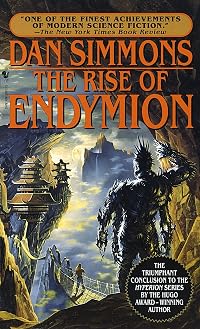
The time of reckoning has arrived. As a final genocidal Crusade threatens to enslave humanity forever, a new messiah has come of age. She is Aenea and she has undergone a strange apprenticeship to those known as the Others. Now her protector, Raul Endymion, onetime shepherd and convicted murderer, must help her deliver her startling message to her growing army of disciples. But first they must embark on a final spectacular mission to discover the underlying meaning of the universe itself. show more They have been followed on their journey by the mysterious Shrike--monster, angel, killing machine--who is about to reveal the long-held secret of its origin and purpose. And on the planet of Hyperion, where the story first began, the final revelation will be delivered--an apocalyptic message that unlocks the secrets of existence and the fate of humankind in the galaxy. show lessTags
Recommendations


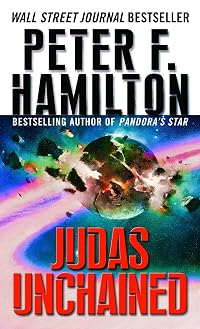
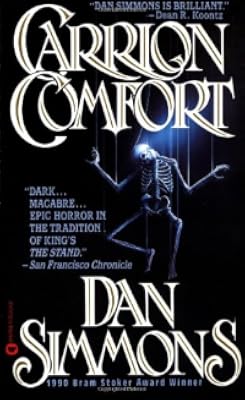
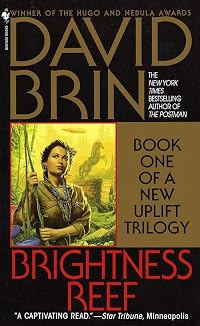
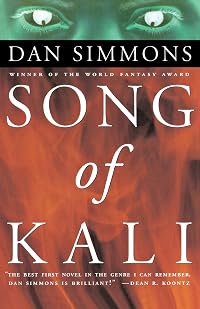
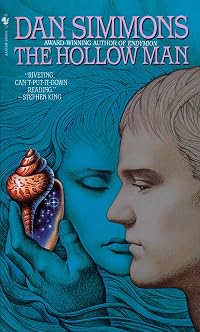


Member Recommendations
Member Reviews
This is the final book of the author’s Hyperion canto. Under no circumstances can you read this book without having read the three preceding Hyperion books.
In the preceding installment, Aenea (a messiah of sorts) has traveled ahead in time to rescue humanity from the Core, an amalgam of artificial intelligences. She is accompanied by Endymion and builds a following as she attempts to avoid capture by Pax operatives.
While the story advances slowly to its climax, the author fills pages and pages with absolutely mundane travelogues and fight descriptions. In addition, much of the action taking place on the Buddhist planet becomes simply absurd.
This entire series of novels is very complex in areas of artificial intelligence, show more nanotechnology and philosophy, sometimes to levels that lose me. The author is a noted opponent of anyone wishing to edit his work, yet is unsurpassed in his need for an editor. He is obviously a “deep thinker” and highly intelligent, but in my opinion simply tries too hard.
If you are like me, and have already read the first three books, you pretty much have to finish the series. If you are thinking of picking up book number one, I would not recommend it. show less
In the preceding installment, Aenea (a messiah of sorts) has traveled ahead in time to rescue humanity from the Core, an amalgam of artificial intelligences. She is accompanied by Endymion and builds a following as she attempts to avoid capture by Pax operatives.
While the story advances slowly to its climax, the author fills pages and pages with absolutely mundane travelogues and fight descriptions. In addition, much of the action taking place on the Buddhist planet becomes simply absurd.
This entire series of novels is very complex in areas of artificial intelligence, show more nanotechnology and philosophy, sometimes to levels that lose me. The author is a noted opponent of anyone wishing to edit his work, yet is unsurpassed in his need for an editor. He is obviously a “deep thinker” and highly intelligent, but in my opinion simply tries too hard.
If you are like me, and have already read the first three books, you pretty much have to finish the series. If you are thinking of picking up book number one, I would not recommend it. show less
This final volume in Simmons' 'Hyperion Cantos' series delves into its story in very great depth; it certainly could not be read as a stand-alone novel. Raul Endymion and his ward/lover, Aenea, engage, both together and separately, in a trans-galactic odyssey to frustrate the will of the Pax (Catholic Church to you and me) and the AIs of the TechnoCore, to preserve the Void Which Binds, and to bring an end to the tyranny of immortality granted by the cruciform symbiotes, because only in that way can death be brought back, allowing humanity, in all its various forms, to progress and develop.
This is all very fine, and I engaged with Raul Endymion, even though he continually admits to himself and others that he isn't the sharpest tool in show more the box; and sure enough, he spends around a third of the novel fretting about something that I (and lots of others, to judge by other reviews) worked out for ourselves pretty quickly. But then again, Simmons perhaps put that in so as to hide revelations about other characters; and those revelations did come as a surprise.
I wasn't so keen on some of the info-dumping; there are a number of stodgy expository lumps in this novel, and a couple of them are quite important in terms of containing important plot points. But others begin to look like the padding of an author being paid by the word; there's a four-page description of the mountaintop view on the world of T'ien Shan, and elsewhere there are lists of people or places which look like fillers. Some of these people do have walk-on parts in the story itself, but others are just figures in a crowd scene.
In the course of his journey, Raul Endymion traverses a number of worlds, and the book begins to look like a travelogue. But T'ien Shan, where the action finally begins to settle down, is well-realised; a civilization built on Himalayan slopes that poke up through clouds of poisonous phosgene gas, themselves covering an ocean of acid makes for an unusual setting (but it didn't need the vista described to us).
Ultimately, this book is more than just a conclusion to the 'Hyperion Cantos'; it has important things to say about the need for death after life. It is also highly critical of its version of the Catholic Church, enough for another critic to offer a one-word review - "blasphemy" - and says it as though that were a bad thing. Yet one of the heroes of the book is Father-Captain de Soya, who in the course of the story rebels but in the end rediscovers faith. So, in all, a very worthwhile read but quite hard going if the reader is not prepared to pay attention. show less
This is all very fine, and I engaged with Raul Endymion, even though he continually admits to himself and others that he isn't the sharpest tool in show more the box; and sure enough, he spends around a third of the novel fretting about something that I (and lots of others, to judge by other reviews) worked out for ourselves pretty quickly. But then again, Simmons perhaps put that in so as to hide revelations about other characters; and those revelations did come as a surprise.
I wasn't so keen on some of the info-dumping; there are a number of stodgy expository lumps in this novel, and a couple of them are quite important in terms of containing important plot points. But others begin to look like the padding of an author being paid by the word; there's a four-page description of the mountaintop view on the world of T'ien Shan, and elsewhere there are lists of people or places which look like fillers. Some of these people do have walk-on parts in the story itself, but others are just figures in a crowd scene.
In the course of his journey, Raul Endymion traverses a number of worlds, and the book begins to look like a travelogue. But T'ien Shan, where the action finally begins to settle down, is well-realised; a civilization built on Himalayan slopes that poke up through clouds of poisonous phosgene gas, themselves covering an ocean of acid makes for an unusual setting (but it didn't need the vista described to us).
Ultimately, this book is more than just a conclusion to the 'Hyperion Cantos'; it has important things to say about the need for death after life. It is also highly critical of its version of the Catholic Church, enough for another critic to offer a one-word review - "blasphemy" - and says it as though that were a bad thing. Yet one of the heroes of the book is Father-Captain de Soya, who in the course of the story rebels but in the end rediscovers faith. So, in all, a very worthwhile read but quite hard going if the reader is not prepared to pay attention. show less
I would have never guessed that a Dan Simmons Hyperion novel could be so boring. Once Father-Captain de Soya exits the plot about the third of the way in, there's no character and no idea left in this book that I really care about-- once again, too much time is spent on dull travelogue, with this book adding cod-philosophy for good measure, and also resurrecting bunches of characters from the first two books only to undermine what we learned about them there. I don't even get what Simmons could have been thinking. I should have listened and ended with book 2, or maybe even book 1.
What to say about a beautiful, tragic, epic, transformative, visionary conclusion to likely the greatest sci-fi series every written? Perhaps that it is even better than the first two books, and a fitting mate to the third. Hyperion, and Fall of Hyperion had the advantage of the shocking newness of this epic vision, but, especially Hyperion, was somewhat stilted in its marriage to the literary conceit of the Canterbury Tales (which was fun, up to a point). The two "Endymion" novels find a better harmony with this continued play with old literature, and the story takes on deeper personal aspects that retell the gospel story in a much more modern context of scientific knowledge. Gut-wrenching, mind-expanding, and with a deep heart at its show more core, you can't ask for anything more in a novel of any genre. show less
I'll say this for Simmons: I found the ending satisfying enough. Unfortunately, though, the book as a whole is easily the weakest in the series, as Simmons succumbs to self-indulgent philosophizing over and over throughout the narrative -- plot relevant, yes, but incredibly repetitive as the ideas discussed tend to be the same ones (with a minor add-on tagged on to the basic reasoning every time it is brought back up). And worse is the numerous pages spent on recounting scenery and local geography on the places the protagonist goes, which slows the book down to the point where my wife (who positively loved the original "Hyperion" (even more than I) but (unlike me) didn't care much for books 2 and 3) gave up and skimmed her way to the show more end just to feel she'd finished it. Myself, it didn't bother as much (likely because I really liked books 2 and 3 and had a larger investment), there's still a good story in this book, albeit one frequently and unreasonably slowed down. But even I did skim a page or two whenever the descriptions got too unnecessarily detailed and long-winded. The book has half again the page count of the others in the series, and it really didn't need to.
But the story, as it is, is good. I saw the main end twist coming, but this is remedied by several of the characters (just not the protagonist) clearly doing the same, which hangs a lantern on it and makes it more palatable. (As does the fact that it, lack of surprise aside, is a very good twist from both narrative and emotional standpoints.) I'm impressed at how SImmons, after three books ending either on cliffhangers (1 and 3) or wrapping up with purposefully high amounts of loose ends (book 2), actually tied most of the narrative together and provided as much closure as this sweeping a narrative in a realistic setting ever could -- as life, naturally, will go on. If you've read and enjoyed book 3 already, there's no reason at all to stop before this one -- it provides a lot of answers and a surprising amount of closure, and, as the books that came before, has a lot of memorable characters to boot. show less
But the story, as it is, is good. I saw the main end twist coming, but this is remedied by several of the characters (just not the protagonist) clearly doing the same, which hangs a lantern on it and makes it more palatable. (As does the fact that it, lack of surprise aside, is a very good twist from both narrative and emotional standpoints.) I'm impressed at how SImmons, after three books ending either on cliffhangers (1 and 3) or wrapping up with purposefully high amounts of loose ends (book 2), actually tied most of the narrative together and provided as much closure as this sweeping a narrative in a realistic setting ever could -- as life, naturally, will go on. If you've read and enjoyed book 3 already, there's no reason at all to stop before this one -- it provides a lot of answers and a surprising amount of closure, and, as the books that came before, has a lot of memorable characters to boot. show less
The first book I read this year was Dan Simmons' Hyperion, which in turn led to The Fall of Hyperion and Endymion, comprising what I believe is one of the most well-written and compulsively readable science fiction adventures of our age. I really grew to love these books and the fascinating universe they contain, so it was a bit of a bummer that the last book fell apart.
The first three books consisted largely of high adventure, intergalactic politics, epic warfare and apolcayptic social collapse, and very slightly of things like religion and metaphysics and philosophy. The Rise of Endymion, unfortunately, flips that formula around. It continues the tale of Aenea, the child of Brawne Lamia destined to become a new messiah, chronicling show more her rise to greatness from the point of view of her bodyguard and lover Raul Endymion. It is, essentially, a gospel, and most of the book reads like one. It's not that it's a poorly-written or overly preachy or even a shallow gospel, but it is boring, and I had no desire to read it. I realised two-thirds of the way through that I wasn't enjoying reading it, and was counting the pages until it was over, which is not something I ever thought I'd be doing in the Hyperion series.
It has its moments. Raul's journey down the world-spanning River Tethys is great (yet over almost as soon as it begins), and the climax is gripping. But the rest of the book is tedious and extremely bloated. In particular, a 200+ page visit to a Tibetan-themed planet almost groans under the weight of all the superfluous geographic worldbuilding and endless background characters it must endure. (You can tell this book was written the same year Seven Years In Tibet and Kundun were released, when the Western obsession with Tibetan exoticism was at its zenith.) Likewise, there are wearying descriptions of the baroque splendour of the Vatican and its rituals. The entire book is, essentially, Simmons sinking into a whirpool of miscellanous religious iconography. He doesn't do so without purpose or objective merit, and I can see how this book would appeal to some, but personally I found it an unenjoyable ride.
Overall, The Rise of Endymion is an unsatisfying conclusion to an otherwise excellent science fiction series. Which is a shame, but honestly, three hits out of four isn't bad in this arena. show less
The first three books consisted largely of high adventure, intergalactic politics, epic warfare and apolcayptic social collapse, and very slightly of things like religion and metaphysics and philosophy. The Rise of Endymion, unfortunately, flips that formula around. It continues the tale of Aenea, the child of Brawne Lamia destined to become a new messiah, chronicling show more her rise to greatness from the point of view of her bodyguard and lover Raul Endymion. It is, essentially, a gospel, and most of the book reads like one. It's not that it's a poorly-written or overly preachy or even a shallow gospel, but it is boring, and I had no desire to read it. I realised two-thirds of the way through that I wasn't enjoying reading it, and was counting the pages until it was over, which is not something I ever thought I'd be doing in the Hyperion series.
It has its moments. Raul's journey down the world-spanning River Tethys is great (yet over almost as soon as it begins), and the climax is gripping. But the rest of the book is tedious and extremely bloated. In particular, a 200+ page visit to a Tibetan-themed planet almost groans under the weight of all the superfluous geographic worldbuilding and endless background characters it must endure. (You can tell this book was written the same year Seven Years In Tibet and Kundun were released, when the Western obsession with Tibetan exoticism was at its zenith.) Likewise, there are wearying descriptions of the baroque splendour of the Vatican and its rituals. The entire book is, essentially, Simmons sinking into a whirpool of miscellanous religious iconography. He doesn't do so without purpose or objective merit, and I can see how this book would appeal to some, but personally I found it an unenjoyable ride.
Overall, The Rise of Endymion is an unsatisfying conclusion to an otherwise excellent science fiction series. Which is a shame, but honestly, three hits out of four isn't bad in this arena. show less
I loved the thoughtful exploration of themes like humanity's relationship to artificial intelligence, organized religion, and space travel. The different forms of space travel explored is fascinating. There are older technologies like the Hawking drive starships where one incurs 'time debt' due to the time relativity. Then there are ships that accelerate so fast that resurrection technology is required...
The Cantos, while printed as four volumes, is best understand as having two parts. "Hyperion" and "Fall of Hyperion" form one part with a common setting and characters. The next two books - "Endymion" and "The Rise of Endymion" - take place centuries after the first two books and are quite different.
Members
- Recently Added By
Lists

NPRs your picks: top 100 Sci-Fi/Fantasy books
297 works; 80 members

Books Read in 2015
3,299 works; 129 members

Books Set in Rome
98 works; 2 members

Next in Series
85 works; 1 member

Locus Award for Best Novel/SF Novel
53 works; 6 members

Books Read in 2024
4,727 works; 128 members

Favorite Science Fiction
457 works; 221 members

Books Read in 2025
4,128 works; 98 members
Author Information

Science fiction writer Dan Simmons was born in East Peoria, Illinois in 1948. He graduated from Wabash College in 1970 and received an M. A. from Washington University the following year. Simmons was an elementary school teacher and worked in the education field for a decade, including working to develop a gifted education program. His first show more successful short story was won a contest and was published in 1982. His first novel, Song of Kali, won a World Fantasy Award, and Simmons has also won a Theodore Sturgeon Award for short fiction, four Bram Stoker Awards, and eight Locus Awards. He is also the author of the Hyperion series, and Simmons and his work have been compared to Herbert's Dune and Asimov's Foundation series. (Bowker Author Biography) show less
Some Editions
Awards and Honors
Awards
Notable Lists
Series

Belongs to Publisher Series
Work Relationships
Is contained in
Was inspired by
Common Knowledge
- Canonical title*
- Endymionin nousu
- Original title
- The Rise of Endymion
- Original publication date
- 1997-09
- People/Characters
- Aenea; A. Bettik; Raul Endymion; Martin Silenus; Rhadamanth Nemes; Lenar Hoyt (show all 7); Paul Duré
- Important places
- Old Earth; Pacem
- Dedication
- This book is for Jack Vance, our finest creator of worlds. It is also dedicated to the memory of Dr. Carl Sagan, scientist, author, and teacher, who articulated the noblest dreams of humankind.
- First words
- "The Pope is dead! Long live the Pope!"
- Quotations*
- Voir et sentir sa bien-aimée nue pour la première fois, c'est l'une des épiphanies pures et irréductibles de la vie.
- Last words
- (Click to show. Warning: May contain spoilers.)Already trusting the North Star as our guide, softly discussing a likely looking campsite on high ground some kilometers west, we passed over the old poet's grave where the Shrike still stood silent guard, flew out over the river where the ripples and whirlpools caught the last glows of sunset, and gained altitude as we gazed down on the lush meadows and enticing forests of our new playground, our ancient world...our new world..our first and future and finest world.
*Some information comes from Common Knowledge in other languages. Click "Edit" for more information.
Classifications
Statistics
- Members
- 4,596
- Popularity
- 3,175
- Reviews
- 69
- Rating
- (3.99)
- Languages
- 15 — Bulgarian, Czech, Danish, Dutch, English, Estonian, Finnish, French, German, Hebrew, Hungarian, Italian, Polish, Spanish, Ukrainian
- Media
- Paper, Audiobook, Ebook
- ISBNs
- 50
- ASINs
- 18