On This Page
Description
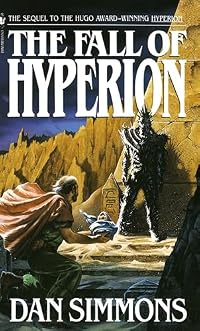
In the continuation of the epic adventure begun in Hyperion, the far future is resplendent with drama and invention. On the world of Hyperion, the mysterious Time Tombs are opening. And the secrets they contain mean that nothing--nothing anywhere in the universe--will ever be the same.Tags
Recommendations

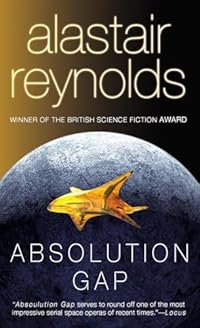
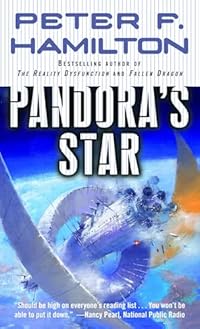
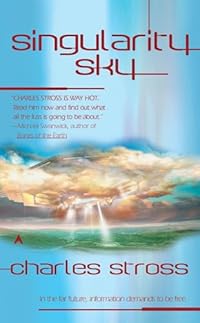
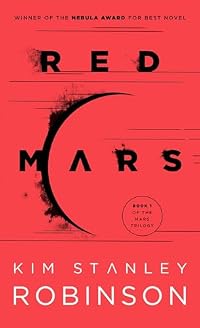
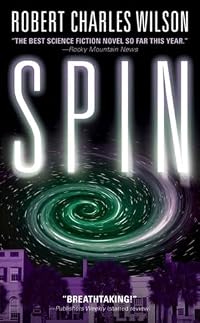
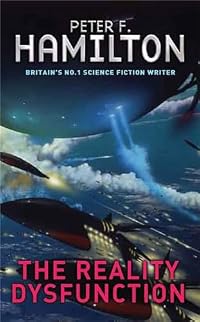
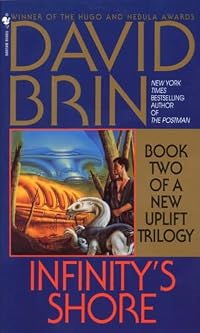
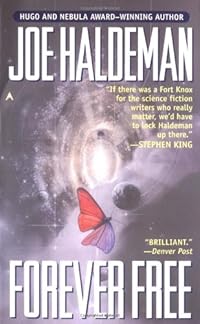

Member Recommendations
Member Reviews
The Fall of Hyperion, I think is a good book or even a great one, but not the book I thought I was going to read next when I finished Hyperion. The end of Hyperion is amazing because it brings all the different emotional journeys of the pilgrims together and unifies them into one and gives them catharsis; I expected Fall would pick up from that, but I actually felt like it tossed the pilgrims aside. The group is torn apart, and the pilgrims' actions feel largely incidental to the (very complicated) proceedings. The giant conspiracy and big concepts underpinning Fall are good, but they move the focus to CEO Gladstone and the new Keats cybrid, who weren't even characters in the first book. It's a good brink-of-war sf thriller with some show more clever twists (some too clever for me), but without meaningful roles for the pilgrims it doesn't really succeed as a follow-up to Hyperion. show less
How does one follow up one of the best science fiction books which saw six pilgrims who are on their way to a location guarded by a giant killing machine? The Fall of Hyperion is the second book of Dan Simmons’ Hyperion Cantos as the remaining pilgrims to the Time Tombs arrive in the valley while an interstellar war breaks out as the Ousters attack Hyperion as a feint before a full-scale invasion of the Hegemony, or do they?
Simmons starts off essentially where he left off in the previous book, however the number of point-of-views increased from just the pilgrims to a whole host of characters. This change while expanding the story onto a galactic scale is a direct departure from its predecessor but given the expanded scope of the story show more that involves numerous places in the galaxy and “cyberspace” with the interactions of Ais it makes sense. This book brings together all the storylines from the previous book and ties to conclusions that were mostly satisfactory though there were some that felt a bit too contrived leading to a little disappointment in the quality of the Simmons writing for that. Though the ending of some of the storylines was a bit disappointing, the rest of Simmons’ writing was very good and engaging even when he brought poetry into the text. Overall, the book is fine follow-up and conclusion to everything introduced into Hyperion, but some things just didn’t hit the mark in concluding some storylines.
The Fall of Hyperion continues Dan Simmons’ Hyperion Cantos series, though up to the overall quality of it’s predecessor it concludes things fine but I didn’t feel the need to continue with the rest of the series because I felt things came to an end. show less
Simmons starts off essentially where he left off in the previous book, however the number of point-of-views increased from just the pilgrims to a whole host of characters. This change while expanding the story onto a galactic scale is a direct departure from its predecessor but given the expanded scope of the story show more that involves numerous places in the galaxy and “cyberspace” with the interactions of Ais it makes sense. This book brings together all the storylines from the previous book and ties to conclusions that were mostly satisfactory though there were some that felt a bit too contrived leading to a little disappointment in the quality of the Simmons writing for that. Though the ending of some of the storylines was a bit disappointing, the rest of Simmons’ writing was very good and engaging even when he brought poetry into the text. Overall, the book is fine follow-up and conclusion to everything introduced into Hyperion, but some things just didn’t hit the mark in concluding some storylines.
The Fall of Hyperion continues Dan Simmons’ Hyperion Cantos series, though up to the overall quality of it’s predecessor it concludes things fine but I didn’t feel the need to continue with the rest of the series because I felt things came to an end. show less
I'm not really sure if "like" is the proper word for how I feel about this book -- horrified, enthralled, repelled, angered, confused, and frustrated are all true as well. In particular, Father Dure's torment, Rachel Weintrub's affliction with backwards aging, and Meina Gladstone's political turmoil all provoked strong emotional reactions. The fallout of decisions made towards the end of the novel and the impact that these had on the various Hegemony societies was really interesting, especially looking at modern parallels in our current reliance on technologically aided communication and commerce. Not for the faint of heart, but definitely worth a read.
I cannot tell you how much this book will continue to affect my brain going forward. Other scifi book series, movies, and even music i love seems to have some direct influence stemming from the Hyperion "Cantos". As a simple and poor example, The Matrix in many ways, almost seems like an homage to the Hyperion series, with significant portions of plotline directly influenced.
The shrike (agent smith), a machine boogeyman whos intents are sometimes inline with those of the web, other times seemingly contrary. Thousands of Shrike (Smiths) working toward a common goal.
Squid like creatures, Artificial Deities, the convergence of mankind and machine. i dont want to give too many examples as every reference i make could be seen as a spoiler, show more and i dont want to be the person who ruins well earned surprises.
the fictional references located while reading the first two books in this series astounded me. it is like a holy grail of geekdom.
i fail to even mention that the plot is beyond incredible... but again, lets not get too much into that. it is after all a sequel. if you dont know where this is headed, you obviously need to read book 1 still.
Reality has a strong mirror of the story as well. with recent announcements that "teleportation" is on its way, farcaster devices and other kick ass technology seems to be around the corner. developments in the last decade have proven that we can cause particles to recreate properties of other particles, end point to end point. we have passed atoms, photons, information, and now raw energy.
for a quick recap of the decade and links, read: Popular Science Feb 2010 (article: physicists prove teleportation energy theoretically possible)
http://www.popsci.com/science/article/2010-02/physicists-prove-teleportation-ene...
not saying simmons was some kind of oracle, just that he had his finger on the right pulse, checking the timing of all the right heartbeats in theory and thought. then built this master work around what was absorbed.
Dan Simmons successfully blends the poetry of John Keats into a multi world existence, replicating poetry, creating new poetry, and detailing a spiderweb of mental imagery that can only be referred to as scholar deification at its pinnacle.
based on the pure impact of info in these stories, along side mirrors in our existing world (and possible unconfirmed referenced in popular media..), i would have to say this is one of the greatest/most influential series i have ever read.
only two more to complete the whole series, but i am not sure how it could get better. hope you keep surprising me simmons! show less
The shrike (agent smith), a machine boogeyman whos intents are sometimes inline with those of the web, other times seemingly contrary. Thousands of Shrike (Smiths) working toward a common goal.
Squid like creatures, Artificial Deities, the convergence of mankind and machine. i dont want to give too many examples as every reference i make could be seen as a spoiler, show more and i dont want to be the person who ruins well earned surprises.
the fictional references located while reading the first two books in this series astounded me. it is like a holy grail of geekdom.
i fail to even mention that the plot is beyond incredible... but again, lets not get too much into that. it is after all a sequel. if you dont know where this is headed, you obviously need to read book 1 still.
Reality has a strong mirror of the story as well. with recent announcements that "teleportation" is on its way, farcaster devices and other kick ass technology seems to be around the corner. developments in the last decade have proven that we can cause particles to recreate properties of other particles, end point to end point. we have passed atoms, photons, information, and now raw energy.
for a quick recap of the decade and links, read: Popular Science Feb 2010 (article: physicists prove teleportation energy theoretically possible)
http://www.popsci.com/science/article/2010-02/physicists-prove-teleportation-ene...
not saying simmons was some kind of oracle, just that he had his finger on the right pulse, checking the timing of all the right heartbeats in theory and thought. then built this master work around what was absorbed.
Dan Simmons successfully blends the poetry of John Keats into a multi world existence, replicating poetry, creating new poetry, and detailing a spiderweb of mental imagery that can only be referred to as scholar deification at its pinnacle.
based on the pure impact of info in these stories, along side mirrors in our existing world (and possible unconfirmed referenced in popular media..), i would have to say this is one of the greatest/most influential series i have ever read.
only two more to complete the whole series, but i am not sure how it could get better. hope you keep surprising me simmons! show less
The first half of the novel which focused primarily on the pilgrims and the Shrike was so much better than the interplanetary space opera that followed. I wish the setting never left the time tombs - the subtle and heady mix of horror and mystery that pervaded the pilgrims' stories and their awaited encounters with the Shrike were the best parts of the novel. I really didn't want the Shrike or the cruciform or Moneta demystified. The story lost that tone of looming terror with the explanations and the explanations, such as they were, felt pretty run of the mill.
A very entertaining three stars that could have been so much more.
A very entertaining three stars that could have been so much more.
Pain is the curl and foam of a wave that does not break.
So, I'm writing this review around three full months after reading The Fall of Hyperion, and I'm still not really sure what to say about it. Did I enjoy it? Absolutely. Did I think it was as good as Hyperion? Absolutely not. But then, in the realm of science fiction, Hyperion, for me, was a cut above the rest. This is a perfectly satisfying conclusion, one that I am happy with, and one that answers a lot of the weirdness that went on in Hyperion.
As my memory of what happened at what point in this story wanes, I have but a few general points to make about the story. This very much feels like a resolution, in that almost all of the question that you have at the end of Hyperion – show more and there are or will be many! - are answered in a way that might be satisfying to you, or might not, depending on what you really wanted out of the story. I think, perhaps, my favourite of the character progressions/”stories” were those of Meina Gladstone and Sol Weintraub (though not that of his daughter – which I know sounds weird given how tied up they were together. But what happens to him in the story is fine, while the whole Rachel/Moneta thing felt both creepy and overly-convenient to me. It's probably not a point I could solidly defend, but it is one that reduced my enjoyment of Rachel's involvement in things. ) The extended portrayal of Sol's grief and hope really felt incredibly realistic to me, so I appreciated the sensitive treatment of such here.
As for Meina, well, I just have a thing for morally ambiguous female leaders (Malazan slight spoiler think Tavore in MBotF, perhaps? ). The exploration of the relationships between the AI and the humans is much more fleshed out here too – I had some difficulty in grasping it in the first book but my fears were allayed by the events of this one. That doesn't hold true for some other things, though. I found what happened around the Time Tombs often felt like a bit of a plot device that changed to suit the other places he wanted the narrative to go. I also felt like ( the bits with the Keats persona dragged a little. I don't know if it was just me, but I would have preferred not to spend quite so much time with him compared to some of the other things that were happening or could have potentially happened. ) I really wanted to spend more time, for example, on the Priest's story and the Catholic Church as a whole – I felt the way that organisation had shifted (and not shifted) over the years to be really intriguing, and I just wanted to read more in that direction.
I've been well warned by someone I trust to end my relationship with these books here, and so I shall. But it's been incredibly enjoyable and rewarding. While I may not have enjoyed this book as much as the first, it's far above average science fiction, and definitely one to read if you enjoy the genre. I give The Fall of Hyperion nine out of ten. show less
So, I'm writing this review around three full months after reading The Fall of Hyperion, and I'm still not really sure what to say about it. Did I enjoy it? Absolutely. Did I think it was as good as Hyperion? Absolutely not. But then, in the realm of science fiction, Hyperion, for me, was a cut above the rest. This is a perfectly satisfying conclusion, one that I am happy with, and one that answers a lot of the weirdness that went on in Hyperion.
As my memory of what happened at what point in this story wanes, I have but a few general points to make about the story. This very much feels like a resolution, in that almost all of the question that you have at the end of Hyperion – show more and there are or will be many! - are answered in a way that might be satisfying to you, or might not, depending on what you really wanted out of the story. I think, perhaps, my favourite of the character progressions/”stories” were those of Meina Gladstone and Sol Weintraub (
As for Meina, well, I just have a thing for morally ambiguous female leaders (Malazan slight spoiler
I've been well warned by someone I trust to end my relationship with these books here, and so I shall. But it's been incredibly enjoyable and rewarding. While I may not have enjoyed this book as much as the first, it's far above average science fiction, and definitely one to read if you enjoy the genre. I give The Fall of Hyperion nine out of ten. show less
Here I find that I’m moderately interested in the underlying story (two factions of humanity, one enmeshed with AI and one not, fighting it out or possibly fighting against the total destruction of humanity) while still not liking the writing style or characters very much. Still annoying: all characters who have sex experience it the same way, which includes a man getting raped by a woman (his former lover, who he currently considers an enemy), and then later deciding that he wanted it because he still loved her; the woman’s actions are treated as generally commendable and she is in fact presented as the embodiment of innocent heroism, although the rape was entirely extraneous to her mission.
Members
- Recently Added By
Lists

Best Science Fiction Novels
816 works; 430 members

NPRs your picks: top 100 Sci-Fi/Fantasy books
297 works; 78 members

SF Masterworks
193 works; 8 members
SF Masterworks
22 works; 3 members

S.F. Masterworks (Complete)
229 works; 15 members

Books Read in 2015
3,298 works; 126 members

Books Read in 2019
4,052 works; 110 members

Locus Award for Best Novel/SF Novel
53 works; 6 members

Books Read in 2026
1,650 works; 61 members
Favorite Science Fiction
448 works; 214 members
Survey of Classic Science Fiction
171 works; 48 members
Talk Discussions
Past Discussions
science fiction book in Name that Book (December 2008)
Author Information

131+ Works 69,342 Members
Science fiction writer Dan Simmons was born in East Peoria, Illinois in 1948. He graduated from Wabash College in 1970 and received an M. A. from Washington University the following year. Simmons was an elementary school teacher and worked in the education field for a decade, including working to develop a gifted education program. His first show more successful short story was won a contest and was published in 1982. His first novel, Song of Kali, won a World Fantasy Award, and Simmons has also won a Theodore Sturgeon Award for short fiction, four Bram Stoker Awards, and eight Locus Awards. He is also the author of the Hyperion series, and Simmons and his work have been compared to Herbert's Dune and Asimov's Foundation series. (Bowker Author Biography) show less
Some Editions
Awards and Honors
Awards
Notable Lists
Series

Belongs to Publisher Series
Work Relationships
Is contained in
Has as a student's study guide
Common Knowledge
- Canonical title*
- Hyperionin tuho
- Original title
- The fall of Hyperion
- Original publication date
- 1990-03
- People/Characters
- Melio Arundez; The Consul; Meina Gladstone; Fedmahn Kassad (Colonel); John Keats; Brawne Lamia (show all 12); Theo Lane (acting Governor-General); The Shrike (the Pain Lord); Martin Silenus; Rachel Weintraub; Sol Weintraub; Tyrena Wingreen-Feif
- Important places
- Time Tombs, Hyperion (fictional)
- Dedication
- To John Keats
Whose Name Was Writ
in Eternity - First words
- On the day the armada went off to war, on the last day of life as we know it, I was invited to a party.
- Quotations*
- Ce que j'avais sous les yeux, c'était une représentation théâtrale du chaos total, une définition fonctionnelle du concept de confusion, une danse désordonnée à la gloire de la violence sinistre.
C'était la guerre... (show all). - Last words
- (Click to show. Warning: May contain spoilers.)On he flared...
*Some information comes from Common Knowledge in other languages. Click "Edit" for more information.
Classifications
Statistics
- Members
- 7,503
- Popularity
- 1,530
- Reviews
- 134
- Rating
- (4.09)
- Languages
- 17 — Czech, Danish, Dutch, English, Estonian, Finnish, French, German, Greek, Hebrew, Hungarian, Italian, Polish, Romanian, Spanish, Ukrainian, Chinese, traditional
- Media
- Paper, Audiobook, Ebook
- ISBNs
- 66
- ASINs
- 23