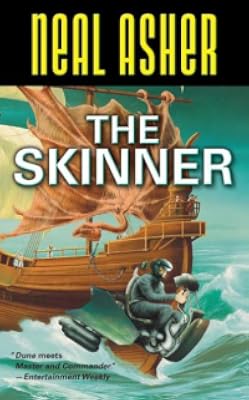
The Skinner
by Neal Asher 
Polity: Spatterjay (1), Polity Universe - Publication Order (2), Polity Universe (Reading Order) (11.1)
On This Page
Description
Three unusual travelers arrive on the remote ocean planet of spatterjay, braving the perils of the world's voracious wildlife as they pursue their individual quests, unaware that their paths are about to converge as the planet threatens to erupt into chaos.Tags
Recommendations
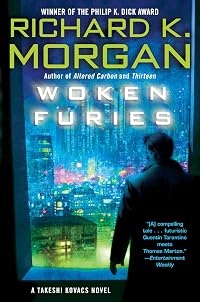

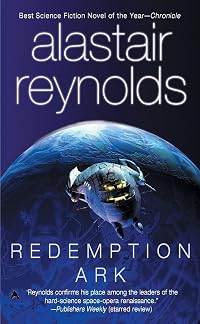
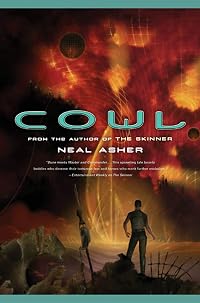
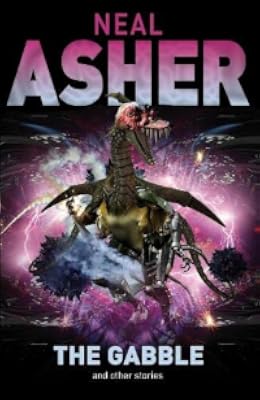



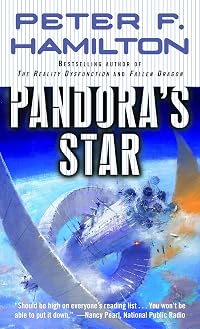
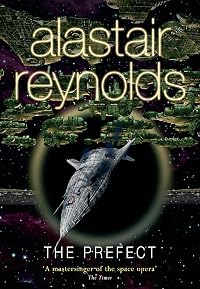
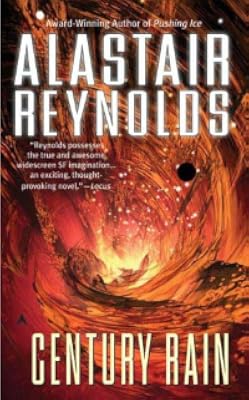

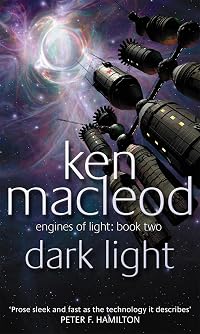
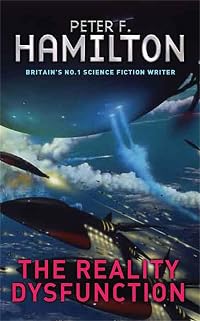
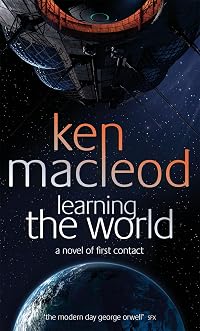
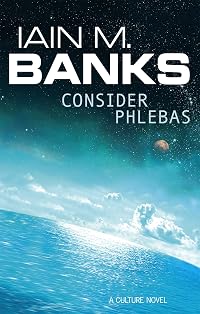
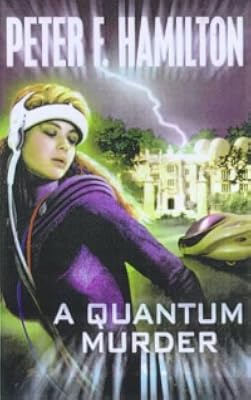
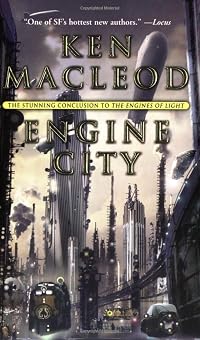
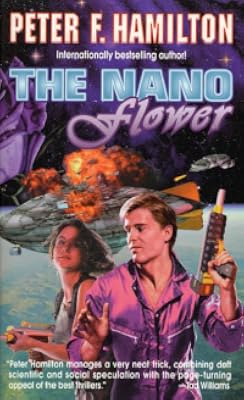
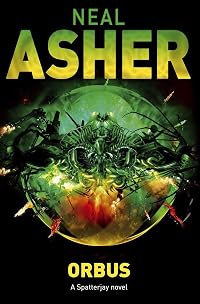
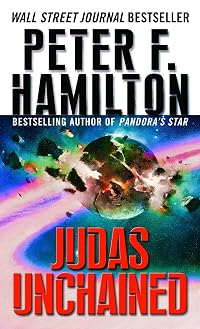


Member Recommendations
Member Reviews
It's almost unfair just how good Asher is with his space opera. I mean, there's hardly any space in this one and I'm flabbergasted at how much awesome alien life can be crammed in a single book.
Of course, it could happen in no other place than the most f***ed up planet in the universe.
Spatterjay. The place where life just holds on. And on. And on. Nothing dies unless it gets THOROUGHLY destroyed. And that means every life form, once infected, is effectively immortal. ALL life forms. I swear, if I didn't know this was SF, I would immediately assume it's a Lovecraftian horror. And it's FANTASTIC. :)
Enter equally messed-up characters, including one that refuses to go full AI despite having been dead and carrying around his corpse for 700 show more years... can you imagine what happens to HIM on a world where dead doesn't exist? Add a hive mind, a girl on a quest to live, and enough Prador on personal missions to make Prador Moon seem like a happy memory.
Beautiful setup, right? Well, it gets better. I got the distinct impression I was reading a ghost story with all the chills and frights. With the obvious twist where nothing dies, of course. Add a bit of Captain Ahab gigantic monsters that can only be taken down with VERY heavy artillery, giving even AI drones a run for their money, and I just have to say.... PLEASE, LET ME NEVER TAKE A VACATION HERE.
So delightfully wicked. show less
Of course, it could happen in no other place than the most f***ed up planet in the universe.
Spatterjay. The place where life just holds on. And on. And on. Nothing dies unless it gets THOROUGHLY destroyed. And that means every life form, once infected, is effectively immortal. ALL life forms. I swear, if I didn't know this was SF, I would immediately assume it's a Lovecraftian horror. And it's FANTASTIC. :)
Enter equally messed-up characters, including one that refuses to go full AI despite having been dead and carrying around his corpse for 700 show more years... can you imagine what happens to HIM on a world where dead doesn't exist? Add a hive mind, a girl on a quest to live, and enough Prador on personal missions to make Prador Moon seem like a happy memory.
Beautiful setup, right? Well, it gets better. I got the distinct impression I was reading a ghost story with all the chills and frights. With the obvious twist where nothing dies, of course. Add a bit of Captain Ahab gigantic monsters that can only be taken down with VERY heavy artillery, giving even AI drones a run for their money, and I just have to say.... PLEASE, LET ME NEVER TAKE A VACATION HERE.
So delightfully wicked. show less
In the first Polity novel we saw a universe populated by people - minimal aliens (although some rules around preserving local life was mentioned, it was more about the life than intelligence). There are aliens of course but it sounds like a human universe with some aliens. Asher never claims it though - I just presumed based on what we saw. The second novel needs less than 20 pages to show you how wrong that assumption was.
Welcome to Spatterjay - a planet outside of the Polity where the locals had found an agreement with the Polity but without becoming part of it. Where there are multiple life forms that can be considered intelligent and where humanity and the local life had started to exist in a symbiosis that is verging on horror. show more And just to make things more complex, there is also another intelligent race on Earth - a hive based one. And no - not the bees. Or the ants. It is the hornets. Add to this the Pradors (which even led a war with humanity) and that universe is a lot larger than you would have thought.
Part of the beauty of the story is learning what really happened while you are reading the story - learning about the war and the 8 criminals, about the reifs and the hornets plans and practices. The novel opens with three humans arriving on the planet - except that none of them is really a nornal human - Erlin had been here before and the virus is in her blood; Sable Keech had also been here 700 years ago but he was alive back then; Janer is visiting for the first time but he is a messenger if the hornets and the race is now coming for the first time here. They seem to be here for different reasons but their paths will connect so many times that at one point it will become one and the same.
There is of course the Warden than is taking care of the runcibles and is monitoring the island. And there is a few drones with sense of humor that makes you laugh even in the darkest parts of the novel. There are the Old Captains and their crews. And there is the local life - the virus that binds them together, the sails and the leeches, the marine life and the leeches (and no, I did not add it twice by mistake - you really need to be careful about them. Actually the first rule on Spatterjay is "do not fall in the water". Or you won't live to hear the second rule).
Sable Keech is here to hunt the last of the 8; Janer is here because the Hive want him there; Erlin is there looking for her Captain and to reconnect to an old life. And it is Keech's return to the world that triggers what follows - because not all that are thought dead are really dead - and he cannot really complain about that being dead for 700 years himself after all. And just like that the Pradors are back (not looking for a war this time, just to murder some people), old secrets get unburied and we see the world of Spatterjay.
In the first novel Asher used the beginning of the chapters to give us information about the Polity and the people; here he uses it to tell another story - the eat and be eaten story of the seas of the world. And it works - the world is in equilibrium - bigger eats smaller until the smallest eats the biggest.
And at the end, the novel leaves the world changed - with the big bad 8 finally out of the way (or so it looks... again) and the local intelligence starting to realize that they need to step up. And with an unlikely hero saving the world for a second time - last time he was payed by being almost killed (and only the virus saved him); now noone besides Janer knows that what actually happened.
The novel is just between science fiction and horror - some of the actions can turn your stomach in a way a horror novel cannot. I am not sure what is more horrific - the sick minds of the humans or the leeches and the local life. It is a cruel world in a cruel universe and I really want to read what happens next.
Long series have a lot of internal orders - do you want to read based on publication order or chronological order is a question of taste. I prefer publication order - it allows you to see the world in the way that the author published it. And in this case, had I read the earlier novels chronologically, a lot of the surprises may not have worked out as well. Yes - there is a book for the Pradors but it was published after this one - so we get the tease for the war here; we will be back to reading about it in a later book.
The first two books create a fascinating world. I am planning to read the next one as soon as I can - I am interested both what happens in the lines of those two but also in the universe as a whole. The series may not be for everyone - it tends to get too gory at times but it works for me - and even if I am sorry that I did not read it earlier, I am happy that I still have more of it to read. Ah, the problem with good books - you want to read them but you also want to have them in your future :) show less
Welcome to Spatterjay - a planet outside of the Polity where the locals had found an agreement with the Polity but without becoming part of it. Where there are multiple life forms that can be considered intelligent and where humanity and the local life had started to exist in a symbiosis that is verging on horror. show more And just to make things more complex, there is also another intelligent race on Earth - a hive based one. And no - not the bees. Or the ants. It is the hornets. Add to this the Pradors (which even led a war with humanity) and that universe is a lot larger than you would have thought.
Part of the beauty of the story is learning what really happened while you are reading the story - learning about the war and the 8 criminals, about the reifs and the hornets plans and practices. The novel opens with three humans arriving on the planet - except that none of them is really a nornal human - Erlin had been here before and the virus is in her blood; Sable Keech had also been here 700 years ago but he was alive back then; Janer is visiting for the first time but he is a messenger if the hornets and the race is now coming for the first time here. They seem to be here for different reasons but their paths will connect so many times that at one point it will become one and the same.
There is of course the Warden than is taking care of the runcibles and is monitoring the island. And there is a few drones with sense of humor that makes you laugh even in the darkest parts of the novel. There are the Old Captains and their crews. And there is the local life - the virus that binds them together, the sails and the leeches, the marine life and the leeches (and no, I did not add it twice by mistake - you really need to be careful about them. Actually the first rule on Spatterjay is "do not fall in the water". Or you won't live to hear the second rule).
Sable Keech is here to hunt the last of the 8; Janer is here because the Hive want him there; Erlin is there looking for her Captain and to reconnect to an old life. And it is Keech's return to the world that triggers what follows - because not all that are thought dead are really dead - and he cannot really complain about that being dead for 700 years himself after all. And just like that the Pradors are back (not looking for a war this time, just to murder some people), old secrets get unburied and we see the world of Spatterjay.
In the first novel Asher used the beginning of the chapters to give us information about the Polity and the people; here he uses it to tell another story - the eat and be eaten story of the seas of the world. And it works - the world is in equilibrium - bigger eats smaller until the smallest eats the biggest.
And at the end, the novel leaves the world changed - with the big bad 8 finally out of the way (or so it looks... again) and the local intelligence starting to realize that they need to step up. And with an unlikely hero saving the world for a second time - last time he was payed by being almost killed (and only the virus saved him); now noone besides Janer knows that what actually happened.
The novel is just between science fiction and horror - some of the actions can turn your stomach in a way a horror novel cannot. I am not sure what is more horrific - the sick minds of the humans or the leeches and the local life. It is a cruel world in a cruel universe and I really want to read what happens next.
Long series have a lot of internal orders - do you want to read based on publication order or chronological order is a question of taste. I prefer publication order - it allows you to see the world in the way that the author published it. And in this case, had I read the earlier novels chronologically, a lot of the surprises may not have worked out as well. Yes - there is a book for the Pradors but it was published after this one - so we get the tease for the war here; we will be back to reading about it in a later book.
The first two books create a fascinating world. I am planning to read the next one as soon as I can - I am interested both what happens in the lines of those two but also in the universe as a whole. The series may not be for everyone - it tends to get too gory at times but it works for me - and even if I am sorry that I did not read it earlier, I am happy that I still have more of it to read. Ah, the problem with good books - you want to read them but you also want to have them in your future :) show less
It took me about a hundred pages to get into this book because of all the explanation of the crazy biology of this planet. But this wasn't the all-too-frequent blahdeblah of an author going on and on about world building: this stuff pays off big time as the story develops. Weird world, weird people and non-people. Loved so many of the characters, though oddly the shining stars weren't the main characters--Keech, Janer, and Erlin, who we see arriving on the planet in the beginning--but many of the minor characters: the historian Olian Tay, the AI submind Sniper, and the wing Windcheater.
The ocean world of Spatterjay is home to some of the most vicious life forms imaginable, and the worst of them are the "leeches": large wormlike creatures that feed by taking chunks of flesh from their living prey. The leeches also transmit a virus which makes the lifeforms it infects very nearly immortal, able to survive unbelievable amounts of physical damage and regenerate lost tissue. All the better to be fed upon again and again, you see. And here's the real kicker: the virus is also capable of infecting humans. Although, if you're not careful, you might not be entirely human anymore when it gets done with you...
I got this book last year through the SantaThing exchange. (And I'm afraid the fact that I'm only getting to it more than show more six months later really says something about the state of my TBR.) I have to confess, I wasn't too sure about it when it showed up on my doorstep. I'd never heard of this book, or its author, and from the cover and the description, it looked like it might be the sort of SF novel that's right up my alley, but equally well might be just mindless, poorly written cheese. Turns out, I really should have trusted my Santa's tastes! Because it was a surprisingly enjoyable read.
The world-building requires some suspension of disbelief, but once you've managed that -- and I found it pretty effortless -- the result is kind of cool. The descriptions of Spatterjay and its ecosystem are vivid enough to make it feel very much like a real place, albeit not one I'd ever actually want to visit. The plot is fairly complex, with lots of different (but ultimately related) agendas coming together, and a gradual revelation about events in the story's past and how they've shaped events in the present. While the characters are far from nuanced and deep, they at least all feel like people with interesting stories. And there's both a lot of fun action and some very effective horror elements. (The worst of which, by the way, have less to do with Spatterjay's gory ecosystem, and more to do with sentient beings doing things to each other that... Well, let's just say this probably isn't a novel for the faint of heart.)
I see there are also a couple of sequels to this. The next volume is definitely going on my wishlist. show less
I got this book last year through the SantaThing exchange. (And I'm afraid the fact that I'm only getting to it more than show more six months later really says something about the state of my TBR.) I have to confess, I wasn't too sure about it when it showed up on my doorstep. I'd never heard of this book, or its author, and from the cover and the description, it looked like it might be the sort of SF novel that's right up my alley, but equally well might be just mindless, poorly written cheese. Turns out, I really should have trusted my Santa's tastes! Because it was a surprisingly enjoyable read.
The world-building requires some suspension of disbelief, but once you've managed that -- and I found it pretty effortless -- the result is kind of cool. The descriptions of Spatterjay and its ecosystem are vivid enough to make it feel very much like a real place, albeit not one I'd ever actually want to visit. The plot is fairly complex, with lots of different (but ultimately related) agendas coming together, and a gradual revelation about events in the story's past and how they've shaped events in the present. While the characters are far from nuanced and deep, they at least all feel like people with interesting stories. And there's both a lot of fun action and some very effective horror elements. (The worst of which, by the way, have less to do with Spatterjay's gory ecosystem, and more to do with sentient beings doing things to each other that... Well, let's just say this probably isn't a novel for the faint of heart.)
I see there are also a couple of sequels to this. The next volume is definitely going on my wishlist. show less
Every time I pick up a book by an author I have never read before I always hope to find a “new favorite”, most of the time this does not happen. I mean what are the odds? If I find a “new favourite” author every month I would not be a very discerning reader. The best I can realistically hope for is to discover a new author whose back catalogue I am keen to investigate. Still, occasionally I strike gold, I think I just did.
There are zillions of genre authors vying for my attention when I browse bookstores. The only way I can narrow down my search for an exciting new author is by recommendations. Personally I don't trust recommendations generated by computer algorithms, I find them interesting but I would rather get recs from my show more peers at PrintSF. In the aggregate they are vastly knowledgeable about sf and their recommendations are always reliable.
Neal Asher is one of the names that crop up again and again alongside “space opera” sf luminaries such as Iain Banks, Alastair Reynolds and Peter F. Hamilton. For some reason British authors seem to be dominating this thriving subgenre of sf. The aforementioned Banks, Reynolds and Hamilton have one thing in common, they are good storytellers, good world builders and - more importantly - good prose writers and characters creators. Basically they just write damn well and we are lucky they are writing in our much maligned genre.
The Skinner is set on an amazing watery world full of weird and unfriendly (mostly marine) creatures, no cure cute bunnies to be found anywhere. They all want to eat you. On a larger scale the planet Spatterjay is on the periphery of Asher’s Polity galactic empire which is not explored in any detail in this particular volume. As I understand it it is a little similar to Iain Banks’ Culture, but I can not really compare them usefully from reading just this one entry in Asher’s series. One thing I have noticed is that the A.I. and drones in this book are very similar to their counterparts in Banks’ books. They are snarky, funny and aggressive. However, The Skinner is not a poor Culture knock off, Asher’s writing style is not as literary and his pacing in this book is faster than the Culture books I have read.
The gosh-wow mind blowing sf elements are all very well, but without some decent prose and character developments to act as foundations to mount them on the book would be unreadable. Kudos to Neal Asher for not forgetting this. The prose is very readable, the dialogues are often very good and the characters are just great to hang out with. Particularly noteworthy is Sable Keech who is a sort of cyborg / zombie / badass cop hybrid. My only criticism is that I find the frequent point of view switches not as smooth as I would like. Not that it hinders the readability of the book much though.
In conclusion I am glad I gave Neal Asher a try and I will be reading many more of his books. show less
There are zillions of genre authors vying for my attention when I browse bookstores. The only way I can narrow down my search for an exciting new author is by recommendations. Personally I don't trust recommendations generated by computer algorithms, I find them interesting but I would rather get recs from my show more peers at PrintSF. In the aggregate they are vastly knowledgeable about sf and their recommendations are always reliable.
Neal Asher is one of the names that crop up again and again alongside “space opera” sf luminaries such as Iain Banks, Alastair Reynolds and Peter F. Hamilton. For some reason British authors seem to be dominating this thriving subgenre of sf. The aforementioned Banks, Reynolds and Hamilton have one thing in common, they are good storytellers, good world builders and - more importantly - good prose writers and characters creators. Basically they just write damn well and we are lucky they are writing in our much maligned genre.
The Skinner is set on an amazing watery world full of weird and unfriendly (mostly marine) creatures, no cure cute bunnies to be found anywhere. They all want to eat you. On a larger scale the planet Spatterjay is on the periphery of Asher’s Polity galactic empire which is not explored in any detail in this particular volume. As I understand it it is a little similar to Iain Banks’ Culture, but I can not really compare them usefully from reading just this one entry in Asher’s series. One thing I have noticed is that the A.I. and drones in this book are very similar to their counterparts in Banks’ books. They are snarky, funny and aggressive. However, The Skinner is not a poor Culture knock off, Asher’s writing style is not as literary and his pacing in this book is faster than the Culture books I have read.
The gosh-wow mind blowing sf elements are all very well, but without some decent prose and character developments to act as foundations to mount them on the book would be unreadable. Kudos to Neal Asher for not forgetting this. The prose is very readable, the dialogues are often very good and the characters are just great to hang out with. Particularly noteworthy is Sable Keech who is a sort of cyborg / zombie / badass cop hybrid. My only criticism is that I find the frequent point of view switches not as smooth as I would like. Not that it hinders the readability of the book much though.
In conclusion I am glad I gave Neal Asher a try and I will be reading many more of his books. show less
Disregard the blurb on the cover that describes this novel as being a cross between "Dune" and "Master and Commander." A better description would be Harry Harrison's "Deathworld" meets Iain Banks' 'Culture' novels. Not that this is a bad thing, what with the conjunction of whacked-out galactic cultures, smart-alleck artificial intelligences, and the legacy of genocidal slavers coming together on a planet where in between surviving the lethal local fauna you can achieve radically extended life.
While the implications of radical life extension intersecting with the demands of justice are the nominal themes of this book, things do blow up real good in the end; plot action being a bigger virtue than character development here. In fact, if I show more have to mark down this book for anything, it's that most of the nominally human characters lack the flair of the other sentient races described, or of the AIs. show less
While the implications of radical life extension intersecting with the demands of justice are the nominal themes of this book, things do blow up real good in the end; plot action being a bigger virtue than character development here. In fact, if I show more have to mark down this book for anything, it's that most of the nominally human characters lack the flair of the other sentient races described, or of the AIs. show less
Never a dull moment in this wicked fun tale. The story is sort of mix of Dune, Moby Dick, Star Wars, and The Thing. The action takes place on the dangerous planet of Spatterjay. With the exception of a few islands and tiny atolls, Spatterjay is mostly a vast ocean teeming with very hungry, very aggressive wildlife. One of the most common life forms on Spatterjay are the leeches. The leeches are anywhere from finger-sized to elephant-sized things who want to eat anything and everything. If you spend longer than a few seconds in the water you're going to have some chomping on you. (Spatterjay doesn't do well as a vacation destination.) To get bitten by a leech is to become infected with a virus. One of the side-effects of this virus is show more near immortality. And wounds seems to heal extremely quickly. But if you're then not too careful about your diet you'll find yourself slowly turning into a leech. It's happened. These immortals, known as Hoopers, are very tough to kill and the older they are, the stronger they are. Spatterjay was named after a pirate named "Spatter" Jay Hoop, a man hated by everyone for reasons I won't go into. About seven centuries ago, Hoop and his crew did some very bad things and one man, Sable Keech has been relentlessly hunting them down ever since one of Hoop's crew killed him. Huh, what? Yeah, Keech is a corpse, a reification who has some of his original brain left and one eye and the rest of his body is kept from rotting away by a special filtration system. He's sort of a cyborg-corpse and very dangerous (as some contract killers find out). Keech is intent on finding Hoop himself who is known as the Skinner for gruesome reasons you could probably guess at. And get this, the Skinner's head and body are living apart. I could go on and on about this cool book. Some other elements in it involve some nasty aliens, war drones, a planetary AI monitoring system, an intelligent hornet hive mind, dragons that work as sails for the Old Captains of Spatterjay, and some very tricky characters and nasty villains whose paths all intersect in one crazy, exciting sci-fi yarn, that's equal parts adventure, revenge tale, and horror story. What a rush. I loved it. show less
Members
- Recently Added By
Lists

XB-1: Osobnosti zanru doporucuji
67 works; 1 member

Library Fantasy/Science Fiction
159 works; 2 members
Author Information

95+ Works 14,610 Members
Neal Asher is a LibraryThing Author, an author who lists their personal library on LibraryThing.
Some Editions
Awards and Honors
Distinctions
Series


Common Knowledge
- Canonical title
- The Skinner
- Original title
- The Skinner
- Original publication date
- 2002-03
- People/Characters
- Janer; Erlin; Sable Keech; Hoop; Sniper; Prador (show all 7); Tay
- Important places
- Spatterjay
- Dedication
- For Caroline -- now in a real book.
- First words
- The reif sipped at his clear drink through a glass straw and seemed to have his attention focused beyond his companion, at somewhere in the middle of the opposite wall.
- Last words
- (Click to show. Warning: May contain spoilers.)Sniper connected to the many links now available to him and inspected his vast surroundings through a thousand eyes, and he grinned... somehow.
- Original language
- English
- Canonical DDC/MDS
- 823.087625
Classifications
- Genres
- Science Fiction, Fiction and Literature
- DDC/MDS
- 823.087625 — Literature & rhetoric English & Old English literatures English fiction By type Genre fiction Adventure fiction Speculative fiction Science fiction Space opera
- LCC
- PR6101 .S54 .S57 — Language and Literature English English Literature 2001-
- BISAC
Statistics
- Members
- 1,091
- Popularity
- 23,407
- Reviews
- 27
- Rating
- (3.97)
- Languages
- Czech, English, French, German
- Media
- Paper, Audiobook, Ebook
- ISBNs
- 19
- ASINs
- 5