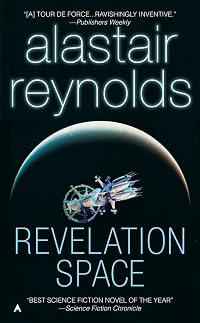
Revelation Space
by Alastair Reynolds
Revelation Space (1), Revelation Space, chronological order (2524-2567)
On This Page
Description
Nine hundred thousand years ago, something annihilated the Amarantin civilization just as it was on the verge of discovering space flight. Now one scientist, Dan Sylveste, will stop at nothing to solve the Amarantin riddle before ancient history repeats itself. With no other resources at his disposal, Sylveste forges a dangerous alliance with the cyborg crew of the starship Nostalgia for Infinity. But as he closes in on the secret, a killer closes in on him because the Amarantin were show more destroyed for a reason. And if that reason is uncovered, the universe-and reality itself-could be irrevocably altered. show lessTags
Recommendations













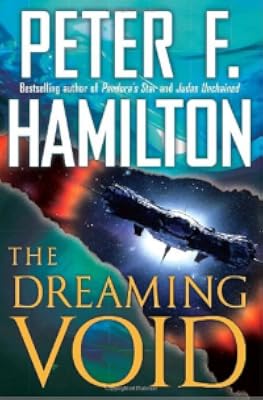
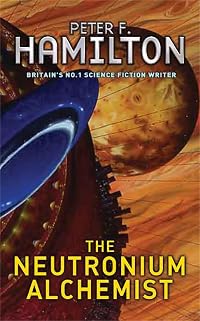

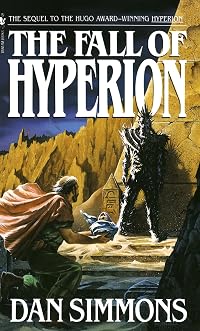

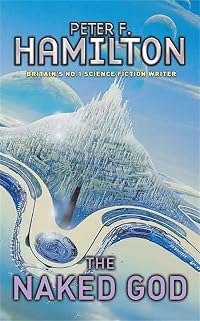


Member Recommendations
reading_fox Dark Space opera, splintered human factions and impressive technology


Member Reviews
When I first read this, twenty-plus years ago, it left me struck by the deep world-building, well-imagined and described tech and settings, and impressed by a pretty original take on some old themes. Space opera on a big scale is a joy when done with care and completeness; that happens here. I remember being dismayed, however, disoriented by jumps in chronology and setting as well as unlikeable main characters. Having read many more books by Reynolds now, I decided to reread his opening salvo.
My original impressions mostly held true, and it is a joy to note that his presentation got better as he published. The non-linearity that marks (and mars) the first half of "Revelation Space," coupled with no real explanations for an entire show more future, human civilization with its tech, factions, and recent history, make this a tough read and a bumpy entry to Reynolds' 'Revelation Space' universe; I would recommend new readers begin with his later-published but more-accessible "Chasm City." Why Reynolds did not bother to say what his 'Demarchists' are in this story escapes me, but he does get there in later works. That said, this is a truly engaging story with all the fixings. In many ways, the best thing about this imperfect work is that he creates an appetite for more: more answers, more development, more of all of it. And for my money, aliens _should_ be inscrutable and truly Other; well-played, Mr. Reynolds. show less
My original impressions mostly held true, and it is a joy to note that his presentation got better as he published. The non-linearity that marks (and mars) the first half of "Revelation Space," coupled with no real explanations for an entire show more future, human civilization with its tech, factions, and recent history, make this a tough read and a bumpy entry to Reynolds' 'Revelation Space' universe; I would recommend new readers begin with his later-published but more-accessible "Chasm City." Why Reynolds did not bother to say what his 'Demarchists' are in this story escapes me, but he does get there in later works. That said, this is a truly engaging story with all the fixings. In many ways, the best thing about this imperfect work is that he creates an appetite for more: more answers, more development, more of all of it. And for my money, aliens _should_ be inscrutable and truly Other; well-played, Mr. Reynolds. show less
Revelation Space is a grandiose, paranoid, cosmological space opera that stares directly into the abyss.
Dan Sylveste is an genius archaeologist, stranded on a frontier colony where he is investigating the dead civilization of the Amarantin, a species of avian-descended sapients who were wiped out a million year ago by an unspecified event. Sylveste's obsession makes him vulnerable, and he runs afoul of expedition politics, becoming a prisoner. His past is tangled with another galactic anomaly, the Shrouds, areas of fractally tortured space time that appear to be protecting something. Sylveste went near the shroud, near enough to be given a message he cannot comprehend, in a place he calls Revelation Space. Also intertwined with his past show more is the starship Nostalgia for Infinity, a kilometers long flying city fallen into near complete degeneracy, inhabited by a handful of cybernetically altered crew.
Ilia Volyova is one of the crew of the Nostalgia for Infinity. Her job is the care of the cache-weapons, 40 artifacts of unknown origin with capabilities that start at "planet-cracking" and escalate from there. Her last gunnery officer was driven insane, scrawling messages about an entity called the Sun Stealer, and Ilia needs a new recruit. She also needs to find a cure for their captain, who has fallen ill to a virulent nanotech disease called the Melding Plague. Sylveste, or more properly an AI-backup of Sylveste's father, is the only man with the cure.
Ana Khouri is a former soldier turned assassin. With a paperwork error separating her from her husband by lightyears, she sees no point in living, which makes her the ideal recruit for an entity called the Mademoiselle. Her mission is simple: infiltrate the Nostalgia for Infinity, take it to Sylveste, and kill him.
Their stories and secrets build towards a conclusion around an alien artifact disguised as a small planet, an array of machines protecting a threshold to an unspeakable truth. The galaxy of Revelation Space is sprinkled with ruins, but empty of life. That is because something called The Inhibitors, ancient machines from the dawn of time, control organic life by destroying any cultures that advance too far. The Amarantin tripped this threshold; humanity has done so as well.
I've parodied Reynolds as "war-criminals war-crimeing", and this a dark book, but it's also an incredibly stylish piece of imagination. show less
Dan Sylveste is an genius archaeologist, stranded on a frontier colony where he is investigating the dead civilization of the Amarantin, a species of avian-descended sapients who were wiped out a million year ago by an unspecified event. Sylveste's obsession makes him vulnerable, and he runs afoul of expedition politics, becoming a prisoner. His past is tangled with another galactic anomaly, the Shrouds, areas of fractally tortured space time that appear to be protecting something. Sylveste went near the shroud, near enough to be given a message he cannot comprehend, in a place he calls Revelation Space. Also intertwined with his past show more is the starship Nostalgia for Infinity, a kilometers long flying city fallen into near complete degeneracy, inhabited by a handful of cybernetically altered crew.
Ilia Volyova is one of the crew of the Nostalgia for Infinity. Her job is the care of the cache-weapons, 40 artifacts of unknown origin with capabilities that start at "planet-cracking" and escalate from there. Her last gunnery officer was driven insane, scrawling messages about an entity called the Sun Stealer, and Ilia needs a new recruit. She also needs to find a cure for their captain, who has fallen ill to a virulent nanotech disease called the Melding Plague. Sylveste, or more properly an AI-backup of Sylveste's father, is the only man with the cure.
Ana Khouri is a former soldier turned assassin. With a paperwork error separating her from her husband by lightyears, she sees no point in living, which makes her the ideal recruit for an entity called the Mademoiselle. Her mission is simple: infiltrate the Nostalgia for Infinity, take it to Sylveste, and kill him.
Their stories and secrets build towards a conclusion around an alien artifact disguised as a small planet, an array of machines protecting a threshold to an unspeakable truth. The galaxy of Revelation Space is sprinkled with ruins, but empty of life. That is because something called The Inhibitors, ancient machines from the dawn of time, control organic life by destroying any cultures that advance too far. The Amarantin tripped this threshold; humanity has done so as well.
I've parodied Reynolds as "war-criminals war-crimeing", and this a dark book, but it's also an incredibly stylish piece of imagination. show less
This is a well-plotted book full of excellent ideas in a truly mind-blowing universe. It suffers from a pedestrian writing style, a lot of repetition, and a male/female romantic relationship straight out of the Golden Age of SF. Fortunately, there's not much romance, the redundant bits are skippable, and I'd rather have pedestrian writing with good ideas than lambent prose around an empty core.
As I read, I kept marveling at the internal consistency of the science and how the world-building followed so logically from the scientific phenomena the author described. It seemed that the author would have to be a working physicist to hold all the necessary information in his head and work out the various implications so thoroughly. Then I show more finished the book, did some googling, and was pleased to be right. It's a delight to see a scientist's mind at work (the breadth and depth of knowledge, the flexibility and daring to follow an idea to its logical conclusion) outside of the strictures of academia. show less
As I read, I kept marveling at the internal consistency of the science and how the world-building followed so logically from the scientific phenomena the author described. It seemed that the author would have to be a working physicist to hold all the necessary information in his head and work out the various implications so thoroughly. Then I show more finished the book, did some googling, and was pleased to be right. It's a delight to see a scientist's mind at work (the breadth and depth of knowledge, the flexibility and daring to follow an idea to its logical conclusion) outside of the strictures of academia. show less
I like SF that tells me something I don’t already know, especially about myself. I think there are some big ideas out there, but you have to be in the right place or vantage point to understand them. Sometimes you need a story like “Revelation Space” to get to that vantage point:
Q Why does bad stuff happen?
A Because if it didn't the future would not be a mystery, i.e., Already Known.
Q Would that be a bad thing?
A Yes, because you wouldn't have a life. Life is the interplay of good and bad.
I nearly took the name `DanSylveste` putting two words into one again; it was an apt choice; as a character he is a monomaniac with deficient eyes (machines), who cares nothing for others feelings or needs, an egotist par excellence. Pretty much show more me, bar the agoraphobia! The novels show humanity turning into different species of transhumans: the `Outers` extreme modification of body for starship voyages, the `Conjoiners` going far further into brains part machine part human, & all such minds interlinked as a `hive` mind etc.
The Revelation books feature an idea that makes me wonder: why is the Galaxy not full of Sentient lifeforms? In a few - max - million years, even with slow interstellar travel, we could colonise this Galaxy. So why has no other species done it? The inhibitors are self-replicating machines with one purpose: to stop any Species doing just that. They act as antibiotics, to stop large scale interstellar `viruses` - er, us - from spreading to far. The problem is, that it does rather explain why we seem so `alone`? The inhibitors just wait, utterly silent, for yet another bloody sentient species to evolve in the galaxy, then they wipe it out! Intersteller `weed wackers` & we are the next weeds, to invade the garden...
God is a singularity of the extremes in complete harmony, so the more you know of the extremes, the more you can know of God. Having said that, don’t test my hypothesis...“Revelation Space” stands out when it comes to arguing solid and plausible scientific concepts. The story that is narrated is also really attractive, although the characters are mere puppets of the narrative. I have also found especially remarkable those fragments in which the author rambles freely on astrophysics; you can see that he is an expert in the field and that he knows how to explain it with talent. What is the downside then? Lack of pace and excess of chaff.
Of its around 600 pages I’d say that about 200 are pure chaff. The novel’s narrative has a lot of great points, but the action between them becomes soporific; as if Reynolds was afraid that the pace would be too intense for us... I do not know if this will be the fault of the author, or if the editor has got something to do with it. The fact is that between each fast-paced and revealing moment the pages follow each other with extreme languor. Part of the fault of this lack of rhythm falls on the inner dialogues of the characters. And it is not that the characters talk to themselves, but that they debate heatedly with a series of strange stream-of-consciousness narrative. Third-person consciousness projecting is similar to a hologram, i.e., it’s directly implanted by means of a chip in the head of the protagonists, and they keep talking with people who are not in the narrative. That is, the character interacts and speaks with another character while responding to the inner voice of a brain chip. Infuriating. But this problem happens a lot in SF.
I enjoyed the ideas in the series, but I feel it's only in his more recent novels that Reynolds has managed to create characters you give a shit about - some of the early Revelation Space books like the first and second volumes are a real chore to slog through. Great at world building (giant mobile cathedrals circling a planet; that needs a Hollywood FX treatment and no mistake!) but not so good at characterisation (the opposite of Dan Simmons in that respect). That said, “Zima Blue” is one of the best SF short stories I've read in recent years.
Back in the day I did read the Mars trilogy in full (now tetralogy), which is not exactly the height of literary agility (rather it narrated a kind of Big Brother house with scientists). But “Revelation Space” was really hard in that respect and not in a good way.
SF = Speculative Fiction. show less
Q Why does bad stuff happen?
A Because if it didn't the future would not be a mystery, i.e., Already Known.
Q Would that be a bad thing?
A Yes, because you wouldn't have a life. Life is the interplay of good and bad.
I nearly took the name `DanSylveste` putting two words into one again; it was an apt choice; as a character he is a monomaniac with deficient eyes (machines), who cares nothing for others feelings or needs, an egotist par excellence. Pretty much show more me, bar the agoraphobia! The novels show humanity turning into different species of transhumans: the `Outers` extreme modification of body for starship voyages, the `Conjoiners` going far further into brains part machine part human, & all such minds interlinked as a `hive` mind etc.
The Revelation books feature an idea that makes me wonder: why is the Galaxy not full of Sentient lifeforms? In a few - max - million years, even with slow interstellar travel, we could colonise this Galaxy. So why has no other species done it? The inhibitors are self-replicating machines with one purpose: to stop any Species doing just that. They act as antibiotics, to stop large scale interstellar `viruses` - er, us - from spreading to far. The problem is, that it does rather explain why we seem so `alone`? The inhibitors just wait, utterly silent, for yet another bloody sentient species to evolve in the galaxy, then they wipe it out! Intersteller `weed wackers` & we are the next weeds, to invade the garden...
God is a singularity of the extremes in complete harmony, so the more you know of the extremes, the more you can know of God. Having said that, don’t test my hypothesis...“Revelation Space” stands out when it comes to arguing solid and plausible scientific concepts. The story that is narrated is also really attractive, although the characters are mere puppets of the narrative. I have also found especially remarkable those fragments in which the author rambles freely on astrophysics; you can see that he is an expert in the field and that he knows how to explain it with talent. What is the downside then? Lack of pace and excess of chaff.
Of its around 600 pages I’d say that about 200 are pure chaff. The novel’s narrative has a lot of great points, but the action between them becomes soporific; as if Reynolds was afraid that the pace would be too intense for us... I do not know if this will be the fault of the author, or if the editor has got something to do with it. The fact is that between each fast-paced and revealing moment the pages follow each other with extreme languor. Part of the fault of this lack of rhythm falls on the inner dialogues of the characters. And it is not that the characters talk to themselves, but that they debate heatedly with a series of strange stream-of-consciousness narrative. Third-person consciousness projecting is similar to a hologram, i.e., it’s directly implanted by means of a chip in the head of the protagonists, and they keep talking with people who are not in the narrative. That is, the character interacts and speaks with another character while responding to the inner voice of a brain chip. Infuriating. But this problem happens a lot in SF.
I enjoyed the ideas in the series, but I feel it's only in his more recent novels that Reynolds has managed to create characters you give a shit about - some of the early Revelation Space books like the first and second volumes are a real chore to slog through. Great at world building (giant mobile cathedrals circling a planet; that needs a Hollywood FX treatment and no mistake!) but not so good at characterisation (the opposite of Dan Simmons in that respect). That said, “Zima Blue” is one of the best SF short stories I've read in recent years.
Back in the day I did read the Mars trilogy in full (now tetralogy), which is not exactly the height of literary agility (rather it narrated a kind of Big Brother house with scientists). But “Revelation Space” was really hard in that respect and not in a good way.
SF = Speculative Fiction. show less
I’ve read an enormous amount of science fiction over the years, but I don’t think I have ever read a “harder” hard science fiction novel than Revelation Space. I’m somewhat shocked that this book was published in 2000, but I’d never heard of it, or its sequels.
This book is enormously complicated, with numerous very challenging story arcs that ultimately converge in the last 50 pages. Set in a distant future in which humanity has colonized the universe, the main theme of the work involves a planetary archeologist named Dan Sylveste, who is excavating an alien civilization on the planet Regulam. The aliens were destroyed by a solar “event” many millennia past. Elsewhere, there are shadowy figure planning the murder of show more Sylveste, for reasons that gradually make themselves known.
This is HARD science fiction with, at times, very detailed astrophysics minutely “explained”. In fact, the last 50 pages become so detailed and convoluted, that I doubt a fraction of 1% of the readers can possibly hope to follow. Nevertheless, the characters are good and the story engrossing at times. It did occasionally lag and coupled with the extreme technical discussion, made for something of a chore to get through. Tightening up the story and “dumbing down” the physics would have raised this to a four star effort. show less
This book is enormously complicated, with numerous very challenging story arcs that ultimately converge in the last 50 pages. Set in a distant future in which humanity has colonized the universe, the main theme of the work involves a planetary archeologist named Dan Sylveste, who is excavating an alien civilization on the planet Regulam. The aliens were destroyed by a solar “event” many millennia past. Elsewhere, there are shadowy figure planning the murder of show more Sylveste, for reasons that gradually make themselves known.
This is HARD science fiction with, at times, very detailed astrophysics minutely “explained”. In fact, the last 50 pages become so detailed and convoluted, that I doubt a fraction of 1% of the readers can possibly hope to follow. Nevertheless, the characters are good and the story engrossing at times. It did occasionally lag and coupled with the extreme technical discussion, made for something of a chore to get through. Tightening up the story and “dumbing down” the physics would have raised this to a four star effort. show less
Oh, the memory of the chills that ran up and down my spine when my sweetheart-at-the-time handed me this book. I couldn't tell you whether the cover art or the title thrilled me more. And then to find that the contents were worthy of both! Suddenly I had a new favorite living science fiction author. And this was his very first novel!
That was ten years ago. And I've lost track of how many times I have re-read Revelation Space since. Each time, I get completely lost in the atmosphere of awe, and the intricate noir-ish plotlines of Dan Sylveste, a noir Indiana Jones in space, Ana Khouri badass military bee-hatch and assassin, and Ilia Volyova triumvir of the giant lighthugger spaceship, the Nostalgia for Infinity. To say nothing of the show more grotesque, baroque horrors of the Melding Plague, a hybrid of biological and computer virus that corrupts flesh and machinery in equal measure and, as its name implies, melds the one into the other, resulting in a captain that is becoming one with his spaceship, and a city full of buildings that have warped to resemble giant vertical pieces of driftwood. I mean, wow!
And the book holds up to multiple re-reads, both in its own right and as the first in a trilogy. As is so often the case with my favorite novels, re-reading only enriches Revelation Space. To read it for the first time is to be distracted into focusing on Dan Sylveste and his travails of leading a vast program of space archaeology and holding political power on a distant research planet, losing that power, and being induced to reveal his lifetime of staggering secrets. All of this forms the main plot of the novel, but it is the stories of Ana Khouri and of Volyova and the rest of the crew of Nostalgia for Infinity that continue onward in Redemption Ark and Absolution Gap. Sylveste's deeds and revelations are just what sets them in motion.
So this time, as Sylveste realized just how important the extinct alien race, the Amarantin*, are, and the greater theme of what came to be known as the Revelation Space Trilogy (coming up with a frankly chilling explanation for the Fermi Paradox) gets teased out, I focused more on Ana, whose story is frankly tragic: a soldier, wounded and temporarily cryo-suspended; shipped light years from home through a clerical error and separated from her husband, probably forever; manipulated first into acting as a sport-assassin for what amounts to a far-future reality TV show and then -- by two completely different parties -- into joining the crew of the Nostalgia for Infinity. She is the only character to appear in all three volumes of the trilogy and its side-quel, Chasm City, but is kind of the Frodo of the piece (though she gets some moments; see below), mostly manipulated by others and only just keeping a piece of herself back -- though with such manipulators as she faces, that's probably quite heroic right there.
And our Frodo is thrown up against some of the most magnificently bitchy characters in all of science fiction: arrogant, selfish scientists (some of them acting from beyond the grave!), singleminded obsessive jackasses, would-be murderers with cosmic vendettas, sociopathic and psychopathic maniacs in charge of weapons that could destroy whole planets without even needing a change of batteries. The dialogue among these characters is just the best:
"You prick," Khouri said, spitting in the process. "You narrowminded, egotistical prick."
"Congratulations," Sylveste said. "Now you can progress to words with six syllables."
And this is before she has a plasma rifle pointed at her sort-of-ally's crotch!
And then there are the set pieces, which never get old -- the discovery of the ancient Amarantin city on the planet Resurgam; the Shadowplay chase through Chasm City and its "Mulch"; the unbelievably cool spacesuit-cum-shuttles by which Volyova and Khouri pull a Baumgartner to the surface of Resurgam: the vast baroque bulk of Nostalgia for Infinity and its haunting secret, which is also the secret not only of the Amarantin but of yet another and even more mysterious alien race from Sylveste's past. Like his fellow "New Weird" author China Mieville, Reynolds thinks big -- but Reynolds was a working astronomer, still at the European Space Agency while writing this book, so his weird is cosmic in scale and scientifically plausible. He hit me like a piece of space debris at hyperspace speeds and he's never disappointed me, as numerous entries on this blog demonstrate.
All that and he's a lovely bloke on Twitter (@aquilarift). You'll probably hear a lot more about him from me this year
*And coming off of Olaf Stapledon's Last and First Men as I am, I couldn't help but imagine the Amarantin as his Seventh (Flying) Men. Hey, why not? It's my brain. show less
That was ten years ago. And I've lost track of how many times I have re-read Revelation Space since. Each time, I get completely lost in the atmosphere of awe, and the intricate noir-ish plotlines of Dan Sylveste, a noir Indiana Jones in space, Ana Khouri badass military bee-hatch and assassin, and Ilia Volyova triumvir of the giant lighthugger spaceship, the Nostalgia for Infinity. To say nothing of the show more grotesque, baroque horrors of the Melding Plague, a hybrid of biological and computer virus that corrupts flesh and machinery in equal measure and, as its name implies, melds the one into the other, resulting in a captain that is becoming one with his spaceship, and a city full of buildings that have warped to resemble giant vertical pieces of driftwood. I mean, wow!
And the book holds up to multiple re-reads, both in its own right and as the first in a trilogy. As is so often the case with my favorite novels, re-reading only enriches Revelation Space. To read it for the first time is to be distracted into focusing on Dan Sylveste and his travails of leading a vast program of space archaeology and holding political power on a distant research planet, losing that power, and being induced to reveal his lifetime of staggering secrets. All of this forms the main plot of the novel, but it is the stories of Ana Khouri and of Volyova and the rest of the crew of Nostalgia for Infinity that continue onward in Redemption Ark and Absolution Gap. Sylveste's deeds and revelations are just what sets them in motion.
So this time, as Sylveste realized just how important the extinct alien race, the Amarantin*, are, and the greater theme of what came to be known as the Revelation Space Trilogy (coming up with a frankly chilling explanation for the Fermi Paradox) gets teased out, I focused more on Ana, whose story is frankly tragic: a soldier, wounded and temporarily cryo-suspended; shipped light years from home through a clerical error and separated from her husband, probably forever; manipulated first into acting as a sport-assassin for what amounts to a far-future reality TV show and then -- by two completely different parties -- into joining the crew of the Nostalgia for Infinity. She is the only character to appear in all three volumes of the trilogy and its side-quel, Chasm City, but is kind of the Frodo of the piece (though she gets some moments; see below), mostly manipulated by others and only just keeping a piece of herself back -- though with such manipulators as she faces, that's probably quite heroic right there.
And our Frodo is thrown up against some of the most magnificently bitchy characters in all of science fiction: arrogant, selfish scientists (some of them acting from beyond the grave!), singleminded obsessive jackasses, would-be murderers with cosmic vendettas, sociopathic and psychopathic maniacs in charge of weapons that could destroy whole planets without even needing a change of batteries. The dialogue among these characters is just the best:
"You prick," Khouri said, spitting in the process. "You narrowminded, egotistical prick."
"Congratulations," Sylveste said. "Now you can progress to words with six syllables."
And this is before she has a plasma rifle pointed at her sort-of-ally's crotch!
And then there are the set pieces, which never get old -- the discovery of the ancient Amarantin city on the planet Resurgam; the Shadowplay chase through Chasm City and its "Mulch"; the unbelievably cool spacesuit-cum-shuttles by which Volyova and Khouri pull a Baumgartner to the surface of Resurgam: the vast baroque bulk of Nostalgia for Infinity and its haunting secret, which is also the secret not only of the Amarantin but of yet another and even more mysterious alien race from Sylveste's past. Like his fellow "New Weird" author China Mieville, Reynolds thinks big -- but Reynolds was a working astronomer, still at the European Space Agency while writing this book, so his weird is cosmic in scale and scientifically plausible. He hit me like a piece of space debris at hyperspace speeds and he's never disappointed me, as numerous entries on this blog demonstrate.
All that and he's a lovely bloke on Twitter (@aquilarift). You'll probably hear a lot more about him from me this year
*And coming off of Olaf Stapledon's Last and First Men as I am, I couldn't help but imagine the Amarantin as his Seventh (Flying) Men. Hey, why not? It's my brain. show less
Am ezitat mult între 4 și 5, dar totuși am rămas la 4 pentru că uneori a trebuit să trag de mine ca să citesc în continuare (mi-a luat 5 zile, pt mine e mult).
În rezumat, caroseria (worldbuilding, background, tehnologie, fizică, astronomie, originalitate exterioară) este senzațională, de 5/5, dar motorul (povestea în sine - destul de SF-generică dacă o despoi de brizbrizuri) e mediocru 3,5, maxim 4/5 și nici cu transmisia nu stă prea bine (personaje și dialoguri, maxim 3/5). Per ansamblu o carte foarte bună totuși (dar nu ”amazing”, povestea o voi uita în câteva săptămâni) și care merită citită.
În rezumat, caroseria (worldbuilding, background, tehnologie, fizică, astronomie, originalitate exterioară) este senzațională, de 5/5, dar motorul (povestea în sine - destul de SF-generică dacă o despoi de brizbrizuri) e mediocru 3,5, maxim 4/5 și nici cu transmisia nu stă prea bine (personaje și dialoguri, maxim 3/5). Per ansamblu o carte foarte bună totuși (dar nu ”amazing”, povestea o voi uita în câteva săptămâni) și care merită citită.
Members
- Recently Added By
Published Reviews
ThingScore 75
Alastair Reynolds is a name to watch. Mixing shades of Banks and Gibson with gigatons of originality, he has pulled off that most difficult of SF tropes, believable aliens. [...] Reynolds supplies hard-science answers that are plausible, entertaining and clever; he even manages to make different flavours of neutrino sound interesting.
added by Widsith
Lists

Best Science Fiction Novels
816 works; 430 members

The Guardian's 1000 Novels Everyone Must Read
1,005 works; 552 members

Space Colonization
100 works; 26 members

S.F. Masterworks (Complete)
229 works; 15 members

Top Five Books of 2014
1,064 works; 398 members

Arthur C. Clarke Award Winners and Shortlisted Books
219 works; 14 members

XB-1: Osobnosti zanru doporucuji
67 works; 1 member

Broderick and Di Filippo's Science Fiction: The 101 Best Novels 1985-2010
103 works; 7 members

SF Masterworks
193 works; 8 members

Books Read in 2017
4,249 works; 130 members

Books I Read Before The Invention Of The Internet.
144 works; 1 member
Favorite Science Fiction
457 works; 223 members

Speculative Fiction to Read
706 works; 31 members
Author Information

142+ Works 40,193 Members
Some Editions
Awards and Honors
Awards
Distinctions
Series


Belongs to Publisher Series
SF Masterworks (New design)
ハヤカワ文庫 SF (1533)
Work Relationships
Is contained in
Contains
Common Knowledge
- Canonical title
- Revelation Space
- Original title
- Revelation Space
- Original publication date
- 2000-03-09
- People/Characters
- Dr. Dan Sylveste; Ana Khouri; Ilia Volyova; Pascale Sylveste; Yuugi Sajaki; Calvin Sylveste (show all 21); Mademoiselle; Sun Stealer; Sluka; Nils Girardieau; Dr. Janequin Henry; John Brannigan; K.C. Ng; Boris Nagorny; Tanner Mirabel; Fazil Volyova; Taraschi; Abdul Hegazi; Carlos Manoukhian; Kjarval; Sudjic
- Important places
- Resurgam (planet); Nostalgia for Infinity (lighthugger ship); Yellowstone (planet); Chasm City; Cerberus
- First words
- There was a razorstorm coming in.
- Last words
- (Click to show. Warning: May contain spoilers.)The red ground--fluctuating, shimmering as ever--dropped smoothly away.
- Blurbers
- Baxter, Stephen; McAuley, Paul J.; Wolfe, Gene; Strahan, Jonathan
- Original language
- English
- Canonical DDC/MDS
- 823.087625
Classifications
- Genres
- Science Fiction, Fiction and Literature
- DDC/MDS
- 823.087625 — Literature & rhetoric English & Old English literatures English fiction By type Genre fiction Adventure fiction Speculative fiction Science fiction Space opera
- LCC
- PR6068 .E95 .R49 — Language and Literature English English Literature 1961-2000
- BISAC
Statistics
- Members
- 6,084
- Popularity
- 2,096
- Reviews
- 164
- Rating
- (3.81)
- Languages
- 12 — Czech, Dutch, English, Finnish, French, German, Hungarian, Japanese, Polish, Russian, Spanish, Swedish
- Media
- Paper, Audiobook, Ebook
- ISBNs
- 49
- UPCs
- 1
- ASINs
- 14