
Nova
by Samuel R. Delany
On This Page
Description
Given that the suns of Draco stretch almost sixteen light years from end to end, it stands to reason that the cost of transportation is the most important factor driving the thirty-second century. And since Illyrion is the element most needed for space travel, Lorq von Ray is plenty willing to fly through the core of a recently imploded sun in order to obtain seven tons of it. The potential for profit is so great that Lorq has little difficulty cobbling together an alluring crew, including a show more gypsy musician and a moon-obsessed scholar interested in the ancient art of writing a novel. What the crew doesn't know is that Lorq's quest is actually fueled by a private revenge so consuming that he'll stop at nothing to achieve it. In the grandest manner of speculative fiction, Nova is a wise and witty classic that casts a fascinating new light on some of humanity's oldest truths and enduring myths. show lessTags
Recommendations




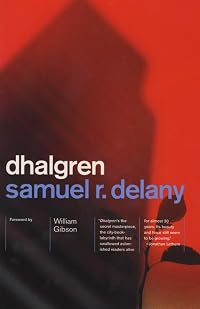
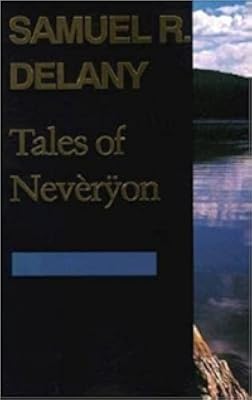
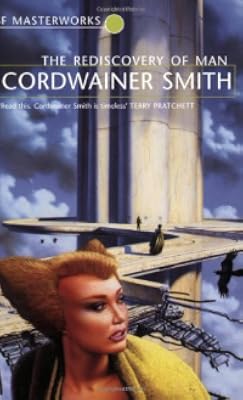
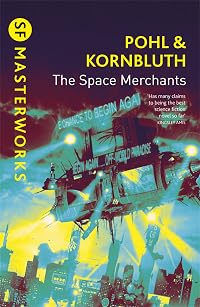











Member Recommendations
Member Reviews
There is much I love about Delany. No one else I've read has his particular gift for telling a story while inspiring you to reflect on how stories are told while the characters think about the stories they are in as well as the stories they've heard which, while unique to this book, are also echoes of stories that we have heard...you get my drift. He does this in a way that is engaging and interesting (to me). AND, I gotta say, I do feel the lack of flesh and blood characters (as opposed to archetypes and speakers of ideas) and sometimes the dialogue (as between Lorq and Ruby) is so bad that I have to think, "Is this a commentary on something? Is there any reason this couldn't have been done better?" Which are small quibbles, and some show more quibbles about things that Delany, frankly, is not about (rather than something he tried and failed to do). So, bravo, Samuel (this one written when he was 25 years old or so...Jesus!). Onto Triton...Neveryon...eventually revisiting Dhalgren, perhaps... show less
3.5/5
In this short little space opera, the colonized universe is separated into three political zones defined by their distance from Earth's sphere of influence. The cost of transportation within the zones and between them is immense, dominated by two elite families who have respective monopolies on spacecraft construction, and the rare fuel that is used to fuel them and all large scale machinery. In a bid for power, the heir to one of these families, Lorq Von Ray, discovers that this fuel (Illyrion) can be found and potentially collected in enormous quantities from the center of active supernovas. In his quest to do so, he assembles a group of ragtag swabbies who operate his spacecraft with neural jacks that are subdermally installed show more into their bodies. With the blood feud between these families reignited, it's a race against the clock and each other to hold the destiny of the known universe in their hands.
Left in the hands of a lesser writer I could see the conventional premise being downright boring, but thankfully Delany is able to do a lot which what is at its heart a pulp adventure flick. Delany's modernist prose style is married with a mythical, theatrical tone that gives the novel both some chewy density as well as a classical flare that I wasn't necessarily expecting but most of the time found myself enjoying. He also created a really memorable cast of characters outside of the captain himself. There's the Romani kid from Earth with a gravelly voice who play an instrument called a Syrnx, a representation of Pan's Flute that evokes the sounds, sights, and smells of ancient Earth that entertains the crew and connects them to their shared history. There's the wandering academic searching for legitimacy to write a novel of his own, a now archaic way of telling a story. There's the tarot-reading ace pilot and her creature keeping partner, and the twins from the outer colonies who crave an inhaled hallucinogenic known as Bliss. The members of the crew are downright interesting and believable, complete with their own flaws, ticks, and traits.
Delany takes time to explicitly use some of the technology and political landscape he invents to comment on real-world affairs. The subdermal studs or jacks that the working class have allow them to be much more connected tangibly to their work, creates an ease of employment no matter the location, and prevents them from being disenfranchised by changes in technology or market force. Despite a perceived cultural black hole that is commented on throughout the novel, workers in Nova are more connected to the means of production than they were at any other time in history. Here, Delany has created a technology that doesn't strip the workers of their labor rights, but actually empowers them from a Marxist perspective. Delany also uses the difference between the crew and their billionaire captain to explicitly discuss race and class, both of which play a tangible role in people's lives even in the future
Now, none of this is to say that Nova is without its flaws. There are certainly sections of the novel that are slow in pace and style, hardly the high action that was promised on the back cover, and plenty of cultural references that date it back to the 1960's, the Mamas and the Papas reference in particular. While I loved most of the characterization work, I would've liked if Von Ray's antagonistic foil, the Red Shift heir, referred to as Prince, weren't quite so monochromatic and unsympathetic. I'm also not sold on the ending of the novel, which is tied up in a literary conceit that felt to me as inorganic and forced in comparison to the rest of the narrative. I had the feeling that Delany is better than this, that he's capable of more, but then again he wrote this when he was 25 so I'm sure that he was still coming into form.
Nova is an overly intellectual and sometimes stymieing work that despite all of its blessing felt directionless in the end. There are so many different promising threads here that Delany starts to weave together, I'm just not sure he was able to finish tying them into a purposeful conclusion. That being said, despite its complexity, it's a very approachable work in comparison to Triton, and if read for the prose and characters first I think you can find a lot here to enjoy. An oddball to be sure. show less
In this short little space opera, the colonized universe is separated into three political zones defined by their distance from Earth's sphere of influence. The cost of transportation within the zones and between them is immense, dominated by two elite families who have respective monopolies on spacecraft construction, and the rare fuel that is used to fuel them and all large scale machinery. In a bid for power, the heir to one of these families, Lorq Von Ray, discovers that this fuel (Illyrion) can be found and potentially collected in enormous quantities from the center of active supernovas. In his quest to do so, he assembles a group of ragtag swabbies who operate his spacecraft with neural jacks that are subdermally installed show more into their bodies. With the blood feud between these families reignited, it's a race against the clock and each other to hold the destiny of the known universe in their hands.
Left in the hands of a lesser writer I could see the conventional premise being downright boring, but thankfully Delany is able to do a lot which what is at its heart a pulp adventure flick. Delany's modernist prose style is married with a mythical, theatrical tone that gives the novel both some chewy density as well as a classical flare that I wasn't necessarily expecting but most of the time found myself enjoying. He also created a really memorable cast of characters outside of the captain himself. There's the Romani kid from Earth with a gravelly voice who play an instrument called a Syrnx, a representation of Pan's Flute that evokes the sounds, sights, and smells of ancient Earth that entertains the crew and connects them to their shared history. There's the wandering academic searching for legitimacy to write a novel of his own, a now archaic way of telling a story. There's the tarot-reading ace pilot and her creature keeping partner, and the twins from the outer colonies who crave an inhaled hallucinogenic known as Bliss. The members of the crew are downright interesting and believable, complete with their own flaws, ticks, and traits.
Delany takes time to explicitly use some of the technology and political landscape he invents to comment on real-world affairs. The subdermal studs or jacks that the working class have allow them to be much more connected tangibly to their work, creates an ease of employment no matter the location, and prevents them from being disenfranchised by changes in technology or market force. Despite a perceived cultural black hole that is commented on throughout the novel, workers in Nova are more connected to the means of production than they were at any other time in history. Here, Delany has created a technology that doesn't strip the workers of their labor rights, but actually empowers them from a Marxist perspective. Delany also uses the difference between the crew and their billionaire captain to explicitly discuss race and class, both of which play a tangible role in people's lives even in the future
Now, none of this is to say that Nova is without its flaws. There are certainly sections of the novel that are slow in pace and style, hardly the high action that was promised on the back cover, and plenty of cultural references that date it back to the 1960's, the Mamas and the Papas reference in particular. While I loved most of the characterization work, I would've liked if Von Ray's antagonistic foil, the Red Shift heir, referred to as Prince, weren't quite so monochromatic and unsympathetic. I'm also not sold on the ending of the novel, which is tied up in a literary conceit that felt to me as inorganic and forced in comparison to the rest of the narrative. I had the feeling that Delany is better than this, that he's capable of more, but then again he wrote this when he was 25 so I'm sure that he was still coming into form.
Nova is an overly intellectual and sometimes stymieing work that despite all of its blessing felt directionless in the end. There are so many different promising threads here that Delany starts to weave together, I'm just not sure he was able to finish tying them into a purposeful conclusion. That being said, despite its complexity, it's a very approachable work in comparison to Triton, and if read for the prose and characters first I think you can find a lot here to enjoy. An oddball to be sure. show less
It is easy to forget that one of the joys of science fiction is the immersion into worlds. The old Golden Age of Science Fiction (think Campbell, et al) was often nothing more than immersion and the science of dreams. And it is just as easy to forget that the immersion into strange, incomprehensible worlds that reflect our fears of what will happen to us did not start with the cyberpunk movement. In another golden age of science fiction (think Ellison, et al) authors were exploring new ideas in science, in the mind, and in writing. The balance of all these parts was often unachievable (depending on the ability of the writer) but, when executed, made the finest writing.
All this to preface a book that does a good job at all. Nova is not show more Delany’s greatest work, but it is a very good book. This is the story of a rich captain trying to fly his ship through a nova to obtain one of the rarest things in the universe and, consequently, bring down his main rivals. Others who have read this may quibble with me on some of my word choices in this brief description, but that speaks to the complexity of this relatively short novel, and the layers of understanding that can be brought to bear. What leaps this above the standard science fiction novel is that it does not so much focus on the destination, but on the journey, and on the people taking that journey. The trip in the star does not even occur until the last twenty pages. But, by then, the star and the destination are not important. Instead, what is important is what makes up this civilization, and the people that inhabit it. And what you will notice is that you are now a part of that civilization; of that universe. And even some throw away ideas (those ideas that seem to help the verisimilitude of the author’s universe) come back to be important points At times I couldn’t help but think that this is the writing that gave William Gibson his base. And that Delany would have written cyberpunk back then if computers were what they are now. This is not a light breezy read (though neither is it James Joyce). But worth the time to explore. show less
All this to preface a book that does a good job at all. Nova is not show more Delany’s greatest work, but it is a very good book. This is the story of a rich captain trying to fly his ship through a nova to obtain one of the rarest things in the universe and, consequently, bring down his main rivals. Others who have read this may quibble with me on some of my word choices in this brief description, but that speaks to the complexity of this relatively short novel, and the layers of understanding that can be brought to bear. What leaps this above the standard science fiction novel is that it does not so much focus on the destination, but on the journey, and on the people taking that journey. The trip in the star does not even occur until the last twenty pages. But, by then, the star and the destination are not important. Instead, what is important is what makes up this civilization, and the people that inhabit it. And what you will notice is that you are now a part of that civilization; of that universe. And even some throw away ideas (those ideas that seem to help the verisimilitude of the author’s universe) come back to be important points At times I couldn’t help but think that this is the writing that gave William Gibson his base. And that Delany would have written cyberpunk back then if computers were what they are now. This is not a light breezy read (though neither is it James Joyce). But worth the time to explore. show less
My reactions to reading this novel in 1998. Spoilers follow.
After reading this novel, I can understand why, in the 1960s, Delany had the literary fame he did. Again, in its poetic language and depiction of a subculture intimately linked to its machines, Delany, as in his Babel-17, reminded me of William Gibson, and an interview with Gibson I recently came across confirmed that influence. (In Gibson, it is computer cowboys. Here it is the jacks nearly everyone has to link to all kinds of machines.)
Delany does a lot of things in this novel: poetic descriptions, intriguing characters, an adventure tale, speculation on human culture and political and social trends, and, like Babel-17, also presents some ruminations on art – particularly show more the aesthetics of the novel.
In the poetry department, Delany eschews precise technical description (for instance, when describing Prince’s prosthetic arm) for suggestion and mood. He also never exactly describes Tyy and Sebastian’s pets.
The characters were all interesting: the intuitive, spontaneous artist Mouse (his sensory-syrnyx is so typical, in its modulation of light, sound, and odor, of sixties' interest in multi-sensory, psychedelic art); the overly introspective and planning – yet brilliant – would-be author Katrin (It was a nice touch to reveal, in a bit of self-referentialism, that the novel is, in fact, the novel he always is talking of writing and prepares for with thousands of notes), the tarot reading Tyy; the twins (actually triplets who long to be reunited with their missing brother) Idas and Lynceos; and the compelling triumvirate of the obsessive Lorq von Ray, Prince and his sister, Ruby Red. Lorq von Ray comes across as generally likeable but his obsessive plans to harvest the power source Illyrion from a nova seem callous and egotistical when he explains the social and political consequences of finding it. Yet, he can also be seen as advancing history and the human condition (what economists would call creative destruction) even though its for personal ego gratification. The Prince, seeming psychotic that he is, can be seen as defender of the stagnant status quo. There is a definite sexual attraction between Ruby Red and von Ray but that doesn’t stop her from trying to kill him (the novel’s quest/adventure plot is paced in very unexpected ways). Though Delany does not say it, I got the sense there was an unspoken sexual attraction of Prince for his sister. Their dispute with von Ray stems from them regarding von Ray as the inferior heir of a fortune based on the piracy of von Ray’s grandfather.
As an adventure tale, I was interested in the story though it is paced oddly with many scenes taking place on worlds before the final encounter with the Prince, Ruby Red, and the nova begins. That encounter does not take up nearly as much room as it probably would if another author wrote this tale. Delany shows a command of astrophysics (though I confess I don’t know what astrophysics involving novae consisted of in 1968), but he doesn’t let a knowledge of hard science stop him from speculating on a vastly expanded table of periodic elements or the reality of Tarot. Delany, mainly through Katrin (though he is the “author” of Nova, I can’t think his stalling, preparations and note-taking make him a surrogate for the prolific Delany), expands on theories of history, literature (including the statements that a novel should reflect its time’s theory of history and that good characterization is done through habitual, purposeful, and gratuitous actions), and society. I found especially interesting his idea that twentieth century man is alienated because his “work” so seldom leads to tangible, productive ends.
As 1960s novels are wont to do, there is an assumption that the art of the sixties represents a new plateau and renaissance for man. Thus in Delany’s Paris of 3166, the music of the Momma and the Poppas is still played and there is also a seeming allusion to the music of the Byrds. (Katrin notes that the 20th century was the first time that information technology began to bind mankind into a single society, a point that cyberpunks picked up on.) Another sixties' allusion is the obvious use of JFK’s assassination and Jacqueline Kennedy Onassis’ life for the segment on the assassination of Morgan by Underwood and the life of von Ray’s aunt, Cyana. show less
After reading this novel, I can understand why, in the 1960s, Delany had the literary fame he did. Again, in its poetic language and depiction of a subculture intimately linked to its machines, Delany, as in his Babel-17, reminded me of William Gibson, and an interview with Gibson I recently came across confirmed that influence. (In Gibson, it is computer cowboys. Here it is the jacks nearly everyone has to link to all kinds of machines.)
Delany does a lot of things in this novel: poetic descriptions, intriguing characters, an adventure tale, speculation on human culture and political and social trends, and, like Babel-17, also presents some ruminations on art – particularly show more the aesthetics of the novel.
In the poetry department, Delany eschews precise technical description (for instance, when describing Prince’s prosthetic arm) for suggestion and mood. He also never exactly describes Tyy and Sebastian’s pets.
The characters were all interesting: the intuitive, spontaneous artist Mouse (his sensory-syrnyx is so typical, in its modulation of light, sound, and odor, of sixties' interest in multi-sensory, psychedelic art); the overly introspective and planning – yet brilliant – would-be author Katrin (It was a nice touch to reveal, in a bit of self-referentialism, that the novel is, in fact, the novel he always is talking of writing and prepares for with thousands of notes), the tarot reading Tyy; the twins (actually triplets who long to be reunited with their missing brother) Idas and Lynceos; and the compelling triumvirate of the obsessive Lorq von Ray, Prince and his sister, Ruby Red. Lorq von Ray comes across as generally likeable but his obsessive plans to harvest the power source Illyrion from a nova seem callous and egotistical when he explains the social and political consequences of finding it. Yet, he can also be seen as advancing history and the human condition (what economists would call creative destruction) even though its for personal ego gratification. The Prince, seeming psychotic that he is, can be seen as defender of the stagnant status quo. There is a definite sexual attraction between Ruby Red and von Ray but that doesn’t stop her from trying to kill him (the novel’s quest/adventure plot is paced in very unexpected ways). Though Delany does not say it, I got the sense there was an unspoken sexual attraction of Prince for his sister. Their dispute with von Ray stems from them regarding von Ray as the inferior heir of a fortune based on the piracy of von Ray’s grandfather.
As an adventure tale, I was interested in the story though it is paced oddly with many scenes taking place on worlds before the final encounter with the Prince, Ruby Red, and the nova begins. That encounter does not take up nearly as much room as it probably would if another author wrote this tale. Delany shows a command of astrophysics (though I confess I don’t know what astrophysics involving novae consisted of in 1968), but he doesn’t let a knowledge of hard science stop him from speculating on a vastly expanded table of periodic elements or the reality of Tarot. Delany, mainly through Katrin (though he is the “author” of Nova, I can’t think his stalling, preparations and note-taking make him a surrogate for the prolific Delany), expands on theories of history, literature (including the statements that a novel should reflect its time’s theory of history and that good characterization is done through habitual, purposeful, and gratuitous actions), and society. I found especially interesting his idea that twentieth century man is alienated because his “work” so seldom leads to tangible, productive ends.
As 1960s novels are wont to do, there is an assumption that the art of the sixties represents a new plateau and renaissance for man. Thus in Delany’s Paris of 3166, the music of the Momma and the Poppas is still played and there is also a seeming allusion to the music of the Byrds. (Katrin notes that the 20th century was the first time that information technology began to bind mankind into a single society, a point that cyberpunks picked up on.) Another sixties' allusion is the obvious use of JFK’s assassination and Jacqueline Kennedy Onassis’ life for the segment on the assassination of Morgan by Underwood and the life of von Ray’s aunt, Cyana. show less
Delany's Nova is nearly exactly as old as me (written in 1966-7, first published in August 1968), and I am stunned at how well it has aged. Although it is a short novel, it is a sprawling space opera set in the 32nd century, and its optimistic forecast for a technologically accomplished galactic humanity is still one that seems believable today (as long as one can imagine our species surviving its several impending comeuppances). This is a book that's been on my radar as a vague "to be read someday" for many, many years. In a way, I'm glad I didn't read it any earlier, because it's all the more impressive for its sustained integrity.
There's no way that anyone would have considered making this a movie when it was published in the 1960s. show more But in the 21st century we have both the effects technology and the audience sophistication to make it worthwhile. The Wachowskis could totally pull it off. Still, Delany is resolutely literary in this book, with the character Katin serving as a metafictionally reflexive anchor: he aspires to write a novel, an anachronistic impossibility in his star-spanning culture.
The story has a fine central ensemble of characters in the crew of the starship Roc: gypsy musician, moonish intellectual, soft-spoken cartomancer, scarred quester, and so on. The villains are detestable enough, although they have their justifications, and the heroes are interestingly flawed. There are exotic and inspiring landscapes, architecture, and space vistas. It's got grittiness and high sentiment, social philosophy and action-adventure. There's even a metafictional brag that it contains some sort of "mystical symbolism." In any case, it's a worthwhile read. show less
There's no way that anyone would have considered making this a movie when it was published in the 1960s. show more But in the 21st century we have both the effects technology and the audience sophistication to make it worthwhile. The Wachowskis could totally pull it off. Still, Delany is resolutely literary in this book, with the character Katin serving as a metafictionally reflexive anchor: he aspires to write a novel, an anachronistic impossibility in his star-spanning culture.
The story has a fine central ensemble of characters in the crew of the starship Roc: gypsy musician, moonish intellectual, soft-spoken cartomancer, scarred quester, and so on. The villains are detestable enough, although they have their justifications, and the heroes are interestingly flawed. There are exotic and inspiring landscapes, architecture, and space vistas. It's got grittiness and high sentiment, social philosophy and action-adventure. There's even a metafictional brag that it contains some sort of "mystical symbolism." In any case, it's a worthwhile read. show less
I probably read this because of what Jo Walton said in [Why is this Book so Great] Really? I’m not very archetype’d. Interesting and not the same-old-same-old, it nevertheless doesn’t strike me as mythic as [Wave Without a Shore], though it is better and less annoying. Maybe WWaS is a tribute. Seven not exactly companions and a few (why more than one) beasts, and they mostly survive. Lorq mutilates his insides as his outsides is scared, but the original traumas had already bent the core of him.
More Energy Than a Nova
Lorq Von Ray is a man on a quest, driven by his desire to defeat his nemesis Prince Red, wrest away the primacy of the Draco system, Earth and its immediate colonies, controlled by the Red family, and establish the supremacy of the Pleiades Federation, Lorq’s home system. With worlds separated by light years, the principal industry is transportation, both the building of ships, controlled by the Red family, and the mining of fuel, a major Von Ray business, to propel them. The fuel is Illyrion, a precious substance because only small quantities can be extracted by mining it in the Outer Colonies. However, at the moment a star goes nova, tons of the stuff are created. Lorq has tried before to capture Illyrion and show more failed, but discovered that he can pilot straight through a nova and scoop of vast amounts of the stuff, seven tons to be exact, and thereby accomplish his twin goals. His quest and the various adventures it entails comprise the overarching narrative of the novel. And as a rip-roaring adventure novel, it in itself is a great yarn. In addition, though, Samuel R. Delany, who wrote this at age 25, jams quite a bit of sharp and witty observations on life grounded in the mundanity of good old Earth of 1968, not to mention current times. And it’s these layers that add immensely to the novel’s enjoyment.
Science fiction readers like to see authors create substantial worlds, both as backdrops to the action and as places removed the confines of this world. Delany’s worlds span light years in our galaxy, with some, like the planet Vorpis, at once alien, inhospitable, beautiful, and testament to human ingenuity. Those weaned on the likes of Star Trek and Star Wars like characters to traverse vast distances in the blink of an eye, and Delany doesn’t disappoint. Too, many want their protagonists larger than life, stronger, wittier, prettier, and humbly flawed. Here Delany provides a host of fatally flawed characters, like Prince Red, blind with revenge, Ruby Red, magnetically beautiful but unalterably attached to Red, and Lorq, who can’t see beyond an ambition that could destroy him. This, combined with the idea of power, how to get it, how to hold onto it, should satisfy a majority of readers.
Delany notches things up by expanding on other subjects very much on the minds of humans stuck here on Earth for the foreseeable future. In Delany’s distant future, race and nationality are still dividers, as crew member Mouse’s origin story reveals, not to mention the contrasted appearances of twins Lynceos and Idas. Too, Caucasians predominate in the Draco sphere, while both Pleiades and the Outer Colonies feature a racial mix, as Lorq himself exemplifies. Like our world of today, where we find ourselves not only attached to devices that determine to an increasing degree whether or not we will be successful, in Delany’s world, human and machine fuse via plug-in sockets that make flesh and metal one, and employment and acceptance accrue to those who accept this merging. Delany also ventures into philosophy as it involves creativity, with Mouse an accomplished musician able to conjure moods and worlds on his syrynx that incorporates a sort of hologram projector driven more by spontaneity vs. fellow crew member Katin, highly educated, given to long expositions on a variety of topics, and obsessed to the point of inaction by intellectualizing and planning the novel he wishes to write.
In short, then, Delany’s Nova can be read on a variety of levels, from fast-paced space opera to exploration of societal issues to metaphysics, enough to satisfy all types of sci-fi readers, as well as those who only occasionally read the genre. show less
Lorq Von Ray is a man on a quest, driven by his desire to defeat his nemesis Prince Red, wrest away the primacy of the Draco system, Earth and its immediate colonies, controlled by the Red family, and establish the supremacy of the Pleiades Federation, Lorq’s home system. With worlds separated by light years, the principal industry is transportation, both the building of ships, controlled by the Red family, and the mining of fuel, a major Von Ray business, to propel them. The fuel is Illyrion, a precious substance because only small quantities can be extracted by mining it in the Outer Colonies. However, at the moment a star goes nova, tons of the stuff are created. Lorq has tried before to capture Illyrion and show more failed, but discovered that he can pilot straight through a nova and scoop of vast amounts of the stuff, seven tons to be exact, and thereby accomplish his twin goals. His quest and the various adventures it entails comprise the overarching narrative of the novel. And as a rip-roaring adventure novel, it in itself is a great yarn. In addition, though, Samuel R. Delany, who wrote this at age 25, jams quite a bit of sharp and witty observations on life grounded in the mundanity of good old Earth of 1968, not to mention current times. And it’s these layers that add immensely to the novel’s enjoyment.
Science fiction readers like to see authors create substantial worlds, both as backdrops to the action and as places removed the confines of this world. Delany’s worlds span light years in our galaxy, with some, like the planet Vorpis, at once alien, inhospitable, beautiful, and testament to human ingenuity. Those weaned on the likes of Star Trek and Star Wars like characters to traverse vast distances in the blink of an eye, and Delany doesn’t disappoint. Too, many want their protagonists larger than life, stronger, wittier, prettier, and humbly flawed. Here Delany provides a host of fatally flawed characters, like Prince Red, blind with revenge, Ruby Red, magnetically beautiful but unalterably attached to Red, and Lorq, who can’t see beyond an ambition that could destroy him. This, combined with the idea of power, how to get it, how to hold onto it, should satisfy a majority of readers.
Delany notches things up by expanding on other subjects very much on the minds of humans stuck here on Earth for the foreseeable future. In Delany’s distant future, race and nationality are still dividers, as crew member Mouse’s origin story reveals, not to mention the contrasted appearances of twins Lynceos and Idas. Too, Caucasians predominate in the Draco sphere, while both Pleiades and the Outer Colonies feature a racial mix, as Lorq himself exemplifies. Like our world of today, where we find ourselves not only attached to devices that determine to an increasing degree whether or not we will be successful, in Delany’s world, human and machine fuse via plug-in sockets that make flesh and metal one, and employment and acceptance accrue to those who accept this merging. Delany also ventures into philosophy as it involves creativity, with Mouse an accomplished musician able to conjure moods and worlds on his syrynx that incorporates a sort of hologram projector driven more by spontaneity vs. fellow crew member Katin, highly educated, given to long expositions on a variety of topics, and obsessed to the point of inaction by intellectualizing and planning the novel he wishes to write.
In short, then, Delany’s Nova can be read on a variety of levels, from fast-paced space opera to exploration of societal issues to metaphysics, enough to satisfy all types of sci-fi readers, as well as those who only occasionally read the genre. show less
Members
- Recently Added By
Lists

Best Science Fiction Novels
816 works; 430 members
Survey of Classic Science Fiction
171 works; 48 members

David Pringle's Science Fiction: The 100 Best Novels
101 works; 9 members

S.F. Masterworks (Complete)
229 works; 15 members

20th Century Literature
1,161 works; 55 members

SF Masterworks
193 works; 8 members

Recommended Speculative Fiction by Women and People of Color
298 works; 45 members

Black Authors
386 works; 32 members

Gays in Space - Novels
43 works; 4 members

What Makes This Book So Great
102 works; 16 members

New wave science fiction
23 works; 2 members

Speculative Fiction to Read
706 works; 32 members

Books Read in 2017
4,249 works; 130 members

Five star books
1,767 works; 110 members

Books Read in 2022
5,226 works; 115 members

Mustich's 1000 Books to Read Before You Die: A Life Changing List
1,001 works; 20 members

Tarotiform Fiction
10 works; 1 member

Best Sellers / Popular 1968
237 works; 5 members
An evolving science fiction novel canon
50 works; 2 members
Author Information

195+ Works 28,997 Members
Samuel R. Delany Jr. was born in Harlem, New York on April 1, 1942. He is a science fiction and short story writer. His first novel, The Jewels of Aptor, was published in 1962. He has written more than 20 novels and collections of short stories, memoirs, and critical essays. He has received numerous awards including the Nebula Award for best novel show more for Babel-17 in 1966 and The Einstein Intersection in 1967, the Nebula Award for best short story for Aye, and Gomorrah and Time Considered as a Helix of Semi-Precious Stones, the Hugo Award for best short story for Time Considered as a Helix of Semi-Precious Stones in 1970 and for his non-fiction book, The Motion of Light in Water, and the Bill Whitehead Award for Lifetime Achievement in Gay Literature in 1993. He is as a professor in the department of English at the University at Buffalo, Buffalo, New York. (Bowker Author Biography) Samuel R. Delany is a professor of English & Creative Writing at Temple University in Philadelphia. (Publisher Provided) show less
Some Editions
Awards and Honors
Series
Belongs to Publisher Series
Work Relationships
Common Knowledge
- Canonical title*
- Nova
- Original title
- Nova
- Original publication date
- 1968-08
- People/Characters
- Mouse (crewperson); Lorq Von Ray (Captain); Prince Red; Ruby Red; Katin Crawford; Sebastian (show all 9); Tyÿ; Idas; Lynceos
- Important places
- Pleiades
- Dedication
- To Bernard and Iva Kay
- First words
- "Hey, Mouse! Play us something," one of the mechanics called from the bar.
- Last words
- (Click to show. Warning: May contain spoilers.)The only way to protect myself from the jinx, I guess, would be to abandon it before I finish the last
- Blurbers
- Budrys, Algis; Eco, Umberto
- Original language
- English US
- Disambiguation notice
- This is the novel alone, not a novel omnibus.
*Some information comes from Common Knowledge in other languages. Click "Edit" for more information.
Classifications
Statistics
- Members
- 2,497
- Popularity
- 7,770
- Reviews
- 51
- Rating
- (3.63)
- Languages
- 13 — Czech, English, Finnish, French, German, Italian, Japanese, Polish, Portuguese, Romanian, Russian, Spanish, Swedish
- Media
- Paper, Audiobook, Ebook
- ISBNs
- 44
- ASINs
- 27