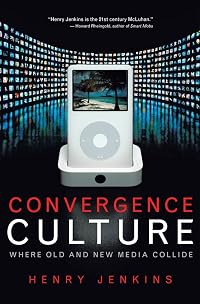
Convergence Culture: Where Old and New Media Collide
by Henry Jenkins
On This Page
Description
Media analyst Jenkins delves beneath the new media hype to uncover the important cultural transformations that are taking place as media converge. He takes us into the secret world of Survivor Spoilers, where avid internet users pool their knowledge to unearth the show's secrets before they are revealed on the air. He shows us how The Matrix has pushed transmedia storytelling to new levels, creating a fictional world where consumers track down bits of the story across multiple media show more channels. Jenkins argues that struggles over convergence will redefine the face of American popular culture: industry leaders see opportunities to direct content across many channels to increase revenue and broaden markets; at the same time, consumers envision a liberated public sphere, free of network controls. Jenkins explains the cultural shift as consumers fight for control across disparate channels, changing the way we do business, elect our leaders, and educate our children.--From publisher description. show lessTags
Recommendations



















Member Recommendations

Member Reviews
Picked this up as part of my reading of things related to fandom and fan studies. Of the books I've read recently on the subject, I feel like this one was the most well-written and is a great overview from someone who has become known as one of the foremost scholars in this area. It focused more on media consumption and integration than fandom activity, I felt, but it still provided a good overview of how media creators are using new methods to engage with their audiences and how audiences are using that engagement to influence media. Definitely worth a read if this is a topic of interest.
I always like Henry Jenkins and this book is no exception. He does a good job of exploding the one-device idea of convergence and paying attention to the social and cultural processes around convergence and participatory culture without getting too frothy. The first few chapters which examine the role of fan communities and corporations' alternate stances on them were pretty good in outlining the punitive/"collaborative" stances that companies (and different entities within one conglomerate) have taken toward fans and fans' responses to and awareness of theses strategies. However, typically, I liked best the last three chapters that talked about fannish practices of remix, appropriation, community-building and participation that pave show more the way we deal with cultural and moral questions, literacy and education, political participation and how we can apply these skills to an increasingly transmedia world. Of course I like the call not to get wrapped up in the technology, the brand, or the inevitability of convergence and miss out on this "critical utopian" moment. show less
Jenkins' deliverance of essential terminology, various concepts he employs to discuss "convergent culture" are theoretically engaging; but how aggressively dated many of the case studies are (no fault of his own) it becomes a slight drag. Overall, the premise of fictional realms expanding across multimedia franchises alongside the audience desire to master scrupulous intertextual references as a collective "participatory culture" are fascinating, alongside the dichotomy he introduces between "popular culture" and "mass media" as a division between 'natural' folk arts against industrialised commodities. Additionally, the chapters drawing on intellectual property and the internet as a force for forging political affiliations via common show more interests are relevant as ever. I found this tedious to finish, but it left plenty of breadcrumbs to follow with regards to other cultural theorists. show less
Is this where it all started, what we have now. A quote from this book:
In the spring of 2004, a short video, edited together out of footage from newscasts and Donald Trump’s hit TV show, The Apprentice (2004), was circulating across the Internet. Framed as a mock preview for The Apprentice, the narrator explains, “George W. Bush is assigned the task of being president. He drives the economy into the ground, uses lies to justify war, spends way over budget, and almost gets away with it until the Donald finds out.” The video cuts to a boardroom, where Trump is demanding to know “who chose this stupid concept” and then firing Dubya. Trump’s disapproving look is crosscut with Bush shaking his head in disbelief and then show more disappointment. Then came the announcer: “Unfortunately, ‘The Donald’ can’t fire Bush for us. But we can do it ourselves. Join us at True Majority Action. We’ll fire Bush together, and have some fun along the way.”
Who would have imagined that Donald Trump could emerge as a populist spokesman, or that sympathetic images of corporate control could fuel a movement to reclaim democracy? A curious mix of cynicism and optimism, the video made Democrats laugh at the current administration and then rally to transform it.
True Majority was founded by Ben Cohen (of Ben & Jerry’s Ice Cream). Its goals were to increase voter participation in the 2004 election and to rally support behind a progressive agenda. According to its Web site (www.truemajority.org), the group has attracted more than 300,000 supporters, who receive regular alerts and participate in letterwriting campaigns.
Interviewed a few weeks before the election, Garrett LoPorto, a senior creative consultant for True Majority, said that the core of viral marketing is getting the right idea into the right hands at the right time. This video generated a higher than average response rate, he argues, both because it expressed a widespread desire to end a failed administration and because The Apprentice provided a perfect metaphor to bring that decision closer to home: “We aren’t here talking about this grand cause of appointing someone as the leader of the free world. We’re just trying to get some guy who screwed up fired. It’s that simple.” Their goal was to get these ideas into the broadest possible circulation. To do that, they sought to create images that are vivid, memorable, and evocative. And most important, the content had to be consistent with what people more or less already believed about the world. Locating people who share your beliefs is easy, LoPorto says, because we tend to seek out like-minded communities on the Web. Each person who passed along the video reaffirmed his or her commitment to those beliefs and also moved one step closer toward political action. A certain percentage of the recipients followed the link back to the True Majority site and expanded its core mailing list. Repeat this process enough times with enough people, he argued, and you can build a movement and start to “nudge” the prevailing structure of beliefs in your direction. At least that’s the theory. The real challenge is to get those ideas back into mainstream media, where they will reach people who do not already share your commitments. As LoPorto acknowledged, “All we needed to do is to get NBC to sue us. If they would sue us over this, this thing would go global and everyone will know about it. That was our secondary hope. . . . NBC was too smart for that—they recognize it was a parody and didn’t bite.”
Hoping to make politics more playful, the True Majority home page offered visitors not only the “Trump Fires Bush” video, but also a game where you could spank Dubya’s bare bottom, a video where “Ben the Ice Cream Man” reduces the federal budget to stacks of Oreo cookies and shows how shuffling just a few cookies can allow us to take care of a range of pressing problems, and other examples of what the group calls “serious fun.” show less
In the spring of 2004, a short video, edited together out of footage from newscasts and Donald Trump’s hit TV show, The Apprentice (2004), was circulating across the Internet. Framed as a mock preview for The Apprentice, the narrator explains, “George W. Bush is assigned the task of being president. He drives the economy into the ground, uses lies to justify war, spends way over budget, and almost gets away with it until the Donald finds out.” The video cuts to a boardroom, where Trump is demanding to know “who chose this stupid concept” and then firing Dubya. Trump’s disapproving look is crosscut with Bush shaking his head in disbelief and then show more disappointment. Then came the announcer: “Unfortunately, ‘The Donald’ can’t fire Bush for us. But we can do it ourselves. Join us at True Majority Action. We’ll fire Bush together, and have some fun along the way.”
Who would have imagined that Donald Trump could emerge as a populist spokesman, or that sympathetic images of corporate control could fuel a movement to reclaim democracy? A curious mix of cynicism and optimism, the video made Democrats laugh at the current administration and then rally to transform it.
True Majority was founded by Ben Cohen (of Ben & Jerry’s Ice Cream). Its goals were to increase voter participation in the 2004 election and to rally support behind a progressive agenda. According to its Web site (www.truemajority.org), the group has attracted more than 300,000 supporters, who receive regular alerts and participate in letterwriting campaigns.
Interviewed a few weeks before the election, Garrett LoPorto, a senior creative consultant for True Majority, said that the core of viral marketing is getting the right idea into the right hands at the right time. This video generated a higher than average response rate, he argues, both because it expressed a widespread desire to end a failed administration and because The Apprentice provided a perfect metaphor to bring that decision closer to home: “We aren’t here talking about this grand cause of appointing someone as the leader of the free world. We’re just trying to get some guy who screwed up fired. It’s that simple.” Their goal was to get these ideas into the broadest possible circulation. To do that, they sought to create images that are vivid, memorable, and evocative. And most important, the content had to be consistent with what people more or less already believed about the world. Locating people who share your beliefs is easy, LoPorto says, because we tend to seek out like-minded communities on the Web. Each person who passed along the video reaffirmed his or her commitment to those beliefs and also moved one step closer toward political action. A certain percentage of the recipients followed the link back to the True Majority site and expanded its core mailing list. Repeat this process enough times with enough people, he argued, and you can build a movement and start to “nudge” the prevailing structure of beliefs in your direction. At least that’s the theory. The real challenge is to get those ideas back into mainstream media, where they will reach people who do not already share your commitments. As LoPorto acknowledged, “All we needed to do is to get NBC to sue us. If they would sue us over this, this thing would go global and everyone will know about it. That was our secondary hope. . . . NBC was too smart for that—they recognize it was a parody and didn’t bite.”
Hoping to make politics more playful, the True Majority home page offered visitors not only the “Trump Fires Bush” video, but also a game where you could spank Dubya’s bare bottom, a video where “Ben the Ice Cream Man” reduces the federal budget to stacks of Oreo cookies and shows how shuffling just a few cookies can allow us to take care of a range of pressing problems, and other examples of what the group calls “serious fun.” show less
Jenkins addresses the convergence of mass media and interactive media from a solid background in studies of fan cultures. He builds his arguments around three core concepts -- media convergence, participatory culture, and collective intelligence -- which he develops in a series of well-written and engaging case studies, ranging from online communities of Survivor spoilers to Harry Potter fan-fiction IPR controversies and the US elections. The focus is largely on how the established mass media "collide" with new media cultures and practices, and the new media forms originating in the digital realm are generally less well covered. Nevertheless, I consider the insights offered in the book to be required reading for any interaction designer show more involved in transmedia/crossmedia projects. show less
Is this where it all started, what we have now. A quote from this book:
In the spring of 2004, a short video, edited together out of footage from newscasts and Donald Trump’s hit TV show, The Apprentice (2004), was circulating across the Internet. Framed as a mock preview for The Apprentice, the narrator explains, “George W. Bush is assigned the task of being president. He drives the economy into the ground, uses lies to justify war, spends way over budget, and almost gets away with it until the Donald finds out.” The video cuts to a boardroom, where Trump is demanding to know “who chose this stupid concept” and then firing Dubya. Trump’s disapproving look is crosscut with Bush shaking his head in disbelief and then show more disappointment. Then came the announcer: “Unfortunately, ‘The Donald’ can’t fire Bush for us. But we can do it ourselves. Join us at True Majority Action. We’ll fire Bush together, and have some fun along the way.”
Who would have imagined that Donald Trump could emerge as a populist spokesman, or that sympathetic images of corporate control could fuel a movement to reclaim democracy? A curious mix of cynicism and optimism, the video made Democrats laugh at the current administration and then rally to transform it.
True Majority was founded by Ben Cohen (of Ben & Jerry’s Ice Cream). Its goals were to increase voter participation in the 2004 election and to rally support behind a progressive agenda. According to its Web site (www.truemajority.org), the group has attracted more than 300,000 supporters, who receive regular alerts and participate in letterwriting campaigns.
Interviewed a few weeks before the election, Garrett LoPorto, a senior creative consultant for True Majority, said that the core of viral marketing is getting the right idea into the right hands at the right time. This video generated a higher than average response rate, he argues, both because it expressed a widespread desire to end a failed administration and because The Apprentice provided a perfect metaphor to bring that decision closer to home: “We aren’t here talking about this grand cause of appointing someone as the leader of the free world. We’re just trying to get some guy who screwed up fired. It’s that simple.” Their goal was to get these ideas into the broadest possible circulation. To do that, they sought to create images that are vivid, memorable, and evocative. And most important, the content had to be consistent with what people more or less already believed about the world. Locating people who share your beliefs is easy, LoPorto says, because we tend to seek out like-minded communities on the Web. Each person who passed along the video reaffirmed his or her commitment to those beliefs and also moved one step closer toward political action. A certain percentage of the recipients followed the link back to the True Majority site and expanded its core mailing list. Repeat this process enough times with enough people, he argued, and you can build a movement and start to “nudge” the prevailing structure of beliefs in your direction. At least that’s the theory. The real challenge is to get those ideas back into mainstream media, where they will reach people who do not already share your commitments. As LoPorto acknowledged, “All we needed to do is to get NBC to sue us. If they would sue us over this, this thing would go global and everyone will know about it. That was our secondary hope. . . . NBC was too smart for that—they recognize it was a parody and didn’t bite.”
Hoping to make politics more playful, the True Majority home page offered visitors not only the “Trump Fires Bush” video, but also a game where you could spank Dubya’s bare bottom, a video where “Ben the Ice Cream Man” reduces the federal budget to stacks of Oreo cookies and shows how shuffling just a few cookies can allow us to take care of a range of pressing problems, and other examples of what the group calls “serious fun.” show less
In the spring of 2004, a short video, edited together out of footage from newscasts and Donald Trump’s hit TV show, The Apprentice (2004), was circulating across the Internet. Framed as a mock preview for The Apprentice, the narrator explains, “George W. Bush is assigned the task of being president. He drives the economy into the ground, uses lies to justify war, spends way over budget, and almost gets away with it until the Donald finds out.” The video cuts to a boardroom, where Trump is demanding to know “who chose this stupid concept” and then firing Dubya. Trump’s disapproving look is crosscut with Bush shaking his head in disbelief and then show more disappointment. Then came the announcer: “Unfortunately, ‘The Donald’ can’t fire Bush for us. But we can do it ourselves. Join us at True Majority Action. We’ll fire Bush together, and have some fun along the way.”
Who would have imagined that Donald Trump could emerge as a populist spokesman, or that sympathetic images of corporate control could fuel a movement to reclaim democracy? A curious mix of cynicism and optimism, the video made Democrats laugh at the current administration and then rally to transform it.
True Majority was founded by Ben Cohen (of Ben & Jerry’s Ice Cream). Its goals were to increase voter participation in the 2004 election and to rally support behind a progressive agenda. According to its Web site (www.truemajority.org), the group has attracted more than 300,000 supporters, who receive regular alerts and participate in letterwriting campaigns.
Interviewed a few weeks before the election, Garrett LoPorto, a senior creative consultant for True Majority, said that the core of viral marketing is getting the right idea into the right hands at the right time. This video generated a higher than average response rate, he argues, both because it expressed a widespread desire to end a failed administration and because The Apprentice provided a perfect metaphor to bring that decision closer to home: “We aren’t here talking about this grand cause of appointing someone as the leader of the free world. We’re just trying to get some guy who screwed up fired. It’s that simple.” Their goal was to get these ideas into the broadest possible circulation. To do that, they sought to create images that are vivid, memorable, and evocative. And most important, the content had to be consistent with what people more or less already believed about the world. Locating people who share your beliefs is easy, LoPorto says, because we tend to seek out like-minded communities on the Web. Each person who passed along the video reaffirmed his or her commitment to those beliefs and also moved one step closer toward political action. A certain percentage of the recipients followed the link back to the True Majority site and expanded its core mailing list. Repeat this process enough times with enough people, he argued, and you can build a movement and start to “nudge” the prevailing structure of beliefs in your direction. At least that’s the theory. The real challenge is to get those ideas back into mainstream media, where they will reach people who do not already share your commitments. As LoPorto acknowledged, “All we needed to do is to get NBC to sue us. If they would sue us over this, this thing would go global and everyone will know about it. That was our secondary hope. . . . NBC was too smart for that—they recognize it was a parody and didn’t bite.”
Hoping to make politics more playful, the True Majority home page offered visitors not only the “Trump Fires Bush” video, but also a game where you could spank Dubya’s bare bottom, a video where “Ben the Ice Cream Man” reduces the federal budget to stacks of Oreo cookies and shows how shuffling just a few cookies can allow us to take care of a range of pressing problems, and other examples of what the group calls “serious fun.” show less
Is this where it all started, what we have now. A quote from this book:
In the spring of 2004, a short video, edited together out of footage from newscasts and Donald Trump’s hit TV show, The Apprentice (2004), was circulating across the Internet. Framed as a mock preview for The Apprentice, the narrator explains, “George W. Bush is assigned the task of being president. He drives the economy into the ground, uses lies to justify war, spends way over budget, and almost gets away with it until the Donald finds out.” The video cuts to a boardroom, where Trump is demanding to know “who chose this stupid concept” and then firing Dubya. Trump’s disapproving look is crosscut with Bush shaking his head in disbelief and then show more disappointment. Then came the announcer: “Unfortunately, ‘The Donald’ can’t fire Bush for us. But we can do it ourselves. Join us at True Majority Action. We’ll fire Bush together, and have some fun along the way.”
Who would have imagined that Donald Trump could emerge as a populist spokesman, or that sympathetic images of corporate control could fuel a movement to reclaim democracy? A curious mix of cynicism and optimism, the video made Democrats laugh at the current administration and then rally to transform it.
True Majority was founded by Ben Cohen (of Ben & Jerry’s Ice Cream). Its goals were to increase voter participation in the 2004 election and to rally support behind a progressive agenda. According to its Web site (www.truemajority.org), the group has attracted more than 300,000 supporters, who receive regular alerts and participate in letterwriting campaigns.
Interviewed a few weeks before the election, Garrett LoPorto, a senior creative consultant for True Majority, said that the core of viral marketing is getting the right idea into the right hands at the right time. This video generated a higher than average response rate, he argues, both because it expressed a widespread desire to end a failed administration and because The Apprentice provided a perfect metaphor to bring that decision closer to home: “We aren’t here talking about this grand cause of appointing someone as the leader of the free world. We’re just trying to get some guy who screwed up fired. It’s that simple.” Their goal was to get these ideas into the broadest possible circulation. To do that, they sought to create images that are vivid, memorable, and evocative. And most important, the content had to be consistent with what people more or less already believed about the world. Locating people who share your beliefs is easy, LoPorto says, because we tend to seek out like-minded communities on the Web. Each person who passed along the video reaffirmed his or her commitment to those beliefs and also moved one step closer toward political action. A certain percentage of the recipients followed the link back to the True Majority site and expanded its core mailing list. Repeat this process enough times with enough people, he argued, and you can build a movement and start to “nudge” the prevailing structure of beliefs in your direction. At least that’s the theory. The real challenge is to get those ideas back into mainstream media, where they will reach people who do not already share your commitments. As LoPorto acknowledged, “All we needed to do is to get NBC to sue us. If they would sue us over this, this thing would go global and everyone will know about it. That was our secondary hope. . . . NBC was too smart for that—they recognize it was a parody and didn’t bite.”
Hoping to make politics more playful, the True Majority home page offered visitors not only the “Trump Fires Bush” video, but also a game where you could spank Dubya’s bare bottom, a video where “Ben the Ice Cream Man” reduces the federal budget to stacks of Oreo cookies and shows how shuffling just a few cookies can allow us to take care of a range of pressing problems, and other examples of what the group calls “serious fun.” show less
In the spring of 2004, a short video, edited together out of footage from newscasts and Donald Trump’s hit TV show, The Apprentice (2004), was circulating across the Internet. Framed as a mock preview for The Apprentice, the narrator explains, “George W. Bush is assigned the task of being president. He drives the economy into the ground, uses lies to justify war, spends way over budget, and almost gets away with it until the Donald finds out.” The video cuts to a boardroom, where Trump is demanding to know “who chose this stupid concept” and then firing Dubya. Trump’s disapproving look is crosscut with Bush shaking his head in disbelief and then show more disappointment. Then came the announcer: “Unfortunately, ‘The Donald’ can’t fire Bush for us. But we can do it ourselves. Join us at True Majority Action. We’ll fire Bush together, and have some fun along the way.”
Who would have imagined that Donald Trump could emerge as a populist spokesman, or that sympathetic images of corporate control could fuel a movement to reclaim democracy? A curious mix of cynicism and optimism, the video made Democrats laugh at the current administration and then rally to transform it.
True Majority was founded by Ben Cohen (of Ben & Jerry’s Ice Cream). Its goals were to increase voter participation in the 2004 election and to rally support behind a progressive agenda. According to its Web site (www.truemajority.org), the group has attracted more than 300,000 supporters, who receive regular alerts and participate in letterwriting campaigns.
Interviewed a few weeks before the election, Garrett LoPorto, a senior creative consultant for True Majority, said that the core of viral marketing is getting the right idea into the right hands at the right time. This video generated a higher than average response rate, he argues, both because it expressed a widespread desire to end a failed administration and because The Apprentice provided a perfect metaphor to bring that decision closer to home: “We aren’t here talking about this grand cause of appointing someone as the leader of the free world. We’re just trying to get some guy who screwed up fired. It’s that simple.” Their goal was to get these ideas into the broadest possible circulation. To do that, they sought to create images that are vivid, memorable, and evocative. And most important, the content had to be consistent with what people more or less already believed about the world. Locating people who share your beliefs is easy, LoPorto says, because we tend to seek out like-minded communities on the Web. Each person who passed along the video reaffirmed his or her commitment to those beliefs and also moved one step closer toward political action. A certain percentage of the recipients followed the link back to the True Majority site and expanded its core mailing list. Repeat this process enough times with enough people, he argued, and you can build a movement and start to “nudge” the prevailing structure of beliefs in your direction. At least that’s the theory. The real challenge is to get those ideas back into mainstream media, where they will reach people who do not already share your commitments. As LoPorto acknowledged, “All we needed to do is to get NBC to sue us. If they would sue us over this, this thing would go global and everyone will know about it. That was our secondary hope. . . . NBC was too smart for that—they recognize it was a parody and didn’t bite.”
Hoping to make politics more playful, the True Majority home page offered visitors not only the “Trump Fires Bush” video, but also a game where you could spank Dubya’s bare bottom, a video where “Ben the Ice Cream Man” reduces the federal budget to stacks of Oreo cookies and shows how shuffling just a few cookies can allow us to take care of a range of pressing problems, and other examples of what the group calls “serious fun.” show less
Members
- Recently Added By
Published Reviews
ThingScore 75
"In the end, Convergence Culture is a good overview for readers interested in popular culture and an excellent introduction for the general public. Jenkins' combination of readable, entertaining, lucid prose, practical application, and scholarly foundations helps to establish this book as a popular analysis of contemporary cultural life. Scholars of new media studies, however, may find that show more this book offers only a cursory examination of the topics they study." show less
added by jodi
Lists

culture
320 works; 1 member
Author Information

31+ Works 2,218 Members
Henry Jenkins is the Peter de Florez Professor of Humanities and the Founder/Director of the Comparative Media Studies Program at MIT.
Awards and Honors
Awards
Common Knowledge
- Canonical title
- Convergence Culture: Where Old and New Media Collide
Classifications
- Genres
- Nonfiction, Technology, General Nonfiction
- DDC/MDS
- 302.230973 — Society, government, & culture Social sciences, sociology & anthropology Mass Communication & Media Communication Media (Means of communication)
- LCC
- P94.65 .U6 .J46 — Language and Literature Philology. Linguistics Communication. Mass media
- BISAC
Statistics
- Members
- 914
- Popularity
- 29,473
- Reviews
- 15
- Rating
- (3.97)
- Languages
- 6 — English, French, Italian, Portuguese, Spanish, Swedish
- Media
- Paper, Ebook
- ISBNs
- 12
- ASINs
- 7