On This Page
Description
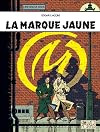
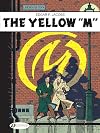
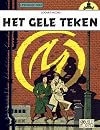
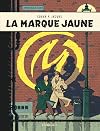
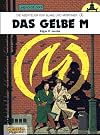
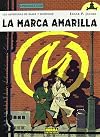
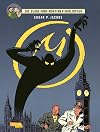
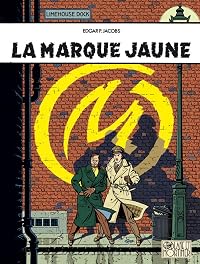
London's walls resound with the incredible exploits of the "Yellow Mark." The spectacular actions of this mysterious criminal are on the increase: holding up the Bank of England, robbing the imperial No one seems able to stop him. He is so audacious that he lets the police know in advance where he will commit his crimes, each time ridiculing Scotland Yard a little more. The apparent ease with which he evades police schemes begins to worry the highest authorities of the country. The Home show more Office asks Captain Francis Blake to solve the mystery and discover the identity of the man who hides behind the Yellow Mark. The captain immediately takes as partner his old friend, Professor Philip Mortimer, whose scientific knowledge will be invaluable in solving this extremely complex enigma. Who hides behind the Yellow Mark? show lessTags
Recommendations












Member Recommendations

Member Reviews
Edgar P. Jacobs was a contemporary and colleague of his fellow countryman, Hergé, assisting the latter with some of his Tintin stories. Comparison is therefore inevitable, and it is to Jacobs' credit.
Jacobs' artwork has the same clean lines as Hergé's, but his figures are drawn more realistically, without the elements of caricature found in the adventures of Tintin. Having only read The Yellow 'M' at the time of writing this review, I found the narrative style somewhat denser; there is none of the slapstick found in Tintin, little in the way of humour, actually, with the action being played seriously. There are no talking animals, apoplectic sea-captains, bungling detectives or comically absent-minded professors. The writing is show more seemingly aimed at an older, if still juvenile, audience than Hergé went for with Tintin. Accordingly, and with an extra 9-10 pages in which to expand the story, I found this first foray with Blake and Mortimer much more satisfying than most of the Tintin albums.
Written in the 1950s, there are a number of stock tropes which, depending upon the reader's viewpoint, will be found either stylistically comforting or clichéd (I obviously incline to the former). Blake is cast in the same mold as Dennis Nayland Smith from the Fu Manchu stories: a capable and influential establishment figure with a military background. Mortimer is the epitome of British scientific know-how, akin to Professor Quatermass. The villain(s) are a blend of Fu Manchu, Fantômas, Rastapopoulos, et al.
The story involves an evil mastermind terrorising the country, stealing (part of) the crown jewels, bent on a mysterious vengeance plot, manifesting seemingly superhuman powers and generally outwitting Scotland Yard at every turn. The action is well-paced, if somewhat formulaic: comfort-food for the brain.
The English translations of the Blake and Mortimer stories have been published out of the order in which they were written. Consequently, a few characters appear with little or no introduction, as we are expected to have met them previously. Also, some minor plot elements refer back to the earlier stories. None of which seriously detracted from my enjoyment of the story, if anything whetting my appetite for more. show less
Jacobs' artwork has the same clean lines as Hergé's, but his figures are drawn more realistically, without the elements of caricature found in the adventures of Tintin. Having only read The Yellow 'M' at the time of writing this review, I found the narrative style somewhat denser; there is none of the slapstick found in Tintin, little in the way of humour, actually, with the action being played seriously. There are no talking animals, apoplectic sea-captains, bungling detectives or comically absent-minded professors. The writing is show more seemingly aimed at an older, if still juvenile, audience than Hergé went for with Tintin. Accordingly, and with an extra 9-10 pages in which to expand the story, I found this first foray with Blake and Mortimer much more satisfying than most of the Tintin albums.
Written in the 1950s, there are a number of stock tropes which, depending upon the reader's viewpoint, will be found either stylistically comforting or clichéd (I obviously incline to the former). Blake is cast in the same mold as Dennis Nayland Smith from the Fu Manchu stories: a capable and influential establishment figure with a military background. Mortimer is the epitome of British scientific know-how, akin to Professor Quatermass. The villain(s) are a blend of Fu Manchu, Fantômas, Rastapopoulos, et al.
The story involves an evil mastermind terrorising the country, stealing (part of) the crown jewels, bent on a mysterious vengeance plot, manifesting seemingly superhuman powers and generally outwitting Scotland Yard at every turn. The action is well-paced, if somewhat formulaic: comfort-food for the brain.
The English translations of the Blake and Mortimer stories have been published out of the order in which they were written. Consequently, a few characters appear with little or no introduction, as we are expected to have met them previously. Also, some minor plot elements refer back to the earlier stories. None of which seriously detracted from my enjoyment of the story, if anything whetting my appetite for more. show less
Well this one was quite a surprise. Unlike its contemporary Tintin Blake and Mortimer adventures are more adult story and without that much humor and comedy. Art is excellent, so called "clear line" schools is truly great. So if you like Tintin, early Tanguy and Laverdure you will truly enjoy it.
Story wise this reads more like graphical novel than standard comic - there are blocks and blocks of text. But while sometimes actions of villains seem very much like parodies (you now that ominous cackle and monologue describing what their evil plan is) overall story is pretty good. You have thrills, chase, mystery and very interesting characters.
Recommended to all fans of thrillers and adventure stories.
Story wise this reads more like graphical novel than standard comic - there are blocks and blocks of text. But while sometimes actions of villains seem very much like parodies (you now that ominous cackle and monologue describing what their evil plan is) overall story is pretty good. You have thrills, chase, mystery and very interesting characters.
Recommended to all fans of thrillers and adventure stories.
A mysterious figure has been terrorizing London, and he seems to be some sort of supervillain. This is an adventure worthy of the Batman a mad scientist with a mind control device has stolen the imperial crown from the Tower of London. How could he get past all the guards to make off with such a potent symbol of British power? This apparent supervillain has already robbed the Bank of England leaving behind a mysterious yellow chalk mark of the Greek letter mu surrounded by a circle. Captain Francis Blake of military intelligence and his close friend Professor Philip Mortimer are asked to come to the aid of Scotland Yard to apprehend the fiend. The game is afoot, and after some interviewing, a daring break in at Blake’s home and an show more apparent visit from the main suspect who appears to be bullet proof and the chase is on from the docks through the sewers and a hidden doorway to a secret laboratory leads to a fiendish plot for revenge and world domination! show less
I know about this series because it was originally published alongside Tintin. It's an odd series set in a fairy-tale version of antiquated London where everyone says "What the Dickens!" every other page. And there is a bonkers pseudo-sci-fi crime plot on top. Fun read, but not sure I want to get the rest of the series.
Picked this up because the cover art reminds me of Tintin.
ETA: Finished. The art style is very similar to Tintin but the story has none of the humour that made Tintin so appealing. The mystery is typical 40s/50s mad scientist gubbins which could do easily have appeared in Saturday Morning Serials of the time. Some of the panels are very wordy for a graphic novel, and I think some of the translation was a tad too literal. And I was concerned at the number of London Bobbies toting guns.
Fun and I'd definitely read more.
ETA: Finished. The art style is very similar to Tintin but the story has none of the humour that made Tintin so appealing. The mystery is typical 40s/50s mad scientist gubbins which could do easily have appeared in Saturday Morning Serials of the time. Some of the panels are very wordy for a graphic novel, and I think some of the translation was a tad too literal. And I was concerned at the number of London Bobbies toting guns.
Fun and I'd definitely read more.
I figured out whodunnit about a third of the way into "The Yellow M" but still enjoyed the story, which is one of the marks of a good mystery for me. I loved the artwork and the feel of this comic.
I can't help thinking of Blake and Mortimer as a sophisticated Scooby Gang, which is a comparison that doesn't really make sense. It's not a negative, though -- I'd definitely read more of their adventures.
I can't help thinking of Blake and Mortimer as a sophisticated Scooby Gang, which is a comparison that doesn't really make sense. It's not a negative, though -- I'd definitely read more of their adventures.
Serial villain Count Orlik has more lives than any of the serial killers fond in Friday 13th or Halloween: no matter what Blake and Mortimer do, they simply cannot get rid of him. The Yellow M has a convoluted plot involving a mad scientist taking hias revenge on those who trashed a book he wrote 30 years before:
Members
- Recently Added By
Lists

Recommended Comics / Graphic Novels
595 works; 122 members

Books Read in 2014
2,343 works; 86 members
Author Information

40+ Works 4,284 Members
Some Editions
Series

Belongs to Publisher Series
Work Relationships
Has as a study
Common Knowledge
- Canonical title
- The Yellow M
- Original title
- La marque jaune
- Original publication date
- 1956
- People/Characters
- Professor Philip Angus Mortimer; Captain Francis Percy Blake; Dr. Jonathan Septimus; Chief Inspector Glenn Kendall; Colonel Olrik; Professor Robert Vernay (show all 13); Leslie Macomber; Sir Hugh Calvin; Sir Charles Garrison; Ahmed Nasir; Mrs. Benson; Mr. Stone (Daily Mail Archivist); Dick the taxi driver
- Important places
- London, England, UK; Tower of London, London, England, UK; Park Lane, London, England, UK (99a); Scotland Yard, London, England, UK; Tavistock Square, London, England, UK (2a); Fleet Street, London, England, UK (show all 11); Royal Courts of Justice, Strand, London, England, UK; Charing Cross Hospital, Charing Cross, London, England, UK; British Library of the British Museum, London, England, UK; Limehouse Dock, London, England, UK; Sudan
- First words
- Big Ben has just struck one o'clock in the morning.
- Quotations*
- Maar... Septimus...U bent echt gek!!...
- Last words
- (Click to show. Warning: May contain spoilers.)A merry christmas to all!
- Original language
- French
*Some information comes from Common Knowledge in other languages. Click "Edit" for more information.
Classifications
Statistics
- Members
- 490
- Popularity
- 61,506
- Reviews
- 12
- Rating
- (4.12)
- Languages
- 10 — Danish, Dutch, English, Finnish, French, German, Italian, Portuguese, Spanish, Swedish
- Media
- Paper, Ebook
- ISBNs
- 28
- ASINs
- 8