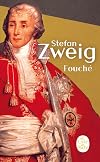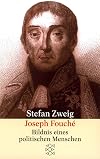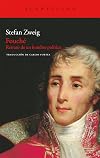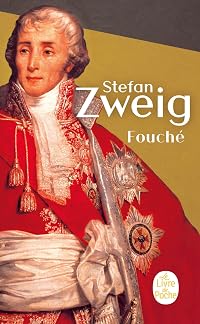
Joseph Fouché: The Portrait of a Politician
by Stefan Zweig
On This Page
Description
Stefan Zweig's 'Joseph Fouché' is a biographical exploration of one of the most enigmatic and influential political figures of the French Revolution and Napoleonic era. Fouché is depicted as a master manipulator and survivor, shifting allegiances and thriving in the tumultuous political landscape of his time. Zweig delves into Fouché's complex character, highlighting his role as a behind-the-scenes power broker who outmaneuvered notable contemporaries like Robespierre and Napoleon. The show more biography examines Fouché's lack of moral scruples and his adaptability, portraying him as a quintessential Machiavellian figure. Intended for readers interested in historical biographies and psychological analyses, the book challenges the notion of heroism in history and underscores the impact of lesser-known, albeit cunning, individuals on political events. show lessTags
Recommendations



















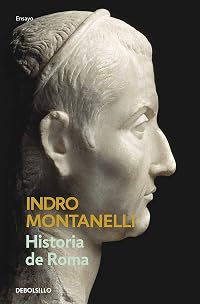
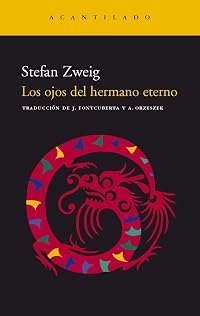

Member Recommendations
Artymedon Another cop of the same time period
Member Reviews
How to survive the dulness of the French "Ancien Regime" when you were not an Aristocrat? By becoming a seminarist answers Fouche; how to finance Robespierre while actively supporting pro-slavery colonists of France's biggest slave trade center, the city of Nantes, and then be elected by them to lead a Counter-Revolution at the Paris Convention;
how to become elected President of the Jacobins club and be ousted of it to become the "Regisseur" of a Coup d'Etat in Thermidor 1795.
Fouche's life under Stefan Zweig becomes an art of knowing how to hold your head on your shoulders while making copious use of the guillotine on others; even using the cannon because the guillotine is too slow; how to escape the immense egos of both Robespierre show more and Bonaparte, to become Emperor Napoleon's brilliant Chief of Police, make millions, being elevated to Duke of Otranto only to later plot the return of the Monarchy.
There is nothing dull in the life of J. Fouche.
Zweig gives us the explanation for what Jean Orieux called "The Art of Survival" speaking of another seminarist, Talleyrand.
His biography is more a brilliant historical essay than a scholar's research but he is right to the point of this very modern character, Joseph Fouche, who by gaining absolute control over himself gained control over others.
His cultivated lack of character helped him not only survive but perceive historical tides which like a surfer he rode at the crest of their waves rather than being swept by them.
An adept to political duck-diving, he was an expert at popping back up after the wave passed over him.
Unfortunately for Zweig, 1929 Germany would soon have its fill of Joseph Fouches. show less
how to become elected President of the Jacobins club and be ousted of it to become the "Regisseur" of a Coup d'Etat in Thermidor 1795.
Fouche's life under Stefan Zweig becomes an art of knowing how to hold your head on your shoulders while making copious use of the guillotine on others; even using the cannon because the guillotine is too slow; how to escape the immense egos of both Robespierre show more and Bonaparte, to become Emperor Napoleon's brilliant Chief of Police, make millions, being elevated to Duke of Otranto only to later plot the return of the Monarchy.
There is nothing dull in the life of J. Fouche.
Zweig gives us the explanation for what Jean Orieux called "The Art of Survival" speaking of another seminarist, Talleyrand.
His biography is more a brilliant historical essay than a scholar's research but he is right to the point of this very modern character, Joseph Fouche, who by gaining absolute control over himself gained control over others.
His cultivated lack of character helped him not only survive but perceive historical tides which like a surfer he rode at the crest of their waves rather than being swept by them.
An adept to political duck-diving, he was an expert at popping back up after the wave passed over him.
Unfortunately for Zweig, 1929 Germany would soon have its fill of Joseph Fouches. show less
Una auténtica delicia dejarse atrapar por la capacidad narrativa de Zweig, por su sentido de la épica en la Historia, por los personajes que elige para iluminar una época. En este caso, Fouché es el ministro frío y amoral que inventó los servicios secretos como los conocemos hoy día. Sorprende su capacidad inmensa para sobrevivir a cualquier régimen, y un carácter taimado y artero capaz de engañar a los mismísimos Robespierre, Lafayette o Napoleón.
Una auténtica delicia dejarse atrapar por la capacidad narrativa de Zweig, por su sentido de la épica en la Historia, por los personajes que elige para iluminar una época. En este caso, Fouché es el ministro frío y amoral que inventó los servicios secretos como los conocemos hoy día. Sorprende su capacidad inmensa para sobrevivir a cualquier régimen, y un carácter taimado y artero capaz de engañar a los mismísimos Robespierre, Lafayette o Napoleón.
Un libro potente e coinvolgente, come si conviene alla misura dell'autore. Peccato che per fare 'stare dentro' il personaggio nell'ipotesi biografica, ogni tanto ci sia qualche incongruenza che riduce la credibilità storica della ricostruzione.
Biografia muy entretenida del personaje historico mas maquiavelo que se pueda imaginar.
4296. Joseph Fouche The Portrait of a Politician, by Stefan Zweig translated from the German by Eden and Cedar Paul (read 6 Apr 2007) This is the fifth book by Zweig I've read. He interests me, having had a dramatic life ending in 1942 when he and his wife committed suicide because the world stage seemed so awful. Fouche was a cleric (though never ordained) for ten years, then became a bloodthirsty revolutionary, then was Napoleon's police chief for a time, then a supporter of King Louis XVIII (even though he voted to cut off his brother's head). Zweig portrays him as evil, always looking out for himself. History is consistently interesting and Zweig is a forceful writer, even though the biography is not in the form I like, since it has show more no footnotes nor any bibliography. show less
Long out-of-print, this biography of Joseph Fouche, a major behind-the-scenes figure in the French Revolution, is a fascinating study of a rise from relatively humble beginnings to the absolute pinnacle of power, back down again, and then up, and then again down. Fouche’s roll-coaster ride of fortune is a remarkable story.
Members
- Recently Added By
Lists

Best Biographies
216 works; 26 members
Author Information

Born in Vienna, the prolific Zweig was a poet in his early years. In the 1920s, he achieved fame with the many biographies he wrote of famous people including Balzac, Dostoevsky, Dickens and Freud. Erasmus with whom he closely identified, was the subject of a longer biography. He also wrote the novellas Amok (1922) and The Royal Game (1944). As show more Nazism spread, Zweig, a Jew, fled to the United States and then to Brazil. He hoped to start a new life there, but the haunting memory of Nazism, still undefeated, proved too much for him. He died with his wife in a suicide pact. (Bowker Author Biography) show less
Series
Belongs to Publisher Series
Work Relationships
Common Knowledge
- Canonical title
- Joseph Fouché: The Portrait of a Politician
- Original title
- Joseph Fouché : Bildnis eines politischen Menschen
- Original publication date
- 1929
- People/Characters
- Fouché, Joseph; Bonaparte, Napoléon
- Important places
- Paris, France
- Important events
- French Revolution; Napoleonic Wars
- Dedication
- To Arthur Schnitzler with affectionate admiration
- First words
- Op 21 mei 1759 wordt Joseph Fouché - nog lang niet hertog van Otranto - in de havenstad Nantes geboren.
Joseph Fouché was born in the seaport town of Nantes on May 31, 1759. - Last words
- (Click to show. Warning: May contain spoilers.)That is why we have andeavoured, carefully following the spoor, to trace his perplexing and involved career, and, amid the vicissitudes of his fortune, to limn the portrait of the most remarkable politician the world has ever known.
- Original language*
- Duits
*Some information comes from Common Knowledge in other languages. Click "Edit" for more information.
Classifications
Statistics
- Members
- 593
- Popularity
- 49,538
- Reviews
- 21
- Rating
- (4.21)
- Languages
- 24 — Albanian, Catalan, Chinese, Czech, Danish, Dutch, English, Finnish, French, German, Hebrew, Hungarian, Icelandic, Italian, Japanese, Polish, Portuguese, Russian, Serbian, Slovak, Slovenian, Spanish, Swedish, Turkish
- Media
- Paper, Audiobook, Ebook
- ISBNs
- 65
- ASINs
- 35