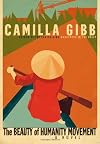
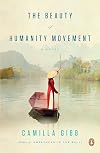
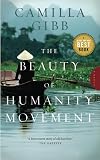
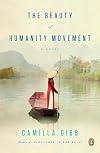
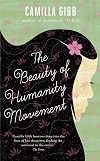
The Beauty of Humanity Movement
by Camilla Gibb
On This Page
Description
Searching for answers about her dissident father's disappearance, a Vietnamese-American art curator returns to her ancestral country, where she meets a venerable pho stall soup maker and a dynamic young tour guide whose historical and cultural insights irrevocably shape her life.Tags
Recommendations














Member Reviews
A surprisingly touching story of family, fealty, and friendship set in present-day Hanoi but steeped in the history of that troubled land. Old Man Hung is an itinerant pho’-seller (a Vietnamese noodle soup) whose customers loyally follow him from one location in the city to another as he gets pushed along. The doi moi (the relatively recent Vietnamese embrace of limited capitalism) has not transformed Hung’s business. He is faithful to his ancient formula and the care of his community, admittedly a community on the edge, literally, a shanty town on the shore of a polluted pond. He looks after his neighbours much as he looks after his customers. But his greatest care is for the memory of the artists and intellectuals who used to show more gather in his pho’ shop (when he still had a shop) back in the early 1950s. This clique of committed artists thought there was no incompatibility between the welcome encroach of communism which would depose their colonial rulers and the individual, subjective critical perspective that art demands. They may have been naive, but their belief, commitment, and deeds (continuing to publish a banned art journal) were heroic. It is this artistic movement — the beauty of humanity movement — that gives the novel its title. Despite losing everything in the interim, even the journals of his treasured poets and artists, Old Man Hung clings to their vision. But his own vision is failing and his memory is too. And it looks as though he has lost the words of the poet, Dao, that he once knew as well as his own heart.
Into this environment comes Maggie, the daughter of one of Old Man Hung’s artists. She was born in Vietnam but fled with her mother to the USA at the fall of Saigon. She has returned to Hanoi to take up a post as curator for a cache of artworks discovered in the hold of the Metropole hotel, but also on a quest for information concerning the fate of her father, who did not escape. Maggie comes into contact, eventually, with Old Man Hung and gradually the story emerges of both her father, the artistic movement to which he belonged, and the abiding love that Hung has harboured all these years for Lan, his estranged neighbour.
The writing here is measured and aromatic. Gibb’s descriptions of Hung’s culinary creations will leave you with an overwhelming desire to visit a Vietnamese restaurant, knowing all the while that it will not live up to Hung’s food. But equally stimulating is Gibb’s sensitive treatment of art and its demands, and the horrors that we visit upon each other in the name of political progress. The novel does not attempt to be a definitive statement on the conflict that so plagued the Americans. Rather it is, in many respects, a quiet exploration of a single simple man’s life and the myriad lives that he touches one way or another. Nicely done. show less
Into this environment comes Maggie, the daughter of one of Old Man Hung’s artists. She was born in Vietnam but fled with her mother to the USA at the fall of Saigon. She has returned to Hanoi to take up a post as curator for a cache of artworks discovered in the hold of the Metropole hotel, but also on a quest for information concerning the fate of her father, who did not escape. Maggie comes into contact, eventually, with Old Man Hung and gradually the story emerges of both her father, the artistic movement to which he belonged, and the abiding love that Hung has harboured all these years for Lan, his estranged neighbour.
The writing here is measured and aromatic. Gibb’s descriptions of Hung’s culinary creations will leave you with an overwhelming desire to visit a Vietnamese restaurant, knowing all the while that it will not live up to Hung’s food. But equally stimulating is Gibb’s sensitive treatment of art and its demands, and the horrors that we visit upon each other in the name of political progress. The novel does not attempt to be a definitive statement on the conflict that so plagued the Americans. Rather it is, in many respects, a quiet exploration of a single simple man’s life and the myriad lives that he touches one way or another. Nicely done. show less
I didn't expect to like this, because I am not generally drawn to literary fiction—especially Canadian literary fiction—and have little interest in the subject of Vietnamese politics. It didn't help that I had also been warned that it wasn't a very cheerful book. So I went in with low expectations and was favourably impressed.
The story swirls around the memories of an elderly man who has survived decades of political turmoil and war in Vietnam, living in poverty, and selling pho from a portable stall. Such a story will obviously include violence and atrocities, and the author handles it in such a way that it is appalling, but not graphic. Despite a lifetime of deprivation and loss, Old Man Hung matter of factly carries on making show more his soup, and remains loyal to his friends and his ideals. Hung and the characters who gravitate around him are, indeed, beautiful humans. While reading, I had feelings of horror, sorrow, and regret, but my final impression was one of optimism, as the characters' love, kindness, and honour shone through.
The book is beautifully written, and I didn't find any flaws in style, plot, or characterization. Will I read more by the author? Probably not, because while I admire this book, it is still not a type that I'm likely to seek out. But I would highly recommend it to anyone who does like this sort of thing. Just don't read it while you're hungry, because the food descriptions will make your mouth water and stomach rumble. show less
The story swirls around the memories of an elderly man who has survived decades of political turmoil and war in Vietnam, living in poverty, and selling pho from a portable stall. Such a story will obviously include violence and atrocities, and the author handles it in such a way that it is appalling, but not graphic. Despite a lifetime of deprivation and loss, Old Man Hung matter of factly carries on making show more his soup, and remains loyal to his friends and his ideals. Hung and the characters who gravitate around him are, indeed, beautiful humans. While reading, I had feelings of horror, sorrow, and regret, but my final impression was one of optimism, as the characters' love, kindness, and honour shone through.
The book is beautifully written, and I didn't find any flaws in style, plot, or characterization. Will I read more by the author? Probably not, because while I admire this book, it is still not a type that I'm likely to seek out. But I would highly recommend it to anyone who does like this sort of thing. Just don't read it while you're hungry, because the food descriptions will make your mouth water and stomach rumble. show less
Asia has long fascinated me, Vietnam in particular. I can't really account for the appeal other than acknowledging that there is one. And modern Vietnam, the Vietnam to emerge from the devastation of the war and then the restrictive and punitive Communist measures, intrigues me most of all. It is this Vietnam then, that Gibb evokes in her newest novel, a novel about art and truth and conviction.
Opening with itinerent pho maker Old Man Hung finding the latest in a never-ending series of places to sell his fragrant broth, the reader is introduced to this man who had once been the center around whom an arts movement once flourished and the two men amongst his regulars, father Binh and son Tu, who have become the closest thing he has to a show more family. Into Hung's regular existence comes art curator Maggie Ly, a Viet Kieu, born in Vietnam but raised overseas (America in Maggie's case). Maggie is searching for any sign of her father's past but she has only hit dead ends until she finds Old Man Hung and a faint glimmer of hope. Maggie's presence and her inquiry about her father, an artist who escaped a reeducation camp with his hands permanently crippled, jolts Hung back into his past.
Hung's pho shop had, in the years immediately following the war, been a meeting place, an anchor, for the Beauty of Humanity Movement group of artists who daringly questioned the path the country was taking. Dao, Binh's father and Tu's grandfather, had been at the forefront of the movement, insisting on using artwork and poetry revolutionarily. But the group went too far and they were betrayed, Hung lost his shop, and Binh lost his father. With the opening up of Vietnam, Maggie has come in hopes of finding a trace of her father, most likely in this group of determined artists and poets who stood by their convictions even in the face of harassment and arrest.
The narrative is triple-stranded, focused on Hung's memories of the past and of all those who died, Maggie's history and search for proof of her father's life before her, and Tu's sanitized or narrowly focused history of Vietnam offered in the course of his job as a tour guide for Westerners. All three of these threads are important to the tale although Hung's have perhaps the most weight as they tie everything together; the past informs the future. The writing is patient, unfolding slowly, revealing the smallest of historical information carefully and almost secretively. Descriptions are vivid and full although occasionally a bit much. Like Hung's pho, Gibb's novel is simple, well-balanced, and satisfying as well as saving room for the unexpected to pull all the flavors together into a seamless whole. Book clubs looking for a very different perspective on the Vietnam War and its long-term effect on the Vietnamese people will find much to discuss and enjoy here. show less
Opening with itinerent pho maker Old Man Hung finding the latest in a never-ending series of places to sell his fragrant broth, the reader is introduced to this man who had once been the center around whom an arts movement once flourished and the two men amongst his regulars, father Binh and son Tu, who have become the closest thing he has to a show more family. Into Hung's regular existence comes art curator Maggie Ly, a Viet Kieu, born in Vietnam but raised overseas (America in Maggie's case). Maggie is searching for any sign of her father's past but she has only hit dead ends until she finds Old Man Hung and a faint glimmer of hope. Maggie's presence and her inquiry about her father, an artist who escaped a reeducation camp with his hands permanently crippled, jolts Hung back into his past.
Hung's pho shop had, in the years immediately following the war, been a meeting place, an anchor, for the Beauty of Humanity Movement group of artists who daringly questioned the path the country was taking. Dao, Binh's father and Tu's grandfather, had been at the forefront of the movement, insisting on using artwork and poetry revolutionarily. But the group went too far and they were betrayed, Hung lost his shop, and Binh lost his father. With the opening up of Vietnam, Maggie has come in hopes of finding a trace of her father, most likely in this group of determined artists and poets who stood by their convictions even in the face of harassment and arrest.
The narrative is triple-stranded, focused on Hung's memories of the past and of all those who died, Maggie's history and search for proof of her father's life before her, and Tu's sanitized or narrowly focused history of Vietnam offered in the course of his job as a tour guide for Westerners. All three of these threads are important to the tale although Hung's have perhaps the most weight as they tie everything together; the past informs the future. The writing is patient, unfolding slowly, revealing the smallest of historical information carefully and almost secretively. Descriptions are vivid and full although occasionally a bit much. Like Hung's pho, Gibb's novel is simple, well-balanced, and satisfying as well as saving room for the unexpected to pull all the flavors together into a seamless whole. Book clubs looking for a very different perspective on the Vietnam War and its long-term effect on the Vietnamese people will find much to discuss and enjoy here. show less
A wonderful book but DON'T read this on Kindle!
I loved this book, so full of feeling and emotion - but the Kindle version has formatting problems and all the Vietnamese words appear huge in comparison to the remaining script. As this includes all the names, the problem occurs several times on most pages. This has resulted in several Amazon.com reviewers rating the book as 1 or 2 stars where it should definitely be up in the top rankings.
The main character, Old Man Hung, is a master at the art of making Pho, the local Vietnamese soup that is so popular for breakfast. Once he had a shop, but all this has been taken away by the authorites over the years and now he scrapes together a living as an itinerrant Pho seller, setting up shop in a show more different spot each day, still evading the authorites.
His home now is in a poverty stricken wasteland by a muddy lake, where he holds together a community of down and outs living in rotting shacks. Once, however, he ran a Pho cafe, a central meeting point for many of the art community who discussed poetry and tried to express opinions against the regime. Needless to say they were all eventually arrested, tortured, murdered. Only Hung remains with his failing memories, trying to scratch a living.
Hung's only 'family' are Binh and his son Tu. Hung knew Binh's father, Dao, a prominent figure amongst the artists, the only person who treated Hung as an intelligent person and drew him into the artists' fold. Hung preserves his memory and is, in turn, watched over by Binh and Tu.
Into this fascinating mix comes Maggie, a Vietnamese who escaped as a child, with her mother, in the last of the evacuation planes to America. Her artist father never made it and she has returned to Hanoi to try and trace memories of him that might linger amongst artistic circles. As a Vietnamese American she is known as Viet Kieu, a foreigner with Vietnamese features, but still a foreigner.
The interactions between these four people and the history wrapped up in their stories is beautifully evoked by Ms Gibb. The feel of modern day Hanoi, with its mix of expensive hotels and tourists, alongside extreme poverty, is tangible.
I enjoyed Sweetness in the Belly by Camilla Gibb, but this was even better - I didn't want to put this book down. I had other books I should have been reading but this one kept pushing itself forward. One of the best books I've read for a long time.
Read it!! show less
I loved this book, so full of feeling and emotion - but the Kindle version has formatting problems and all the Vietnamese words appear huge in comparison to the remaining script. As this includes all the names, the problem occurs several times on most pages. This has resulted in several Amazon.com reviewers rating the book as 1 or 2 stars where it should definitely be up in the top rankings.
The main character, Old Man Hung, is a master at the art of making Pho, the local Vietnamese soup that is so popular for breakfast. Once he had a shop, but all this has been taken away by the authorites over the years and now he scrapes together a living as an itinerrant Pho seller, setting up shop in a show more different spot each day, still evading the authorites.
His home now is in a poverty stricken wasteland by a muddy lake, where he holds together a community of down and outs living in rotting shacks. Once, however, he ran a Pho cafe, a central meeting point for many of the art community who discussed poetry and tried to express opinions against the regime. Needless to say they were all eventually arrested, tortured, murdered. Only Hung remains with his failing memories, trying to scratch a living.
Hung's only 'family' are Binh and his son Tu. Hung knew Binh's father, Dao, a prominent figure amongst the artists, the only person who treated Hung as an intelligent person and drew him into the artists' fold. Hung preserves his memory and is, in turn, watched over by Binh and Tu.
Into this fascinating mix comes Maggie, a Vietnamese who escaped as a child, with her mother, in the last of the evacuation planes to America. Her artist father never made it and she has returned to Hanoi to try and trace memories of him that might linger amongst artistic circles. As a Vietnamese American she is known as Viet Kieu, a foreigner with Vietnamese features, but still a foreigner.
The interactions between these four people and the history wrapped up in their stories is beautifully evoked by Ms Gibb. The feel of modern day Hanoi, with its mix of expensive hotels and tourists, alongside extreme poverty, is tangible.
I enjoyed Sweetness in the Belly by Camilla Gibb, but this was even better - I didn't want to put this book down. I had other books I should have been reading but this one kept pushing itself forward. One of the best books I've read for a long time.
Read it!! show less
I very much enjoyed "The Beauty of Humanity Movement." It's a lovely story that features " Old Man Hung" who tells us the story of Vietnam from modern times to back before the Second world war and before. Hung tells us the story through events in his life. One of the lovely aspects of the story is the sense of respect and love of family or adopted family in Old Man Hung's case. On one level it's a beautiful story of love and respect for the old and the new in Vietnam. I came away from reading the book with an entirely new perspective on Vietnam and much more positive one than I had previously held. One of the characters, Maggie, is a young woman who fled Vietnam as young child with her mother to the US, and returns to Vietnam to find show more her roots. We are able to "see" and understand Vietnam from both a very modern perspective as well as historical Vietnam.
I gained a large amount of knowledge about Vietnam and often found myself often referring to Wikipedia to understand some of the long history of Vietnam. One thing that I took away from this novel -which was written by a social anthropologist - was that the idea that the US war had much of an impact on Vietnam is mainly a western construct. That was fascinating to me , because as a westerner , most of what I have known about Vietnam has been from Western perspective. I learned that Vietnam has been fighting many larger battles throughout all of it's history - with China, the Occupation of France for some hundreds of year, the attack of the Japanese into Vietnam etc. The book certainly does not focus on any battles, but it just refers to various parts of history in Vietnam. [The Beauty of Humanity ] is first and foremost a lovely story but I really took away a new understanding of Vietnam and that mattered to me.
I will definitely read Camilla Gibb's other book, The Sweetness in the Belly, which takes place in Ethiopia.
This quote from the The Beauty of Humanity really stood out to me
" No more art or artists," he says. " Just American's and their obsession with the war."
"It runs very deep in the American psyche," says Maggie.
If the Vietnamese were so obsessed , if they did not didn't get over the war and allowed themselves to lie down and be haunted or just lay down like dogs, where would they be today? In the South they'd be speaking Khmer; in the North they'd be speaking Mandarin. The Vietnamese would yet another ethnic minority being kicked about like a football by the big boots in Beijing."
My only complaint with the story is that it starts out very slowly and it sometimes moved more slowly than I felt was needed, though I enjoy reading slow , thought provoking books.
3.7 stars. Well worth the read if you want a different perspective on Vietnam and a beautifully told story. show less
I gained a large amount of knowledge about Vietnam and often found myself often referring to Wikipedia to understand some of the long history of Vietnam. One thing that I took away from this novel -which was written by a social anthropologist - was that the idea that the US war had much of an impact on Vietnam is mainly a western construct. That was fascinating to me , because as a westerner , most of what I have known about Vietnam has been from Western perspective. I learned that Vietnam has been fighting many larger battles throughout all of it's history - with China, the Occupation of France for some hundreds of year, the attack of the Japanese into Vietnam etc. The book certainly does not focus on any battles, but it just refers to various parts of history in Vietnam. [The Beauty of Humanity ] is first and foremost a lovely story but I really took away a new understanding of Vietnam and that mattered to me.
I will definitely read Camilla Gibb's other book, The Sweetness in the Belly, which takes place in Ethiopia.
This quote from the The Beauty of Humanity really stood out to me
" No more art or artists," he says. " Just American's and their obsession with the war."
"It runs very deep in the American psyche," says Maggie.
If the Vietnamese were so obsessed , if they did not didn't get over the war and allowed themselves to lie down and be haunted or just lay down like dogs, where would they be today? In the South they'd be speaking Khmer; in the North they'd be speaking Mandarin. The Vietnamese would yet another ethnic minority being kicked about like a football by the big boots in Beijing."
My only complaint with the story is that it starts out very slowly and it sometimes moved more slowly than I felt was needed, though I enjoy reading slow , thought provoking books.
3.7 stars. Well worth the read if you want a different perspective on Vietnam and a beautifully told story. show less
Camilla Gibb's The Beauty of Humanity Movement, a novel of contemporary Vietnam, skillfully mingles past and present into an arresting and effective narrative. Hung is an itinerant pho seller who once had his own restaurant, until it was confiscated by the communists. More than fifty years later he still trundles a cart around Hanoi, feeding a faithful corps of customers who depend upon his magical recipe to start their day. In the 1950s Hung's restaurant was a haven for a collection of artists and writers who refused to conform to the communist ideology of the time, who insisted on expressing themselves despite the dangers and published their work in defiance of a government that had branded them as counter-revolutionaries. After a show more brief period of productivity the group was broken up by the government; some were killed and others were sent to re-education camps. All these years later Hung remains close to the family of the group’s ringleader, a revered poet named Dao, to whom he keeps a shrine in the shack where he lives beside a polluted lake. Dao’s son Binh and grandson Tu keep watch over the old man. Enter Maggie, the daughter of the artist Ly Van Hai—one of the group from Hung’s restaurant—who managed to get his wife and daughter out of Saigon as it was being overrun by communist forces in 1975, but who in the end did not survive. Maggie, an art curator, grew up in the US, and is thoroughly American in her habits and attitudes. The main thread of Gibb’s story follows Maggie’s efforts to track down some remnant of her father’s life, a search that brings her into contact with Hung, Tu, and Binh. The novel provides a convincing and vivid portrait of what life in Vietnam is like today, but does not shy away from the horrors and hardships of a past that has seen more than its share of war and brutality. Crucial to the novel’s success is Gibb’s understanding of Vietnamese history, food and culture, which enables her to sprinkle the text with convincing and illuminating detail of a sort that brings this complex and highly spiritual country and its people to life on the page. The novel’s weakness is a soft ending, which is content to provide everyone with exactly what his or her heart desires. But The Beauty of Humanity Movement is certainly worth reading and will be of interest to anyone who finds the exotic otherness of Vietnam alluring, a country that has not yet resolved the many contradictions at its core. show less
"Hung is the heart of this small community on the banks of a polluted pond; he is good to these poor people, keeping them fed and entertained. He treats everyone with respect—from people in high places, like Miss Maggie Lý, to people without sense or legs, like his neighbour. It is humbling to have an Old Man Hung in your life. It makes you want to be a better person.” (Ch 4)
Miss Maggie Lý, born in Vietnam but raised by her mother in the US, “feels a stranger in the world in the absence of a family history.” Her father, Lý Văn Hai, an artist in Hanoi in the 1940s, was sent to re-education camp in 1956. He never saw his family again. An art curator, Maggie leaves America without hesitation when she learns that an incomparable show more collection of work has been found in a bomb shelter beneath a Hanoi. In her quest to trace the priceless works of art and, in the process, discover her own roots, she will meet Old Man Hung, who remembers that Lý Văn Hai would have been in good company. Hung remembers just how good was the poetry, the essays, and the artwork produced by the artists of The Beauty of Humanity Movement – he remembers “the fearlessness the men he knew had displayed in the face of opposition, the reach and inspiration of their work.” (Ch 1)
The elderly Hung, the central character in the novel, is unforgettable. The ninth child in his family, he recalls being sent away to live with his uncle in Hanoi in 1933; and his uncle taught him to make pho. Through decades of war and deprivation, and through the oppression of Communist rule, Hung continually learns new ways of making pho in order that he might feed his people. From the vantage point of old age and as “the best pho maker is Hanoi,” Hung observes the differences in how he has lived with the manner in which his adopted family lives: that is, post war, in an era of capitalism and popular culture. But Hung is not ready to go yet. He has a mission: “He is a blank slate upon which history will write its story. But he will wake before the story’s end, he is sure of it. He will counter the lies written there. He will fill in the gaps that remain.” (Ch 18)
Gibbs is a gifted writer with a talent for bringing home a sense of place and for writing about the connections which bind us together: love, politics, food, culture, history. I also thoroughly enjoyed her previous novel set in Ethiopia and London: A Sweetness in the Belly. Highly recommended. show less
Miss Maggie Lý, born in Vietnam but raised by her mother in the US, “feels a stranger in the world in the absence of a family history.” Her father, Lý Văn Hai, an artist in Hanoi in the 1940s, was sent to re-education camp in 1956. He never saw his family again. An art curator, Maggie leaves America without hesitation when she learns that an incomparable show more collection of work has been found in a bomb shelter beneath a Hanoi. In her quest to trace the priceless works of art and, in the process, discover her own roots, she will meet Old Man Hung, who remembers that Lý Văn Hai would have been in good company. Hung remembers just how good was the poetry, the essays, and the artwork produced by the artists of The Beauty of Humanity Movement – he remembers “the fearlessness the men he knew had displayed in the face of opposition, the reach and inspiration of their work.” (Ch 1)
The elderly Hung, the central character in the novel, is unforgettable. The ninth child in his family, he recalls being sent away to live with his uncle in Hanoi in 1933; and his uncle taught him to make pho. Through decades of war and deprivation, and through the oppression of Communist rule, Hung continually learns new ways of making pho in order that he might feed his people. From the vantage point of old age and as “the best pho maker is Hanoi,” Hung observes the differences in how he has lived with the manner in which his adopted family lives: that is, post war, in an era of capitalism and popular culture. But Hung is not ready to go yet. He has a mission: “He is a blank slate upon which history will write its story. But he will wake before the story’s end, he is sure of it. He will counter the lies written there. He will fill in the gaps that remain.” (Ch 18)
Gibbs is a gifted writer with a talent for bringing home a sense of place and for writing about the connections which bind us together: love, politics, food, culture, history. I also thoroughly enjoyed her previous novel set in Ethiopia and London: A Sweetness in the Belly. Highly recommended. show less
Members
- Recently Added By
Author Information

9+ Works 1,911 Members
Awards and Honors
Common Knowledge
- Canonical title
- The Beauty of Humanity Movement
- People/Characters
- Old Man Hung
- Important places
- Vietnam; Hanoi, Vietnam
- Dedication
- For Phuong, Lan and Bao
- First words
- Old man Hung makes the best pho in the city and has done so for decades.
- Last words
- (Click to show. Warning: May contain spoilers.)Hung has his moments of wondering whether this is the afterlife or the present life. But then he asks himself, Does it matter?
Classifications
Statistics
- Members
- 362
- Popularity
- 86,993
- Reviews
- 31
- Rating
- (3.96)
- Languages
- English, French
- Media
- Paper, Audiobook, Ebook
- ISBNs
- 18
- ASINs
- 6