
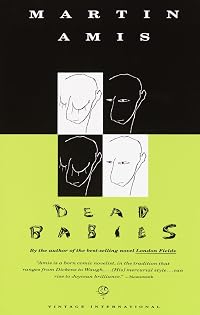
Dead Babies
by Martin Amis
On This Page
Description
If the Marquis de Sade were to crash one of P.G. Wodehouse's house parties, the chaos might resemble the nightmarishly funny goings-on in this novel by the author of London Fields. The residents of Appleseed Rectory have primed themselves both for a visit from a triad of Americans and a weekend of copious drug taking and sexual gymnastics. There's even a heifer to be slugged and a pair of doddering tenants to be ingeniously harassed. But none of these variously bright and dull young things show more has counted on the intrusion of "dead babies"--Dreary spasms of reality. Or on the uninvited presence of a mysterious prankster named Johnny, whose sinister idea of fun makes theirs look like a game of backgammon. show lessTags
Recommendations











Member Recommendations
Member Reviews
What a fucked up little novel. Each of the characters are so clearly definied it's difficult not to be engaged in their story, even though it mostly involves sex, drugs, and violence in the worst ways. Ironically, the most sane-seeming of the bunch (Quentin) is actually the worst of them becaue we find out what a manipulative and sadistic person he is towards the end.
Most of all, I feel bad for the dwarf (Keith), who really just wants to be happy, but is soo wracked with insecurity and physical pain that he attempts suicide. He manages to survive the attempt, but the final scene leaves him walking toward the house where Quentin (with axe in hand) lies in wait...
Most of all, I feel bad for the dwarf (Keith), who really just wants to be happy, but is soo wracked with insecurity and physical pain that he attempts suicide. He manages to survive the attempt, but the final scene leaves him walking toward the house where Quentin (with axe in hand) lies in wait...
“Dead Babies” is set over a chaotic weekend at Appleseed Rectory. The residents of Appleseed are preparing for the arrival of three American visitors, their expectations include drugs, sexual exploits, and pranks.
Appleseed Rectory’s residents aren't ordinary people, they embody grotesque caricatures of youthful debauchery. They are a band of misfits, each hiding insecurities behind layers of hedonism. Each character’s story unravels throughout the novel, exposing their histories and vulnerabilities allowing readers to grasp the motivations behind their grotesque behaviours. Quentin, the self-proclaimed leader, invites Skip, Roxy, and Marvell for the weekend. Skip is a cruel sadist, Roxy, a sexual libertine who brings chaos show more wherever she goes whilst Marvell is a the drug doctor whose concoctions heighten the rampant indulgence. As the weekend unfolds, tensions rise among the guests. A mysterious prankster named Johnny lurks in the shadows and as Sunday comes around his arrival only serves as a catalyst for further chaos.
I found it hard to look away from the characters self-destructive paths, and this in all probability, along with its brevity, was the only reason why I finished it. This is my fourth Martin Amis book so I should know his writing style by now and I also realise that he is something of a marmite author, you either love or hate him. Here he tries to illustrate a society consumed by self-indulgence and moral decay but if this is meant as a parody then it simply passed me by. I simply found it distasteful. show less
Appleseed Rectory’s residents aren't ordinary people, they embody grotesque caricatures of youthful debauchery. They are a band of misfits, each hiding insecurities behind layers of hedonism. Each character’s story unravels throughout the novel, exposing their histories and vulnerabilities allowing readers to grasp the motivations behind their grotesque behaviours. Quentin, the self-proclaimed leader, invites Skip, Roxy, and Marvell for the weekend. Skip is a cruel sadist, Roxy, a sexual libertine who brings chaos show more wherever she goes whilst Marvell is a the drug doctor whose concoctions heighten the rampant indulgence. As the weekend unfolds, tensions rise among the guests. A mysterious prankster named Johnny lurks in the shadows and as Sunday comes around his arrival only serves as a catalyst for further chaos.
I found it hard to look away from the characters self-destructive paths, and this in all probability, along with its brevity, was the only reason why I finished it. This is my fourth Martin Amis book so I should know his writing style by now and I also realise that he is something of a marmite author, you either love or hate him. Here he tries to illustrate a society consumed by self-indulgence and moral decay but if this is meant as a parody then it simply passed me by. I simply found it distasteful. show less
A number of the unimpressed noted recently that 2010's The Pregnant Widow is similar to Marty's earlier novel Dead Babies. This observation is grounds for drug testing in my book.
Dead Babies is a veering gonzo, assault on the senses. Screams from the asylum compete with boozy sadism and a taunt of the bedroom farce which Iris Murdoch was accomplishing at the time (1975). Amis even makes snort in the direction of Iris, for the sake of form, mind you. Dead Babies is Houellebecq on acid. The serrated sentences all draw blood and I was left in awe. It isn't so much a novel as an exercise, a Salo for the budding stylist
Dead Babies is a veering gonzo, assault on the senses. Screams from the asylum compete with boozy sadism and a taunt of the bedroom farce which Iris Murdoch was accomplishing at the time (1975). Amis even makes snort in the direction of Iris, for the sake of form, mind you. Dead Babies is Houellebecq on acid. The serrated sentences all draw blood and I was left in awe. It isn't so much a novel as an exercise, a Salo for the budding stylist
The principle embodied by this book seems to be, "if some is good, more is better." It's kind of about a group of friends who are having a debauched weekend of drugs and sex (when the drugs allow them any sort of sexual interest in each other). It's probably also kind of about the '70s attitudes of the younger part of society. They're aimless, bored, willing to try anything but sort of jaded about it all. Or they're pretending to be jaded about it all because that's what their peer group expects. In other words, the moral of the story is that hipsters aren't new, in case you thought they were.
And as it turns out, the weekend is a little more than they can handle on a number of levels. Bullying, drugs, sexual politics, weird phobias, show more mother issues, father issues, casual prostitution, and existential searching for something more are all parts of the narrative. But that makes it sound more interesting to read than it really is in practice. The fact of the matter is that the characters are pretty much uniformly either vile, carelessly cruel, self-destructive or all of the above. I can get past that, but at the bottom of it, the old adage "if you're bored, then you must be boring" holds true for all of them.
Recommended for: nihilists, people who romanticize the "free love" era.
Quote: "The inhabitants suffer, too, from curious mental complaints brought on by prolonged use of drugs, complaints that can be alleviated only by drugs of different kinds. And so Appleseed Rectory is a place of shifting outlines and imploded vacuums; it is a place of lagging time and false memory, a place of street sadness, night fatigue and cancelled sex." show less
And as it turns out, the weekend is a little more than they can handle on a number of levels. Bullying, drugs, sexual politics, weird phobias, show more mother issues, father issues, casual prostitution, and existential searching for something more are all parts of the narrative. But that makes it sound more interesting to read than it really is in practice. The fact of the matter is that the characters are pretty much uniformly either vile, carelessly cruel, self-destructive or all of the above. I can get past that, but at the bottom of it, the old adage "if you're bored, then you must be boring" holds true for all of them.
Recommended for: nihilists, people who romanticize the "free love" era.
Quote: "The inhabitants suffer, too, from curious mental complaints brought on by prolonged use of drugs, complaints that can be alleviated only by drugs of different kinds. And so Appleseed Rectory is a place of shifting outlines and imploded vacuums; it is a place of lagging time and false memory, a place of street sadness, night fatigue and cancelled sex." show less
In this book, Martin Amis is a wonderful satirist of a (mostly imagined?) kind of post-sixties upper class British youth decadence. I wanted to put this book down repeatedly in disgust, but kept going till the end to gather up the little Amis gestures. The exaggerated excesses, cruelty, and callous blasé attitude -- along with the privileged pointlessness of their lives -- make the characters all "dead babies."
Like a British version of Less Than Zero but without empathy for any of its characters. Goes from being the sex and drug parties of privileged scumbags to close with absurd and meaningless violence. Gets an extra star for good, though self-satisfied writing. Avoid.
I didn't like any of the characters and it seemed to be written by a writer on speed himself. I know about the writer's obsession with Nabokov and therefore I don't trust any of the characters. The novel is some topsy turvy version of an Agatha Christie story. God I sometimes hated it and the next moment I was still intrigued by it. There are moments of almost real laughter as with most Martin Amis novels, but most of the time the novel is just grotesquely disturbing. The ideals of the sixties have gone and the only thing that stays is a world packed with decadent rich fuckers all disturbed by those same ideals. Of course you feel sorry for them, but then you still realise that it is all no excuse for their behaviour.
On the other hand show more the novel is nothing more that a typical English black humour feast part of the same tradition as Bottom and The Young Ones. In that light the characters are all real life actors who become the victims of this utterly black world created by the writer and his accomplice. I have never been intrigued by this version of English humour - it actually bores me a lot. Nevertheless, because of the psychological background of the characters and the confusing ending the novel is worth more than the tv-series afore mentioned.
Over all it's an okay book that at least confuses you and makes you laugh the next second. show less
On the other hand show more the novel is nothing more that a typical English black humour feast part of the same tradition as Bottom and The Young Ones. In that light the characters are all real life actors who become the victims of this utterly black world created by the writer and his accomplice. I have never been intrigued by this version of English humour - it actually bores me a lot. Nevertheless, because of the psychological background of the characters and the confusing ending the novel is worth more than the tv-series afore mentioned.
Over all it's an okay book that at least confuses you and makes you laugh the next second. show less
Members
- Recently Added By
Published Reviews
"Amis' second novel ranks among his most incendiary with its mordant wit, black comedy, and sense of the violently absurd."
added by GYKM
Lists

1001 Books You Must Read Before You Die
1,448 works; 1,133 members

Dishonourable Mentions of 2013
189 works; 63 members

Cheesy pleasures and odd lots!
119 works; 7 members

living room bookshelf
150 works; 1 member
Author Information

58+ Works 29,708 Members
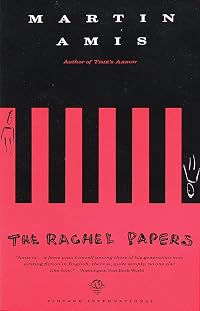
Martin Amis, son of the novelist Kingsley Amis, was born August 25, 1949. His childhood was spent traveling with his famous father. From 1969 to 1971 he attended Exeter College at Oxford University. After graduating, he worked for the Times Literary Supplement and later as special writer for the Observer. Amis published his first novel, The Rachel show more Papers, in 1973, which received the prestigious Somerset Maugham Award in 1974. Other titles include Dead Babies (1976), Other People: A Mystery Story (1981); London Fields (1989), The Information (1995), and Night Train (1997). Martin Amis has been called the voice of his generation. His novels are controversial, often satiric and dark, concentrating on urban low life. His style has been compared to that of Graham Greene, Philip Larkin and Saul Bellow, among others. He is currently Professor of Creative Writing at the Centre for New Writing at the University of Manchester. In 2008, The Times named him one of the 50 greatest British writers since 1945. (Bowker Author Biography) show less
Some Editions
Awards and Honors
Notable Lists
Common Knowledge
- Canonical title
- Dead Babies
- Original title
- Dead Babies
- Alternate titles
- Dark Secrets
- Original publication date
- 1975
- People/Characters
- Quentin Villiers; Andy Adorno; Giles Coldstream; Keith Whitehead; Celia Villiers; Diana Parry (show all 11); Marvell Buzhardt; Skip Marshall; Roxeanne Smith; Lucy Littlejohn; Johnny
- Important places
- England, UK
- Epigraph
- ...and so even when [the satirist] presents a vision of the future, his business is not prophecy, just as his subject is not tomorrow...it is today.
-Menippus - Dedication
- For Julie
- First words
- There were five bedrooms.
- Last words
- (Click to show. Warning: May contain spoilers.)As he watched Keith move up the drive, his green eyes flashed into the dawn like wild, dying suns.
- Original language
- English
- Disambiguation notice
- Dead Babies was also published under the title Dark Secrets.
Classifications
Statistics
- Members
- 1,103
- Popularity
- 22,968
- Reviews
- 18
- Rating
- (3.21)
- Languages
- 6 — English, Estonian, French, Italian, Romanian, Spanish
- Media
- Paper, Audiobook, Ebook
- ISBNs
- 22
- ASINs
- 7