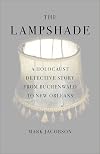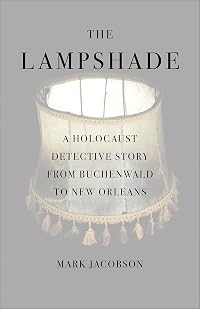
The Lampshade
by Mark Jacobson
On This Page
Description
The journey that takes Mark Jacobson around the world began when a friend bought a lamp at a rummage sale and was told that it was made from the skins of Jews. While he didn't believe the story, he sent it to Mark, saying, "You're a journalist, you figure out what it is."After three years of research in America, Poland, Germany, and Israel, and with the assistance of forensic experts, DNA analysis, and consultations with Yad Yashem and the historical director at Buchenwald, Jacobson has show more investigated not only the truth of the thing itself but of the idea of it. He also analyzes our understanding of history; of myths, facts, and evidence; and of the concept of evil.Despite extensive historical reporting of items made of human skin in eyewitness accounts from Nazi concentration camps, this is the first known discovery and investigation of such an artifact. show lessTags
Recommendations













































Member Reviews
A very interesting story about a horrifying artefact. The subtitle "...from Buchenwald to New Orleans" is only too accurate. There is a lot of travel in the book and the author spoke to many people, some of whom seemed entirely irrelevant. But every red herring and every digression went into the book (some in the Notes; Jacobson kept the Notes for entire mini-stories that even he could not shoehorn into the book; perhaps he should have made more extensive use of the section). We follow Jacobson to and fro on his travels as he tells the story in pieces and revisits New Orleans multiple times. He may have revisited Germany multiple times too; quite frankly I started to lose interest around page 200, only two-thirds of the way into this show more somewhat bloated book, and skimmed the remainder. Perhaps he was in Germany once and interspersed it with New Orleans stories. Probably the most unexpected part of the story to me was the reaction of Holocaust museums to the lampshade. It was tested and proven to be made from human skin, it was of the correct era and place more or less (European, first half of 20th century), the circumstantial evidence was fairly solid, but the director of the major Holocaust museum in the USA insisted in the face of all testimony that the Nazi lampshade thing was "a myth". Her parting words were to the effect that even if it were proven to be true, it's still a myth. Yad Vashem had a more professional, museum science reason for wanting no part of it: the provenance was lacking, where might it have actually been before it was looted from the rubble of post-Katrina New Orleans? The ending of the book is inconclusive and (presumably by design) unsatisfying. Jacobson decides to bury the lampshade. He has the details mostly clear; the medical examiner from NYC who is also a cantor will sing at the funeral. Then he decides not to and takes it back to Buchenwald for further testing. It might stay there. Whatever. show less
Fascinating and horrifying book to read. After Hurricane Katrina, a man claims to have found a lampshade made of human skin. Mark Jacobson tracks down it's history and much much more.
It was interesting and well-written, if a little creepy. A lot I didn't know. Not to be insensitive, but I would have thrown the thing away.
Ratings
Members
- Recently Added By
Author Information
12+ Works 625 Members
Mark Jacobson is the author of the novels Gojiro and Everyone and No One. He has been a contributing editor to New York, Rolling Stone, and Natural History, as well as a staff writer at The Village Voice, and a columnist for Esquire Rae Jacobson is a writer living in Brooklyn, where she is working on a novel
Awards and Honors
Distinctions
Common Knowledge
- Canonical title
- The Lampshade
- Alternate titles
- The Lampshade
Classifications
- Genres
- Nonfiction, History, General Nonfiction, Travel, Biography & Memoir
- DDC/MDS
- 940.5318 — History & geography History of Europe History of Europe 1918- World War II, 1939-1945 Social, political, economic history; Holocaust Holocaust
- LCC
- D804.7 .M67 .J33 — History of Europe, Asia, Africa and Oceania History (General) World War II (1939-1945)
- BISAC
Statistics
- Members
- 154
- Popularity
- 212,837
- Reviews
- 4
- Rating
- (3.75)
- Languages
- English
- Media
- Paper, Audiobook, Ebook
- ISBNs
- 6
- ASINs
- 7