
Chil Rajchman (1914–2004)
Author of The Last Jew of Treblinka: A Memoir
About the Author
Works by Chil Rajchman
Tagged
Common Knowledge
- Legal name
- Rajchman, Yechiel Meyer
- Other names
- Ruminowski, Henryk
Reichman, Henryk
Rajchman, Chil Meyer
Reichman, Yechiel - Birthdate
- 1914-06-14
- Date of death
- 2004-05-07
- Gender
- male
- Occupations
- memoirist
Holocaust survivor
resistance member - Short biography
- Chil Rajchman, alias Henryk Ruminowski (his nom de guerre in the resistance), was born to a Jewish family in Łódź, Poland. After the invasion of Poland by Germany in World War II, he and his family were forced into the Warsaw Ghetto. In 1942, along with his younger sister, he was deported to the Nazi extermination camp at Treblinka. There he was put to work with the Jewish Sonderkommando unit, which disposed of the bodies. On August 2, 1943, along with about 100 other such prisoners, he joined an uprising and escaped from Treblinka. After hiding in the countryside for some time, he returned to Warsaw, where he lived under false identity papers issued by the Polish underground. During this time, he joined the Polish Socialist Party and the underground resistance in the Ghetto. In 1945, he was liberated by the advancing Red Army and went back to his hometown to discover that nearly all the Jews had been murdered. In 1946, he emigrated with his new wife to France and then to Uruguay. He died in Montevideo in 2004. It was not until 2009, five years after his death, that his memoir of Treblinka, written in Yiddish in Warsaw in 1944-1945, was first published. It appeared in France under the title Je suis le dernier Juif (I Am the Last Jew). It was translated into English and published in 2011 under the title The Last Jew of Treblinka: A Memoir, with a preface by Elie Wiesel.
- Nationality
- Poland
Uruguay - Birthplace
- Lodz, Poland
- Places of residence
- Lodz, Poland
Montevideo, Uruguay
Warsaw Ghetto
Lublin, Poland
Treblinka - Place of death
- Montevideo, Uruguay
Members
Reviews
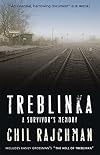
Treblinka is less infamous compared to Auschwitz. The main difference between the two is that Auschwitz was a work as well as an extermination camp but on the other hand, Treblinka was solely an extermination camp. Nobody that arrived at Treblinka survived more than a few hours, as they were gassed immediately. So, after the war, there were very few eyewitnesses who could recount the horrors of Treblinka. This is the reason why Treblinka didn’t surpass the infamy of Auschwitz. Only Jews show more that were able to survive death on arrival were those who were assigned to dispose off any traces of the corpses. Chil Rajchman was one of them.
‘Treblinka: A Survivor’s Memory’ is the most harrowing account I have ever read of the atrocities committed by the Nazis in the concentration camps. And I should mention the fact that there were even Ukrainian guards (144 of them) along with the SS (100 numbers) at Treblinka who “ran” the camp.
So, why should anyone read this piece of history that might give them nightmares for a very longtime? Renowned Russian war reporter and writer Vasily Grossman lays it very aptly:
It is the writer’s duty to tell the terrible truth, and it is a reader’s civic duty to learn this truth. To turn away, to close one’s eyes and walk past is to insult the memory of those who perished. show less
‘Treblinka: A Survivor’s Memory’ is the most harrowing account I have ever read of the atrocities committed by the Nazis in the concentration camps. And I should mention the fact that there were even Ukrainian guards (144 of them) along with the SS (100 numbers) at Treblinka who “ran” the camp.
So, why should anyone read this piece of history that might give them nightmares for a very longtime? Renowned Russian war reporter and writer Vasily Grossman lays it very aptly:
It is the writer’s duty to tell the terrible truth, and it is a reader’s civic duty to learn this truth. To turn away, to close one’s eyes and walk past is to insult the memory of those who perished. show less
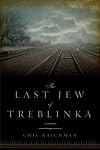
To anyone who has read as many survivor's memoires of the Holocaust as I have, it is plainly obvious why this one was not as widely read as the others. Authors like Primo Levi and Elie Wiesel made bestseller lists because they have an innate literary talent that Chil Rajchman is sorely missing, which does much to make their books accessible to a global audience. That being said, a way with words or lack-there-of should not detract from this book. Rajchman is one of the few survivors of show more Treblinka, so we must look past his brusque delivery to see the incredible story of survival within. Rajchman's straightforward narrative actually betrays much about his experience, thus doing the book a favour, by exposing the emotionally deadening caused by the attrocities of his experience. show less
A truly chilling account of one of the most notorious death camps in the Nazi extermination of Jews. Rajchman tells it in such a matter of fact fashion, that even though what is being described is beyond horrifying, I could still read it. That any human could survive a year in hell like this is amazing. His witness of what was done at Treblinka is essential if one want to know the depths of depravity Hitler's Jewish solution led to. May something like this never happen again.
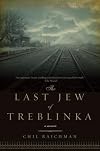
A shocking, horrifying portrait of the Treblinka death camp, written in starkly plain language by one of its few survivors. THE LAST JEW OF TREBLINKA was not published until 2011, several years after Rajchman had died, in Uruguay where he had emigrated and become a successful businessman. Rajchman only survived because he was one of a handful of prisoners to escape after an ill-fated revolt. Barely a hundred pages, you can read his account in a couple hours. This is not a book to "like." It show more is too filled with descriptions of horror, cruelty, suffering and inhumanity. Recommended only if you have a strong stomach. An important piece of Holocaust history.
- Tim Bazzett, author of the memoir, BOOKLOVER show less
- Tim Bazzett, author of the memoir, BOOKLOVER show less
Lists
You May Also Like


Associated Authors
Statistics
- Works
- 1
- Members
- 430
- Popularity
- #56,814
- Rating
- 4.1
- Reviews
- 17
- ISBNs
- 42
- Languages
- 12
