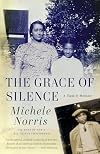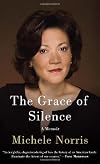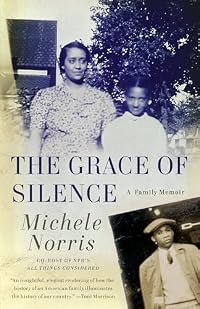
The Grace of Silence: A Memoir
by Michele Norris
On This Page
Description
The cohost of National Public Radio's "All Things Considered" set out, through original reporting, to write a book about "the hidden conversation on race" that is going on in this country. Along the way she unearthed painful family secrets that compelled her to question her own self-understanding; she traveled extensively to explore her own complex racial legacy. Her exploration is informed by hundreds of interviews with ordinary Americans and their observations about evolving attitudes show more toward race in America. show lessTags
Recommendations









Member Reviews
Michele Norris's exploration of her family history is a stunning tale of systemic racial injustice, thoroughly researched and reported, but it also raises questions about all family's and their histories: who conceals what facts, and why. Certainly, her book spoke to me not only about her family but about my own immigrant grandparents, whose stories are only partially known. Who decides what will be passed on and what will be hidden? Norris discusses these questions and they have been with me since finishing "The Grace of Silence".
This memoir by Michele Norris, cohost of NPR's All Things Considered, delivers an informative, compelling view of race relations in the US. In uncovering long hidden instances from her family's past including her father being shot by a policeman and her Grandmother traveling around making pancakes as Aunt Jemima, she explores racism past and present. The book is thoughtful, informative and well researched. The ongoing struggle is also illuminated by examples from our nation's history. In addition to enjoying a well written memoir, I have gained more specific insights than available from my privileged white male perspective.
I came across this book as my girlfriend was weeding through her room. In 2011-2012 all students at Sac State (where she was) were encouraged to read it, and it was assigned for her composition class. She didn’t care for it too much. Her loss, I say.
Norris’s name might be familiar to you who listen to NPR. She is one of their news correspondents. In 2011 she began writing a book about Obama and what his election means for African-Americans. She wound up writing a book diving into her family history and how it intertwined with many seminal events in black history. She found out things about her maternal grandma and her father that they hid from her (and everyone else) for life.
Her maternal grandma, it turned out, worked as an “Aunt show more Jemima” saleswoman in the ‘30s and ‘40s. Norris even managed to turn up a newspaper article about her grandma, celebrating her achievement as a representative of a major brand. Aunt Jemima was actually based on racist “slave mammy” stereotypes, evoking nostalgia of pre-Civil War days. Norris tries to dive into her grandma’s mind and make sense of the ambivalence she would have felt, using something traumatically racist for her own benefit and fortune.
She also found out that her father had been shot by a white cop as a young man. She was shocked. Her dad, the most law-abiding man she ever knew, a man who worked hard and took pride in his perfect garden and polished car – attacked a cop. This was in 1946, in Birmingham, a city later reviled during the Civil Rights era as the “most segregated city in America.” He had just returned from his armed forces tour overseas. Norris does some amazing searching to find police records from that time, and interviews some elderly people who were involved in her dad’s shooting and arrest.
But why did he never say? This is where Norris captures the “grace of silence.” Her grandma, dad, and all her other relatives scarred and traumatized by racism were not passive or too frightened to speak, she argues. Instead they chose to not dwell on the negative. But how, Norris asks, can the healing begin without any testimony? She understands the grace of silence, but prefers the catharsis of opening old wounds. Thankfully her way of writing about those wounds is clear, deftly mixing personal and political. Her conclusion – about bringing in everyone to conversations on racism, not just victims – is spot-on. A neat book. show less
Norris’s name might be familiar to you who listen to NPR. She is one of their news correspondents. In 2011 she began writing a book about Obama and what his election means for African-Americans. She wound up writing a book diving into her family history and how it intertwined with many seminal events in black history. She found out things about her maternal grandma and her father that they hid from her (and everyone else) for life.
Her maternal grandma, it turned out, worked as an “Aunt show more Jemima” saleswoman in the ‘30s and ‘40s. Norris even managed to turn up a newspaper article about her grandma, celebrating her achievement as a representative of a major brand. Aunt Jemima was actually based on racist “slave mammy” stereotypes, evoking nostalgia of pre-Civil War days. Norris tries to dive into her grandma’s mind and make sense of the ambivalence she would have felt, using something traumatically racist for her own benefit and fortune.
She also found out that her father had been shot by a white cop as a young man. She was shocked. Her dad, the most law-abiding man she ever knew, a man who worked hard and took pride in his perfect garden and polished car – attacked a cop. This was in 1946, in Birmingham, a city later reviled during the Civil Rights era as the “most segregated city in America.” He had just returned from his armed forces tour overseas. Norris does some amazing searching to find police records from that time, and interviews some elderly people who were involved in her dad’s shooting and arrest.
But why did he never say? This is where Norris captures the “grace of silence.” Her grandma, dad, and all her other relatives scarred and traumatized by racism were not passive or too frightened to speak, she argues. Instead they chose to not dwell on the negative. But how, Norris asks, can the healing begin without any testimony? She understands the grace of silence, but prefers the catharsis of opening old wounds. Thankfully her way of writing about those wounds is clear, deftly mixing personal and political. Her conclusion – about bringing in everyone to conversations on racism, not just victims – is spot-on. A neat book. show less
Wow. Every American should read this book. It's so much more than it appears to be on first look. The reader expects a family memoir, and that is provided along with crucial and little-known American history. This book contains so much elegant wisdom, eloquently told. Further, it asks us to do more, to be more, to understand more.
I've been listening to Michele Norris on NPR for years without knowing anything about her. You won't find much that's current about her and her work in this book, but you can find that online. What you'll find are precious gems for living well.
All that said, this book will be loved by mature readers. Immature readers or those who don't accept responsibity nor have an appreciation of the give and take of all show more kinds of communities, including family, won't get it. But then, I don't think Michele was writing for those audiences.
She has a remarkable family, full of grace, and they're still passing it down through generations. Oh that we all possessed such grace! Don't miss a word of this book. It's the sort I'll read again and give as gifts. show less
I've been listening to Michele Norris on NPR for years without knowing anything about her. You won't find much that's current about her and her work in this book, but you can find that online. What you'll find are precious gems for living well.
All that said, this book will be loved by mature readers. Immature readers or those who don't accept responsibity nor have an appreciation of the give and take of all show more kinds of communities, including family, won't get it. But then, I don't think Michele was writing for those audiences.
She has a remarkable family, full of grace, and they're still passing it down through generations. Oh that we all possessed such grace! Don't miss a word of this book. It's the sort I'll read again and give as gifts. show less
Insightful memoir weaves a narrative of the African American experience of the last 20/30 years that presents some stories that really leave you stunned. The stories related to Norris' own family are heartfelt but the one that made the most impression on me was that of Issac Woodard and his blinding at the hands of a Southern policeman. I love the details of Norris's writing. An example is when describing her search for the names of the officers involved in her father's arrest, she describes getting a sinus infection from the moldy pages and the comment on the various styles of penmanship from the policemen. I did admire the candid nature of some of the reminisces presented in the book. I also found interesting how she noted the show more downsides to desegregation in some neighborhoods. I think it shows how poverty is one of the main afflictions that serves the underbelly of other problems such as the education gap and indeed racism as well. show less
I picked this up because I heard Ms. Norris speak at a conference I attended. In this book, she tracks down her family's secret stories that shaped who they were and how segregation in America shaped her whole family. Her father's story is particularly poignant.
Michele Norris began the journey of discovering her own family experiences as a means to find a way into discussion of race. She felt an unprecedented openness for conversation, yet authentic conversation never really happened with participants still carefully walking around the subject. She attempted conversation in her own family, only to find the same experience. And so her journey began. Her story is well written with her questions, quandaries, insights, and emotions unfolding as they occurred for her. I particularly liked that she couched her journey as a search into the roles of silence and voice.
She ends her epilogue with encouragement to ask our own families to "tell me more about yourself." "There is grace in silence, and power show more to be had from listening to that which, more often than not, was left unsaid." show less
She ends her epilogue with encouragement to ask our own families to "tell me more about yourself." "There is grace in silence, and power show more to be had from listening to that which, more often than not, was left unsaid." show less
Members
- Recently Added By
Author Information

3+ Works 455 Members
Awards and Honors
Distinctions
Classifications
- Genres
- Biography & Memoir, Nonfiction, General Nonfiction, History
- DDC/MDS
- 070.92 — Computer science, information & general works News media, journalism & publishing Documentary media, educational media, news media; journalism; publishing Biography And History Biographies
- LCC
- PN4874 .N64 .A3 — Language and Literature Literature (General) Literature (General) Journalism. The periodical press, etc. By region or country
- BISAC
Statistics
- Members
- 334
- Popularity
- 94,651
- Reviews
- 22
- Rating
- (3.77)
- Languages
- English
- Media
- Paper, Audiobook, Ebook
- ISBNs
- 8
- ASINs
- 4