
Trash
by Andy Mulligan
On This Page
Description
Fourteen-year-olds Raphael and Gardo team up with a younger boy, Rat, to figure out the mysteries surrounding a bag Raphael finds during their daily life of sorting through trash in a third-world country's dump.Tags
Recommendations

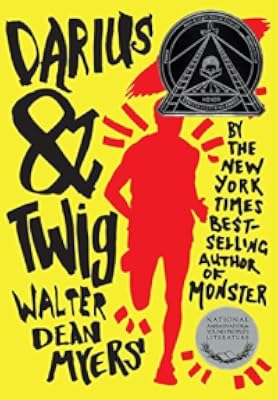
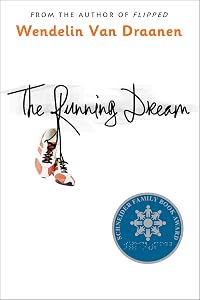
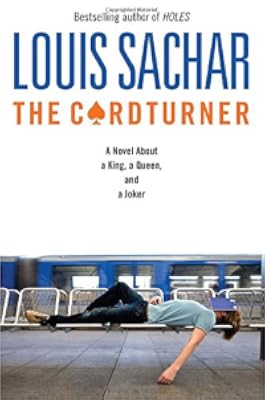
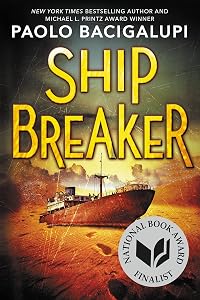
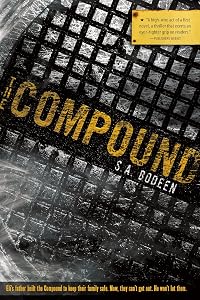
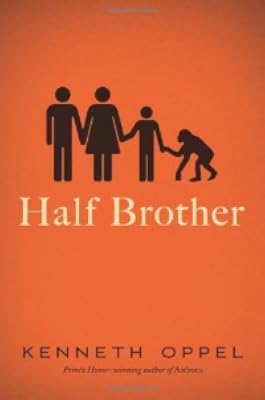


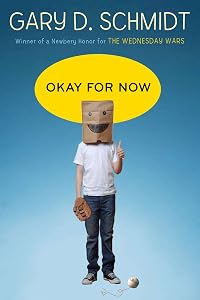
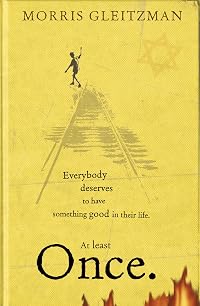






Member Recommendations
Member Reviews
This book was okay, it had a really good message, a fantastic setting, and intriguing characters, but I think the execution took me out of the story most of the time.
Most of all it's the multiple POV's that bug me. Normally I don't actually mind multiple POV's, but only when they're done well and they actually contribute to the story in some way. The POV's here seemed almost random, and I feel the idea wasn't introduced as early as it should have, to get me acquainted with the idea. Also, the POV's didn't have a consistent or even separate voices, they all were written more or less the same as the others, despite that one of the storytellers was one of the dumpsite kids and another an educated person from a different country. There were show more very, very few indications of voice. And sometimes the boys would use really formal language that removed me from the scene.
The setting though, is phenomenal. I think that's what really shined in this book. I could imagine everything perfectly, in all its stinking and hideous glory. I loved that Mulligan didn't soften any details down, he didn't lessen the poverty or the filth in which the three main boys lived.
But all in all, an okay read. I wasn't particularly drawn into the storyline but the setting and the boys kept me reading. show less
Most of all it's the multiple POV's that bug me. Normally I don't actually mind multiple POV's, but only when they're done well and they actually contribute to the story in some way. The POV's here seemed almost random, and I feel the idea wasn't introduced as early as it should have, to get me acquainted with the idea. Also, the POV's didn't have a consistent or even separate voices, they all were written more or less the same as the others, despite that one of the storytellers was one of the dumpsite kids and another an educated person from a different country. There were show more very, very few indications of voice. And sometimes the boys would use really formal language that removed me from the scene.
The setting though, is phenomenal. I think that's what really shined in this book. I could imagine everything perfectly, in all its stinking and hideous glory. I loved that Mulligan didn't soften any details down, he didn't lessen the poverty or the filth in which the three main boys lived.
But all in all, an okay read. I wasn't particularly drawn into the storyline but the setting and the boys kept me reading. show less
I've seen lots of reviews (not to mention the book's own jacket copy) that call this a near-future dystopia, or say it's set in an unspecified Latin American country. It's neither. The country is pretty clearly the Philippines (it's not specified, exactly, but it's not hidden either). And, unfortunately, this ain't the future -- here's an article about this exact situation in Manila and another in Cambodia.
The writing is spare and unsettling, and deals with issues that won't be familiar to most young readers -- not just the families living on trash heaps, but complex and terrifying political corruption and police brutality. The fact that it feels like the science fiction dystopias that are popular now might ironically make it feel more show more accessible.
Except, of course, that this ends "happily" the way [a:Paolo Bacigalupi|1226977|Paolo Bacigalupi|http://photo.goodreads.com/authors/1278742221p2/1226977.jpg]'s [b:Drowned Cities|12814594|The Drowned Cities (Ship Breaker, #2)|Paolo Bacigalupi|http://photo.goodreads.com/books/1333712780s/12814594.jpg|13677912] does: our protagonists get a one in a billion lucky break, but unlike in your typical YA dystopian novel, there's no third book in the trilogy where the protagonist saves the world. This is our world, and we need to figure that part out ourselves.
The writing is spare and unsettling, and deals with issues that won't be familiar to most young readers -- not just the families living on trash heaps, but complex and terrifying political corruption and police brutality. The fact that it feels like the science fiction dystopias that are popular now might ironically make it feel more show more accessible.
Except, of course, that this ends "happily" the way [a:Paolo Bacigalupi|1226977|Paolo Bacigalupi|http://photo.goodreads.com/authors/1278742221p2/1226977.jpg]'s [b:Drowned Cities|12814594|The Drowned Cities (Ship Breaker, #2)|Paolo Bacigalupi|http://photo.goodreads.com/books/1333712780s/12814594.jpg|13677912] does: our protagonists get a one in a billion lucky break, but unlike in your typical YA dystopian novel, there's no third book in the trilogy where the protagonist saves the world. This is our world, and we need to figure that part out ourselves.
Trash by Andy Mulligan is set in a Philippines inspired but unnamed nation. Rafael and his friends work in the dump, sifting through the trash heap for things the can either use or sell.
One day they find something top secret and dangerous. It's immediately clear that they have to keep it away from the corrupt police.
The book starts off from Rafael's point of view. He has such a strong, clear and compelling voice that he should have carried the entire story. Then other points of view are added and none of them can fill Rafael's shoes.
One day they find something top secret and dangerous. It's immediately clear that they have to keep it away from the corrupt police.
The book starts off from Rafael's point of view. He has such a strong, clear and compelling voice that he should have carried the entire story. Then other points of view are added and none of them can fill Rafael's shoes.
Raphael, Gardo and Jun-Jun are three young teenagers who live in a landfill in a smelly, corrupt third-world country (it never says it, but it's based on the Phillipines). They make their living sifting through the garbage, which is mostly made up of poop, for things they can sell: bits of metal, rags, and other things. In this way, these boys and their families barely scrape by, and sleep at night in a tower of crates that more or less keeps them away from the rats. Sometimes they stop by the school that was founded by charitable types that wanted the trash kids to have opportunities outside of the dump, but time spent at the school is time not spent finding things to sell.
Most days, these kids find only poop. But one day, Raphael show more happens upon something really good. In a trash bag from a rich part of town, he finds a leather bag with a map, a key, an ID card, and best of all, a wallet that contains quite a bit of money. Highly unusual, and he knows it's important when the police show up that night asking if anyone found this leather bag, and offering a very hefty reward for them.
Rather than give it up, Raphael enlists his friends in solving the mystery of these items, a journey that takes them to the vice-president's mansion, a heinous third-world prison, the cemetery, and other places. It's not all Scooby-Doo fun and games, though. They stumbled upon something very dangerous and it's going to take all of their garbage-kid survival skills to evade the police and avoid the awful punishment they would get.
This was pretty thrilling and really well-written. Each character has a distinct voice, and the setting was evocative. My only complaint is that it was a tad unrealistic and a bit too neat in the end. But, you know. Awful consequences for poverty-stricken children aren't as inevitable in books as they are in real life. I would highly recommend this book in any case. show less
Most days, these kids find only poop. But one day, Raphael show more happens upon something really good. In a trash bag from a rich part of town, he finds a leather bag with a map, a key, an ID card, and best of all, a wallet that contains quite a bit of money. Highly unusual, and he knows it's important when the police show up that night asking if anyone found this leather bag, and offering a very hefty reward for them.
Rather than give it up, Raphael enlists his friends in solving the mystery of these items, a journey that takes them to the vice-president's mansion, a heinous third-world prison, the cemetery, and other places. It's not all Scooby-Doo fun and games, though. They stumbled upon something very dangerous and it's going to take all of their garbage-kid survival skills to evade the police and avoid the awful punishment they would get.
This was pretty thrilling and really well-written. Each character has a distinct voice, and the setting was evocative. My only complaint is that it was a tad unrealistic and a bit too neat in the end. But, you know. Awful consequences for poverty-stricken children aren't as inevitable in books as they are in real life. I would highly recommend this book in any case. show less
This was a well written and well thought out novel with some entertaining moments - and rather a few more serious ones too. The plot was perhaps a little over-the-top, but it was enjoyable and kept me hooked as the children set about solving the mystery that they had uncovered. I believe that the youth of today need to read more about children living as these three boys did - spending their days squabbling in trash for a few coins, to really appreciate how lucky that they are. I would recommend it for ages 10 .
This story intertwines the lives of 3 young boys who live in the squalor of a dumpsite on the outskirts of their city. Finding a wallet while going about their daily business of survival ultimately leads the trio on a dangerous adventure. They need to use all their wits to keep one step ahead of the corrupt local police and government officials. By deciphering the cryptic clues and working out the codes they find contained in a map from the wallet, they end up visiting an old man in prison.....The story illustrates how good can win out over evil even when the odds seem to be stacked impossibly high!
In Behala, poverty is so rampant that the poor scrape a living together by living near a trash dump, where they wait for the trucks to offload their garbage so they can scramble to salvage what they can and repurpose. The thought of a large group of people rushing to dig through a trash heap might sound appalling, but it isn't a fictional concept. I've seen it in a travel documentary*, and it's heartbreaking.
Trash tells the story of 3 boys who make their living this way, until one of them finds something unique. A bag with a lot of money and a coded message. When the police show up the next day demanding the bag to be returned, they know they've found something important, but instead of just giving it up, they decide to investigate, show more which leads to a treasure hunt of a sort.
Despite all the serious topic discussed in the book, it didn't pack the punch that it should have. This could be a serious, literary look at poverty and government corruption, but it feels more like The Goonies most of the time. The characters didn't feel substantial enough, so their predicament didn't have the impact it might have, and their personalities all felt the same, with the exception of Jun-Jun, on occasion.
The book isn't bad, but I guess it just didn't live up to my expectations.
*Nicaragua episode of No Reservations show less
Trash tells the story of 3 boys who make their living this way, until one of them finds something unique. A bag with a lot of money and a coded message. When the police show up the next day demanding the bag to be returned, they know they've found something important, but instead of just giving it up, they decide to investigate, show more which leads to a treasure hunt of a sort.
Despite all the serious topic discussed in the book, it didn't pack the punch that it should have. This could be a serious, literary look at poverty and government corruption, but it feels more like The Goonies most of the time. The characters didn't feel substantial enough, so their predicament didn't have the impact it might have, and their personalities all felt the same, with the exception of Jun-Jun, on occasion.
The book isn't bad, but I guess it just didn't live up to my expectations.
*Nicaragua episode of No Reservations show less
Members
- Recently Added By
Lists

Carnegie Medal books I've read (shortlist and winners)
86 works; 16 members

Books Read in 2016
4,666 works; 197 members

Books Read in 2017
4,249 works; 129 members
Author Information

17 Works 1,473 Members
Awards and Honors
Awards
Distinctions
Common Knowledge
- Canonical title*
- Trash : je weet nooit wat je tussen het afval vindt...
- Original title
- Trash
- Original publication date
- 2010
- People/Characters
- Rafael Fernandez; Raphael Fernandez; Gardo; Jose Angelico; Jun-Jun (Rat); Jun-Jun | "Rat" (show all 12); Father Julliard; Pia Dante Angelico; Olivia Weston; Gabriel Olondriz; Senator Zapanta; Pia Dante
- Important places
- Behala; Behala's Mission School; Colva Prison; Naravo Cemetery
- Important events
- Day of the Dead
- First words
- My name is Raphael Fernandez and I am a dumpsite boy.
- Original language*
- Engels
*Some information comes from Common Knowledge in other languages. Click "Edit" for more information.
Classifications
- Genres
- Fiction and Literature, Tween, Kids, Teen, Young Adult
- DDC/MDS
- 823.92 — Literature & rhetoric English & Old English literatures English fiction 1900- 2000-
- LCC
- PZ7 .M918454 .T — Language and Literature Fiction and juvenile belles lettres Fiction and juvenile belles lettres Juvenile belles lettres
- BISAC
Statistics
- Members
- 1,173
- Popularity
- 21,353
- Reviews
- 46
- Rating
- (3.72)
- Languages
- 13 — Chinese, Danish, Dutch, English, Finnish, French, German, Hungarian, Italian, Portuguese, Spanish, Swedish, Turkish
- Media
- Paper, Audiobook, Ebook
- ISBNs
- 53
- ASINs
- 10