City of Truth
by James Morrow
On This Page
Description
This "delightful" Nebula Award-winning novella about a world without lies has "a sharp, unmerciful edge that would have pleased old Jonathan Swift" (Minneapolis Star-Tribune). Truth reigns supreme in the city-state of Veritas. Not even politicians lie, and weirdly frank notices abound--such as warning: this elevator maintained by people who hate their jobs: ride at your own risk. In this dystopia of mandatory candor, every preadolescent citizen is ruthlessly conditioned, through a show more Skinnerian ordeal called a "brainburn," to speak truthfully under all circumstances. Jack Sperry wouldn't dream of questioning the norms of Veritas; he's happy with his life and his respectable job as a "deconstructionist," destroying "mendacious" works of art--relics from a less honest era. But when his adored son, Toby, falls gravely ill, the truth becomes Jack's greatest enemy. Somehow our hero must overcome his brainburn and attempt to heal his child with beautiful lies. Alternately hilarious and moving, City of Truth thoughtfully explores the pitfalls inherent in any attempt to engineer a perfect society. show lessTags
Recommendations













Member Reviews
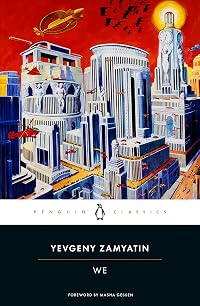
City of Truth is one of the shortest of James Morrow's novels, but it has as much conceptual heft as any of them. The setting is a near-future dystopia in which the denizens are conditioned for absolute honesty and candor. I was reminded of many other books, from Zamiatin's We to The Physiognomy of Jeffrey Ford, in terms of the way that an imagined totalitarianism and its resistance are conceived. Even outside of the satirical fantasy genre, however, the book is unusual for placing a father's relationship to his son at the center of the main character's motivation.
Morrow is best known for his autopsies and parodies of religious themes, and there is certainly much relevant to theology in a book which refers repeatedly to "putative show more souls" and where examples of lies include "God protects the innocent" and "Love is eternal." But the heart of this book is an exploration of philosophical matters that have an equal "secular" importance. The name of the protagonist Jack Sperry reads to me as derived from spero (Lat. "I hope"), which points to the ethical business of the story, and the epistemological issue is mentioned in passing by one of Sperry's insurgent ("dissembler") acquaintances as "the confusion of the empirical with the true" (87).
The book has many moments that are terribly funny, but it revolves around personal tragedy as well as the systematic cruelty of a society extrapolated from benevolent rational motives. It is short and quick-to-read, but not for the faint of heart. show less
Morrow is best known for his autopsies and parodies of religious themes, and there is certainly much relevant to theology in a book which refers repeatedly to "putative show more souls" and where examples of lies include "God protects the innocent" and "Love is eternal." But the heart of this book is an exploration of philosophical matters that have an equal "secular" importance. The name of the protagonist Jack Sperry reads to me as derived from spero (Lat. "I hope"), which points to the ethical business of the story, and the epistemological issue is mentioned in passing by one of Sperry's insurgent ("dissembler") acquaintances as "the confusion of the empirical with the true" (87).
The book has many moments that are terribly funny, but it revolves around personal tragedy as well as the systematic cruelty of a society extrapolated from benevolent rational motives. It is short and quick-to-read, but not for the faint of heart. show less
Thanks to brutal electro-shock treatments at adolescence, no one in the city of Veritas can tell a lie. For the first part of this short novel, this is used to satirize advertising and branding, very much in the model of classic Galaxy magazine. Then the story shifts into more emotional territory as the main character gains a very personal and sad reason for needing to be able to lie. As with the old Galaxy novels, it's not clear how we might get from here to there, but once the premise is established, it's handled well.
Recommended as a good example of Morrow's ability to mix satire, humor, and pathos. A good counterpoint to his longer historical novels such as The Last Witchfinder.
Recommended as a good example of Morrow's ability to mix satire, humor, and pathos. A good counterpoint to his longer historical novels such as The Last Witchfinder.
Speculative fiction, I guess, but more concerned with literary experimentation than the scientific kind. Still, Morrow plays it admirably straight here, and the results are hilarious. I'd like a Plymouth Adequate of my own, in fact. You could, I suppose, criticize this book by saying that he mixes up the concepts of personal honesty and rationalist accuracy, and you'd be right: has any scientist ever argued that you should offer your honest opinion about everyone and everything you see? Still, "City of Truth" also succeeds in demonstrating exactly how much of real life is made up of tactful silences, white lies, and euphemism and how necessary these things are to our psychological survival. It's also, as others have mentioned, terribly show more sad at the end, but Morrow essentially forces his readers to consider the potential virtues of the cheerless dystopia he constructed in the book's first half. A very neat trick indeed. show less
City of Truth is the first of what I hope will be many great book recommendations (she has Good Opinions) from my new book-best friend Lauren (as she's the only other person I interact with in a regular basis that reads books).
James Morrow's premise of a city where only the truth can be told starts as a satiric comedy. The cars have names like “Plymouth Adequate”; the protagonist's son attends “Camp Ditch-the-Kids”. However, a few chapters in, the transition to a tragedy begins. Suffice to say that nothing in fiction cuts me emotionally like fathers grieving for their children (see *Lost Boys*, *Pet Semetary*).
Morrow accomplishes a great feat of narrative also. Similes are used only as an examples of lies in chapter one, but show more by the fourth chapter, the narrator has passed from narrative similes to using full metaphors in his speech. His tight mask of truth has cracked, and he hasn't yet caught on.
The book is short (at under 175 pages), but Morrow packs so much in that its brevity is an asset. Lesser authors might have expanded the last few pages to a full chapter, but Morrow understands that after an emotional roller-coaster (yes, I cried, for the first time in a long while at a book) readers can connect many implied dots from action to action. It's my first book by Mr. Morrow, but I'll definitely be back (likely with Galapagos Regained; it's the one Lauren has been hyping). show less
James Morrow's premise of a city where only the truth can be told starts as a satiric comedy. The cars have names like “Plymouth Adequate”; the protagonist's son attends “Camp Ditch-the-Kids”. However, a few chapters in, the transition to a tragedy begins. Suffice to say that nothing in fiction cuts me emotionally like fathers grieving for their children (see *Lost Boys*, *Pet Semetary*).
Morrow accomplishes a great feat of narrative also. Similes are used only as an examples of lies in chapter one, but show more by the fourth chapter, the narrator has passed from narrative similes to using full metaphors in his speech. His tight mask of truth has cracked, and he hasn't yet caught on.
The book is short (at under 175 pages), but Morrow packs so much in that its brevity is an asset. Lesser authors might have expanded the last few pages to a full chapter, but Morrow understands that after an emotional roller-coaster (yes, I cried, for the first time in a long while at a book) readers can connect many implied dots from action to action. It's my first book by Mr. Morrow, but I'll definitely be back (likely with Galapagos Regained; it's the one Lauren has been hyping). show less
According to Kant, human beings occupy a special place in creation, and morality can be summed up in one ultimate commandment of reason, or imperative, from which all duties and obligations derive. Known as the categorical imperative, it denotes an absolute, unconditional requirement that asserts its authority in all circumstances, both required and justified as an end in itself. It is best known in its first formulation: Act only according to that maxim whereby you can, at the same time, will that it should become a universal law. Based on this Kant asserted that lying, or deception of any kind, would be forbidden under any interpretation and in any circumstance.
Imagine a city, let us call it Veritas, where all human adults are show more conditioned so that they cannot tell a lie. This is the premise of James Morrow's novel City of Truth, otherwise known as Veritas. In it he explores the implications of this for Veritas society. Some of the results are very funny, as any kind of dishonesty or unsubstantiated claims are impossible. So you have cars with such names as the "Ford Sufficient" and "Plymouth Adequate", a restaurant offering "Murdered Cow Sandwich with Wilted Hearts Lettuce and High-Cholesterol Fries", a morning TV programme called "Enduring Another Day", a "Camp Ditch-The-Kids" summer camp, the "Centre for Palliative Treatment of Hopeless Diseases" and (my favourite) an illuminated sign on the cathedral: "Assuming God Exists, Jesus May Have Been His Son". The effect on interpersonal relationships is indicated by the vow at a traditional wedding ceremony: "To have and to hold, to love and to cherish, to the degree that these mischievous and sentimental abstractions possess any meaning." All those little "white lies" and "lies by omission" which lubricate relationships in our world are impossible, so a degree of frankness which we would consider brutally rude is the norm.
The protagonist of this novella, Jack Sperry, leads a simple straightforward life as a "deconstructionist", one who destroys works of art (all basically lies) for his living. His daily life in Veritas is one which is based only on the truth: "There are no metaphors in Veritas"(p 5). He takes his adequate car to his job "at the Wittgenstein Museum in Plato Borough, giving illusion its due."(p 2) When his son Toby, who is away for the summer at "Camp Ditch-the-Kids", is bit by a Rabbit and contracts a fatal disease Jack's life is turned upside-down in more ways than one. His story is a more a fable, a satirical view of the unintended consequences of being unable to lie and the way that humans who can lie deal with the accidents of living. Filled with humorous notions, phrases, and moments that create mental double-takes for the reader this novella is a delight in both its lightness and heaviness (apologies to Milan Kundera). There are lies that we tell ourselves to help us deal with the world, but this story imagines a city where you cannot do that. It is unpleasant and humorous at the same time, but, like a philosophic thought experiment, sometimes it is the best way to illustrate a complicated philosophical concept in the context of a story or situation.
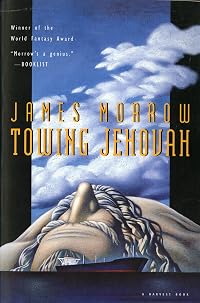
James Morrow has a reputation of presenting big ideas in clever ways (for an example read his Towing Jehovah). Morrow's style has been likened to Vonnegut's, but this wry little story reminded me of Swift. City of Truth is clever in ways that will leave you thinking about the meaning of life and the nature of truth for a long time after you finish reading the book. show less
Imagine a city, let us call it Veritas, where all human adults are show more conditioned so that they cannot tell a lie. This is the premise of James Morrow's novel City of Truth, otherwise known as Veritas. In it he explores the implications of this for Veritas society. Some of the results are very funny, as any kind of dishonesty or unsubstantiated claims are impossible. So you have cars with such names as the "Ford Sufficient" and "Plymouth Adequate", a restaurant offering "Murdered Cow Sandwich with Wilted Hearts Lettuce and High-Cholesterol Fries", a morning TV programme called "Enduring Another Day", a "Camp Ditch-The-Kids" summer camp, the "Centre for Palliative Treatment of Hopeless Diseases" and (my favourite) an illuminated sign on the cathedral: "Assuming God Exists, Jesus May Have Been His Son". The effect on interpersonal relationships is indicated by the vow at a traditional wedding ceremony: "To have and to hold, to love and to cherish, to the degree that these mischievous and sentimental abstractions possess any meaning." All those little "white lies" and "lies by omission" which lubricate relationships in our world are impossible, so a degree of frankness which we would consider brutally rude is the norm.
The protagonist of this novella, Jack Sperry, leads a simple straightforward life as a "deconstructionist", one who destroys works of art (all basically lies) for his living. His daily life in Veritas is one which is based only on the truth: "There are no metaphors in Veritas"(p 5). He takes his adequate car to his job "at the Wittgenstein Museum in Plato Borough, giving illusion its due."(p 2) When his son Toby, who is away for the summer at "Camp Ditch-the-Kids", is bit by a Rabbit and contracts a fatal disease Jack's life is turned upside-down in more ways than one. His story is a more a fable, a satirical view of the unintended consequences of being unable to lie and the way that humans who can lie deal with the accidents of living. Filled with humorous notions, phrases, and moments that create mental double-takes for the reader this novella is a delight in both its lightness and heaviness (apologies to Milan Kundera). There are lies that we tell ourselves to help us deal with the world, but this story imagines a city where you cannot do that. It is unpleasant and humorous at the same time, but, like a philosophic thought experiment, sometimes it is the best way to illustrate a complicated philosophical concept in the context of a story or situation.
James Morrow has a reputation of presenting big ideas in clever ways (for an example read his Towing Jehovah). Morrow's style has been likened to Vonnegut's, but this wry little story reminded me of Swift. City of Truth is clever in ways that will leave you thinking about the meaning of life and the nature of truth for a long time after you finish reading the book. show less
Amusing tale about the Veritas, the city where everyone is compelled to speak the truth. And no lying by omission, either. As the narrator points out after many awkward social moment, it's tough to be a citizen.
Despite milking the truth-in-advertising gag for all it's worth, I think Morrow missed a narrative opportuniy here. The Dissemblers, for of course there are some, could have supported the narrator's campaign to save his son via the Placebo Effect in order to create some effective nti-Veritas propaganda. Think of it: a subversive campaign to win hearts and minds by proving that Lying Saves Lives.
Instead, well, we're left with a rather underwhelming resolution.
Despite milking the truth-in-advertising gag for all it's worth, I think Morrow missed a narrative opportuniy here. The Dissemblers, for of course there are some, could have supported the narrator's campaign to save his son via the Placebo Effect in order to create some effective nti-Veritas propaganda. Think of it: a subversive campaign to win hearts and minds by proving that Lying Saves Lives.
Instead, well, we're left with a rather underwhelming resolution.
An interesting (and unlikely) follow-up to "Being Mortal," this early science fiction novella by James Morrow tackles the issue of how truthful to be to someone who is dying (in this case, the main character's young son). Though it is rough around the edges and does not delve deeply into character (that's not the point), I thought Morrow did a pretty good job of balancing the humorous aspects of a "City of Truth" (Veritas, the vera-city) (where no one lies by order of law and psychological conditioning), the moral and emotional issues of honesty and fabrication, and the tragic circumstance of losing someone you love (yes, truly love).
Another unexpected treat, considering I started this on December 25...Christmas makes an appearance in show more the story (the holiday with the clearest challenge to parental honesty), and Santa even makes an appearance.
If you haven't read Morrow's Godhead trilogy, you have a treat in store.
Now I find myself intrigued by another of his titles: The Continent of Lies. show less
Another unexpected treat, considering I started this on December 25...Christmas makes an appearance in show more the story (the holiday with the clearest challenge to parental honesty), and Santa even makes an appearance.
If you haven't read Morrow's Godhead trilogy, you have a treat in store.
Now I find myself intrigued by another of his titles: The Continent of Lies. show less
Members
- Recently Added By
Lists

Best Dystopias
280 works; 272 members

Nebula Award
111 works; 14 members
Author Information

68+ Works 7,964 Members
Awards and Honors
Awards
Series
Belongs to Publisher Series
Présence du futur (530)
Work Relationships
Common Knowledge
- Canonical title
- City of Truth
- Original publication date
- 1991-01
- People/Characters
- Jack Sperry; Toby Sperry
- Important places
- Veritas (Imaginary place)
- First words
- I no longer live in the City of Truth.
Classifications
Statistics
- Members
- 484
- Popularity
- 62,690
- Reviews
- 13
- Rating
- (3.80)
- Languages
- English, French, German
- Media
- Paper, Ebook
- ISBNs
- 10
- ASINs
- 3