On This Page
Description
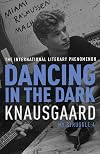
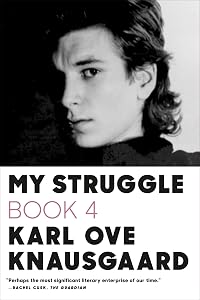
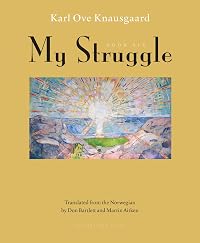
At eighteen years old, Karl Ove moves to a tiny fisherman's village in the far north of the arctic circle to work as a school teacher. No interest in the job itself, his intention is to save up enough money to travel while finding the space and time to start his writing career. Initially everything looks fine. He writes his first few short stories, finds himself accepted by the hospitable locals, and receives flattering attention from several beautiful local girls. But as the darkness of the show more long arctic nights start to consume the landscape, Karl Ove's life takes a darker turn. His writing repeats itself, his drinking escalates to some disturbing blackouts, his attempts at losing his virginity end in humiliation and shame, and to his distress, he also develops romantic feelings towards one of his students. Along the way, there are flashbacks to his high school years and the roots of his current problems. Ever present is the long shadow cast by his father, whose own sharply increasing alcohol consumption serves as an ominous backdrop to the author's lifestyle. show lessTags
Recommendations













Member Recommendations

JuliaMaria Ein junger Lehrer in einem nördlichen Dorf in Norwegen, einmal fiktiv, einmal autobiografisch.
Member Reviews
Book Four was engaging and sturdily amusing -- how could it not be as the plot is the over-eager 18 year old male on fire to lose his virginity? K.O. spends a year in northern Norway teaching in a tiny town at a tiny school. Indeed you could argue that Book Four is different from the previous three in that it has, sort of, a plot and a structure or, or at least momentum. It is also, like the first three, alternately tender and sad and irritating. This is the time when our lad's father settles into serious alcoholism and when K.O. having discovered the magical effect that drinking has on his own self-consciousness, starts depending on it. But it is also the book in which K.O. begins to emerge as the adult person he will be--his ambition show more to become a writer begins to take firm hold, his desire to learn what he needs to, to prove himself in other ways (in this case to be a decent teacher) than simply achieving his primary obsession. It is also the most "fictional" of the books, with some hints at the fictional aspect of the "stories" in the earlier books. I'm keeping in mind what K.O. said at his reading about being able to look any of the people who might appear in his books in the eye. I know his father's family doesn't think he dealt fairly and that is understandable, it's an unrelentingly harsh portrait--but even that refusal to face facts demonstrates, ironically, why the man drank himself to death. Onward to Books Five and Six. ****1/2 show less
I first started this book almost exactly a year ago, and then put it to one side as I didn't seem to be clicking with it and as I'd really enjoyed the three previous books in Knausgaard's My Struggle series I really wanted to connect with it. Sometimes you have to be in the right mood for certain types of writing.
Second time around, at first I thought that my initial instincts had been right - it was like Knausgaard was an old boyfriend I'd now become tired of; exciting at the start, but now just coming across as self-absorbed and arrogant. Which he is - there's no doubt about that. However, it wasn't too long before he drew me back into his world, and I was back hanging on his every word about the minutiae of his small-town world.
This show more fourth book in the series is set mostly in northern Norway where Knausgaard has gone straight out of high school to complete a one year temping teaching job at a school in a somewhat remote village. It's a place of complete adjustment for him. In the winter the sun never fully rises and day-to-day life takes place in pitch black darkness, and in the summer it moves to the complete opposite with night never falling.
18 year old Knausgaard has taken the job reluctantly as a means of giving himself somewhere quiet to write, yet he feels hemmed in by a village where nothing happens and everyone knows everyone else's business.
As always with Knausgaard, for me a lot of the attraction is the fascinating fly-on-the-wall perspective of daily life in a land that's so different to my own upbringing, and this book is particularly interesting as this northern Norwegian setting is very alien to Knausgaard's norm as well. Many of his pupils have no ambitions or expectations beyond joining their forefathers as fishermen, and very different social rules apply, with it being socially acceptable to drink a lot more alcohol than in southern Norway, and for children to swear at adults.
For a large section of the book Knausgaard looks back on the year or two before he left school when he was a particularly odious teenage boy, obsessed with getting into girls' knickers, drinking too much and generally being a teenage brat. There are few (if any) redeeming features of him during this period, and although he's still hugely immature during his teaching year which the rest of the book focuses on, it's a relief for the reader that he develops some redeeming features again.
Given that we're reading these translated volumes knowing of the international success Knausgaard has had as a writer, it's very interesting to read of his profound self-belief at this young age that he will become a published author, and to experience his early dedication to his craft.
So in summary, despite it being hideous to experience being inside the head of a teenage boy at times, as ever Knausgaard does it with such skill that we really live that period of his life as if we are him. Nothing is held back (including much detail on his repetitive failure at sex), and by the end I feel like I've just come back in a time machine from another life and time.
5 stars - is it really possible to ever give this man much less? show less
Second time around, at first I thought that my initial instincts had been right - it was like Knausgaard was an old boyfriend I'd now become tired of; exciting at the start, but now just coming across as self-absorbed and arrogant. Which he is - there's no doubt about that. However, it wasn't too long before he drew me back into his world, and I was back hanging on his every word about the minutiae of his small-town world.
This show more fourth book in the series is set mostly in northern Norway where Knausgaard has gone straight out of high school to complete a one year temping teaching job at a school in a somewhat remote village. It's a place of complete adjustment for him. In the winter the sun never fully rises and day-to-day life takes place in pitch black darkness, and in the summer it moves to the complete opposite with night never falling.
18 year old Knausgaard has taken the job reluctantly as a means of giving himself somewhere quiet to write, yet he feels hemmed in by a village where nothing happens and everyone knows everyone else's business.
As always with Knausgaard, for me a lot of the attraction is the fascinating fly-on-the-wall perspective of daily life in a land that's so different to my own upbringing, and this book is particularly interesting as this northern Norwegian setting is very alien to Knausgaard's norm as well. Many of his pupils have no ambitions or expectations beyond joining their forefathers as fishermen, and very different social rules apply, with it being socially acceptable to drink a lot more alcohol than in southern Norway, and for children to swear at adults.
For a large section of the book Knausgaard looks back on the year or two before he left school when he was a particularly odious teenage boy, obsessed with getting into girls' knickers, drinking too much and generally being a teenage brat. There are few (if any) redeeming features of him during this period, and although he's still hugely immature during his teaching year which the rest of the book focuses on, it's a relief for the reader that he develops some redeeming features again.
Given that we're reading these translated volumes knowing of the international success Knausgaard has had as a writer, it's very interesting to read of his profound self-belief at this young age that he will become a published author, and to experience his early dedication to his craft.
So in summary, despite it being hideous to experience being inside the head of a teenage boy at times, as ever Knausgaard does it with such skill that we really live that period of his life as if we are him. Nothing is held back (including much detail on his repetitive failure at sex), and by the end I feel like I've just come back in a time machine from another life and time.
5 stars - is it really possible to ever give this man much less? show less
The saga continues, this time mostly focusing on his early adulthood teaching in a rural fishing village. I have to give him credit for being honest about his less-than-admirable qualities, most notably being attracted to his teenage students (tempered somewhat by him only being 18 himself).
Onward!
Onward!
I kept a very close eye on myself as I read this, and worked out why I keep reading: it's just readable. KOK writes ideal airplane literature for those of us who think we're too good for airplane literature. You don't have to keep track of anything, the pages turn, not because you have to keep going, but because it's all so digestible that there's no reason to stop turning them. He captures exactly what it's like to be an 18 year old boy (unpleasant), and throws in a few slightly intellectual paragraphs to salve your conscience while you're otherwise reading about booze and fucking.
I recently read somewhere this definition of literature as opposed to non-literary language: in literature, sentences always mean at least two things (it's show more a common one, I know; I think I read it in Sartre). That is not true of My Struggle, in which the words very much mean only and always what they appear to mean--again, this makes it an easy read, your brain will not be taxed at all. It's also interesting to think of KOK trying to make literature out of the non-literary, an old avant-garde approach to writing (though the old avant-gardists would, ahem, not appreciate KOK's spin on it). Is that what's going on here? Is this in any way incompatible with my "it's just airplane literature" enjoyment? I don't think so.
In any case, KOK knows this. Karl Ove discusses with his mother her brother's poetry.
"Why," asks Karl Ove, "can't he just write it as it is, straight?"
"Some do," she said. "But there are things you can't say straight."
"Such as?"
Her answer is, roughly, Heidegger's concept of Sorge, which isn't entirely convincing as an answer, but does make me really like his mother.
Later, he describes his teenage nostalgia for childhood, "when the trees were trees, not 'trees', cars not 'cars', when Dad was Dad, not 'Dad.'"
So, despite myself, I managed to intellectualize this non-intellectual book. It reflects on its own non-intellectuality, it's own lack of irony, in such a way that the reader can indulge in the boy as unliterary, unintelligent, unironical--while also being aware that this is just nostalgia. The impressive thing about book four is how it is successful as nostalgic pablum, while inserting *just* enough of the ironic acid to keep my brain engaged.
If only there'd been less stuff about the Tyrannical Family. I just do not care to hear about people's struggles with their family members. We all have them. They are not interesting. KOK as a teenager refusing to beat off might not be interesting to others, I admit. show less
I recently read somewhere this definition of literature as opposed to non-literary language: in literature, sentences always mean at least two things (it's show more a common one, I know; I think I read it in Sartre). That is not true of My Struggle, in which the words very much mean only and always what they appear to mean--again, this makes it an easy read, your brain will not be taxed at all. It's also interesting to think of KOK trying to make literature out of the non-literary, an old avant-garde approach to writing (though the old avant-gardists would, ahem, not appreciate KOK's spin on it). Is that what's going on here? Is this in any way incompatible with my "it's just airplane literature" enjoyment? I don't think so.
In any case, KOK knows this. Karl Ove discusses with his mother her brother's poetry.
"Why," asks Karl Ove, "can't he just write it as it is, straight?"
"Some do," she said. "But there are things you can't say straight."
"Such as?"
Her answer is, roughly, Heidegger's concept of Sorge, which isn't entirely convincing as an answer, but does make me really like his mother.
Later, he describes his teenage nostalgia for childhood, "when the trees were trees, not 'trees', cars not 'cars', when Dad was Dad, not 'Dad.'"
So, despite myself, I managed to intellectualize this non-intellectual book. It reflects on its own non-intellectuality, it's own lack of irony, in such a way that the reader can indulge in the boy as unliterary, unintelligent, unironical--while also being aware that this is just nostalgia. The impressive thing about book four is how it is successful as nostalgic pablum, while inserting *just* enough of the ironic acid to keep my brain engaged.
If only there'd been less stuff about the Tyrannical Family. I just do not care to hear about people's struggles with their family members. We all have them. They are not interesting. KOK as a teenager refusing to beat off might not be interesting to others, I admit. show less
If my memories were stacked in a heap on the back of my life’s trailer, music was the rope that held them together and kept it, my life, in position.
Just as Brother Townes said, all you keep is the getting there. Heidegger was less than bemused by this preoccupation with the getting-there. Van Zandt is referenced per the musical orientation of the citation. I find myself disagreeing with Knausgård but recognize I am pondering his teenage self filtered nearly thirty years into the future. This thrown-ness brings us to Heidegger and my own angst, especially towards Karl Ove's Marxist uncle.
There's a lesson in Book Four: 18 year-olds shouldn't be allowed to teach junior high.
Joel told me some time ago that in this age of myriad show more platform and endless self-promotion, only humiliation could retain the poetic gesture. Karl Ove is an acolyte.
Winter in Northern Norway is much like the fate of the Night's Watch on Westeros. Celibacy isn't a requirement in Norway, only endless streams of vodka and white wine. Four was a much more engaging read than Three. The ceaseless crying of the earlier time is replaced by blackouts and premature ejaculation. show less
Just as Brother Townes said, all you keep is the getting there. Heidegger was less than bemused by this preoccupation with the getting-there. Van Zandt is referenced per the musical orientation of the citation. I find myself disagreeing with Knausgård but recognize I am pondering his teenage self filtered nearly thirty years into the future. This thrown-ness brings us to Heidegger and my own angst, especially towards Karl Ove's Marxist uncle.
There's a lesson in Book Four: 18 year-olds shouldn't be allowed to teach junior high.
Joel told me some time ago that in this age of myriad show more platform and endless self-promotion, only humiliation could retain the poetic gesture. Karl Ove is an acolyte.
Winter in Northern Norway is much like the fate of the Night's Watch on Westeros. Celibacy isn't a requirement in Norway, only endless streams of vodka and white wine. Four was a much more engaging read than Three. The ceaseless crying of the earlier time is replaced by blackouts and premature ejaculation. show less
In this installment of his six-volume fiction, Knausgaard is eighteen years old. He relates his first year teaching lower secondary school in Håfjord, a small town by the sea in far north Norway. This is his first full-time paid employment outside of a month’s summertime stint at a nursing home. The excitement of being on his own to earn money, to write, to be all he can be is palpable in the beginning. Only a few short months into the teaching gig he calls his mother: he wants to quit. Ah, callow youth!
It turns out what he really wants to do, what absorbs his attention, is shag girls. "I would have given anything to sleep with a girl. Any girl actually…But it wasn’t something you were given, it was something you took. Exactly show more how, I didn’t know…" A great deal of the time and energy of his sixteenth, seventeenth, and eighteenth years revolved around this quest. The wider world was there: the colleague he lived with continually asked him to go on tramps in the countryside but he refused: "not my thing." When at Christmas that year he returns to Lavik in southern Norway he notices trees: "I’d had no idea that I had missed trees until I was sitting there and saw them."
Outside of shagging girls what Karl Ove wanted to do is write. And not just write: “I will be the bloody greatest ever…I had to be big. I had to.” Actually, it is this certainty in his own talents that makes Karl Ove interesting to listen to for five hundred-odd pages in this installment. It has been said that a novel is just words on paper until it is read; that is, the reader brings imagination, understanding, and empathy to a novel to make it cohere or not. This installment of Knausgaard’s six-part novel, subtitled Dancing in the Dark, is a particularly good example of the need for reader insight. Karl Ove is a special kind of boy, but he can fail. That we don’t want him to fail is only partly his doing.
This section of the linked novels is also more claustrophobic than earlier installments of Knausgaard’s story. We have less of the older authorial voice, and any distance history might provide. All thought and action takes place entirely within Karl Ove’s own head, and outside of a section in which he moves back to his final year in high school and occasional comments by the then 40-year-old author, we have only the binocular vision of his two eyes and his underdeveloped prefrontal cortex to guide us through six months living in the perpetual dark of the an Arctic winter.
The dark plays a large role in developing this teenager into a man. He has to fight against the dark within and without, and doesn’t always manage it. We readers give him ample room for mistakes in this environment, seeing as how we can hardly imagine ourselves pulling it off. The endless cycles of weekend drinking are both horrible and understandable; we just wish our bright young narrator were not so susceptible to alcohol’s siren song.
Knausgaard finishes Min Kamp Volume #4 on a high note and with a flourish worthy of his hormonal anguish. He has us laughing that he finally scaled the hills and valleys of his testosterone-soaked internal landscape. While the story of his eighteenth year has insufficient perspective in itself to have much meaning, the rest of the volumes and readers themselves provide context and meaning. We learn fractionally more about the elusive Yngve, who has small speaking parts in this novel, and marginally more about his father’s decline. We feel Karl Ove’s desperation and confusion when he realizes the place his mother rented is only home when his mother and brother are there: "...home is no longer a place. It was mum and Yngve. They were my home."
This novel is the written equivalent of Karl Ove staring into the bathroom mirror while washing his hands, looking and being looked at, inside and outside at the same time, purely and unambiguously expressing his inner state. It is forgotten the instant the pen is put down or the book closed until someone else opens the book, picks up the soap, stares at their reflection, and examines their soul. show less
It turns out what he really wants to do, what absorbs his attention, is shag girls. "I would have given anything to sleep with a girl. Any girl actually…But it wasn’t something you were given, it was something you took. Exactly show more how, I didn’t know…" A great deal of the time and energy of his sixteenth, seventeenth, and eighteenth years revolved around this quest. The wider world was there: the colleague he lived with continually asked him to go on tramps in the countryside but he refused: "not my thing." When at Christmas that year he returns to Lavik in southern Norway he notices trees: "I’d had no idea that I had missed trees until I was sitting there and saw them."
Outside of shagging girls what Karl Ove wanted to do is write. And not just write: “I will be the bloody greatest ever…I had to be big. I had to.” Actually, it is this certainty in his own talents that makes Karl Ove interesting to listen to for five hundred-odd pages in this installment. It has been said that a novel is just words on paper until it is read; that is, the reader brings imagination, understanding, and empathy to a novel to make it cohere or not. This installment of Knausgaard’s six-part novel, subtitled Dancing in the Dark, is a particularly good example of the need for reader insight. Karl Ove is a special kind of boy, but he can fail. That we don’t want him to fail is only partly his doing.
This section of the linked novels is also more claustrophobic than earlier installments of Knausgaard’s story. We have less of the older authorial voice, and any distance history might provide. All thought and action takes place entirely within Karl Ove’s own head, and outside of a section in which he moves back to his final year in high school and occasional comments by the then 40-year-old author, we have only the binocular vision of his two eyes and his underdeveloped prefrontal cortex to guide us through six months living in the perpetual dark of the an Arctic winter.
The dark plays a large role in developing this teenager into a man. He has to fight against the dark within and without, and doesn’t always manage it. We readers give him ample room for mistakes in this environment, seeing as how we can hardly imagine ourselves pulling it off. The endless cycles of weekend drinking are both horrible and understandable; we just wish our bright young narrator were not so susceptible to alcohol’s siren song.
Knausgaard finishes Min Kamp Volume #4 on a high note and with a flourish worthy of his hormonal anguish. He has us laughing that he finally scaled the hills and valleys of his testosterone-soaked internal landscape. While the story of his eighteenth year has insufficient perspective in itself to have much meaning, the rest of the volumes and readers themselves provide context and meaning. We learn fractionally more about the elusive Yngve, who has small speaking parts in this novel, and marginally more about his father’s decline. We feel Karl Ove’s desperation and confusion when he realizes the place his mother rented is only home when his mother and brother are there: "...home is no longer a place. It was mum and Yngve. They were my home."
This novel is the written equivalent of Karl Ove staring into the bathroom mirror while washing his hands, looking and being looked at, inside and outside at the same time, purely and unambiguously expressing his inner state. It is forgotten the instant the pen is put down or the book closed until someone else opens the book, picks up the soap, stares at their reflection, and examines their soul. show less
I've loved every one of these so far, but I'd be lying if I didn't say they were all a little dense and hard to crack... until now. Volume four was the most accessible yet. I sped through this one even as Karl Ove battled teen alcoholism and unrelenting premature ejaculation issues. He is as unrelentingly self-critical as ever and while it should probably have been more depressing this was the most optimistic and even triumphant volume so far.
Members
- Recently Added By
Lists

1001 Books You Must Read Before You Die
1,448 works; 1,133 members

Kirkus Starred Fiction Reviews of Books Published in 2015
310 works; 6 members
Books Read in 2015
3,299 works; 126 members

Books Read in 2020
4,379 works; 124 members

Books Read in 2022
5,226 works; 115 members

Books Read in 2017
4,249 works; 130 members

Kirkus Reviews Best Fiction of 2015
98 works; 6 members
Author Information

67+ Works 12,647 Members
Karl Ove Knausgaard is a Norwegian author known for his six autobiographical novels called "My Struggle". His debut novel Out of This World won the Norwegian Critics Prize and his A Time for Everything was a finalist for the Nordic Council Prize. My Struggle: Book One was a New Yorker Book of the Year and Book Two was listed among the Wall Street show more Journal's 2013 Books of the Year. In 2014, Book Three was named a New York Times Notable Book of the Year. His new autobiographical quartet is based on the four seasons. Autumn was relased in August 2017. (Bowker Author Biography) show less
Some Editions
Awards and Honors
Awards
Distinctions
Notable Lists
Series

Belongs to Publisher Series
btb (71306)
Gallimard, Folio (6574)
Common Knowledge
- Canonical title*
- Leben
- Original title
- Min kamp 4
- Alternate titles
- Dancing in the Dark
- Original publication date
- 2010; 2015 (English translation) (English translation)
- People/Characters
- Karl Ove Knausgård; Yngve Knausgård
- Important places
- Håfjord, Norway
- First words
- Langsomt kom de to koffertene mine glidende på rullebåndet gjennom ankomsthallen.
- Quotations
- Jeg forstilte meg alltid litt overfor Tor Einar, det gjorde jeg ikke overfor Nils Erik, og jeg likte ikke meg selv når jeg forstilte meg, når det fantes en avstand mellom den jeg var og det jeg sa, en slags forsinkelse som ... (show all)ga rom for beregningen, det at jeg heller sa det han ville høre enn det jeg selv ville si eller snakke om.
- Last words
- (Click to show. Warning: May contain spoilers.)Stønnet, og en ny brekning gikk gjennom henne, og jeg så den digre raua der foran meg, kunne plutselig ikke motstå den, la hendene på skinkene, stakk den inn og begynte å peise på igjen.
- Original language
- Norwegian
*Some information comes from Common Knowledge in other languages. Click "Edit" for more information.
Classifications
- Genres
- Biography & Memoir, General Fiction, Fiction and Literature
- DDC/MDS
- 839.823 — Literature & rhetoric German & related literatures Other Germanic literatures Danish and Norwegian literatures Norwegian literature Norwegian Bokmål fiction
- LCC
- PT8951.21 .N38 .M5613 — Language and Literature German, Dutch and Scandinavian literatures Norwegian literature Individual authors or works 1961-2000
- BISAC
Statistics
- Members
- 975
- Popularity
- 27,094
- Reviews
- 30
- Rating
- (4.11)
- Languages
- 18 — Catalan, Czech, Danish, Dutch, English, Estonian, Finnish, French, German, Hungarian, Italian, Norwegian (Bokmål), Norwegian, Polish, Portuguese (Portugal), Spanish, Swedish, Turkish
- Media
- Paper, Audiobook, Ebook
- ISBNs
- 54
- ASINs
- 13