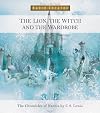
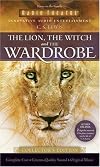
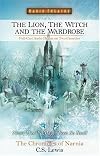
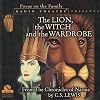
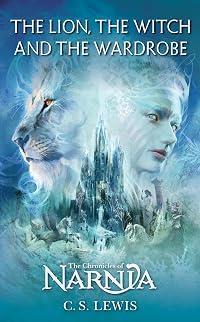
The Lion, the Witch and the Wardrobe (Radio Theatre)
by C. S. Lewis
The Chronicles of Narnia: Focus on the Family (2)
On This Page
Description
A forgotten wardrobe becomes the pathway to adventure and intrigue as four children step into another time and place--Narnia. Unlike other destinations, Narnia is an enchanted place inhabited by fauns, talking animals and the evil White Witch, who has turned this once verdant land into one of eternal winter.Tags
Recommendations

















Member Reviews
After hearing about it for years, I have finally started the Focus on the Family Radio Theatre dramatization of the Chronicles of Narnia. The Narnia books have been favorites of mine since childhood, but I had never listened to them on audiobook. Due to a recent move I now have a long drive to work... but I was amazed how quickly it went when I started listening to The Lion, the Witch and the Wardrobe! (I was almost tricked into putting in the first disc — The Magician's Nephew — but I noticed in time, and quickly substituted the proper first book of the series *wink wink*.)
I was completely enthralled by the dramatization. The script is excellent, so wonderfully faithful to the book. I love how they used most of the book's show more dialogue, and the parts they added or modified slightly because of the different medium were not disruptive in the least. This is my first radio dramatization so I don't know how their sound effects compare to those of other productions, but they sounded quite good to me. The music was fitting and did not compete with the narration.
The talent they gathered for this production is also, for the most part, stellar. It took me a few minutes to get used to Paul Scofield's narration, but once I got to know his voice I felt how well it fitted Narnia. The child actors are also quite good, with the actors voicing Lucy and Edmund standing out particularly to me. Peter sounds a little like he is reading lines with emphasis rather than really delivering them, but it's only when he has a long speech to make, and isn't too glaring.
The big exception to the general excellence of the voice actors is David Suchet's Aslan. I had been warned that he overplayed the role, and unfortunately I have to add my voice to those who say, as politely as possible, "ouch!" He draws out the ends of his words in such an odd way; he sounds like a bad voice-over actor in a commercial. I like the growly-ness of his softer lines, but his loud ones are just comical rather than majestic. It's really shocking that no one in the production found his portrayal as ridiculous as it comes across to the average listener. Someone should have told him to tone it down. It's really a shame that the central Character in the stories should be so badly misplayed.
But besides that, I thoroughly enjoyed this audiobook. It is like watching a movie in your head. It was interesting to see what my brain conjured up as I listened. Mostly it was a combination of the better actors from both the BBC and Walden film adaptations of Narnia, and it was lovely to pull the best pieces together from each of those productions and leave the dross behind. I cannot recommend this dramatization enough: it's faithful to Lewis' brilliant original story, and for purists like me, that is highest praise. Recommended! show less
I was completely enthralled by the dramatization. The script is excellent, so wonderfully faithful to the book. I love how they used most of the book's show more dialogue, and the parts they added or modified slightly because of the different medium were not disruptive in the least. This is my first radio dramatization so I don't know how their sound effects compare to those of other productions, but they sounded quite good to me. The music was fitting and did not compete with the narration.
The talent they gathered for this production is also, for the most part, stellar. It took me a few minutes to get used to Paul Scofield's narration, but once I got to know his voice I felt how well it fitted Narnia. The child actors are also quite good, with the actors voicing Lucy and Edmund standing out particularly to me. Peter sounds a little like he is reading lines with emphasis rather than really delivering them, but it's only when he has a long speech to make, and isn't too glaring.
The big exception to the general excellence of the voice actors is David Suchet's Aslan. I had been warned that he overplayed the role, and unfortunately I have to add my voice to those who say, as politely as possible, "ouch!" He draws out the ends of his words in such an odd way; he sounds like a bad voice-over actor in a commercial. I like the growly-ness of his softer lines, but his loud ones are just comical rather than majestic. It's really shocking that no one in the production found his portrayal as ridiculous as it comes across to the average listener. Someone should have told him to tone it down. It's really a shame that the central Character in the stories should be so badly misplayed.
But besides that, I thoroughly enjoyed this audiobook. It is like watching a movie in your head. It was interesting to see what my brain conjured up as I listened. Mostly it was a combination of the better actors from both the BBC and Walden film adaptations of Narnia, and it was lovely to pull the best pieces together from each of those productions and leave the dross behind. I cannot recommend this dramatization enough: it's faithful to Lewis' brilliant original story, and for purists like me, that is highest praise. Recommended! show less
I loved Narnia as a kid, of course (though never as much as Middle–earth). I never really revisited it after my teens, though – until now, when one of my Goodreads friends pointed me to the free Chrissi Hart podcast–format reading of the whole series, which I couldn't resist.
The narration is not the best ever, with occasional (sometimes frequent) misplaced emphasis and eyebrow–raising pronunciation, but it is definitely fond and earnest, by a woman who clearly loves this world – and who has a great voice, an engaging accent, and a facility for character voices that don't come off as cartoonish. I'm not sure I'd pay for it, but free? I'm not about to quibble.
OK. There's an elephant in the room (are there elephants in Narnia? show more If there are lions it stands to reason there might be elephants and giraffes and things…), and I'm going to go blindly poke at it to try to figure out what it is. (Hello, my friend Mixed Metaphor.) A lot of people are turned off the books – or turned on by them – because of the heavy allegory of Aslan as a Christ figure. And I have to say that maybe I'm very obtuse – always possible – but I don't quite get it. I mean, obviously I see the immortal and beneficent but sometimes terrifying guardian and sometimes leader with healing and other powers. (I'm not that obtuse.) My problem with the parallel is that – well, I don't see Christ romping and frolicking with his followers, even in the joy of his resurrection.
More importantly, though, is the tenet that Christ suffered and died for all of his followers, present and future – he went to hell so we don't have to. He did nothing criminal (well, beyond rabble–rousing), but allowed himself to suffer and die to break a pattern and preserve those who believe in him and follow him, accepting punishment on their behalf. Aslan, though – Aslan died for one person: Edmund. Edmund screwed up, and out of ignorance, greed, and pettiness betrayed Aslan (whom he'd never met, so he's not much of a Judas figure) and his siblings and the cause of the good guys, and because of this by ancient tradition his life is forfeit. And instead of allowing his execution, Aslan takes his place. His death accomplished nothing but Edmund's salvation; if anything, it was harmful to the anti–Witch cause, because his death and revival and romp meant a significant delay before getting to her home to de–statueify all the scores of creatures trapped in stone at the castle, who were significant in winning the war.
It's all a bit muddled by the idea that Christmas exists in Narnia (though pretty much only embodied in a gift–giving Father Christmas; Christ has nothing to do with it here).
And really it's not fair to Edmund. I mean, they'd all heard a bit of talk about Aslan, and the other three were impressed and interested, and even Edmund in his cranky self-absorption must have gotten an idea of what it was all about. But none of them really understood what was really up was until they met Aslan. And Ed never had the chance to do that until later – the Winter Queen got to him first, and punched every button he had. I don't think any betrayal of Aslan can be held too much against him – he had no idea what he was betraying. There, at least… he certainly betrayed his family. But he honestly didn't believe in the stakes – it could be argued that he still didn't quite believe in this fantasy world, entirely.
I'm just glad that (spoiler!) Edmund gets more chances. When all's said and done, C.S. Lewis's voice is still very appealing after all these years, and I love these (astonishingly lucky) English children. I'd still rather go to Middle-earth - but Narnia is a lovely place to visit too. show less
The narration is not the best ever, with occasional (sometimes frequent) misplaced emphasis and eyebrow–raising pronunciation, but it is definitely fond and earnest, by a woman who clearly loves this world – and who has a great voice, an engaging accent, and a facility for character voices that don't come off as cartoonish. I'm not sure I'd pay for it, but free? I'm not about to quibble.
OK. There's an elephant in the room (are there elephants in Narnia? show more If there are lions it stands to reason there might be elephants and giraffes and things…), and I'm going to go blindly poke at it to try to figure out what it is. (Hello, my friend Mixed Metaphor.) A lot of people are turned off the books – or turned on by them – because of the heavy allegory of Aslan as a Christ figure. And I have to say that maybe I'm very obtuse – always possible – but I don't quite get it. I mean, obviously I see the immortal and beneficent but sometimes terrifying guardian and sometimes leader with healing and other powers. (I'm not that obtuse.) My problem with the parallel is that – well, I don't see Christ romping and frolicking with his followers, even in the joy of his resurrection.
More importantly, though, is the tenet that Christ suffered and died for all of his followers, present and future – he went to hell so we don't have to. He did nothing criminal (well, beyond rabble–rousing), but allowed himself to suffer and die to break a pattern and preserve those who believe in him and follow him, accepting punishment on their behalf. Aslan, though – Aslan died for one person: Edmund. Edmund screwed up, and out of ignorance, greed, and pettiness betrayed Aslan (whom he'd never met, so he's not much of a Judas figure) and his siblings and the cause of the good guys, and because of this by ancient tradition his life is forfeit. And instead of allowing his execution, Aslan takes his place. His death accomplished nothing but Edmund's salvation; if anything, it was harmful to the anti–Witch cause, because his death and revival and romp meant a significant delay before getting to her home to de–statueify all the scores of creatures trapped in stone at the castle, who were significant in winning the war.
It's all a bit muddled by the idea that Christmas exists in Narnia (though pretty much only embodied in a gift–giving Father Christmas; Christ has nothing to do with it here).
And really it's not fair to Edmund. I mean, they'd all heard a bit of talk about Aslan, and the other three were impressed and interested, and even Edmund in his cranky self-absorption must have gotten an idea of what it was all about. But none of them really understood what was really up was until they met Aslan. And Ed never had the chance to do that until later – the Winter Queen got to him first, and punched every button he had. I don't think any betrayal of Aslan can be held too much against him – he had no idea what he was betraying. There, at least… he certainly betrayed his family. But he honestly didn't believe in the stakes – it could be argued that he still didn't quite believe in this fantasy world, entirely.
I'm just glad that (spoiler!) Edmund gets more chances. When all's said and done, C.S. Lewis's voice is still very appealing after all these years, and I love these (astonishingly lucky) English children. I'd still rather go to Middle-earth - but Narnia is a lovely place to visit too. show less
This is a great book for all ages. I'm making my way through the 50 Greatest Books ever written and this has been by far the easiest and most refreshing. And it's short! These 1000 page books are killing me! lol
Listen to this with your kids; it's a wonderful tale.
Listen to this with your kids; it's a wonderful tale.
Well done/produced. Fun to listen to; sticks with the book
2 CD's; 149 minutes
A forgotten wardrobe becomes the pathway to adventure as four children step into another time and place... When Peter, Susan, Edmund and Lucy discover Narnia, they find talking animals, an evil White Witch and a majestic lion named Aslan. They also find danger, betrayal and wonders beyond imagination.
A forgotten wardrobe becomes the pathway to adventure as four children step into another time and place... When Peter, Susan, Edmund and Lucy discover Narnia, they find talking animals, an evil White Witch and a majestic lion named Aslan. They also find danger, betrayal and wonders beyond imagination.
CRD400-002 lion witch fantasy
Ratings
Members
- Recently Added By
Author Information

528+ Works 523,099 Members
C. S. (Clive Staples) Lewis, "Jack" to his intimates, was born on November 29, 1898 in Belfast, Ireland. His mother died when he was 10 years old and his lawyer father allowed Lewis and his brother Warren extensive freedom. The pair were extremely close and they took full advantage of this freedom, learning on their own and frequently enjoying show more games of make-believe. These early activities led to Lewis's lifelong attraction to fantasy and mythology, often reflected in his writing. He enjoyed writing about, and reading, literature of the past, publishing such works as the award-winning The Allegory of Love (1936), about the period of history known as the Middle Ages. Although at one time Lewis considered himself an atheist, he soon became fascinated with religion. He is probably best known for his books for young adults, such as his Chronicles of Narnia series. This fantasy series, as well as such works as The Screwtape Letters (a collection of letters written by the devil), is typical of the author's interest in mixing religion and mythology, evident in both his fictional works and nonfiction articles. Lewis served with the Somerset Light Infantry in World War I; for nearly 30 years he served as Fellow and tutor of Magdalen College at Oxford University. Later, he became Professor of Medieval and Renaissance English at Cambridge University. C.S. Lewis married late in life, in 1957, and his wife, writer Joy Davidman, died of cancer in 1960. He remained at Cambridge until his death on November 22, 1963. (Bowker Author Biography) show less
Series

Belongs to Publisher Series
Work Relationships
Is contained in
Is an adaptation of
Common Knowledge
- Canonical title
- The Lion, the Witch and the Wardrobe (Radio Theatre) (Radio Theatre)
- Disambiguation notice
- This is the Focus on the Family dramatisation.
Classifications
Statistics
- Members
- 133
- Popularity
- 245,160
- Reviews
- 6
- Rating
- (4.43)
- Languages
- English
- Media
- Audiobook
- ISBNs
- 5
- UPCs
- 3
- ASINs
- 2