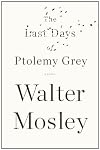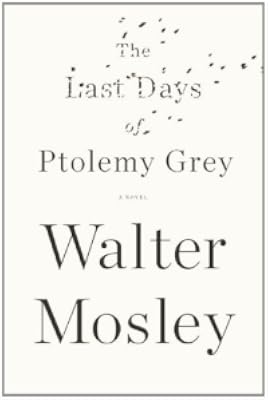
The Last Days of Ptolemy Grey
by Walter Mosley
On This Page
Description
A masterful, moving novel about age, memory, and family from one of the literary icons of our time.Coming in March 2022 from Apple Plus , a six-part series starring Samuel L. Jackson
Ptolemy Grey is ninety-one years old and has been all but forgotten-by his family, his friends, even himself-as he sinks into a lonely dementia. His grand-nephew, Ptolemy's only connection to the outside world, was recently killed in a drive-by shooting, and Ptolemy is too suspicious of anyone else to allow show more them into his life. until he meets Robyn, his niece's seventeen-year-old lodger and the only one willing to take care of an old man at his grandnephew's funeral.
But Robyn will not tolerate Ptolemy's hermitlike existence. She challenges him to interact more with the world around him, and he grasps more firmly onto his disappearing consciousness. However, this new activity pushes Ptolemy into the fold of a doctor touting an experimental drug that guarantees Ptolemy won't live to see age ninety- two but that he'll spend his last days in feverish vigor and clarity. With his mind clear, what Ptolemy finds-in his own past, in his own apartment, and in the circumstances surrounding his grand-nephew's death-is shocking enough to spur an old man to action, and to ensure a legacy that no one will forget.
In The Last Days of Ptolemy Grey, Mosley captures the compromised state of his protagonist's mind with profound sensitivity and insight, and creates an unforgettable pair of characters at the center of a novel that is sure to become a true contemporary classic. show less
Tags
Recommendations
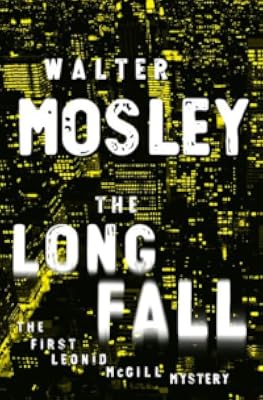
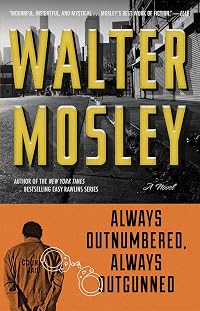





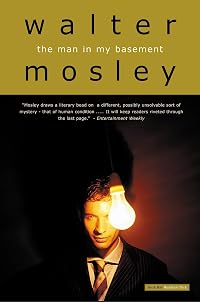










Member Reviews
Ptolemy Grey is almost past the point of no return on a decline into poverty, dementia and filth. His mind doesn’t play straight with him, the nephew (or is it grandson?) who has taken minimal care of him by escorting him to the bank and the grocery store on a semi-regular basis hasn’t been seen now for three weeks (or is it longer?), his stock of canned tuna is nearly gone and his toilet doesn’t work. As if all that weren’t enough, whenever he ventures out of his apartment alone, a manic neighbor woman with a heavy habit attempts to mug him for his pension money. Just when this story seems to be too grim to continue with, Ptolemy Grey is visited by nothing less than an angel in the person of an 18-year-old orphan who has been show more staying with his niece. This beautiful young woman takes on the job of bringing Pitypapa Grey back to the world, to live in it fully for the time he has left. Is she too good to be true? Should we trust her, or does she have an ulterior motive? When she takes him to a doctor who is conducting an experimental drug trial, is she selling his body to the devil, or saving his soul? Oh, this is a fine piece of writing. If you don’t love Ptolemy Grey and hold your breath waiting to see if he will rise to the final challenge he sets up for himself, look to your own soul. It needs your attention. show less
 This review was written for LibraryThing Early Reviewers.
He only had one chair, and that had a book, a glass of water, and three stones he’d found that day at the park on it. They were blond stones, a color he’d never seen in rock and so he picked them up and brought them home, to be with them for a while.
That’s exactly why I read Walter Mosley -- to “be awhile” with his characters, whose situations and moral complexities I always think I haven’t seen, and whose unfamiliarity always softens into a fond recognition.
Here it’s 2006 and 91-year-old Ptolemy Grey lives alone in squalor in south-central LA. He has a small pension, he has a radio and a TV tuned 24/7 to a dueling background of classical music and cable news, and he has sporadic contact with extended family two and three show more generations down the line. But his home and mind have declined since his wife died decades ago, and now dementia keeps him obsessed about the ages-ago deaths of a childhood friend in a house fire and the lynching of a beloved mentor. So when another loved one dies in street violence, and a new young friend awakens Ptolemy's spirit, he embarks on a mission to protect his loved ones before his own time comes.
Mosley narrates almost completely in scenes here -- from Ptolemy’s perspective, a mix of confusion and distraction co-mingled with vestiges of philosopher and keen observer. A key plot point about experimental drugs did require a suspension of disbelief ... or maybe it just required me to fully enter a world where the rules don’t resemble the ones I know, and to appreciate the point of this book: being awhile with this man in that world. I loved every page of it.
(Review based on an advance reading copy provided by the publisher.) show less
That’s exactly why I read Walter Mosley -- to “be awhile” with his characters, whose situations and moral complexities I always think I haven’t seen, and whose unfamiliarity always softens into a fond recognition.
Here it’s 2006 and 91-year-old Ptolemy Grey lives alone in squalor in south-central LA. He has a small pension, he has a radio and a TV tuned 24/7 to a dueling background of classical music and cable news, and he has sporadic contact with extended family two and three show more generations down the line. But his home and mind have declined since his wife died decades ago, and now dementia keeps him obsessed about the ages-ago deaths of a childhood friend in a house fire and the lynching of a beloved mentor. So when another loved one dies in street violence, and a new young friend awakens Ptolemy's spirit, he embarks on a mission to protect his loved ones before his own time comes.
Mosley narrates almost completely in scenes here -- from Ptolemy’s perspective, a mix of confusion and distraction co-mingled with vestiges of philosopher and keen observer. A key plot point about experimental drugs did require a suspension of disbelief ... or maybe it just required me to fully enter a world where the rules don’t resemble the ones I know, and to appreciate the point of this book: being awhile with this man in that world. I loved every page of it.
(Review based on an advance reading copy provided by the publisher.) show less
Walter Mosley has two currents in which his books are found. One, the Easy Rawlins detective stories, have the funky elegance of Chandler; the other, in which black men have the names of ancient Greeks, is his own, and is the more valuable of the two. This book falls into the second group, and is difficult to speak of because the book itself disciplines one's language. It tells its story clearly but in a hushed rustle; it performs the terrible tricks of memory in an aging mind whose loved people have died. Not only do you believe this voice, this mind, you become it. A resonant book, whose resonance is achieved by what's left out as well as what's included.
Could Well be Spoilers. This book is to a great extent a return of Mosley to his better form. Parts of the plot aren't believable, but Ptolemy Grey is a real person and I cared about him a lot. One morning my mother woke up as someone close to her old self. There is no knowing why and it didn't last very long. (my tears don't belong here.) After a couple of hours she faded back into her lost self. When Ptolemy Grey sets himself up for his final confrontation, what did he hope for? what did we hope for for him? But he goes on living to fade back away, although we know he doesn't have long.
So that's a bigger question about the book, about the premise. Would you trade years of confusion for days of clarity, knowing you had limited time but show more real time to figure things out & set them in order? What would it take to keep living knowing you would return to confusion; most of us don't live in a world where violence really is a choice.
And of course we make those tradeoffs every day, and many of us do so more dramatically when we choose certain health treatments.
I think this is a good book & worth reading. show less
So that's a bigger question about the book, about the premise. Would you trade years of confusion for days of clarity, knowing you had limited time but show more real time to figure things out & set them in order? What would it take to keep living knowing you would return to confusion; most of us don't live in a world where violence really is a choice.
And of course we make those tradeoffs every day, and many of us do so more dramatically when we choose certain health treatments.
I think this is a good book & worth reading. show less
Have you ever wondered what it’s like to be inside the mind of an elderly person with dementia? In The Last Days of Ptolemy Grey, Walter Mosley gives us a glimpse of the horrors of cognitive loss. The opening pages of Mosley’s new novel are sure to go down as one of the best representations of dementia in fiction. Ptolemy Grey is an elderly man in Los Angeles who has to rely on his relatives to help him get food, go to the bank, and avoid being mugged. His apartment is a cacophony of 24-hour news coverage and classical music radio, and most of his apartment is inaccessible due to accumulated garbage, rats and bugs. Ptolemy’s external life mirrors his internal confusion, and one can’t help but look at him with anything other than show more pity—a fact echoed by his relatives who refer to him as “Pity Papa.”
Life begins to change for Ptolemy when his nephew, Reggie, fails to come for him one day. Instead, another nephew, Hilly, comes for him. Ptolemy is reluctant to follow him, but finally trusts him. Hilly steals from him, which Ptolemy is aware enough to recognize. The next time Hilly comes, Ptolemy accuses him, but he allows him to take him over to his niece’s house. It turns out that Ptolemy has been brought to her house for Reggie’s funeral. Ptolemy’s static life seems to be in disarray, but it is through this confusion Robyn enters his life and begins to clean it up. Robyn is a distant relative and teenager, but she immediately begins to take care of Ptolemy, starting by cleaning up his apartment. Ptolemy immediately begins to rely on her, and they develop a love that Ptolemy notes would have been perfect if he were 50 years younger and Robyn were 20 years older.
Robyn eventually gets Ptolemy to see a doctor. The doctor offers him an experimental and illegal treatment if Ptolemy will donate his body when he dies. Ptolemy sees this as a deal with the devil, but he takes the chance at clarity in order to set his life in order and to take care of Robyn and the children that Reggie’s death left behind. How Ptolemy does this is the mystery of the story, so I won’t give it away here. Suffice it to say that Ptolemy’s long history and memories of a childhood mentor named Coydog bring about a satisfactory ending to the novel.
Mosley’s writing in this novel is crisp and full of dialog, both internal and external. As I noted earlier, his strongest writing is at the beginning of the book, and I can’t help but feel that the book suffers a bit when Ptolemy gets clarity in his mind back. Nevertheless, the portraits Mosley draws of the other characters and the relationships he chart make this a very good novel. show less
Life begins to change for Ptolemy when his nephew, Reggie, fails to come for him one day. Instead, another nephew, Hilly, comes for him. Ptolemy is reluctant to follow him, but finally trusts him. Hilly steals from him, which Ptolemy is aware enough to recognize. The next time Hilly comes, Ptolemy accuses him, but he allows him to take him over to his niece’s house. It turns out that Ptolemy has been brought to her house for Reggie’s funeral. Ptolemy’s static life seems to be in disarray, but it is through this confusion Robyn enters his life and begins to clean it up. Robyn is a distant relative and teenager, but she immediately begins to take care of Ptolemy, starting by cleaning up his apartment. Ptolemy immediately begins to rely on her, and they develop a love that Ptolemy notes would have been perfect if he were 50 years younger and Robyn were 20 years older.
Robyn eventually gets Ptolemy to see a doctor. The doctor offers him an experimental and illegal treatment if Ptolemy will donate his body when he dies. Ptolemy sees this as a deal with the devil, but he takes the chance at clarity in order to set his life in order and to take care of Robyn and the children that Reggie’s death left behind. How Ptolemy does this is the mystery of the story, so I won’t give it away here. Suffice it to say that Ptolemy’s long history and memories of a childhood mentor named Coydog bring about a satisfactory ending to the novel.
Mosley’s writing in this novel is crisp and full of dialog, both internal and external. As I noted earlier, his strongest writing is at the beginning of the book, and I can’t help but feel that the book suffers a bit when Ptolemy gets clarity in his mind back. Nevertheless, the portraits Mosley draws of the other characters and the relationships he chart make this a very good novel. show less
This review was written for LibraryThing Early Reviewers.This is the first book I've actually read by Walter Mosley, and it did not disappoint. His writing is tight and sturdy; I knew from early in that I was in good hands. Mosley draws an exquisite internal portrait of a man whose mind is a blur; we get to watch in fine detail as the haze clears and he takes control of his life in its final days.
The characters are probably the strongest part of this book. Ptolemy himself, and the people he interacts with routinely, are portrayed with a masterful realism. There are more mythical characters as well, or perhaps I should say mythical relationships, and they are powerfully and beautifully rendered. I'm thinking especially of the time Ptolemy spends with his long-gone mentor Coydog McCann, and show more also of the acidic relationship Ptolemy develops with the doctor who treats him. There is so much color and light in these spaces, you can't help but be drawn in.
I enjoyed this immensely, and can't wait to dive into some more of Mosley's work. show less
The characters are probably the strongest part of this book. Ptolemy himself, and the people he interacts with routinely, are portrayed with a masterful realism. There are more mythical characters as well, or perhaps I should say mythical relationships, and they are powerfully and beautifully rendered. I'm thinking especially of the time Ptolemy spends with his long-gone mentor Coydog McCann, and show more also of the acidic relationship Ptolemy develops with the doctor who treats him. There is so much color and light in these spaces, you can't help but be drawn in.
I enjoyed this immensely, and can't wait to dive into some more of Mosley's work. show less
The Last Days of Ptolemy Grey is one of the best works, and some would say the best, in the career of one of America's most accomplished authors. Walter Mosley is well-known for his Easy Rawlins detective series, featuring a black WWII vet who becomes a private detective in LA's 1940s-1960s Watts neighborhood. Insights into Watts' black community, as well as how Easy and others deal with prevalent racism, are series' features. But the stories are largely driven by their memorable characters, particularly his deadly but utterly loyal friend Raymond "Mouse" Alexander, well-played by Don Cheadle in the "Devil with a Blue Dress" movie. Over the years Mosley has ventured into many other genres, including literary novels, history, philosophy, show more erotica and science fiction. Among his non-Easy works, two of my favorite novels are Always Outnumbered, Always Outgunned, centered around the remarkable Socrates Fortlow, an ex-con (due to a crime of passion) who is trying to make it in the straight world, and RL's Dream, haunted by famed real life bluesman Robert "RL" Johnson, who supposedly acquired his supernatural blues skills in a deal with the devil. Mosley has a restless and far-ranging mind, and in Ptolemy Grey takes on aging and dementia, and the restorative powers of love late in life.
Ptolemy Grey, 91 years old, lives alone in a filthy LA apartment where he refuses to enter the bedroom he shared with his beloved deceased wife, and sleeps under a table amidst years of hoarded detritus. He has begun to lose track of daily life and how to take care of himself, keeping the radio and tv on at all times as company. When the great-grand-nephew who was providing some care to him is killed in a drive-by, a different niece's son shows up to help him, and raises Ptolemy's suspicions. Having had a measure of success in life, Ptolemy has become a chore to his family, and vulnerable to being taken advantage of.
The seemingly hopeless, degenerating circumstances begin to change when he meets teenage Robyn Small at the funeral, a girl who has been taken in by the family and recognizes his goodness and integrity. She proceeds to resurrect his apartment from the filth, and gets him to a doctor. The doctor offers him a Faustian bargain, an experimental drug that will sharpen his faculties but likely shorten his life, in exchange for receiving his body for study once he dies. As Ptolemy begins to recall his past life, we learn of his mentor Coydog, who was lynched for stealing from a white man and hid the loot somewhere known only by Ptolemy. Desperation leading to thievery, and whether any good can ever come of it, is one of the book's main themes, as is the importance of having someone to trust. Ptolemy also is looking to avenge the death of his great-grand-nephew, which may have been personal rather than gang-related as assumed.
The details of Ptolemy's dementia are credible and captivating. Mosley has said the book was inspired by his mother's five year descent into dementia. The book addresses the strain on families when this happens, and the plight of the demented. It also addresses the violence that can be triggered by need or avarice. But the reason this novel rises to greatness is the love between honest and strong Robyn, and the Ptolemy she recognizes even when he can barely recognize himself. As Ptolemy says, if she were twenty years older and he forty years younger, they would marry. She restores the dignity he had lost, and in turn finds generosity and a new kind of safety in his innate decency. The powerful message is it is never too late. For love, or for justice in an often unjust life.
Some quotations from the book:
“That’s how Ptolemy imagined the disposition of his memories, his thoughts: they were still his, still in the range of his thinking, but they were, many and most of them, locked on the other side of a closed door that he’d lost the key for. So his memory became like secrets held away from his own mind. But these secrets were noisy things; they babbled and muttered behind the door, and so if he listened closely he might catch a snatch of something he once knew well.”
“The great man say that life is pain," Coydog had said over eighty-five years before. "That mean if you love life, then you love the hurt come along wit' it. Now, if that ain't the blues, I don't know what is.”
“That's how powerful you are, girl...You pretty, but pretty alone is not what people see. You the kinda pretty, the kinda beauty, that's like a mirror. Men and women see themselves in you, only now they so beautiful that they can't bear to see you go.” show less
Ptolemy Grey, 91 years old, lives alone in a filthy LA apartment where he refuses to enter the bedroom he shared with his beloved deceased wife, and sleeps under a table amidst years of hoarded detritus. He has begun to lose track of daily life and how to take care of himself, keeping the radio and tv on at all times as company. When the great-grand-nephew who was providing some care to him is killed in a drive-by, a different niece's son shows up to help him, and raises Ptolemy's suspicions. Having had a measure of success in life, Ptolemy has become a chore to his family, and vulnerable to being taken advantage of.
The seemingly hopeless, degenerating circumstances begin to change when he meets teenage Robyn Small at the funeral, a girl who has been taken in by the family and recognizes his goodness and integrity. She proceeds to resurrect his apartment from the filth, and gets him to a doctor. The doctor offers him a Faustian bargain, an experimental drug that will sharpen his faculties but likely shorten his life, in exchange for receiving his body for study once he dies. As Ptolemy begins to recall his past life, we learn of his mentor Coydog, who was lynched for stealing from a white man and hid the loot somewhere known only by Ptolemy. Desperation leading to thievery, and whether any good can ever come of it, is one of the book's main themes, as is the importance of having someone to trust. Ptolemy also is looking to avenge the death of his great-grand-nephew, which may have been personal rather than gang-related as assumed.
The details of Ptolemy's dementia are credible and captivating. Mosley has said the book was inspired by his mother's five year descent into dementia. The book addresses the strain on families when this happens, and the plight of the demented. It also addresses the violence that can be triggered by need or avarice. But the reason this novel rises to greatness is the love between honest and strong Robyn, and the Ptolemy she recognizes even when he can barely recognize himself. As Ptolemy says, if she were twenty years older and he forty years younger, they would marry. She restores the dignity he had lost, and in turn finds generosity and a new kind of safety in his innate decency. The powerful message is it is never too late. For love, or for justice in an often unjust life.
Some quotations from the book:
“That’s how Ptolemy imagined the disposition of his memories, his thoughts: they were still his, still in the range of his thinking, but they were, many and most of them, locked on the other side of a closed door that he’d lost the key for. So his memory became like secrets held away from his own mind. But these secrets were noisy things; they babbled and muttered behind the door, and so if he listened closely he might catch a snatch of something he once knew well.”
“The great man say that life is pain," Coydog had said over eighty-five years before. "That mean if you love life, then you love the hurt come along wit' it. Now, if that ain't the blues, I don't know what is.”
“That's how powerful you are, girl...You pretty, but pretty alone is not what people see. You the kinda pretty, the kinda beauty, that's like a mirror. Men and women see themselves in you, only now they so beautiful that they can't bear to see you go.” show less
Members
- Recently Added By
Lists

Best Audiobooks
240 works; 114 members

A Rainbow of Books: Colors in the Title
570 works; 24 members
Author Information

105+ Works 26,717 Members
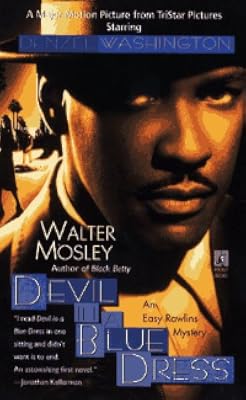
Walter Mosley was born in Los Angeles, California on January 12, 1952. He graduated from Johnson State College in Vermont. His first book, Devil in a Blue Dress, was published in 1990, won a John Creasy Award for best first novel, and was made into a motion picture starring Denzel Washington in 1995. He is the author of the Easy Rawlins Mystery show more series, the Leonid McGill Mystery series, and the Fearless Jones series. His other works include Always Outnumbered, Always Outgunned, 47, Last Days of Ptolemy Grey, and Twelve Steps toward Political Revelation. He has received numerous awards, including an O. Henry Award, the Carl Brandon Society Parallax Award, and PEN America's Lifetime Achievement Award. (Bowker Author Biography) Walter Mosley is the author of the acclaimed Easy Rawlins series of mysteries, the novels "Blue Light" and "RL's Dream", and two collections of stories featuring Socrates Fortlow, "Always Outnumbered", "Always Outgunned", for which he received the Anisfield-Wolf Award, and "Walkin' the Dog". He is a member of the board of directors of the National Book Awards and the founder of the PEN American Center's Open Book Committee. At various times in his life he has been a potter, a computer programmer, & a poet. He was born in Los Angeles & now lives in New York. (Publisher Provided) show less
Awards and Honors
Notable Lists
Work Relationships
Has the adaptation
Common Knowledge
- Canonical title
- The Last Days of Ptolemy Grey
- Alternate titles
- Last Days of Ptolemy Grey
- Original publication date
- 2010-11-09
- People/Characters
- Ptolemy Usher Grey; Robyn; Reggie; Coydog McCann
- Important places
- Los Angeles, California, USA; California, USA
- Related movies
- The Last Days of Ptolemy Gray (IMDb | 2022)
- Dedication
- For the man who gave everything - Leroy Mosley
- Blurbers
- Danticat, Edwidge
Classifications
Statistics
- Members
- 850
- Popularity
- 32,346
- Reviews
- 68
- Rating
- (4.14)
- Languages
- English
- Media
- Paper, Audiobook, Ebook
- ISBNs
- 11
- ASINs
- 8