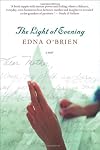
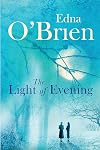
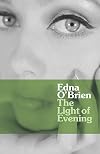
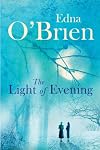
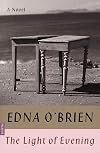
The Light of Evening
by Edna O'Brien
On This Page
Description
From her hospital bed in Dublin, the elderly Dilly awaits the visit of her daughter, Eleanora, from London. The epochs of her life pass before her; she also retraces Eleanora's precipitate marriage to a foreigner, which alienated mother and daughter, and Dilly's heart rending letters sent over the years in a determination to reclaim her daughter. But Eleanora's visit does not prove to be the glad reunion Dilly prayed for. And in her hasty departure, Eleanora leaves behind a secret journal of show more their stormy relationship-a revelation that brings the novel to a shocking close. show lessTags
Recommendations



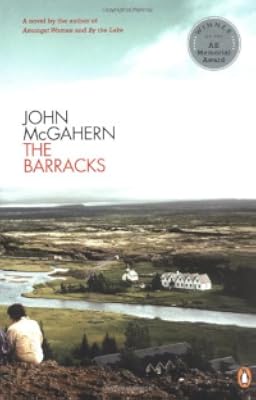

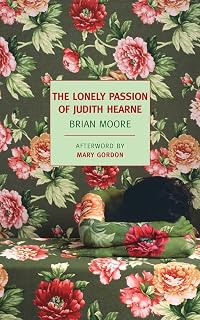


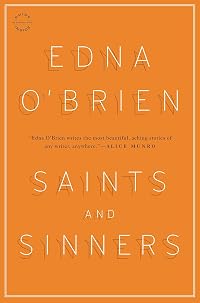
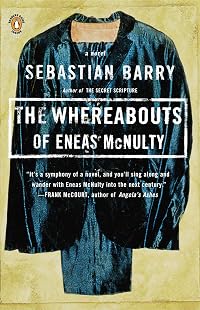






Member Recommendations

Member Reviews
9.0/10
Books have an interesting way of pulling their own magic act: they seem to know exactly when they should be read, and by whom. While Edna O'Brien's [b:The Country Girls Trilogy|82955|The Country Girls Trilogy|Edna O'Brien|https://i.gr-assets.com/images/S/compressed.photo.goodreads.com/books/1388276273l/82955._SX50_.jpg|504995] has been sitting patiently on the shelf for a couple of years, this one insisted on being read now, despite that it had never been on my radar. I didn't even know it existed, in fact, until a middle-of-the-night-i-need-to-read-something-NOW episode spewed this one out onto my iPad from the digital library bookshelf. I fell under its trance quite easily, as the lulling, haunting voice of Faulkner, of all show more people, insinuated himself into an Irish mother-daughter tale: The past is never dead. It's not even past.
The novel doesn't catch fire -- it merely smolders, like the dying embers around a campfire. There is warmth and charm infused with an almost-rambling tale of a woman's life. In fact, it seems at first as if we're going to have an almost-tame story of the foibles of Irish Emigrant To America Turns Domestic Servant And Is Disappointed. But, the life that escapes onto the page is heartbreaking in its simplicity and commonality: this can be a tale of any young woman, any place, any time, who longs to escape the bonds of destiny. For destiny it is when you're born in a certain time and place; to a certain class; to a certain socio-economic imperative. There may be a few who escape these ties, but very few get away.
It is, too, the tale of a mother and daughter who are always at odds, despite the deep love they feel for each other. The daughter knows best, as all daughters do; the mother knows best, as all mothers do - -- and they are both right, and both wrong, in the same breath. It is the dance of time, since the first mother-daughter pair appeared on this earth.
It is heartbreaking to experience both sides of the equation, from a bird's eye view, and not be able to stop the inevitable collision. O'Brien is so adept at creating both tension and empathy that one wants to step into the story and bang their respective heads together to make them see each other's despair, anguish, pain: they are not as unalike as they think they are.
And everything comes too late -- it always comes ten seconds too late. The missed connection; the letter that was mailed too late; the phone call that wasn't returned; the misunderstood gift that was meant as balm and is perceived as poison, until it's too late ... too late to see it was love and not a thorn that was being delivered.
O'Brien excels in portraying the misunderstood gesture and how in the end it will tear out your very soul, for the regret of it all.
Oh, what one would give to have simply taken that phone call from Mum. Oh, what one one would give to have read the letter when it was received. Oh, what one would give to retake the 10-minute detour that drove right by your Mum's house.
But life isn't a rehearsal O'Brien tells us; it isn't the long photo-shoot we imagine, where we can retake, to our hearts' content.
The final act will come, and there will only be unread letters, left for you, poste restante. And that's only if you're lucky.
[This book came hard on the heels of [book:Nothing to Be Frightened of|2982466] and was all the more, for that -- hence, why I think, certain books wait for you, ready to pounce when you're ready for them.] show less
Books have an interesting way of pulling their own magic act: they seem to know exactly when they should be read, and by whom. While Edna O'Brien's [b:The Country Girls Trilogy|82955|The Country Girls Trilogy|Edna O'Brien|https://i.gr-assets.com/images/S/compressed.photo.goodreads.com/books/1388276273l/82955._SX50_.jpg|504995] has been sitting patiently on the shelf for a couple of years, this one insisted on being read now, despite that it had never been on my radar. I didn't even know it existed, in fact, until a middle-of-the-night-i-need-to-read-something-NOW episode spewed this one out onto my iPad from the digital library bookshelf. I fell under its trance quite easily, as the lulling, haunting voice of Faulkner, of all show more people, insinuated himself into an Irish mother-daughter tale: The past is never dead. It's not even past.
The novel doesn't catch fire -- it merely smolders, like the dying embers around a campfire. There is warmth and charm infused with an almost-rambling tale of a woman's life. In fact, it seems at first as if we're going to have an almost-tame story of the foibles of Irish Emigrant To America Turns Domestic Servant And Is Disappointed. But, the life that escapes onto the page is heartbreaking in its simplicity and commonality: this can be a tale of any young woman, any place, any time, who longs to escape the bonds of destiny. For destiny it is when you're born in a certain time and place; to a certain class; to a certain socio-economic imperative. There may be a few who escape these ties, but very few get away.
It is, too, the tale of a mother and daughter who are always at odds, despite the deep love they feel for each other. The daughter knows best, as all daughters do; the mother knows best, as all mothers do - -- and they are both right, and both wrong, in the same breath. It is the dance of time, since the first mother-daughter pair appeared on this earth.
It is heartbreaking to experience both sides of the equation, from a bird's eye view, and not be able to stop the inevitable collision. O'Brien is so adept at creating both tension and empathy that one wants to step into the story and bang their respective heads together to make them see each other's despair, anguish, pain: they are not as unalike as they think they are.
And everything comes too late -- it always comes ten seconds too late. The missed connection; the letter that was mailed too late; the phone call that wasn't returned; the misunderstood gift that was meant as balm and is perceived as poison, until it's too late ... too late to see it was love and not a thorn that was being delivered.
O'Brien excels in portraying the misunderstood gesture and how in the end it will tear out your very soul, for the regret of it all.
Oh, what one would give to have simply taken that phone call from Mum. Oh, what one one would give to have read the letter when it was received. Oh, what one would give to retake the 10-minute detour that drove right by your Mum's house.
But life isn't a rehearsal O'Brien tells us; it isn't the long photo-shoot we imagine, where we can retake, to our hearts' content.
The final act will come, and there will only be unread letters, left for you, poste restante. And that's only if you're lucky.
[This book came hard on the heels of [book:Nothing to Be Frightened of|2982466] and was all the more, for that -- hence, why I think, certain books wait for you, ready to pounce when you're ready for them.] show less
This is a story about the intense relationships that can occur between mothers and daughters. From her hospital bed the elderly Dilly remembers her youthful journey to America, and her time spent working for a family in Brooklyn - a story similar to O'Brien's own mother's story. Now suffering from cancer, Dilly is concerned about her daughter, Eleanora, a writer, married to a controlling jealous man - again, in the same league as O'Brien's husband Ernest Gébler from whom she was divorced in 1968.
O'Brien's portrayal of Ireland in the early and mid-twentieth century is remarkably accurate. There were many young people who longed to go to America and like Dilly's experience, they were not happy journeys. In time she looks back on show more Brooklyn with affection. The letters Dilly received in New York from her mother are delightful in their candour. Her letters to her own daughter, Eleanora, are just as unfeigned but have more heartfelt strength of feeling. O'Brien's writing is lyrical, rhythmic at times, and filled with implicit emotion but how I wish her women were more confident. Not only do they leave unsaid all that should be said, but they are dominated by the worst of men. Without doubt this deserves top rating for writing. show less
O'Brien's portrayal of Ireland in the early and mid-twentieth century is remarkably accurate. There were many young people who longed to go to America and like Dilly's experience, they were not happy journeys. In time she looks back on show more Brooklyn with affection. The letters Dilly received in New York from her mother are delightful in their candour. Her letters to her own daughter, Eleanora, are just as unfeigned but have more heartfelt strength of feeling. O'Brien's writing is lyrical, rhythmic at times, and filled with implicit emotion but how I wish her women were more confident. Not only do they leave unsaid all that should be said, but they are dominated by the worst of men. Without doubt this deserves top rating for writing. show less
The Light of Evening is Edna O'Brien's nineteenth novel, and its heart can be derived from the dedication – “For my mother and my motherland.” This is a story about mothers and daughters, and of mother Ireland.
Dilly lives in the country home of Rusheen with her husband Cornelius. Her children are grown and married, and Dilly and Cornelius are living out their old age while struggling to keep their land. She has been stoically suffering with the shingles, but now has finally decided to make the trip to Dublin to see a specialist there.
While she is being admitted to the hospital and through her first night there, in a sleeping pill induced fog, Dilly's mind wanders over areas of her life that mean the most to her or are troubling show more her – her beloved daughter Eleanora, her begrudging willing of Rusheen to her greedy son Terrence, the tragic, unrequited love of Gabriel in her youth in America. In the twilight of her years, these are the things that Dilly chooses to celebrate, mourn, confront, and remember.
As her hospital stay continues, it appears that the shingles may not be the only thing that Dilly is suffering from. The nurses hint at ovarian cancer, but obfuscate the matter, perhaps shielding Dilly from the harsh truth.
The next part of the novel flashes back to Dilly's childhood. We meet the young Dilly, desperate to start a new life in America . Her parents scrimp and save to buy her a passage on a ship bound for Ellis Island , a journey full of hardship and disease, realities that Dilly is loathe to share with her parents. She arrives in New York to discover further hardships. The city is teeming with poor people, overcrowding, and innumerable dangers. Her cousin Mary Kate, with whom she will be staying, is not in the respectable, stable circumstances that her family in Ireland led Dilly's parents to believe. Life is hard, and the so-called Promised Land is not full of as much promise as Dilly had hoped. Dilly finds a job as a cleaner in the home of wealthy Irish immigrants, Mr. and Mrs. McCormack, and soon befriends their cook Solveig. Together the girls pore over, and puzzle at, the fashion and beauty advertisements in the newspapers. Dilly's circumstances seem to be improving until Mrs. McCormack accuses Dilly of stealing one of her rings. Dilly is unfairly and peremptorily sacked.
On an outing to Coney Island with her cousin Mary Kate and two girlfriends, Kitty and Noreen, Dilly meets Gabriel. She is immediately captivated by him, and although it is clear that Kitty fancies him, Dilly is able to spend stolen moments alone with him wading in the water. They talk about Ireland and the towns she has grown up around, and after the encounter, Dilly is convinced that Gabriel did not find her at all memorable, even though that scene in the water would forever be emblazoned on her heart. One night, Dilly is at a dance at the home of Ma Sullivan, and encounters Gabriel there. He remembers her, and they begin to court, mostly through letters as Gabriel travels out west, and through subsequent visits to Ma Sullivan's when Gabriel is in New York.
One day, her girlfriends show Dilly an anonymous note saying that Dilly will never see Gabriel again. It is insinuated that Rita, a former flame, is behind the note, and Dilly is devastated. She allows herself to be persuaded into returning home to Ireland , broken and brokenhearted. She meets Cornelius at a dance, marries him, and becomes the mistress of the farm Rusheen. Perhaps the farm draws her in more than Cornelius does.
The third part of the novel returns to the present day, to Dilly in the hospital in Dublin . She has struck up a friendship with Sister Consolata, and they share tales of their lives with one another. Dilly elaborates to the sister about how her son, Terrence, and his wife bullied her into willing Rusheen to them, instead of to her favored daughter Eleanora. Dilly does not particularly approve of the life her daughter has chosen to lead in England , living with a man Dilly believes is not worthy of her, writing books that scandalize her hometown. And yet Dilly suspects that her beloved daughter is more worthy of the land and the farm than her son.
The fourth section of the novel contains Eleanora's story – how she met and married her husband, the birth of her first child, her mother's disappointment with her and her marriage, her husband's abusive insults about her and her writing.
In the next section, we are back at the hospital with Dilly, who is desperate for a visit from Eleanora. When her daughter finally comes to the hospital, she can only stay a short while, ostensibly because she must return to a conference in Denmark . In reality, Eleanora must leave for a tryst with a married man. In her haste to leave the hospital, she leaves behind her journal.
A nurse brings Eleanora's journal to Dilly, and in the next section of the novel, Dilly reads through her daughter's most intimate thoughts and feelings, about her husband, her mother, and her life. Dilly had wanted to take Eleanora back to Rusheen to see it again, and to visit the solicitor's office, to change her will and leave Rusheen to her daughter. Unfortunately, Dilly doesn't make it, and dies in the hospital. After her death, Eleanora finds stacks of her mother's letters to her over the years. They paint the picture of a devoted and loving mother, appreciative of her daughter's success and generosity, and full of concern for her welfare.
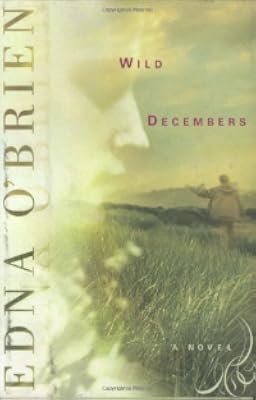
This is a beautifully written and sensitive novel that delves into the precarious relationship between mothers and daughters, homelands and new frontiers, and the past and the present. Edna O'Brien's writing is lush and laden with emotion. It is a towering achievement, and a worthy companion to her masterpiece Wild Decembers. show less
Dilly lives in the country home of Rusheen with her husband Cornelius. Her children are grown and married, and Dilly and Cornelius are living out their old age while struggling to keep their land. She has been stoically suffering with the shingles, but now has finally decided to make the trip to Dublin to see a specialist there.
While she is being admitted to the hospital and through her first night there, in a sleeping pill induced fog, Dilly's mind wanders over areas of her life that mean the most to her or are troubling show more her – her beloved daughter Eleanora, her begrudging willing of Rusheen to her greedy son Terrence, the tragic, unrequited love of Gabriel in her youth in America. In the twilight of her years, these are the things that Dilly chooses to celebrate, mourn, confront, and remember.
As her hospital stay continues, it appears that the shingles may not be the only thing that Dilly is suffering from. The nurses hint at ovarian cancer, but obfuscate the matter, perhaps shielding Dilly from the harsh truth.
The next part of the novel flashes back to Dilly's childhood. We meet the young Dilly, desperate to start a new life in America . Her parents scrimp and save to buy her a passage on a ship bound for Ellis Island , a journey full of hardship and disease, realities that Dilly is loathe to share with her parents. She arrives in New York to discover further hardships. The city is teeming with poor people, overcrowding, and innumerable dangers. Her cousin Mary Kate, with whom she will be staying, is not in the respectable, stable circumstances that her family in Ireland led Dilly's parents to believe. Life is hard, and the so-called Promised Land is not full of as much promise as Dilly had hoped. Dilly finds a job as a cleaner in the home of wealthy Irish immigrants, Mr. and Mrs. McCormack, and soon befriends their cook Solveig. Together the girls pore over, and puzzle at, the fashion and beauty advertisements in the newspapers. Dilly's circumstances seem to be improving until Mrs. McCormack accuses Dilly of stealing one of her rings. Dilly is unfairly and peremptorily sacked.
On an outing to Coney Island with her cousin Mary Kate and two girlfriends, Kitty and Noreen, Dilly meets Gabriel. She is immediately captivated by him, and although it is clear that Kitty fancies him, Dilly is able to spend stolen moments alone with him wading in the water. They talk about Ireland and the towns she has grown up around, and after the encounter, Dilly is convinced that Gabriel did not find her at all memorable, even though that scene in the water would forever be emblazoned on her heart. One night, Dilly is at a dance at the home of Ma Sullivan, and encounters Gabriel there. He remembers her, and they begin to court, mostly through letters as Gabriel travels out west, and through subsequent visits to Ma Sullivan's when Gabriel is in New York.
One day, her girlfriends show Dilly an anonymous note saying that Dilly will never see Gabriel again. It is insinuated that Rita, a former flame, is behind the note, and Dilly is devastated. She allows herself to be persuaded into returning home to Ireland , broken and brokenhearted. She meets Cornelius at a dance, marries him, and becomes the mistress of the farm Rusheen. Perhaps the farm draws her in more than Cornelius does.
The third part of the novel returns to the present day, to Dilly in the hospital in Dublin . She has struck up a friendship with Sister Consolata, and they share tales of their lives with one another. Dilly elaborates to the sister about how her son, Terrence, and his wife bullied her into willing Rusheen to them, instead of to her favored daughter Eleanora. Dilly does not particularly approve of the life her daughter has chosen to lead in England , living with a man Dilly believes is not worthy of her, writing books that scandalize her hometown. And yet Dilly suspects that her beloved daughter is more worthy of the land and the farm than her son.
The fourth section of the novel contains Eleanora's story – how she met and married her husband, the birth of her first child, her mother's disappointment with her and her marriage, her husband's abusive insults about her and her writing.
In the next section, we are back at the hospital with Dilly, who is desperate for a visit from Eleanora. When her daughter finally comes to the hospital, she can only stay a short while, ostensibly because she must return to a conference in Denmark . In reality, Eleanora must leave for a tryst with a married man. In her haste to leave the hospital, she leaves behind her journal.
A nurse brings Eleanora's journal to Dilly, and in the next section of the novel, Dilly reads through her daughter's most intimate thoughts and feelings, about her husband, her mother, and her life. Dilly had wanted to take Eleanora back to Rusheen to see it again, and to visit the solicitor's office, to change her will and leave Rusheen to her daughter. Unfortunately, Dilly doesn't make it, and dies in the hospital. After her death, Eleanora finds stacks of her mother's letters to her over the years. They paint the picture of a devoted and loving mother, appreciative of her daughter's success and generosity, and full of concern for her welfare.
This is a beautifully written and sensitive novel that delves into the precarious relationship between mothers and daughters, homelands and new frontiers, and the past and the present. Edna O'Brien's writing is lush and laden with emotion. It is a towering achievement, and a worthy companion to her masterpiece Wild Decembers. show less
An interesting book, with a subject which was of interest to me: namely, mother-daughter relationships, especially as one approaches death.There were some sections which I liked, but overall I was a little disappointed. I thought O'Brien failed to really draw out the real nature of the mother's relationships and the reasons for them. I didn't feel a strong emotional connection with the characters...could it be my maleness?
Edna O’Brien’s latest, The Light of Evening, focuses on the mother-daughter relationship between Dilly and her daughter Eleanora. It’s Joycean modernist at times in that there are shifts in time sequence, narration moves from third to first person depending on the character, and a stream of consciousness section which documents Dilly’s love affair in America, her return to Ireland and subsequent marriage. One section which describes a Christmas dinner where Dilly is a servant to a high class Irish-American family in Brooklyn clearly pays homage to Joyce’s The Dead. I have never read O’Brien till now but in this book she has an amazing ability to produce short sections of great prose that clearly convey a character’s show more thinking, and has such a gift for describing not only the exterior of her character’s lives, but for penetrating the interior of their moods and thoughts as well.
Be warned, the book is so well written and uses such different techniques that for me, at least, I had to read slowly and even go back and reread certain passages. However, it was time well spent, and it was not till I finished and thought about it did I realize what a great piece of work it was. show less
Be warned, the book is so well written and uses such different techniques that for me, at least, I had to read slowly and even go back and reread certain passages. However, it was time well spent, and it was not till I finished and thought about it did I realize what a great piece of work it was. show less
an absolutely wonderful read, like most of Ms. O'Brien's books, it is the next best thing to perfection. The troubled relationship of 2 generations of mother and daughter are played out over the backdrop of decades in the Irish countryside and 1920's New York to the present day with Dilly dying in a hospital hoping for a visit from her daughter Eleanor. The letters of Dilly to her daughter Eleanor are brilliant in their mixture of passionate love and recrimination and humour. This is an Irish story and highly recommended by one of Irelands best contempory writers, Frank McCourt, who says "And what novelist in the world can match Edna O'Brien when she explores the human heart? None, I say."
I love Irish writers for the most part, and I'd heard good things about O'Brien's work. Bought it. Tried to read it. Gave it to a friend. I simply lost interest about halfway through. I didn't care what happened, regardless of the fine prose style (I couldn't finish Murakami's Wind-Up Bird Chronicles for the same reason -- I didn't care about what happened). As they say, only three words matter to a reader: MAKE ME CARE.
Members
- Recently Added By
Author Information

85+ Works 10,497 Members
Writer Edna O'Brien was born in Clare County, Ireland, in 1930 and attended Pharmaceutical College in Dublin. O'Brien, winner of the Kingsley Amis Award, the Los Angeles Times Book Price and the European Literature Prize, has written short stories, novels, plays, television plays and screenplays. She has also written for such magazines as show more Cosmopolitan, Ladies Home Journal and The New Yorker. (Bowker Author Biography) Edna O'Brien's previous works of fiction include "Down by the River", "House of Splendid Isolation", "Time & Tide", & "Lantern Slides", which won the Los Angeles Times Book Prize for fiction. Her book about James Joyce was published in 1999 & excerpted in "The New Yorker". An honorary member of the American Academy of Arts & Letters, O'Brien grew up in Ireland & now lives in London. (Publisher Provided) show less
Awards and Honors
Common Knowledge
- Original publication date
- 2006
- Epigraph
- The past is never dead. It's not even past. William Faulkner
- Dedication
- For my mother and my motherland.
Classifications
Statistics
- Members
- 310
- Popularity
- 103,415
- Reviews
- 11
- Rating
- (3.20)
- Languages
- Dutch, English, French, Italian
- Media
- Paper, Audiobook, Ebook
- ISBNs
- 21
- UPCs
- 1
- ASINs
- 4