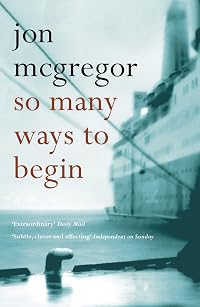
So Many Ways to Begin
by Jon McGregor
On This Page
Description
LONGLISTED FOR THE MAN BOOKER PRIZE David Carter cannot help but wish for more: that his wife Eleanor would be the sparkling girl he once found so irresistible; that his job as a museum curator could live up to the promise it once held; that his daughter's arrival could have brought him closer to Eleanor. But a few careless words spoken by his mother's friend have left David restless with the knowledge that his whole life has been constructed around a lie.Tags
Recommendations
















Member Recommendations

Member Reviews
I chose this book as an early reviewer selection because I recognized the author’s name and felt badly that I couldn’t get through the last book of his I was sent. Maybe I could redeem myself with this one and find a story I liked. See, McGregor can write. That much was clear with the last book and I wanted to try again. I’m glad I did.
This book was first published in 2006 so it can’t quite be called an ‘early’ review, but I think that the publisher wants to bring attention to McGregor's work and rightfully so. It is well written with excellent pacing, structure, characterization and an intimacy that isn’t stifling or voyeuristic.
David Carter wants you to know about his life. The way the writer threads the story is through show more the use of David’s keepsakes. As a boy, he clung to all types of mementos and has grown up loving museums, collections and archaeology. As an adult he’s fulfilled his dreams and become a museum curator. Each chapter he writes is headed with a description of one of his life mementos. A pair of gloves, theater tickets, snapshots, a job application, university prospectuses; each has significance in the chapter and you can imagine David telling you this story, bringing out each one and shyly offering it to you. It’s an excellent device and very believable. Not only does it give you tangible detail, but is almost more revealing of David’s character than what he says.
Although there are no big secrets in this book, there are many little ones. Small things are revealed subtly and tension builds if you recognize them for what they are. Eleanor’s agoraphobia for example was obliquely referred to in the very beginning, but took time to manifest itself in real time. Same with the actual reason for David’s hospitalization; as soon as it was hinted that it wasn’t for the reason given to Kate, I knew he had to have run afoul of Chris and could only turn the pages helplessly as it came to pass.
Mental illness is a major theme in this book, but it’s never made pathetic or something to be ashamed of. David is patient and loving in the face of it and even though it makes his life difficult at times, he’s never ready to walk out on the women he loves. The ending is a bit hard to take after so much yearning, but it is a fitting one. I think both David and Mary healed in small ways and rather than being frustrated, both seem satisfied. show less
This book was first published in 2006 so it can’t quite be called an ‘early’ review, but I think that the publisher wants to bring attention to McGregor's work and rightfully so. It is well written with excellent pacing, structure, characterization and an intimacy that isn’t stifling or voyeuristic.
David Carter wants you to know about his life. The way the writer threads the story is through show more the use of David’s keepsakes. As a boy, he clung to all types of mementos and has grown up loving museums, collections and archaeology. As an adult he’s fulfilled his dreams and become a museum curator. Each chapter he writes is headed with a description of one of his life mementos. A pair of gloves, theater tickets, snapshots, a job application, university prospectuses; each has significance in the chapter and you can imagine David telling you this story, bringing out each one and shyly offering it to you. It’s an excellent device and very believable. Not only does it give you tangible detail, but is almost more revealing of David’s character than what he says.
Although there are no big secrets in this book, there are many little ones. Small things are revealed subtly and tension builds if you recognize them for what they are. Eleanor’s agoraphobia for example was obliquely referred to in the very beginning, but took time to manifest itself in real time. Same with the actual reason for David’s hospitalization; as soon as it was hinted that it wasn’t for the reason given to Kate, I knew he had to have run afoul of Chris and could only turn the pages helplessly as it came to pass.
Mental illness is a major theme in this book, but it’s never made pathetic or something to be ashamed of. David is patient and loving in the face of it and even though it makes his life difficult at times, he’s never ready to walk out on the women he loves. The ending is a bit hard to take after so much yearning, but it is a fitting one. I think both David and Mary healed in small ways and rather than being frustrated, both seem satisfied. show less
 This review was written for LibraryThing Early Reviewers.
So many ways to begin -
Perhaps the way to start a review of [So Many Ways to Begin] is with the question of what made me choose it from the ER list. I was attracted by the words ‘curator’ and ‘museum' and intrigued by the promise that the protagonist would be struggling to resolve an unexpected revelation. The novel, of course, is much more, but it met my expectations. Despite the fact I'm reading several other books I'm enjoying, it caught my attention enough that I dropped everything else to read it through and I was not disappointed. I didn't need so much to find out 'what happened' as 'how David absorbs what he learns about himself and others.'
We know from the start that David was adopted, but David does not know. He has a show more happy childhood growing up with parents who love him dearly. He grows up utterly obsessed with museums and goes to work in one as soon as he can, he approaches life cautiously and in this somewhat distant and objective way, of arranging things so that they 'work'. When a family friend develops early Alzheimer's, she drops a bomb that changes everything. He has, by this time, fallen in love with a girl, Eleanor, who has her own secrets and troubles. They marry and then the real trouble begins.
The prose is lean, confined to actions and thoughts, the internal quality amplified by the lack of quotation marks in the dialogue. There are no flights of metaphoric fancy, no intrusions at all in the telling of the two intertwined stories of Eleanor and David. The novel does have narrative freedom, entering briefly the minds of many characters, although David dominates. The narrative moves back and forth in time, but in a consistent enough way that it is not intrusive once you get the pattern of it.
I would characterize [So Many Ways to Begin] as a quiet psychological novel, with accurate and often moving descriptions of early onset Alzheimer's, the effect of it on family, on the searing revelation of learning, as an adult, that you are adopted, of the consequences of severe and unacknowledged abuse as a child, on coping with what is likely to be a genetic tendency to unipolar depression. The last two, concern Eleanor, David's wife, whose story is not as well told or resolved, indeed at moments it seems a big enough story to warrant a book of its own, and there was, for me, an uneasy quality of it getting almost out of the author's control. There were aspects to Eleanor's story that bothered me, her acquiescence and passivity about her education -- that felt more like something that might have happened to a woman born earlier, but not so much one born around 1950. And yet, the example I want to give, of the writing is about Eleanor trying to explain how she feels to David:"I mean you're listening but you just you can't quite hear what they're saying on the other end of the line. I mean, you can hear the words but you can't put them in order, you can't make them make sense, you know? It's like that. It's like there is always something distracting me but I don't know what it is."
David's story is excellently done, down to the very last page. **** stars. show less
Perhaps the way to start a review of [So Many Ways to Begin] is with the question of what made me choose it from the ER list. I was attracted by the words ‘curator’ and ‘museum' and intrigued by the promise that the protagonist would be struggling to resolve an unexpected revelation. The novel, of course, is much more, but it met my expectations. Despite the fact I'm reading several other books I'm enjoying, it caught my attention enough that I dropped everything else to read it through and I was not disappointed. I didn't need so much to find out 'what happened' as 'how David absorbs what he learns about himself and others.'
We know from the start that David was adopted, but David does not know. He has a show more happy childhood growing up with parents who love him dearly. He grows up utterly obsessed with museums and goes to work in one as soon as he can, he approaches life cautiously and in this somewhat distant and objective way, of arranging things so that they 'work'. When a family friend develops early Alzheimer's, she drops a bomb that changes everything. He has, by this time, fallen in love with a girl, Eleanor, who has her own secrets and troubles. They marry and then the real trouble begins.
The prose is lean, confined to actions and thoughts, the internal quality amplified by the lack of quotation marks in the dialogue. There are no flights of metaphoric fancy, no intrusions at all in the telling of the two intertwined stories of Eleanor and David. The novel does have narrative freedom, entering briefly the minds of many characters, although David dominates. The narrative moves back and forth in time, but in a consistent enough way that it is not intrusive once you get the pattern of it.
I would characterize [So Many Ways to Begin] as a quiet psychological novel, with accurate and often moving descriptions of early onset Alzheimer's, the effect of it on family, on the searing revelation of learning, as an adult, that you are adopted, of the consequences of severe and unacknowledged abuse as a child, on coping with what is likely to be a genetic tendency to unipolar depression. The last two, concern Eleanor, David's wife, whose story is not as well told or resolved, indeed at moments it seems a big enough story to warrant a book of its own, and there was, for me, an uneasy quality of it getting almost out of the author's control. There were aspects to Eleanor's story that bothered me, her acquiescence and passivity about her education -- that felt more like something that might have happened to a woman born earlier, but not so much one born around 1950. And yet, the example I want to give, of the writing is about Eleanor trying to explain how she feels to David:"I mean you're listening but you just you can't quite hear what they're saying on the other end of the line. I mean, you can hear the words but you can't put them in order, you can't make them make sense, you know? It's like that. It's like there is always something distracting me but I don't know what it is."
David's story is excellently done, down to the very last page. **** stars. show less
This review was written for LibraryThing Early Reviewers.Jon McGregor had my full attention from the opening sentence….”Eleanor was in the kitchen when he got back from her mother’s funeral”.....The obvious question is why did Eleanor not attend? you are caught in the author’s trap you want to know the answer and so you start reading…...The seemingly ordinary story of the life of Robert Carter and his wife Eleanor Campbell and the fallout that happens when an offhand comment shatters irrevocably those values previously held to be true.
Told in a similar writing style to William Boyd and set over a time period of some 50 years it is the language of McGregor that adds so much and enriches the reading experience……”so he might have been rushing to catch his train and not turned show more and seen her there. These things, the way they fall into place. The people we would be if these things were otherwise”.......”the house empty behind them, unspoken regrets and recriminations swept out of sight like crumbs from the table, silence blanketing the room, the two of them avoiding eachother’s eyes”.......”Every step drew her deeper into the hollows of the landscape, the green hills and shining rivers and mist-tangled treetops, as though she was clambering into the postcard she used to keep propped up on the mantelpiece”...... The author addresses and opens up to examination Carter’s work as Curator of a Coventry museum, his relationship with Eleanor and how this relationship is tested over a chance remark. The reader is able to identify and immerse himself in the story as it unfolds. Jon McGregor’s real ability is the astounding way he brings to life the ordinary and mundane in colourful descriptive heartfelt prose. Wonderful writing, brilliant author, highly highly recommended….”David joked to Eleanor one worn-out evening, and they were happy, in the ordinary ways which had evaded them for so long”....... show less
Told in a similar writing style to William Boyd and set over a time period of some 50 years it is the language of McGregor that adds so much and enriches the reading experience……”so he might have been rushing to catch his train and not turned show more and seen her there. These things, the way they fall into place. The people we would be if these things were otherwise”.......”the house empty behind them, unspoken regrets and recriminations swept out of sight like crumbs from the table, silence blanketing the room, the two of them avoiding eachother’s eyes”.......”Every step drew her deeper into the hollows of the landscape, the green hills and shining rivers and mist-tangled treetops, as though she was clambering into the postcard she used to keep propped up on the mantelpiece”...... The author addresses and opens up to examination Carter’s work as Curator of a Coventry museum, his relationship with Eleanor and how this relationship is tested over a chance remark. The reader is able to identify and immerse himself in the story as it unfolds. Jon McGregor’s real ability is the astounding way he brings to life the ordinary and mundane in colourful descriptive heartfelt prose. Wonderful writing, brilliant author, highly highly recommended….”David joked to Eleanor one worn-out evening, and they were happy, in the ordinary ways which had evaded them for so long”....... show less
As a child, David Corter happily dug up artifacts from the war and haunted the local museums, dreaming of running his own museum one day. He collected artifacts from his own life almost obsessively, cataloging them and preserving them, building a history of his and his family's lives. When, at the age of 22, a family friend suffering from early-onset Alzheimer's reveals the long-held secret that David was actually adopted, he finds himself having to reevaluate everything he thought he knew about his history. Coupled with David's quest are his wife's problems...her abusive relationship with her family has left her prone to debilitating bouts of depression.
While the story itself, of two dysfunctional people finding their way in life, is show more not a new or original one, the way in which the story is told is unique. Each chapter takes as its center an item from David's collection, using that item as a jumping-off point for a story about his past. These stories jump around in time, weaving together slowly into a complete picture of his life and struggle for identity.
A quiet, slow-paced, melancholy title, this book is nevertheless engaging. show less
While the story itself, of two dysfunctional people finding their way in life, is show more not a new or original one, the way in which the story is told is unique. Each chapter takes as its center an item from David's collection, using that item as a jumping-off point for a story about his past. These stories jump around in time, weaving together slowly into a complete picture of his life and struggle for identity.
A quiet, slow-paced, melancholy title, this book is nevertheless engaging. show less
This review was written for LibraryThing Early Reviewers.Many years ago I saw a play called "Philadelphia, Here I Come!" that I loved. In many ways, that play reminds me of this quiet book, filled with longing, unanswered questions and reaching, always reaching, for things that will never be.
I picked up "So Many Ways To Begin" and I could not put it down. I even woke up in the middle of the night to read it.
MacGregor's writing is like music it's so beautiful. And it reads so brilliantly true. I believed everything about these characters'lives, and MacGregor's extraordinary talent is that he makes us care so deeply about these seemingly ordinary people.
"So Many Ways To Begin" is first a story about one man, but also about his family, and then his extended family, all of whom, like most of us, show more seem to be trying very hard, but often stumbling. There was only one wretched character here who I just couldn't stand; I was rooting, at every turn, for the rest.
I was quite surprised by the ending, which I also liked.
Highly recommended. show less
I picked up "So Many Ways To Begin" and I could not put it down. I even woke up in the middle of the night to read it.
MacGregor's writing is like music it's so beautiful. And it reads so brilliantly true. I believed everything about these characters'lives, and MacGregor's extraordinary talent is that he makes us care so deeply about these seemingly ordinary people.
"So Many Ways To Begin" is first a story about one man, but also about his family, and then his extended family, all of whom, like most of us, show more seem to be trying very hard, but often stumbling. There was only one wretched character here who I just couldn't stand; I was rooting, at every turn, for the rest.
I was quite surprised by the ending, which I also liked.
Highly recommended. show less
This review was written for LibraryThing Early Reviewers.McGregor excels at literary psychological suspense, similar to what Ian McEwan does so well. When reading So Many Ways to Begin, one feels slightly off-balance, as though the world is comfortable but not quite right. As the pages turn, the reader becomes edgy, each increasing word or scene appears to set the story up for disaster. And disaster, one learns, is not necessarily a bomb or an earthquake so much as it is a glance, a word, an opening or closing door, a stare.
The basic premise of McGregor's tale is a simple one that has been presented in many ways in many books: a family secret from the past comes into the present to haunt and change present-day lives. What McGregor has done that is different is allow his work to take on a show more more interior feel which allows readers to twist in discomfort at the thoughts and actions of the everyday characters in the book. There is no tight plot; there is mystery but no methodical approach to it. Fans of plot-centric fiction will be disappointed in McGregor's work. His words and pages are pure literature.
There are times when one wishes the book would move faster, the action seems to linger too long in the characters' minds or their very slow actions. There are times one yearns for a bit more twists and turns, more secrets revealed and tossed aside, more progress toward the goal, the learning of the secret. But one must be patient to read So Many Ways to Begin and realize that although it is about a mystery, it is about more than that. It is about families and childhoods and memories. It is about what has meaning and what doesn't. It is about what we take with us when we move on, and about how we move through. Through life, through dreams, through shock and tragedy.
There is a great deal of love and affection in So Many Ways to Begin. It comes forth in odd ways at strange times and sometimes lingers on and on in the pages to the point where the reader questions it, dislikes it, wants it to be gone. There are other times when it is easy to want more: more detail, more connection, more acknowledgement. When it doesn't happen, the frustration of the reader feels so true to life, and this seems to be what McGregor is striving for, these incremental moments of living that are captured or not, take on meaning or don't, give us happiness or take it away.
McGregor's writing might not be for everyone, and he will be compared to Ian McEwan, but he is really his own writer. He knows what he wants to write about and how to do it. He's innovative, introspective, insightful. He's very, very real in his work, and So Many Ways to Begin must be commended for it is a special book that speaks to all of us in some way. It is not just a book about family relationships, about adoption and a quest for roots. It is not just about marriage, mental illness, crime and punishment. It is about the minutes that tick away in all of our lives every day. McGregor's work is going on between the ticks of the seconds, in the little dips of silence between the clicks on the clock. McGregor is in there, in everyone's silence, and he's very, very good at it. show less
The basic premise of McGregor's tale is a simple one that has been presented in many ways in many books: a family secret from the past comes into the present to haunt and change present-day lives. What McGregor has done that is different is allow his work to take on a show more more interior feel which allows readers to twist in discomfort at the thoughts and actions of the everyday characters in the book. There is no tight plot; there is mystery but no methodical approach to it. Fans of plot-centric fiction will be disappointed in McGregor's work. His words and pages are pure literature.
There are times when one wishes the book would move faster, the action seems to linger too long in the characters' minds or their very slow actions. There are times one yearns for a bit more twists and turns, more secrets revealed and tossed aside, more progress toward the goal, the learning of the secret. But one must be patient to read So Many Ways to Begin and realize that although it is about a mystery, it is about more than that. It is about families and childhoods and memories. It is about what has meaning and what doesn't. It is about what we take with us when we move on, and about how we move through. Through life, through dreams, through shock and tragedy.
There is a great deal of love and affection in So Many Ways to Begin. It comes forth in odd ways at strange times and sometimes lingers on and on in the pages to the point where the reader questions it, dislikes it, wants it to be gone. There are other times when it is easy to want more: more detail, more connection, more acknowledgement. When it doesn't happen, the frustration of the reader feels so true to life, and this seems to be what McGregor is striving for, these incremental moments of living that are captured or not, take on meaning or don't, give us happiness or take it away.
McGregor's writing might not be for everyone, and he will be compared to Ian McEwan, but he is really his own writer. He knows what he wants to write about and how to do it. He's innovative, introspective, insightful. He's very, very real in his work, and So Many Ways to Begin must be commended for it is a special book that speaks to all of us in some way. It is not just a book about family relationships, about adoption and a quest for roots. It is not just about marriage, mental illness, crime and punishment. It is about the minutes that tick away in all of our lives every day. McGregor's work is going on between the ticks of the seconds, in the little dips of silence between the clicks on the clock. McGregor is in there, in everyone's silence, and he's very, very good at it. show less
This review was written for LibraryThing Early Reviewers.Reread Jan 2022 as part of the 2006 Booker revisit for the Mookse group
I first read this book back in 2006, after loving McGregor's debut novel [b:If Nobody Speaks of Remarkable Things|880612|If Nobody Speaks of Remarkable Things|Jon McGregor|https://i.gr-assets.com/images/S/compressed.photo.goodreads.com/books/1347247692l/880612._SY75_.jpg|1094652], and at the time I found it a little disappointing, partly because it deliberately avoids the lyrical set piece descriptive passages which I liked most in that book, and also because much of the story seemed rather depressing.
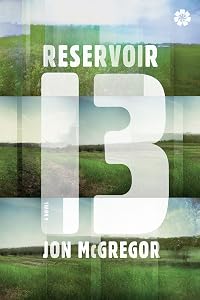
Coming back to it 15 years later with the hindsight of knowing how McGregor's writing has developed, particularly in [b:Reservoir 13|33283659|Reservoir 13|Jon show more McGregor|https://i.gr-assets.com/images/S/compressed.photo.goodreads.com/books/1481095738l/33283659._SY75_.jpg|44007812], it is a much more powerful and subtle book than I realised at the time, and one which impressed me far more this time.
The central character is David, a child of the second world war brought up in Coventry, which suffered more damage than most British cities during the war. A collector as a child, he achives his dream of working in a museum, which accounts for the structure of the book, in which each chapter is associated with an object in a collection that represents the key elements of his life story.
The two key elements are his relationship with his wife Eleanor, who he meets on a work trip to a museum in Aberdeen, and who he helps to escape the narrow expectations of her struggling working class family. Later she suffers from depression, and McGregor's account of dealing with this, and her eventual partial recovery, is very moving.
The other driver of the story is adoption. As a young adult, David discovers that he was really the child of an Irish domestic servant, given up for adoption immediately after birth. His quest to discover more about her leads him to Donegal, where the book's surprisingly moving conclusion takes place.
The subtlety with which the story is told is much clearer second time round, and the elements I found a little gloomy first time are all at least partly redeemed.
One other thing that is definitely a foretaste of Reservoir 13 is that at various points in the story, alternative versions of the aftermath of apparently minor events are suggested briefly. show less
I first read this book back in 2006, after loving McGregor's debut novel [b:If Nobody Speaks of Remarkable Things|880612|If Nobody Speaks of Remarkable Things|Jon McGregor|https://i.gr-assets.com/images/S/compressed.photo.goodreads.com/books/1347247692l/880612._SY75_.jpg|1094652], and at the time I found it a little disappointing, partly because it deliberately avoids the lyrical set piece descriptive passages which I liked most in that book, and also because much of the story seemed rather depressing.
Coming back to it 15 years later with the hindsight of knowing how McGregor's writing has developed, particularly in [b:Reservoir 13|33283659|Reservoir 13|Jon show more McGregor|https://i.gr-assets.com/images/S/compressed.photo.goodreads.com/books/1481095738l/33283659._SY75_.jpg|44007812], it is a much more powerful and subtle book than I realised at the time, and one which impressed me far more this time.
The central character is David, a child of the second world war brought up in Coventry, which suffered more damage than most British cities during the war. A collector as a child, he achives his dream of working in a museum, which accounts for the structure of the book, in which each chapter is associated with an object in a collection that represents the key elements of his life story.
The two key elements are his relationship with his wife Eleanor, who he meets on a work trip to a museum in Aberdeen, and who he helps to escape the narrow expectations of her struggling working class family. Later she suffers from depression, and McGregor's account of dealing with this, and her eventual partial recovery, is very moving.
The other driver of the story is adoption. As a young adult, David discovers that he was really the child of an Irish domestic servant, given up for adoption immediately after birth. His quest to discover more about her leads him to Donegal, where the book's surprisingly moving conclusion takes place.
The subtlety with which the story is told is much clearer second time round, and the elements I found a little gloomy first time are all at least partly redeemed.
One other thing that is definitely a foretaste of Reservoir 13 is that at various points in the story, alternative versions of the aftermath of apparently minor events are suggested briefly. show less
Members
- Recently Added By
Lists

Booker Prize
491 works; 62 members

Man Booker Prize Longlist 2006
19 works; 2 members
Author Information

18+ Works 4,346 Members
Awards and Honors
Awards
Common Knowledge
- Original publication date
- 2006-08-07
- People/Characters
- David Carter; Eleanor Carter (née Campbell); Kate Carter; Dorothy Carter; Susan Carter; Ivy Campbell (show all 11); Stewart Campell; Donald Campbell; Anna Richards; Chris Richards; Julia Pearson
- Important places
- Coventry, England, UK; Donegal, County Donegal, Ireland
- Dedication
- To Alice
- First words
- They came in the morning, early, walking with the others along tracks and lanes and roads, across fields, down the long low hills which led to the slow pull of the river, down to the open gateways of the city walls, the hours... (show all) and the days of walking showing in the slow shift of their bodies, their breath steaming above them in the cold morning air as the night fell away at their backs.
Classifications
Statistics
- Members
- 562
- Popularity
- 52,735
- Reviews
- 42
- Rating
- (3.81)
- Languages
- 6 — Dutch, English, French, German, Italian, Spanish
- Media
- Paper, Audiobook, Ebook
- ISBNs
- 24
- ASINs
- 9