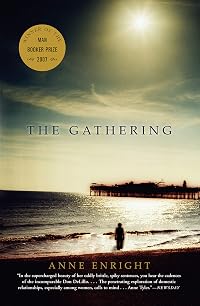
The Gathering
by Anne Enright
On This Page
Description
Regarded as one of her country's foremost voices, Irish author Anne Enright makes a fresh mark on a rich literary tradition. "The Gathering" is a deeply insightful family saga, steeped in secrets and intrigue, unfolding over three generations.Tags
Recommendations
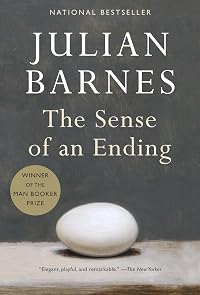
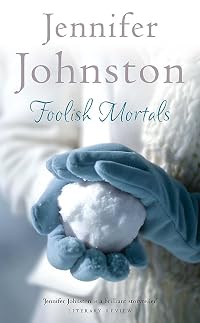

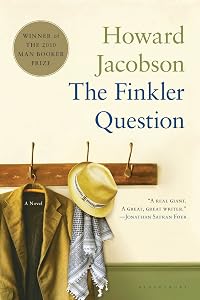
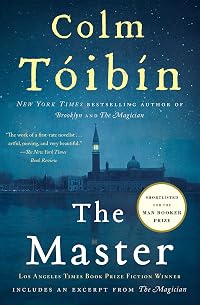




Member Recommendations


Member Reviews
'the seeds of my brother's death were sown many years ago'
By sally tarbox on 12 Aug. 2012
Format: Paperback
After reading- and not greatly liking- Enright's 'The Forgotten Waltz', I found that 'The Gathering' is in a different category altogether and is a beautifully written novel about how events in your childhood can screw you up for ever.
'The great thing about being dragged up is that there is no one to blame. We are entirely free range. We are human beings in the raw. Some survive better than others, that is all.'
This certainly isn't a plot-driven novel, but as narrator Veronica struggles to come to terms with her favorite brother's suicide, which threatens her own sanity, I found I couldn't put it down.
By sally tarbox on 12 Aug. 2012
Format: Paperback
After reading- and not greatly liking- Enright's 'The Forgotten Waltz', I found that 'The Gathering' is in a different category altogether and is a beautifully written novel about how events in your childhood can screw you up for ever.
'The great thing about being dragged up is that there is no one to blame. We are entirely free range. We are human beings in the raw. Some survive better than others, that is all.'
This certainly isn't a plot-driven novel, but as narrator Veronica struggles to come to terms with her favorite brother's suicide, which threatens her own sanity, I found I couldn't put it down.
The winner of the Man Booker Prize in 2007, The Gathering is one of the angriest novels I have ever read. It's not entirely clear exactly what Veronica Hegarty, the narrator of the novel, is so angry about, because there is such a rich smorgasbord of things possible causes for: the lack of attention paid to her throughout her life by her mother, who usually cannot even remember her name because her time and attention has been divided among 12 children and shredded by a total of 19 pregnancies; a husband who might be cheating on her, who might be acting the loving husband instead of actually being a loving husband; the very fact that she is female, and therefore has been subject for her entire life to the whims of men and the confusions show more of being a woman during the second half of the 20th century, when what it meant to be a woman was undergoing genuine change. But one cause seems to predominate: Veronica's brother Liam, a mere 11 months older than she, has just committed suicide.
This saga of an Irish family begins with Veronica's grandmother, Ada, who meets Lamb Nugent in the foyer of a hotel in 1925. Ada is there about a job; Lamb works behind the desk. Nugent falls in love with Ada from the moment she twitches her gloves off with precise movements:
"It has already happened. It happened when she walked in the door; when she looked about her, but only as far as the chair. It happened in the perfection with which she managed to be present but not seen. And all the rest was just agitation: first of all that she should notice him back (and she did - she noticed his stillness), and second that she should love him as he loved her; suddenly, completely, and beyond what had been allocated to them as their station."
It comes as a shock after Veronica tells this story, all in precise, careful, lovely language, each moment so vividly recalled in her imagination that the reader can't help but picture the hotel lobby, the 19-year-old girl and her admirer, to learn that Nugent does not become Ada's husband. Instead, Ada marries Charlie, Nugent's best friend, a man constantly nipping out to "see a man about a dog" and to gamble - a man bad with money, but who adores Ada and whom she adores as well. And Lamb? He is there, with his wife and his four children, and he is the landlord for the Hegarty family. And he never stops loving Ada. And he gets his revenge.
But what does that have to do with Liam, and Liam's suicide, and Veronica's anger? For her anger goes beyond the place it would have as one of the stages of grieving; it extends to her living brothers and sisters, her mother, her husband, even, seemingly, to Ireland itself. This book glows red with anger:
"I know that these men [men with easy hearts] exist, I have even met them, it is just that I could never love one, even if I tried. I love the ones who suffer, and the love me. They love to see me sitting on their nice Italian furniture, and they love to see me cry.
"And I know how silly it is. You don't kill someone by having sex with them. You kill them with a knife, or a rope, or a hammer, or a gun. You strangle them with their tights. You do not kill them with a penis. So it is all - the I hate you, I love you, I hate - a dream of killing and dying, I understand that much; that when you roll away from each other go to sleep, then the dream is over for another day."
Veronica who has lost her way in this world, but did not realize it until her brother died. That brother, and his story, is the driving force in this book, but is not truly the source of Veronica's deep anger, anger so deep it is depression as well as fury. This is a hard book to read; not enjoyable, but open, almost like a corpse splayed in autopsy, welling with emotion. It is the story of a family that has never been happy, even as it has been successful, even as it has grown and prospered, even as the siblings cling to and love one another. Nevertheless, it is beautifully rendered. It is worthy of its prize. show less
This saga of an Irish family begins with Veronica's grandmother, Ada, who meets Lamb Nugent in the foyer of a hotel in 1925. Ada is there about a job; Lamb works behind the desk. Nugent falls in love with Ada from the moment she twitches her gloves off with precise movements:
"It has already happened. It happened when she walked in the door; when she looked about her, but only as far as the chair. It happened in the perfection with which she managed to be present but not seen. And all the rest was just agitation: first of all that she should notice him back (and she did - she noticed his stillness), and second that she should love him as he loved her; suddenly, completely, and beyond what had been allocated to them as their station."
It comes as a shock after Veronica tells this story, all in precise, careful, lovely language, each moment so vividly recalled in her imagination that the reader can't help but picture the hotel lobby, the 19-year-old girl and her admirer, to learn that Nugent does not become Ada's husband. Instead, Ada marries Charlie, Nugent's best friend, a man constantly nipping out to "see a man about a dog" and to gamble - a man bad with money, but who adores Ada and whom she adores as well. And Lamb? He is there, with his wife and his four children, and he is the landlord for the Hegarty family. And he never stops loving Ada. And he gets his revenge.
But what does that have to do with Liam, and Liam's suicide, and Veronica's anger? For her anger goes beyond the place it would have as one of the stages of grieving; it extends to her living brothers and sisters, her mother, her husband, even, seemingly, to Ireland itself. This book glows red with anger:
"I know that these men [men with easy hearts] exist, I have even met them, it is just that I could never love one, even if I tried. I love the ones who suffer, and the love me. They love to see me sitting on their nice Italian furniture, and they love to see me cry.
"And I know how silly it is. You don't kill someone by having sex with them. You kill them with a knife, or a rope, or a hammer, or a gun. You strangle them with their tights. You do not kill them with a penis. So it is all - the I hate you, I love you, I hate - a dream of killing and dying, I understand that much; that when you roll away from each other go to sleep, then the dream is over for another day."
Veronica who has lost her way in this world, but did not realize it until her brother died. That brother, and his story, is the driving force in this book, but is not truly the source of Veronica's deep anger, anger so deep it is depression as well as fury. This is a hard book to read; not enjoyable, but open, almost like a corpse splayed in autopsy, welling with emotion. It is the story of a family that has never been happy, even as it has been successful, even as it has grown and prospered, even as the siblings cling to and love one another. Nevertheless, it is beautifully rendered. It is worthy of its prize. show less
Melancholy pervades The Gathering by Anne Enright. Each page is like taking a first breath after hearing bad news. The weight that you now bear. That’s not to say I didn’t like The Gathering. A novel doesn’t have to be happy for me to like it. Quite the contrary. I like books that dig deep, and The Gathering certainly does that. It’s filled with heavy themes. Alcoholism, past trauma, unhappy marriages, emotional illness, death, shame and guilt, to name a few. But Enright’s storytelling is so clear and, at times, amusing, that she manages to present these depressing themes in a style that is utterly engaging. And Enright’s exploration of sibling relationships is extraordinary. From that easy mutual place we share as children show more to the touchstones we hold onto to narrow the gaps as we age into adulthood… and that final uncloseable gap, death. “There are so few people given us to love and they all stick.” Yes, for better or worse, they all stick. The Gathering is a book about family history that will likely cause reflection on those people closest to you… the people you love or don’t and why. show less
I have met Anne Enright a good few times and, frankly, struggled to work with her for several sound reasons; frankly, I would be content to dislike her, if she weren't such a genius on the page. I say this, so you can believe it, with the full weight of a grudge long held -- I wish I could consign this woman's work to the bin, at least verbally, with some erudite critical lashing, but the fact is, the fact remains, that she is a bloody genius. This book, The Gathering, for which she won the Booker prize, is the sort of novel that clings to you. Just as its characters do within the story, the book itself gets under your skin. You find yourself looking out of windows, or neglecting the whistling kettle, not so much thinking, not show more coherently, about reading one more chapter, but feeling an indistinct urge to return to the narrative -- to see the finish of these lives, as much as you will ever see it. There is a certain magic to her first-person style that feels so intimate, it's almost as if you, the reader, are becoming tangled in the narrator's emotions. And these are not happy emotions. This is no romance novel where one delights in the happy bubble bursting in your chest as the love ripples out of the page. One does not want these feelings and yet there is no escaping them. "Drawn in" is a phrase we use when we speak of good books, of favorite plots and fantasy epics, but it is not quite right here. It's more like being hooked, and struggling to be free.
The prose is occasionally complex, occasionally even slightly incoherent, which is where Enright seems to excel even in comparison with the rest of her writing. Inside the narrator's head, things are a jumble, and so we are jumbled along with them, and even clarity is not quite clear, in the end. I cannot say that this book is charming, or delightful, or any of those bright, easy words that describe so many of the books I like to read. I don't really know that I liked to read this book at all. But I was compelled to, and it was brilliant, and as much as I would rather tell you that this whole thing was a stinking pile, I can't -- if you are a reader of literary fiction, or a connoisseur of prose, or even just an emotional type, then it is for you that I admit Anne Enright's brilliance. -- signed, A Reluctant but Avid Fan show less
The prose is occasionally complex, occasionally even slightly incoherent, which is where Enright seems to excel even in comparison with the rest of her writing. Inside the narrator's head, things are a jumble, and so we are jumbled along with them, and even clarity is not quite clear, in the end. I cannot say that this book is charming, or delightful, or any of those bright, easy words that describe so many of the books I like to read. I don't really know that I liked to read this book at all. But I was compelled to, and it was brilliant, and as much as I would rather tell you that this whole thing was a stinking pile, I can't -- if you are a reader of literary fiction, or a connoisseur of prose, or even just an emotional type, then it is for you that I admit Anne Enright's brilliance. -- signed, A Reluctant but Avid Fan show less
A woman nearing middle age flies from her home in Dublin to retrieve the body of her brother who has drowned himself in the English sea. The two siblings, who were close in both age and temperament, come from an Irish Catholic working class family of twelve kids, to say nothing of the seven miscarriages that their “Mammy” suffered. The brother’s corpse is being brought back for a wake in the house from which the family has long since scattered but where Mammy still lives. Of course, this is no simple journey for the sister, her brother’s suicide having unleashed a torrent of conflicting feelings, emotions, and regrets. In particular, she is trying her best to come to grips with memories of some terrible things that may or may show more not have happened while the two were forced by Mammy’s fragile health to spend a season living with their grandparents. Resolving these repressed visions—and understanding the role they may have played in her brother’s demise—is the essential premise of The Gathering.
Beyond that brief synopsis, maybe the best way to critique this novel would be to describe Veronica Hegarty, the narrator of the story and the ostensible protagonist of this woeful clan. To characterize her, I found myself running through a list of “un” words: unlikeable, unreliable, unrelenting, uncertain, unsympathetic, uninteresting, and, most of all, unbearable. And that set of uns would be a good way to describe the entire book as well. Although author Anne Enright certainly delivered some stylish prose at times, the story itself was told in a disjoint manner that was almost wholly devoid of warmth or compassion. Veronica is truly a mess in ways that were hard to reconcile with the secrets of her past; her tendencies toward both self-pity and self-loathing were off-putting and her combined obsession/revulsion with sex was unhealthy, to say the least. Although learning to live with—if not exactly rise above—the pains inflicted by a dysfunctional family upbringing is one of the points of The Gathering, knowing that did not make the novel any more enjoyable to read. show less
Beyond that brief synopsis, maybe the best way to critique this novel would be to describe Veronica Hegarty, the narrator of the story and the ostensible protagonist of this woeful clan. To characterize her, I found myself running through a list of “un” words: unlikeable, unreliable, unrelenting, uncertain, unsympathetic, uninteresting, and, most of all, unbearable. And that set of uns would be a good way to describe the entire book as well. Although author Anne Enright certainly delivered some stylish prose at times, the story itself was told in a disjoint manner that was almost wholly devoid of warmth or compassion. Veronica is truly a mess in ways that were hard to reconcile with the secrets of her past; her tendencies toward both self-pity and self-loathing were off-putting and her combined obsession/revulsion with sex was unhealthy, to say the least. Although learning to live with—if not exactly rise above—the pains inflicted by a dysfunctional family upbringing is one of the points of The Gathering, knowing that did not make the novel any more enjoyable to read. show less
Beautifully written (smooth, silken style, relentless and at times quite funny too) meditation on grief, time, memory--how the mind muses, backfills, avoids, denies. Also on family, its ghosts past and present.--specifically, the huge Hegarty clan, which is gathering for the funeral of handsome, hapless, desperately drunken Liam, who has put rocks in his pockets and walked into the sea. His closest sibling Veronica tells the tale, managing eventually to touch down in her own reality by coming to terms with the past, and her terrible secret knowledge that Liam’s fate was written at the age of 9 when he was sexually molested by their grandmother’s landlord [not info given away early]. Powerful stuff. For the Irish family show more gathering/wayward boy (American, this time), see Charming Billy, Alice McDermott (Nat’l Bk Award); for meditations on memory, family, Ireland, grief, and writing to die for, The Sea, John Banville (Man Booker 2005), other works as well for unreliable narrator, wicked humor and self-serving “memory”; more accessibly, his Benjamin Black novels. Excellent novel on awful subject of sexual abuse of boys and consequences--Mysterious Skin, Scott Heim. show less
Genuinely incredible book. In the wake of the her brother's suicide a women remembers a terrible event from their childhood, an event that dislocates her from her life and her large family of brothers and sisters as well as her husband and two daughters. Her own memories and imagined events from her family's past intermingle with the return of her brother's body to Ireland for the funeral and the freefall fallout months later. Enright writes the heart out of this with painful fidelity to truth while wrestling with the difficulty, the impossibility, of truly knowing it, but also her compassion and insight into the frail and flawed humanity of her characters. This is a searing portrait of family in modern Ireland that hurts and haunts and show more gets under the skin. I found myself utterly caught up in Veronica's voice and life and perceptions, immersed in her memories and imaginings as she fights to make sense of the fear and pain and strange damage in her life and her brother's which may or may not spring from something awful that happened one summer in her grandmother's house. A book about damage that does its fair share in the mind and heart and psyche of the reader. show less
Members
- Recently Added By
Published Reviews
ThingScore 75
At its best Enright's prose style is excitingly original, a blend of defensive social satire with extreme precision in evoking sounds, smells, and atmosphere and a great ability to make rapid and telling transitions from past to present, concrete to abstract, narrative to reflection. However, these qualities emerge for the most part in sections peripheral to the main story.... When, on the show more other hand, she slides into melodrama and literary formula, The Gathering does indeed sound like at least nine other writers and by no means the best. show less
added by jburlinson
Her prose often ravishes and sometimes repels: reading her can be like staring into the lustrous surface of a lake, trying to discern the dangers lurking beneath. . . Bringing together the skills she has honed along the way, Enright carries off her illusions without props or dei ex machina, bravely engaging with the carnival horrors of everyday life.
added by christiguc
added by lucyknows
Lists

1001 Books You Must Read Before You Die
1,448 works; 1,134 members

The Guardian's 1000 Novels Everyone Must Read
1,005 works; 550 members

Best 21st Century Books (So Far)
670 works; 86 members

Booker Prize
491 works; 62 members

Female Author
1,235 works; 67 members
Booker Prize Shortlist: Titles Read
103 works; 10 members

Global Reads: Books Set in the United Kingdom and Ireland
109 works; 5 members

Best of Irish Literature
37 works; 7 members

BBC Radio 4 Bookclub
340 works; 13 members

Man Booker Prize Longlist 2007
13 works; 2 members

Novels featuring siblings
133 works; 8 members

Started, Not Finished
7 works; 1 member

Books About Older People
50 works; 11 members
Books Read in 2016
4,666 works; 197 members

Secrets Books
94 works; 3 members

Biggest Disappointments
606 works; 163 members

Best books I read in 2013
152 works; 3 members

Reading List: Books for Insomniacs
17 works; 4 members

My TBR
371 works; 3 members

Books Tagged Abuse
152 works; 4 members

Read Irish Women Challenge 2023
11 works; 3 members

Florida
366 works; 3 members

BBC World Book Club
265 works; 5 members

Books Read in 2026
1,910 works; 66 members
Author Information

27+ Works 8,708 Members
Anne Teresa Enright (born 11 October 1962) is an Irish author. She received an English and philosophy degree from Trinity College, Dublin. Enright is a Fellow of the Royal Society of Literature; her novel The Gathering won the 2007 Man Booker Prize. She has also won the 1991 Rooney Prize for Irish Literature, the 2001 Encore Award and the 2008 show more Irish Novel of the Year. Enright's writings have appeared in several magazines, including The New Yorker, The Paris Review, Granta, the London Review of Books, The Dublin Review and the Irish Times. In 2015 she made the New Zealand Best Seller List with her title The Green Road. This title also made the Costa Book Award 2015 shortlist in the UK. It also won the Irish Book Award for Novel of the Year. (Bowker Author Biography) show less
Some Editions
Awards and Honors
Awards
Distinctions
Series
Belongs to Publisher Series
Work Relationships
Has as a student's study guide
Common Knowledge
- Canonical title
- The Gathering
- Original title
- The Gathering
- Original publication date
- 2007
- People/Characters
- Veronica Hegarty; Liam Hegarty; Lambert Nugent (Lamb); Ada Merriman; Ada Spillane
- Important places
- Dublin, Ireland; Brighton, East Sussex, England, UK
- First words
- I would like to write down what happened in my grandmother's house the summer I was eight or nine, but I am not sure if it really did happen. I need to bear witness to an uncertain event. I feel it roaring inside me--this ... (show all)thing that may not have taken place. I don't even know what name to put on it. I think you might call it a crime of the flesh, but the flesh is long fallen away and I am not sure what hurt may linger in the bones.
- Quotations
- …I was living my life in inverted commas. I could pick up my keys and go ‘home’ where I could ‘have sex’ with my ‘husband’ just like lots of other people did. That is what I had been doing for years. And I didnâ... (show all)€™t seem to mind the inverted commas, or even notice that I was living in them, until my brother died.
- Last words
- (Click to show. Warning: May contain spoilers.)Gatwick airport is not the best place to be gripped by a fear of flying. But it seems that this is happening to me now; because you are so high up, in those things, and there is such a long way to fall. Then again, I have been falling for months. I have been falling into my own life for months. And I am about to hit it now.
- Blurbers
- Kennedy, A.L.; Tóibín, Colm; O'Connor, Joseph; Davies, Sir Howard
- Original language
- English
- Disambiguation notice
- This is The Gathering by Anne Enright. It should not be combined with The Gathering by Joseph Lidster.
Classifications
Statistics
- Members
- 4,365
- Popularity
- 3,431
- Reviews
- 216
- Rating
- (3.08)
- Languages
- 17 — Bulgarian, Catalan, Chinese, Czech, Danish, Dutch, English, Finnish, French, German, Greek, Italian, Norwegian (Bokmål), Polish, Portuguese, Spanish, Swedish
- Media
- Paper, Audiobook, Ebook
- ISBNs
- 58
- UPCs
- 1
- ASINs
- 16