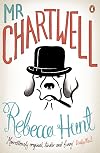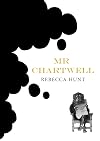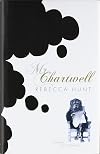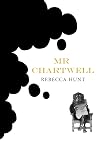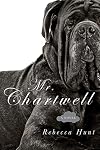
Mr. Chartwell
by Rebecca Hunt
On This Page
Description
July 1964. Chartwell House, Kent: Winston Churchill wakes at dawn. There's a dark, mute "presence" in the room that focuses on him with rapt concentration.It's Mr. Chartwell.
Soon after, in London, Esther Hammerhans, a librarian at the House of Commons, goes to answer the door to her new lodger. Through the glass she sees a vast silhouette the size of a mattress.
It's Mr. Chartwell.
Charismatic, dangerously seductive, Mr. Chartwell unites the eminent statesman at the end of his career show more and the vulnerable young woman. But can they withstand Mr. Chartwell's strange, powerful charms and his stranglehold on their lives? Can they even explain who or what he is and why he has come to visit?
In this utterly original, moving, funny, and exuberant novel, Rebecca Hunt explores how two unlikely lives collide as Mr. Chartwell's motives are revealed to be far darker and deeper than they at first seem.
From the Hardcover edition.
. show less
Tags
Recommendations








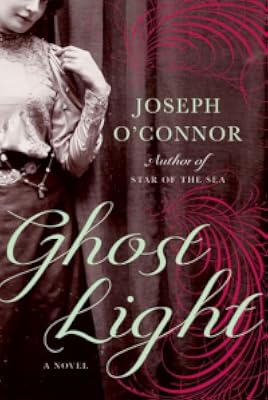
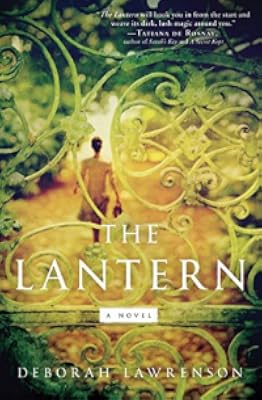
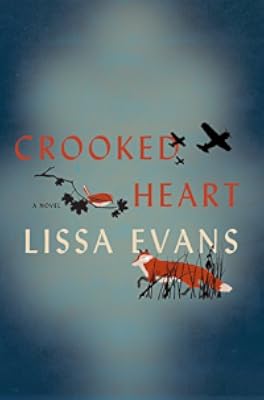


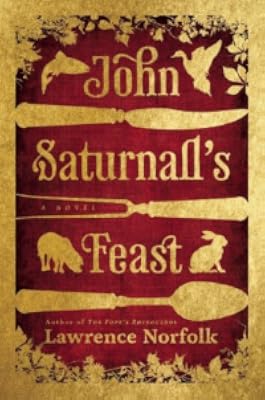




Member Recommendations
sarah-e Little Bee is the story of how an unexpected visitor brings memories of a dark time; the tone is more serious than Mr. Chartwell but some similar issues are discussed.
Member Reviews
In 1964, 89 year old Winston Churchill wakes up to find a looming presence in his room. It is the depression from which he has suffered throughout his life, which he famously called the “black dog.” Across town, Esther Hammerhans opens her front door to find a huge black dog standing outside, wanting to rent her spare room. The black dog introduces himself as Mr Chartwell, and later comes to be known as Black Pat. Esther has no idea who or what he is, or why he has sought her out. So will she find out before she falls under his diabolical spell?
This is such an unusual novel that I find it very difficult to review. The premise sounds completely absurd – to make the black dog of depression into an actual black dog, who can talk and show more interact with those whose life he infiltrates – and does not sound as though it should work. However, as a plot device it works incredibly well, showing how depression can creep up on someone insiduously, how it can affect all areas of life, and how it can be strangely attractive.
The narrative is in the third person, and takes place over a few days during which Churchill retires completely from politics. The story switches from Churchill to Esther, who do not know each other, and are unaware that they have a mutual companion. I thought the writing was terrific – descriptive, but without any unnecessary words, subtle, and at times very funny. However, the humour had a distinct sting in the tail.
Esther is a beautifully drawn character, who was easy to believe in, and Churchill was also described brilliantly (as was his wife, Clementine), and facts from his real life were woven into the story. Black Pat hovers over every scene ominously and is variously shown as tender, spiteful, witty, selfish, cynical and inviting. But while he can sometimes be quite likeable (at least in the form which he takes in this story), the reader is never allowed to forget exactly who he is and what he represents.
I’m not sure that my review has done this book justice. However, I will say that it was one of the most original stories I’ve read in a long time, and despite the unusual premise, it worked on every level for me. This is Rebecca Hunt’s debut novel – I certainly hope that she will write more! show less
This is such an unusual novel that I find it very difficult to review. The premise sounds completely absurd – to make the black dog of depression into an actual black dog, who can talk and show more interact with those whose life he infiltrates – and does not sound as though it should work. However, as a plot device it works incredibly well, showing how depression can creep up on someone insiduously, how it can affect all areas of life, and how it can be strangely attractive.
The narrative is in the third person, and takes place over a few days during which Churchill retires completely from politics. The story switches from Churchill to Esther, who do not know each other, and are unaware that they have a mutual companion. I thought the writing was terrific – descriptive, but without any unnecessary words, subtle, and at times very funny. However, the humour had a distinct sting in the tail.
Esther is a beautifully drawn character, who was easy to believe in, and Churchill was also described brilliantly (as was his wife, Clementine), and facts from his real life were woven into the story. Black Pat hovers over every scene ominously and is variously shown as tender, spiteful, witty, selfish, cynical and inviting. But while he can sometimes be quite likeable (at least in the form which he takes in this story), the reader is never allowed to forget exactly who he is and what he represents.
I’m not sure that my review has done this book justice. However, I will say that it was one of the most original stories I’ve read in a long time, and despite the unusual premise, it worked on every level for me. This is Rebecca Hunt’s debut novel – I certainly hope that she will write more! show less
This was a bit of an odd book, but in a good way. Whenever someone asked what the book was about, I had to think a bit trying to come up with something a bit more coherent than "the personification of Winston Churchill's depression." I never did, actually. But as I read the book in under two days, I probably didn't have enough time to truly formulate my thoughts. It took me a long while to fully comprehend that this wasn't a book about a dog, or the lodger from hell, or even Winston Churchill. This is a book about depression and how it comes onto people and how they either overcome it or live with it -- or not. I wish the cover blurb was a bit less circumspect about that aspect as it would have greatly improved my reading of the book. I show more may have to give this another go in a few months and see if it improves with a second reading; I suspect it might.
Review copy courtesy of the publisher. show less
Review copy courtesy of the publisher. show less
A wonderful little book. I love the way depression is concretized into a giant, snarky dog--much better than any of those hideous commercials for antidepressants. There's a portion of the book in which two of the characters who are suffering from relationships with the dog--Mr. Chartwell--recognize each other, and have this comically oblique conversation, made even more so by Churchill's circumlocutions. It was the sort of "I'm a (depressed) nobody--who are you?" that happens in real life.
Mr. Chartwell is enjoyable, funny (!), and different from the vast majority of books being published. I was so pleased when my ER copy finally arrived, and the wait turned out to be well worth it.
Mr. Chartwell is enjoyable, funny (!), and different from the vast majority of books being published. I was so pleased when my ER copy finally arrived, and the wait turned out to be well worth it.
 This review was written for LibraryThing Early Reviewers.
At Chartwell, his English countryside home, Winston Churchill spends his last days before resigning from public life contemplating his life and career. In London, Westminster Palace librarian Esther Hammerhans is dreading an upcoming anniversary. Her colleague and friends are doing all they can to bolster her mood to prepare her for the unhappy day. Both Churchill and Esther are visited by an exceedingly large black dog, Black Pat, seemingly invisible to all but Churchill and Esther, who is determined to attach himself to their lives and bring unhappiness.
In Mr. Chartwell, first-time author Rebecca Hunt does an amazing job of representing depression as "other." Black Pat is an unwelcome, oppressive, stubborn entity visited upon those show more who are unlucky enough to suffer. He is indifferent to class and circumstance; he refuses almost all offers and demands to leave the sufferer be. Hope is the only defense. Though the book is about depression, it is not depressing. Hunt is able to illustrate love, support, longing, frustration, friendship, fear, and hope among her characters. Even Black Pat is multidimensional; he's loyal, gruff, jokey, insistent, and even playful. In the end, Mr. Chartwell is a touching snapshot of a few days in the life of two people living rich and perhaps greatly satisfying lives who have also been affected by depression.
As an aside: I am a librarian with personal experience with how people and families are affected by depression. I also recently visited London and Kent and toured Chartwell. This book felt very personal to me. However, the book's themes are universal; no knowledge of WWII history, libraries, or depression is necessary to appreciate this well written book. show less
In Mr. Chartwell, first-time author Rebecca Hunt does an amazing job of representing depression as "other." Black Pat is an unwelcome, oppressive, stubborn entity visited upon those show more who are unlucky enough to suffer. He is indifferent to class and circumstance; he refuses almost all offers and demands to leave the sufferer be. Hope is the only defense. Though the book is about depression, it is not depressing. Hunt is able to illustrate love, support, longing, frustration, friendship, fear, and hope among her characters. Even Black Pat is multidimensional; he's loyal, gruff, jokey, insistent, and even playful. In the end, Mr. Chartwell is a touching snapshot of a few days in the life of two people living rich and perhaps greatly satisfying lives who have also been affected by depression.
As an aside: I am a librarian with personal experience with how people and families are affected by depression. I also recently visited London and Kent and toured Chartwell. This book felt very personal to me. However, the book's themes are universal; no knowledge of WWII history, libraries, or depression is necessary to appreciate this well written book. show less
This review was written for LibraryThing Early Reviewers.Esther Hammerhans lives a mild life although lonely since her husband, Michael, died. When she opens her house to a lodger, she gets someone she did not expect. Her lodger is a large black dog, known as Black Pat, who not only speaks to her, but also runs roughshod through her life. Through conversations with Black Pat, she learns that this dog is on assignment and his client is Winston Churchill.
Winston Churchill is about to retire from office in a few days. With this, a dreaded companion throughout his life has re-emerged. Black Pat is back to wreak havoc on his psyche. The dog wanders in and out to cause sorrow and angst.
When Esther and Winston meet, they find that they are the only ones who can see this awful animal. Winston show more implores Esther to fight the dog because this is a war. She realizes what a drag Black Pat has been on her mind and takes his advice to fight back.
Black Pat is the embodiment of depression. This depression has haunted Winston and Michael their whole lives. It even drove Michael to take his own life. Now it is stalking Esther. Armed with good friends and resilience, Esther refuses to be taken down. show less
Winston Churchill is about to retire from office in a few days. With this, a dreaded companion throughout his life has re-emerged. Black Pat is back to wreak havoc on his psyche. The dog wanders in and out to cause sorrow and angst.
When Esther and Winston meet, they find that they are the only ones who can see this awful animal. Winston show more implores Esther to fight the dog because this is a war. She realizes what a drag Black Pat has been on her mind and takes his advice to fight back.
Black Pat is the embodiment of depression. This depression has haunted Winston and Michael their whole lives. It even drove Michael to take his own life. Now it is stalking Esther. Armed with good friends and resilience, Esther refuses to be taken down. show less
Mr Chartwell is the story of six days in the lives of two people, Winston Churchill on the eve of his retirement in 1964, and Esther Hammerhans, a librarian with a room to rent. Mr Chartwell is interested in moving in but Esther has her doubts. You see, Mr Chartwell is a dog, a very large dog. Who talks. This is such an imaginative story, I really couldn’t help but like it. Black Pat is the personification (dogification?) of Churchill’s Black Dog and he is quite a character. Esther’s story comes out slowly and provides a bit of suspense but this is really just a quiet, blackly humorous tale. I thought the writing was lovely and the descriptions of Black Pat were great.
I know this was offered as an ER book. I had to look back at show more the description to see why I decided not to even request it. I think I was turned off thinking I’d be reading about Churchill and depression. Well, I was, but it was done in such an inventive manner and with a wonderfully light touch, that it really did work for me. show less
I know this was offered as an ER book. I had to look back at show more the description to see why I decided not to even request it. I think I was turned off thinking I’d be reading about Churchill and depression. Well, I was, but it was done in such an inventive manner and with a wonderfully light touch, that it really did work for me. show less
I find it strange that I unknowingly gravitated toward this book about depression whilst in the thrall of my own, but perhaps there is order in the universe after all.
This debut novel provokes mixed feelings in me. On the one hand, it is well-written and unusually cogent for a novel whose center is mental illness; its depictions of grief-induced depression resonate truthfully and its female protagonist, Esther, is a sympathetic heroine without feeling overwrought or cloying.
The flip-side of the novel, however -- the side that includes Churchill and his life-long battle with clinical manic depression/bi-polar disorder -- strikes some false notes, at least for me. Hunt picks up the mythic metaphor of Churchill's "black dog" (the image show more Churchill supposedly used to signify his depressive periods and one whose shadow appears on the deceptively bright, chipper cover of the book) and runs with it, personifying depression as Black Pat, a massively threatening yet charmingly seductive combatant in the mental game which both Esther and Churchill are fighting.
My problem with this extension of the popular metaphor is that it firmly externalizes depression in a way that can feel very misleading to the reader who actually has depression. Depression is not a stranger at the door or even an enemy in the room -- it is your own twisted face sneering back at you, your own voice whispering that you are worthless, that your friends only tolerate you, that your lover only uses you, that your family finds you pathetic, that there is no meaning and no true joy and nothing worth reaching for. Depression is an internal enemy, and while the novel starts to hint at that parallel toward the end, I found that the externalized metaphor was taken too far in the bulk of the book, to the point that it became a frustration for the reader (me) rather than the emotional connection that it should have been.
In fairness, there are many things about the Black Pat character Hunt has created that do have a truthful resonance. Depression is incredibly seductive -- there is nothing easier to do, when that black weight starts pulling at the loose threads of your life, than to let the burden press you into the ground, to curl up and close up and give up. Depression does have a largeness in your life -- its effects are broadly destructive, it is unwieldy and impossible to ignore. And to fight depression is a complex but necessary act of defiance, in reality, self-defiance. I did appreciate Hunt's construction of an historically consistent Churchill, a protective force, representative of that constant mental struggle, battling upright against his particular demon, even into his last days.
I cannot accuse Hunt of counterfeiting such a darkly intimate experience, only of taking what was originally a psychologist's metaphor for the unexplainable a little too far. There is value in this novel -- in the end, it does acknowledge, subtly, that those who encounter the "black beast" (and I am more comfortable with that phrase, if we must, since personally I struggle to think of a black dog as anything other than cuddly) must and should fight, and that some can shake the darkness from their lives (those whose depression is born of grief or other external circumstances) and some must battle continuously because the beast is borne within their brains and cannot be fully exorcised.
As I read the novel, I struggled with it, but having finished it this afternoon and considered it, the bottom line is that the book can have a positive impact, even though it may frustrate certain readers. A worthwhile, if difficult, exercise.
A final note, in anticipation of some reactions: I do know that this novel is "only fiction", and obviously my own experience and my own current state of mind focuses my attention more minutely on certain details than others, but even were I not where I am now, I do feel that if a novelist places a particular mental illness at the center of her novel, she had better be sure her details in that regard can hold up to serious scrutiny. Otherwise, such a novel can hold only superficial entertainment (which is not terribly admirable for a book about depression) and little artistic or personal truth. show less
This debut novel provokes mixed feelings in me. On the one hand, it is well-written and unusually cogent for a novel whose center is mental illness; its depictions of grief-induced depression resonate truthfully and its female protagonist, Esther, is a sympathetic heroine without feeling overwrought or cloying.
The flip-side of the novel, however -- the side that includes Churchill and his life-long battle with clinical manic depression/bi-polar disorder -- strikes some false notes, at least for me. Hunt picks up the mythic metaphor of Churchill's "black dog" (the image show more Churchill supposedly used to signify his depressive periods and one whose shadow appears on the deceptively bright, chipper cover of the book) and runs with it, personifying depression as Black Pat, a massively threatening yet charmingly seductive combatant in the mental game which both Esther and Churchill are fighting.
My problem with this extension of the popular metaphor is that it firmly externalizes depression in a way that can feel very misleading to the reader who actually has depression. Depression is not a stranger at the door or even an enemy in the room -- it is your own twisted face sneering back at you, your own voice whispering that you are worthless, that your friends only tolerate you, that your lover only uses you, that your family finds you pathetic, that there is no meaning and no true joy and nothing worth reaching for. Depression is an internal enemy, and while the novel starts to hint at that parallel toward the end, I found that the externalized metaphor was taken too far in the bulk of the book, to the point that it became a frustration for the reader (me) rather than the emotional connection that it should have been.
In fairness, there are many things about the Black Pat character Hunt has created that do have a truthful resonance. Depression is incredibly seductive -- there is nothing easier to do, when that black weight starts pulling at the loose threads of your life, than to let the burden press you into the ground, to curl up and close up and give up. Depression does have a largeness in your life -- its effects are broadly destructive, it is unwieldy and impossible to ignore. And to fight depression is a complex but necessary act of defiance, in reality, self-defiance. I did appreciate Hunt's construction of an historically consistent Churchill, a protective force, representative of that constant mental struggle, battling upright against his particular demon, even into his last days.
I cannot accuse Hunt of counterfeiting such a darkly intimate experience, only of taking what was originally a psychologist's metaphor for the unexplainable a little too far. There is value in this novel -- in the end, it does acknowledge, subtly, that those who encounter the "black beast" (and I am more comfortable with that phrase, if we must, since personally I struggle to think of a black dog as anything other than cuddly) must and should fight, and that some can shake the darkness from their lives (those whose depression is born of grief or other external circumstances) and some must battle continuously because the beast is borne within their brains and cannot be fully exorcised.
As I read the novel, I struggled with it, but having finished it this afternoon and considered it, the bottom line is that the book can have a positive impact, even though it may frustrate certain readers. A worthwhile, if difficult, exercise.
A final note, in anticipation of some reactions: I do know that this novel is "only fiction", and obviously my own experience and my own current state of mind focuses my attention more minutely on certain details than others, but even were I not where I am now, I do feel that if a novelist places a particular mental illness at the center of her novel, she had better be sure her details in that regard can hold up to serious scrutiny. Otherwise, such a novel can hold only superficial entertainment (which is not terribly admirable for a book about depression) and little artistic or personal truth. show less
Members
- Recently Added By
Published Reviews
Despite these shortcomings, it is the irrepressible exuberance of the novel that wins through. Mr Chartwell is undoubtedly flawed but it is also bold, original and frequently very funny. I
added by lkernagh
Hunt's debut is charming, funny and moving.
added by lkernagh
Although there are nagging doubts about whether or not Hunt’s admittedly striking narrative conceit can match the weight of her themes, the required response may be a simple, uncomplaining surrender to the prevailing eccentricity.
added by lkernagh
Lists

Mental health fiction
55 works; 18 members

A Novel Cure
742 works; 23 members
Author Information
2 Works 592 Members
Some Editions
Awards and Honors
Awards
Common Knowledge
- Canonical title
- Mr. Chartwell
- Original title
- Mr. Chartwell
- Original publication date
- 2010-10-07
- People/Characters
- Winston Churchill (Churchill, Winston Leonard Spencer); Esther Hammerhans; Mr. Chartwell; Black Pat; Beth Oliver; John Dennis-John (show all 12); Mark Corkbowl; Alec Douglas-Home; Big Oliver; Little Oliver; Michael Hammerhans; Clementine Hozier
- Important places
- Kent, England, UK
- Dedication
- This book is dedicated with love and thanks to my parents.
- First words
- Winston Leonard Spencer Churchill's mouth was pursed as if he had a slice of lemon hidden in there.
- Last words
- (Click to show. Warning: May contain spoilers.)"So then, onwards."
Classifications
Statistics
- Members
- 490
- Popularity
- 61,666
- Reviews
- 53
- Rating
- (3.54)
- Languages
- 5 — Dutch, English, French, German, Italian
- Media
- Paper, Audiobook, Ebook
- ISBNs
- 25
- ASINs
- 8