Safe Passage: The Remarkable True Story of Two Sisters Who Rescued Jews from the Nazis
by Ida Cook
On This Page
Description
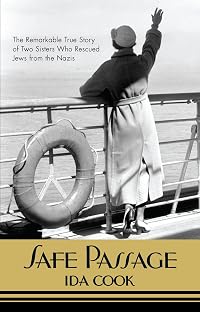
This timeless memoir documents two sisters' bravery leading up to WWII-a singular historical account that shines a light on one of humanity's darkest hours. Ida and Louise Cook are two ordinary Englishwomen, seemingly destined never to stray from their quiet London suburb and comfortable jobs-Ida as a budding romance novelist and Louise as a civil service typist. But in 1923, a chance hearing of an aria from Madame Butterfly sparked a passion for opera in the sisters that led to the show more formation of friendships with some of Europe's leading singers and their network, many of them Jewish. As the Nazis rose to power, Ida and Louise began working with the opera world's insiders to save members of the community from persecution and death. Through ingenuity, thrift and bottomless goodwill, the sisters eluded the suspicion of the Nazis and helped secure safe passage for dozens of refugees. No one would have predicted such daring lives for Ida and Louise Cook-but that underestimation is exactly how they were able to save lives. First published in 1950, Ida's memoir of the adventures she and Louise shared remains as fresh, vital and entertaining as the woman who wrote it, and is a moving testament to the extraordinary acts of courage by two everyday heroes. show lessTags
Recommendations











Member Reviews
Mary Burchell was a popular Mills & Boon/Harlequin author in the mid-20th century. Mary Burchell was the pseudonym for Ida Cook, whose own story proves the old adage “truth is stranger than fiction.” Ida and her sister, Louise, came of age between the wars. Working girl Louise's purchase of a gramophone and opera recordings led to the sisters' lifelong love of opera. Their lives revolved around opera season. Ida began collecting snapshots of opera stars as she and Louise queued for gallery seats. This led to acquaintances and then friendships with many of the major opera stars of the early to mid-twentieth century, including Amelita Galli-Curci, Rosa Ponselle, Ezio Pinza, Elisabeth Rethberg, Maria Callas, and conductor Clemens show more Krauss and his wife, soprano Viorica Ursuleac. It was their friendship with Krauss and Ursuleac that led to the defining period of their lives, when they aided refugees escaping from Nazi Germany and other countries under their control.
The British government accepted refugees under a guarantee system whereby accepted refugees would not be a financial burden to the social system. Ida and Louise raised funds to provide guarantees for refugees, many of whom were Jewish. The sisters also smuggled valuables belonging to refugees out of German controlled areas, since the refugees weren't allowed to leave with money or valuables. Their love of opera provided a perfect cover for their clandestine activities. The authorities viewed them as eccentric but harmless opera aficionados. Cook's writing career took off just as their rescue work commenced, and most of her new-found wealth went to the rescue efforts. Ida and Louise Cook were honored by Yad Vashem as Righteous among the Nations, and are credited with helping 29 Jews escape from Germany and Austria. show less
The British government accepted refugees under a guarantee system whereby accepted refugees would not be a financial burden to the social system. Ida and Louise raised funds to provide guarantees for refugees, many of whom were Jewish. The sisters also smuggled valuables belonging to refugees out of German controlled areas, since the refugees weren't allowed to leave with money or valuables. Their love of opera provided a perfect cover for their clandestine activities. The authorities viewed them as eccentric but harmless opera aficionados. Cook's writing career took off just as their rescue work commenced, and most of her new-found wealth went to the rescue efforts. Ida and Louise Cook were honored by Yad Vashem as Righteous among the Nations, and are credited with helping 29 Jews escape from Germany and Austria. show less
Ida and her sister Louise were mentioned in Julia Boyd's Travellers in the Third Reich. Louise, the elder, was a civil service clerk, and Ida had taken a risk to leave her job, also in the civil service, to work on a magazine. Under the name Mary Burchell, Ida had begun a successful career as a writer of romantic fiction, so she had money to spare. Ida and Louise were mad-keen opera goers and had become friends with some famous performers, two of whom introduced the sisters to a Jewish music lecturer who made clear to them the perilous situation of the Jews in Germany and its occupied countries. The sisters helped the woman and her family escape to Britain, and went on to help many other Jews settle in Britain.
The parts of the book show more describing how the sisters got people away are the most interesting. Ida Cook doesn't dwell on the fear and danger, and touches lightly on the devastation of failing to save some of the people she tries to help, so she comes across as relentlessly positive. But she took those risks and saved those people, so she can tell her story however she wants. There's an awful lot about opera.
A quick, easy read. It's uplifting to read about good people. show less
The parts of the book show more describing how the sisters got people away are the most interesting. Ida Cook doesn't dwell on the fear and danger, and touches lightly on the devastation of failing to save some of the people she tries to help, so she comes across as relentlessly positive. But she took those risks and saved those people, so she can tell her story however she wants. There's an awful lot about opera.
A quick, easy read. It's uplifting to read about good people. show less
Ida Cook is the real name of Mary Burchell, a prolific author of Mills & Boon / Harlequin romances between the 1930s and 1980s. I used to really like some of her romances when I was young, but they are less appealing to me now because they lean pretty heavily towards domineering men who are forgiven everything because they are geniuses and therefore can't be held up to the same standards as ordinary mortals. When I heard that she had written an autobiography which included the work she had done rescuing Jewish refugees from Nazi Germany, I was intrigued, because it just seemed so far removed from her usual, exceedingly light, romantic writing.
Ida and her sister Louise were opera superfans, as obsessive as some teenagers today who show more idolize young rockstars. The first 100 or so pages of the book is a gushing tribute to the opera stars of the 1920s and 30s. This part of the book does provide insight into the personalities and backgrounds of the author and her sister, and really interesting information about the lifestyle of young working women between the wars. There was just a little too much adulation for my taste. Having no interest in opera, I was finding it rather tedious, and was on the verge of giving up. Fortunately I persevered, because once she reached the part about their pre-war refugee work, the book became fascinating. It was at its best when detailing some of the individual people and families who they rescued. She tells it all very matter-of-factly—they saw a job that needed to be done, and did it to the best of their abilities, exhausting all of the resources that they had available to them. They knew they couldn't save everyone, so they helped as many as they could, and deeply regretted having to leave so many behind. Once the war begins, her descriptions of life in London during the Blitz and after are riveting.
The portion of this book that is World War II memoir is excellent. For a reader who happens to love opera, the whole book would be perfect. For the rest of us, I can only advise perseverance through the first six chapters until finding the heart of the book.
A favourite line: When telling about how she started writing romances, she says that at first it would wound her when people would come up to her and say, ”Of course, I don't read your sort of stuff." But in later years, "I just look them in the eye and say, "No? And you can't write it either, can you?” show less
Ida and her sister Louise were opera superfans, as obsessive as some teenagers today who show more idolize young rockstars. The first 100 or so pages of the book is a gushing tribute to the opera stars of the 1920s and 30s. This part of the book does provide insight into the personalities and backgrounds of the author and her sister, and really interesting information about the lifestyle of young working women between the wars. There was just a little too much adulation for my taste. Having no interest in opera, I was finding it rather tedious, and was on the verge of giving up. Fortunately I persevered, because once she reached the part about their pre-war refugee work, the book became fascinating. It was at its best when detailing some of the individual people and families who they rescued. She tells it all very matter-of-factly—they saw a job that needed to be done, and did it to the best of their abilities, exhausting all of the resources that they had available to them. They knew they couldn't save everyone, so they helped as many as they could, and deeply regretted having to leave so many behind. Once the war begins, her descriptions of life in London during the Blitz and after are riveting.
The portion of this book that is World War II memoir is excellent. For a reader who happens to love opera, the whole book would be perfect. For the rest of us, I can only advise perseverance through the first six chapters until finding the heart of the book.
A favourite line: When telling about how she started writing romances, she says that at first it would wound her when people would come up to her and say, ”Of course, I don't read your sort of stuff." But in later years, "I just look them in the eye and say, "No? And you can't write it either, can you?” show less
Fabulous Read, and completely different than what I had expected. This book is not a biography (as I had thought) but a memor, and Ida Cook is one of the two sisters of the title.
Living in Great Britain, prior to the start of WWII, the Cook sisters are women of simple means whose greatest joy comes from scrimping their salaries to save for trips abroad to hear the Opera stars they have grown to like. When one of these Opera connections exposes them to what is really happening to the Jews in Germany, they combine their love of music with a mission to help as many people they can - by helping to smuggle the valuables of Jewish Families out of Germany and into England where they can help support the refugees when they arrive in the UK. As show more most of the sisters work takes place prior to the actual outbreak of WWII - and actually ends at the declaration of war because they can no longer travel - this is one entry into the Holocaust Literature Genre which, for lack of a better term, is easier to read. They know there are "problems", but the brutality of the death camps is still shrouded from their knowledge.
This narrative provides a lot of details to the buildup of WWII and how the Jews were treated in the 30's. A lot of these facts were unknown to me, and the book unveils them in a very personal and practical manner. Very little time is spent discussing the political situation and even the buildup to the war, it focuses instead on the families the sisters were able to help, making it a very personal account. Mixed in with all of these stories is the ongoing dialog of music and opera which the sisters used as a "cover" for their frequent trips. The details of some of the opera productions, conductors and singers is an interesting memoir in itself adding to the color of the European music scene of that time. Highly Recommended. show less
Living in Great Britain, prior to the start of WWII, the Cook sisters are women of simple means whose greatest joy comes from scrimping their salaries to save for trips abroad to hear the Opera stars they have grown to like. When one of these Opera connections exposes them to what is really happening to the Jews in Germany, they combine their love of music with a mission to help as many people they can - by helping to smuggle the valuables of Jewish Families out of Germany and into England where they can help support the refugees when they arrive in the UK. As show more most of the sisters work takes place prior to the actual outbreak of WWII - and actually ends at the declaration of war because they can no longer travel - this is one entry into the Holocaust Literature Genre which, for lack of a better term, is easier to read. They know there are "problems", but the brutality of the death camps is still shrouded from their knowledge.
This narrative provides a lot of details to the buildup of WWII and how the Jews were treated in the 30's. A lot of these facts were unknown to me, and the book unveils them in a very personal and practical manner. Very little time is spent discussing the political situation and even the buildup to the war, it focuses instead on the families the sisters were able to help, making it a very personal account. Mixed in with all of these stories is the ongoing dialog of music and opera which the sisters used as a "cover" for their frequent trips. The details of some of the opera productions, conductors and singers is an interesting memoir in itself adding to the color of the European music scene of that time. Highly Recommended. show less
"You never know what you can do until you refuse to take no for an answer." That comment by Ida Cook would have applied to any number of situations in her and her sister Louise's lives.
This was a wonderful read, as inspiring as it was uplifting. However, anyone who picks up this book expecting a tale of rescue missions and resistance will be disappointed. The first 100 or so pages don't mention any of this, instead it's all about - opera. When this was first published in 1950, the title was We Followed Our Stars, which was far more suitable. Louise and Ida Cook become opera lovers quite by chance, but it's a love that came to define their lives. These days, it's not unheard of for people to follow their favourite band/sports show more stars/football team around the world, but picture yourself if you will in London in the mid-1920s and ask yourself if you're prepared to get on an ocean liner for the princely sum of £38 (keeping in mind your weekly wage is £3) to cross the Atlantinc, just to go to the opera in New York. This was the beginning of the travels of the Cook sisters in pursuit of opera. Along the way, they managed to befriend many of the superstars of the opera world of the day, most of whom have passed from memory by now. It's these connections that lead them, many years later, to helping Jewish refugees to relocate to England under the Guarantee system.
It's an interesting and surprising autobiography and memoir, but I'd like to point out that the current title is rather misleading in my opinion, as the sisters' refugee work makes up only around a third of the book. show less
This was a wonderful read, as inspiring as it was uplifting. However, anyone who picks up this book expecting a tale of rescue missions and resistance will be disappointed. The first 100 or so pages don't mention any of this, instead it's all about - opera. When this was first published in 1950, the title was We Followed Our Stars, which was far more suitable. Louise and Ida Cook become opera lovers quite by chance, but it's a love that came to define their lives. These days, it's not unheard of for people to follow their favourite band/sports show more stars/football team around the world, but picture yourself if you will in London in the mid-1920s and ask yourself if you're prepared to get on an ocean liner for the princely sum of £38 (keeping in mind your weekly wage is £3) to cross the Atlantinc, just to go to the opera in New York. This was the beginning of the travels of the Cook sisters in pursuit of opera. Along the way, they managed to befriend many of the superstars of the opera world of the day, most of whom have passed from memory by now. It's these connections that lead them, many years later, to helping Jewish refugees to relocate to England under the Guarantee system.
It's an interesting and surprising autobiography and memoir, but I'd like to point out that the current title is rather misleading in my opinion, as the sisters' refugee work makes up only around a third of the book. show less
This was a wonderful book to read...providing such a dramatic picture of history from the eyes of someone who not only knew how to write but had such an incredible connection to the love of opera that she and her sister helped to change so many lives. Right now it's so sad to see how much they loved visiting America and meeting the people they had helped save. What would Ida Cook say now, in 2025, about what is happening to America.
"Mary Burchell"'s dramatic real-life adventures - crossing the atlantic by steamship to attend the opera in New York, smuggling jewellery out of Nazi Germany in aid of Jewish refugees - far surpass anything in the way of romance that she ever wrote for Harlequin/Mills & Boon. Not to denigrate her excellent operatic romances, by any means, but had she chosen to write spy thrillers, she would clearly have been wildly successful at that too.
Members
- Recently Added By
Lists

Holocaust
100 works; 13 members

Best Biographies, Autobiographies and Memoirs
465 works; 160 members

Top Five Books of 2018
802 works; 265 members

Books about Romance Novels
31 works; 1 member
Author Information

139 Works 1,670 Members
Some Editions
Common Knowledge
- Canonical title
- Safe Passage: The Remarkable True Story of Two Sisters Who Rescued Jews from the Nazis
- Original title
- We Followed Our Stars
- Alternate titles
- Safe Passage; The Bravest Voices
- Original publication date
- 1950
- People/Characters
- Ida Cook (1904-1986); Mary Louise Cook (1901-1991)
- Important places
- London, England, UK; Germany
- Important events
- World War II (1939 | 1945)
- Original language
- English
- Disambiguation notice
- Original title: "We Followed Our Stars" reedited as "Safe Passage" and "The Bravest Voices".
Classifications
- Genres
- Nonfiction, Biography & Memoir, Music, General Nonfiction, History
- DDC/MDS
- 941.084092 — History & geography History of Europe British Isles Historical periods of British Isles 1837- Period of Victoria and House of Windsor 1936-1945
- LCC
- ML400 .C66 — Music Literature on music Literature on music History and criticism Biography
- BISAC
Statistics
- Members
- 191
- Popularity
- 171,564
- Reviews
- 9
- Rating
- (4.08)
- Languages
- English
- Media
- Paper, Audiobook, Ebook
- ISBNs
- 21
- ASINs
- 4