

Anne Sebba
Author of That Woman: The Life of Wallis Simpson, Duchess of Windsor
About the Author
Anne Sebba is a biographer, lecturer, journalist, and former Reuters foreign correspondent. She has written eight books, including acclaimed biographies of Jennie Churchill and Mother Teresa, as well as the New York Times bestseller That Woman about the life of Wallis Simpson. She is a member of show more the Society of Authors Management Committee. Visit her website at annesebba.com. show less
Image credit: Anne Sebba
Works by Anne Sebba
Les Parisiennes: How the Women of Paris Lived, Loved and Died in the 1940s (2016) 408 copies, 16 reviews
Associated Works
Little Boy Lost (1949) — Afterword, some editions; Introduction, some editions — 534 copies, 15 reviews
Safe Passage: The Remarkable True Story of Two Sisters Who Rescued Jews from the Nazis (1950) — Foreword, some editions — 191 copies, 9 reviews
Tagged
Common Knowledge
- Canonical name
- Sebba, Anne
- Birthdate
- 1951
- Gender
- female
- Education
- King's College, London
- Occupations
- journalist
author
linguist
lecturer
biographer - Organizations
- Reuters
Society of Authors - Short biography
- Anne Sebba, born in London, is a journalist, biographer, and lecturer. She read History at King’s College London and her first job was at the BBC World Services in the Arabic Department.
She has written critically- acclaimed nonfiction books, mostly about iconic women who enjoyed using power and influence in different ways such as Enid Bagnold, Mother Teresa, Laura Ashley, and Jennie Churchill. She has also written short stories and introductions to reprints of novels. She
makes regular television appearances, has presented radio documentaries about women, is an official lecturer for the National Association of Decorative and Fine Arts Societies (Nadfas) and regularly gives talks on cruises, to corporations, clubs and institutions including The English Speaking Union, The British Library, The Royal Oak Foundation, National Trust and Women’s Institutes. She is a former Chair of Britain’s Society of Authors, now serves on the SOA Council, and is former President of ArtsRichmond. - Nationality
- UK
- Birthplace
- London, England, UK
- Places of residence
- Rome, Italy
New York, New York, USA
London, England, UK - Associated Place (for map)
- London, England, UK
Members
Reviews
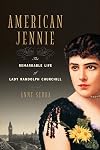
Anne Sebba’s biography of Jennie Churchill, Winston’s mother, is an engrossing depiction of a fascinating person. Jennie came from a New York family - the Jeromes - spent much of her youth in Paris, and married Randolph Churchill, an up-and-coming English politician. She was often in the public eye, both because of her husband’s political career and her own lifestyle. Sebba addresses four notorious rumors about her life: was Winston conceived out of wedlock; was Randolph the father of show more Winston’s younger brother, Jack; did Randolph have and die of syphilis; and did Jennie have two hundred lovers. Sebba concludes all of these are possible, but not proven. If Winston wasn’t conceived until after the marriage, he was born two months prematurely; if he was conceived at time when Sebba documents both Jennie and Randolph were in Paris, he was full term. It’s noted that Winston wasn’t underweight (as far as anyone could tell; weight at birth wasn’t recorded), nor did he have any other signs of prematurity. Churchill later commented on his birth: “Although I was present at the occasion, I have no recollection of the events leading up to it”. One of Sebba’s recurring themes is that Jennie was “sexually fearless” – so maybe.
Randolph’s purported syphilis and Jack Churchill’s parentage are a linked question. Later in life Randolph Churchill developed symptoms that were consistent with tertiary (neurological) syphilis. Contemporary rumors claimed that he had contracted it from a prostitute who was smuggled into his bed as a practical joke while he was at Oxford, or that he had picked it up from a housemaid at Blenheim, or that he’d contracted it from a French actress. The point Sebba makes is that although Randolph’s symptoms can be explained by other pathologies – for example, a brain tumor – his contemporaries, doctors, and he himself believed he had syphilis. There was no definitive test for syphilis at the time – the Wasserman test wasn’t developed until 1906 – so a diagnosis of syphilis was based on symptoms and signs. Randolph’s doctors dosed him with mercury compounds, the only known syphilis treatment then (leading to the quip “an evening with Venus can lead to a lifetime with Mercury”) but mercury poisoning itself could lead to some of the symptoms Randolph experienced. The connection with Jack Churchill’s parentage is based on the argument that Randolph, as a gentleman, would never expose his wife to syphilis if he believed he had it and therefore was not Jack’s father; Sebba notes that there are several candidates for the position.
The “200 lovers” rumor is also “possible, but not proven”. Sebba repeatedly describes Jennie as “having a high libido” and, once again, contemporaries seemed to believe it. Controversial women often get accused of promiscuity and Jennie doesn’t seem to be an exception. Even her critics agreed she was attractive, with beautiful black hair, elegant clothing, and a “panther-like” demeanor. He second and third husbands were both 20 years younger than she was, suggesting her considerable physical attraction even in her 50s and 60s. But Sebba notes the contraceptive technology of the day was primitive and it’s had to imagine that much sexual activity without a pregnancy. Even if Jennie was sexually unfaithful to Randolph, she was devoted to him in other ways, effectively campaigning for him politically and nursing him through his illness.
I don’t want to give the impression that this book is only about Jennie’s sexual proclivities; although Sebba notes they are appropriate subjects for a biographer there are plenty of other things that make Jennie interesting. Her marriage to Randolph was controversial, and the Churchill family never really approved of her. Her father, Leonard Jerome, had a controversial career, always fluctuating between wealth and bankruptcy. She was an accomplished pianist, of professional quality. Her finances were always in disarray; Sebba notes that she was usually deeply in debt (it didn’t help that Randolph was a compulsive gambler). And her end was tragic; she’d bought a new pair of Italian shoes with dangerously high heels, slipped on a staircase, and broke an ankle. Somehow the wound became gangrenous and her leg ended up being amputated above the knee; she was bearing her condition resolutely when an artery hemorrhaged; her last words were “Nurse, I feel faint”. I reflect that Jennie was an absorbing character in her own right. Sure, she was Winston Churchill’s mother; but who remembers Gladstone’s mother or Disraeli’s or Lincoln’s or Roosevelt’s?
A ”page-turning” read. Well-selected photographs, useful endnotes, and a good bibliography. show less
Randolph’s purported syphilis and Jack Churchill’s parentage are a linked question. Later in life Randolph Churchill developed symptoms that were consistent with tertiary (neurological) syphilis. Contemporary rumors claimed that he had contracted it from a prostitute who was smuggled into his bed as a practical joke while he was at Oxford, or that he had picked it up from a housemaid at Blenheim, or that he’d contracted it from a French actress. The point Sebba makes is that although Randolph’s symptoms can be explained by other pathologies – for example, a brain tumor – his contemporaries, doctors, and he himself believed he had syphilis. There was no definitive test for syphilis at the time – the Wasserman test wasn’t developed until 1906 – so a diagnosis of syphilis was based on symptoms and signs. Randolph’s doctors dosed him with mercury compounds, the only known syphilis treatment then (leading to the quip “an evening with Venus can lead to a lifetime with Mercury”) but mercury poisoning itself could lead to some of the symptoms Randolph experienced. The connection with Jack Churchill’s parentage is based on the argument that Randolph, as a gentleman, would never expose his wife to syphilis if he believed he had it and therefore was not Jack’s father; Sebba notes that there are several candidates for the position.
The “200 lovers” rumor is also “possible, but not proven”. Sebba repeatedly describes Jennie as “having a high libido” and, once again, contemporaries seemed to believe it. Controversial women often get accused of promiscuity and Jennie doesn’t seem to be an exception. Even her critics agreed she was attractive, with beautiful black hair, elegant clothing, and a “panther-like” demeanor. He second and third husbands were both 20 years younger than she was, suggesting her considerable physical attraction even in her 50s and 60s. But Sebba notes the contraceptive technology of the day was primitive and it’s had to imagine that much sexual activity without a pregnancy. Even if Jennie was sexually unfaithful to Randolph, she was devoted to him in other ways, effectively campaigning for him politically and nursing him through his illness.
I don’t want to give the impression that this book is only about Jennie’s sexual proclivities; although Sebba notes they are appropriate subjects for a biographer there are plenty of other things that make Jennie interesting. Her marriage to Randolph was controversial, and the Churchill family never really approved of her. Her father, Leonard Jerome, had a controversial career, always fluctuating between wealth and bankruptcy. She was an accomplished pianist, of professional quality. Her finances were always in disarray; Sebba notes that she was usually deeply in debt (it didn’t help that Randolph was a compulsive gambler). And her end was tragic; she’d bought a new pair of Italian shoes with dangerously high heels, slipped on a staircase, and broke an ankle. Somehow the wound became gangrenous and her leg ended up being amputated above the knee; she was bearing her condition resolutely when an artery hemorrhaged; her last words were “Nurse, I feel faint”. I reflect that Jennie was an absorbing character in her own right. Sure, she was Winston Churchill’s mother; but who remembers Gladstone’s mother or Disraeli’s or Lincoln’s or Roosevelt’s?
A ”page-turning” read. Well-selected photographs, useful endnotes, and a good bibliography. show less
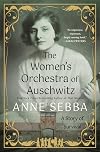
This is a thorough, detailed, and moving account of the little known Women's Orchestra of the Auschwitz concentration camp during World War II.
Utilizing written accounts, personal interviews, and volumes of historical records, Ms. Sebba has crafted a deeply emotional and revealing story about the fifty or so women who performed in or were associated with this tight-knit ensemble. The book speaks of the horrors observed and endured. Yet, through it all, this mixed group of ethnically, show more culturally, and linguistically diverse group of women were molded into a a tight-knit community. Yet, each and every one of them understood how tenuous their bond was, being subject to the whims of the Nazis, loeding over them all.
Ms Sebba's writing is concise, highly descriptive, evocative, and thorough. Her research is Herculean in scope. She delivers an emotional roller coaster as one might imagine the feelings of these internees to be. I was deeply moved by the story, stunned by the women's endurance, and amazed by their accounts. Caution: keep the tissue box within reach.
I am grateful to St. Martin's Press for having provided a complimentary copy of this book through NetGalley. Their generosity, however, has not influenced this review - the words of which are mine alone.
Publisher: St. Martin's Press
Publication date: September 16, 2025
Number of Pages: 400
ISBN: 978-1250287595 show less
Utilizing written accounts, personal interviews, and volumes of historical records, Ms. Sebba has crafted a deeply emotional and revealing story about the fifty or so women who performed in or were associated with this tight-knit ensemble. The book speaks of the horrors observed and endured. Yet, through it all, this mixed group of ethnically, show more culturally, and linguistically diverse group of women were molded into a a tight-knit community. Yet, each and every one of them understood how tenuous their bond was, being subject to the whims of the Nazis, loeding over them all.
Ms Sebba's writing is concise, highly descriptive, evocative, and thorough. Her research is Herculean in scope. She delivers an emotional roller coaster as one might imagine the feelings of these internees to be. I was deeply moved by the story, stunned by the women's endurance, and amazed by their accounts. Caution: keep the tissue box within reach.
I am grateful to St. Martin's Press for having provided a complimentary copy of this book through NetGalley. Their generosity, however, has not influenced this review - the words of which are mine alone.
Publisher: St. Martin's Press
Publication date: September 16, 2025
Number of Pages: 400
ISBN: 978-1250287595 show less
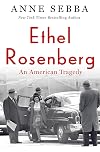
Anne Sebba recounts the circumstances that led to the execution of a thirty-seven-year-old housewife and mother—her children were ten and six years old at the time of her death—on June 19, 1953. Like many of her compatriots, Ethel embraced Communism as a means of making society more equitable. After marrying Julius Rosenberg, whom she adored, Ethel gave up her dreams of pursuing a singing and acting career. Julius, whose business ventures never amounted to much, eventually became a spy show more who passed on classified information to the Russians. Sebba suggests that "the case against Ethel was weak and unsubstantiated." According to this reasoning, the authorities arrested Ethel as a means of pressuring Julius to confess and reveal his accomplices' names. Even now, some historians maintain that Ethel was innocent, while others insist that she supported or even masterminded a Communist spy ring.
One fact is incontrovertible: Ethel was devoted to Julius and their sons, Michael and Robert. When she found life stressful, she was enlightened enough to seek therapy for herself and Michael, who was a high-strung and willful youngster. In 1950, federal authorities took Julius and Ethel into custody and charged them "with conspiracy to commit espionage." During their trial that began on March 6, 1951, the prosecutors argued that Ethel assisted Julius in his efforts to betray his country. The jury found Julius and Ethel guilty as charged, and approximately one week later, Judge Irving Kaufman sentenced them to death.
This heartbreaking work of non-fiction is based on interviews with Ethel and Julius's sons and acquaintances, secondary sources, letters, and a transcript of the Rosenberg trial. Sebba does not pretend to be objective. She admits that certain facts remain elusive to this day and, when she is unsure about something, she speculates about what she thinks may have occurred. Whether or not it is accurate in all respects, this book is a well-researched and powerful indictment of America's history of anti-Semitism, sexist attitudes, judicial corruption, and Cold War paranoia. "Ethel Rosenberg" is billed as an American tragedy, which it certainly was. It is also a gripping sociological and psychological study of an era when hysteria, fear, and prejudice prevailed over truth, common sense, and compassion. show less
One fact is incontrovertible: Ethel was devoted to Julius and their sons, Michael and Robert. When she found life stressful, she was enlightened enough to seek therapy for herself and Michael, who was a high-strung and willful youngster. In 1950, federal authorities took Julius and Ethel into custody and charged them "with conspiracy to commit espionage." During their trial that began on March 6, 1951, the prosecutors argued that Ethel assisted Julius in his efforts to betray his country. The jury found Julius and Ethel guilty as charged, and approximately one week later, Judge Irving Kaufman sentenced them to death.
This heartbreaking work of non-fiction is based on interviews with Ethel and Julius's sons and acquaintances, secondary sources, letters, and a transcript of the Rosenberg trial. Sebba does not pretend to be objective. She admits that certain facts remain elusive to this day and, when she is unsure about something, she speculates about what she thinks may have occurred. Whether or not it is accurate in all respects, this book is a well-researched and powerful indictment of America's history of anti-Semitism, sexist attitudes, judicial corruption, and Cold War paranoia. "Ethel Rosenberg" is billed as an American tragedy, which it certainly was. It is also a gripping sociological and psychological study of an era when hysteria, fear, and prejudice prevailed over truth, common sense, and compassion. show less
Les Parisiennes: Resistance, Collaboration, and the Women of Paris Under Nazi Occupation by Anne Sebba
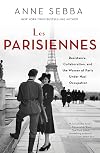
I received this book from a friend, another history buff, who said, "I hope you like it. I didn't." I loved it.
So, before writing this review, I also read the several reviews written by others. To be entirely frank, I sometimes wonder if people truly understand how history can be written in many ways. I ~loved~ this book for precisely the reasons others rated it with fewer stars. I blanched at the three star ratings, but my mouth dropped open with the rating of two stars (was the book even show more read?).
This book may well be--no, it IS--one of the best written histories of WW2 civilians in my reading experience, if only because it is written in the oft-choppy, always frustrating, chaotic genre of war itself. Although broadly chronological, it sometimes does not read that way. You plunge into the story of a beautiful lady, but are suddenly thrust into the story of a less than beautiful one. I got the feeling Anne Sebba realized how arcane would appear the stories of women who were, well, just women; and so, she seems to have used examples of many, whose names might just be recognized. Yet, the stories of the rich and famous were also the stories of the simple and unsophisticated. It was chaos for all and just like war, you hide behind a wall to avoid the sniper's eye, only to be thrust into the mortar blast which blows out the wall 30 yards behind you; you cannot help but glance back, then back again to insure the wall of your refuge still stands, and then to look to the safety of your children or the one special object you have preserved against the destruction. It is chaos here; destruction there; carnage everywhere.
You see, the stories are told in the same abrupt ways in which life was encountered in wartime Paris, or as the title page sub-title states, "How the Women of Paris Lived, Loved, and Died Under Nazi Occupation." They lived; sometimes just barely. They loved; sometimes messily but more often, bitterly and at a distance. And, they died...always messily; rarely quickly and with antiseptic cleanliness. Sometimes I found myself putting down the book to let the helter-skelterness (if that's not a word, it should be) of the wartime experience sink in; betimes also, with a tear welling in the eyes
Some reviewers seem frustrated in their reading of the tome, but the contradictions which are inherent in wartime survival were well-written by Anne Sebba to show the confusion, inequity, injustice, and raging chaos. Concerning the women of Paris, almost universally perceived in the world as scions of fashion and modernity, it cannot be told in a different way. Indeed, there's just no other way to accurately tell the broad story of wartime survival--or death--in Paris, especially with such a clear focal point of les parisiennes. Furthermore, I opine, to attempt to tell the broader story simply misses the point of telling the story at all.
One thing really screams in this book: The profound resiliency of the women who bore the brunt of wartime hostility. I really appreciate Sebba's obsessive attention to that story; it is a story which is too often neglected in favor of the experiences of armies and soldiers, campaigns and consequences, allies and enemies, farmers and merchants, businesses and economies, heroes and (even) heroines. Yet, I would challenge the reader to find even one similar account (and I do not write that lightly; in assessing my own experience of a dozen or more books written from or concerning the female experience of war--and several dozen more general accounts--I cannot think of a single one which targets what Sebba so skillfully documents.
One final point: Three sections of plates (images) profoundly enhance the text. How Sebba accomplished the gargantuan task of sorting through tens of thousands of wartime photos to create the carefully curated sections may never be fully appreciated; and I have to tell you, the final sheet of twelve of "Today's Witnesses" is particularly sobering.
But, before I go, I must also mention the copious endnotes on the text (by chapter, thankfully), extensive bibliography, annotations on the illustrations, carefully constructed index (also including the illustrations), and even a cast of characters (just in case you get lost along the way, as you most certainly will).
A superb job. Highly recommended, but mark my words: It ain't an easy read. You will weep, but you will learn. show less
So, before writing this review, I also read the several reviews written by others. To be entirely frank, I sometimes wonder if people truly understand how history can be written in many ways. I ~loved~ this book for precisely the reasons others rated it with fewer stars. I blanched at the three star ratings, but my mouth dropped open with the rating of two stars (was the book even show more read?).
This book may well be--no, it IS--one of the best written histories of WW2 civilians in my reading experience, if only because it is written in the oft-choppy, always frustrating, chaotic genre of war itself. Although broadly chronological, it sometimes does not read that way. You plunge into the story of a beautiful lady, but are suddenly thrust into the story of a less than beautiful one. I got the feeling Anne Sebba realized how arcane would appear the stories of women who were, well, just women; and so, she seems to have used examples of many, whose names might just be recognized. Yet, the stories of the rich and famous were also the stories of the simple and unsophisticated. It was chaos for all and just like war, you hide behind a wall to avoid the sniper's eye, only to be thrust into the mortar blast which blows out the wall 30 yards behind you; you cannot help but glance back, then back again to insure the wall of your refuge still stands, and then to look to the safety of your children or the one special object you have preserved against the destruction. It is chaos here; destruction there; carnage everywhere.
You see, the stories are told in the same abrupt ways in which life was encountered in wartime Paris, or as the title page sub-title states, "How the Women of Paris Lived, Loved, and Died Under Nazi Occupation." They lived; sometimes just barely. They loved; sometimes messily but more often, bitterly and at a distance. And, they died...always messily; rarely quickly and with antiseptic cleanliness. Sometimes I found myself putting down the book to let the helter-skelterness (if that's not a word, it should be) of the wartime experience sink in; betimes also, with a tear welling in the eyes
Some reviewers seem frustrated in their reading of the tome, but the contradictions which are inherent in wartime survival were well-written by Anne Sebba to show the confusion, inequity, injustice, and raging chaos. Concerning the women of Paris, almost universally perceived in the world as scions of fashion and modernity, it cannot be told in a different way. Indeed, there's just no other way to accurately tell the broad story of wartime survival--or death--in Paris, especially with such a clear focal point of les parisiennes. Furthermore, I opine, to attempt to tell the broader story simply misses the point of telling the story at all.
One thing really screams in this book: The profound resiliency of the women who bore the brunt of wartime hostility. I really appreciate Sebba's obsessive attention to that story; it is a story which is too often neglected in favor of the experiences of armies and soldiers, campaigns and consequences, allies and enemies, farmers and merchants, businesses and economies, heroes and (even) heroines. Yet, I would challenge the reader to find even one similar account (and I do not write that lightly; in assessing my own experience of a dozen or more books written from or concerning the female experience of war--and several dozen more general accounts--I cannot think of a single one which targets what Sebba so skillfully documents.
One final point: Three sections of plates (images) profoundly enhance the text. How Sebba accomplished the gargantuan task of sorting through tens of thousands of wartime photos to create the carefully curated sections may never be fully appreciated; and I have to tell you, the final sheet of twelve of "Today's Witnesses" is particularly sobering.
But, before I go, I must also mention the copious endnotes on the text (by chapter, thankfully), extensive bibliography, annotations on the illustrations, carefully constructed index (also including the illustrations), and even a cast of characters (just in case you get lost along the way, as you most certainly will).
A superb job. Highly recommended, but mark my words: It ain't an easy read. You will weep, but you will learn. show less
Lists
Awards


You May Also Like


Associated Authors
Statistics
- Works
- 15
- Also by
- 7
- Members
- 1,541
- Popularity
- #16,713
- Rating
- 3.9
- Reviews
- 59
- ISBNs
- 108
- Languages
- 6
- Favorited
- 1