
Caroline Moorehead
Author of A Train in Winter: An Extraordinary Story of Women, Friendship, and Resistance in Occupied France
About the Author
Caroline Moorehead is the biographer of Bertrand Russell, Freya Stark, Iris Origo and Martha Gellhorn. Her books include Human Cargo: A Journey among Refugees, Dancing to the Precipice, A Train in Winter, and Village of Secrets: Defying the Nazis in Vichy France. (Bowker Author Biography)
Series
Works by Caroline Moorehead
A Train in Winter: An Extraordinary Story of Women, Friendship, and Resistance in Occupied France (2011) 1,173 copies, 60 reviews
Dancing to the Precipice: The Life of Lucie de la Tour du Pin, Eyewitness to an Era (2009) 270 copies, 5 reviews
A Bold and Dangerous Family: The Rossellis and the Fight Against Mussolini (2017) 133 copies, 2 reviews
A Sicilian Man: Leonardo Sciascia, the Rise of the Mafia and the Struggle for Italy’s Soul (2026) 15 copies
A Guide to Human Rights 1 copy
Human Cargo 1 copy
Associated Works
999: The Extraordinary Young Women of the First Official Jewish Transport to Auschwitz (2020) — Foreword, some editions; Foreword, some editions — 377 copies, 14 reviews
Van Gogh, The life and work of the artist illustrated with 80 colour plates (1979) — Translator, some editions — 78 copies
Tagged
Common Knowledge
- Canonical name
- Moorehead, Caroline
- Birthdate
- 1944-10-28
- Gender
- female
- Education
- University of London (BA|1965)
- Occupations
- journalist
biographer
journalist
human rights advocate
book reviewer - Organizations
- Index on Censorship
British Institute of Human Rights
Royal Society of Literature
Society of Authors
English PEN
London Library - Awards and honors
- Order of the British Empire (Officer, 2005)
Royal Society of Literature (Fellow) - Short biography
- Caroline Moorehead was born in London and earned a bachelor's degree from the University of London in 1965. She is has written biographies of Bertrand Russell, Heinrich Schliemann, Freya Stark, Iris Origo, Martha Gellhorn, and aristocrat Lucie de la Tour du Pin. She also has written a number of nonfiction pieces centered on human rights, including a history of the International Committee of the Red Cross. She began a trilogy of books on the French Resistance in World War II with A Train in Winter (2011) which focuses on 230 French women of the Resistance sent to Auschwitz. Village of Secrets (2014) describes a wartime French village that helped 3,000 Jews to safety.
She has also written book reviews for various newspapers and reviews, including the Times Literary Supplement, The Telegraph, The Independent, The Spectator, and The New York Review of Books. She specialized in human rights as a journalist, contributing a column first to the Times and then the Independent, and co-producing and writing a series of programs on human rights for BBC television.
She has served on the committees of the Royal Society of Literature, of which she was elected a Fellow in 1993; the Society of Authors; English PEN; and the London Library. She was awarded an OBE for services to literature in 2005. - Nationality
- UK
- Birthplace
- London, England, UK
- Places of residence
- London, England, UK
- Associated Place (for map)
- London, England, UK
Members
Reviews
A Train in Winter: An Extraordinary Story of Women, Friendship, and Resistance in Occupied France (The Resistance Trilogy) by Caroline Moorehead
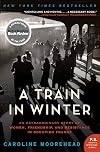
This really is an extraordinary story. Thank goodness for an author that was able to do it justice.
The book is in 2 parts. The first reads a little like an espionage thriller as the resistance gathers strength. There are a few dark episodes when some people are betrayed or hunted down. Then it takes a very sombre turn as various groups of women are rounded up and imprisoned around Paris.
The second part is desperately harrowing. The women are herded onto trains taking most of them to show more Birkenau, part of the Auschwitz complex in Poland. The journey itself was unbearable but only a shadow of what was to follow. Of over 200 women who made the trip out of France only 49 survived to return to France.
This book describes the unspeakable ordeals, inhttps://www.librarything.com/work/11391043/book/126707071#dignities and cruelty the women endured and attempts to explain why some few managed to make it while most eventually succumbed to hunger, weakness or disease or were brutally murdered because they were too ill to work or tried to resist.
The book also describes how those few were changed by what they had suffered. show less
The book is in 2 parts. The first reads a little like an espionage thriller as the resistance gathers strength. There are a few dark episodes when some people are betrayed or hunted down. Then it takes a very sombre turn as various groups of women are rounded up and imprisoned around Paris.
The second part is desperately harrowing. The women are herded onto trains taking most of them to show more Birkenau, part of the Auschwitz complex in Poland. The journey itself was unbearable but only a shadow of what was to follow. Of over 200 women who made the trip out of France only 49 survived to return to France.
This book describes the unspeakable ordeals, inhttps://www.librarything.com/work/11391043/book/126707071#dignities and cruelty the women endured and attempts to explain why some few managed to make it while most eventually succumbed to hunger, weakness or disease or were brutally murdered because they were too ill to work or tried to resist.
The book also describes how those few were changed by what they had suffered. show less
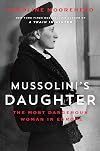
Edda Mussolini is, at best, a complicated figure. The daughter of Italy's dictator, Edda was a fascist glamour girl, marrying a man who served her father as foreign minister, traveled globally, and yet found herself navigating the troubled waters of WWII Europe. As Mussolini's rule crumbled, Edda's husband broke with him, a decision that quickly became fatal and Edda fled to Switzerland, where she sought to use her husband's diaries as leverage with first the Germans, then the Allied Powers. show more While this book taught me a lot about fascist Italy and the Mussolini family, I was left with feelings that range from ambivalent to disturbed about Edda and the role she played in her father's government. show less
A Train in Winter: An Extraordinary Story of Women, Friendship, and Resistance in Occupied France (The Resistance Trilogy) by Caroline Moorehead
I'm starting off 2017 with a remarkable book about women who were active in the French Resistance during the German occupation of France in WWII. These women were arrested for varied acts of resistance against the German occupiers such as transporting Jews to the free zone, hiding people wanted by the Germans, writing political pamphlets, secretly sending letters, printing fliers, denouncing German occupation, and, for some, simply being in the wrong place at the wrong time. Most of the show more politically active women were Communist.
After being arrested, the women were held in camps in France. In January of 1943, 230 French women, most labeled as political activists, were put on a train and sent to Birkenau in Auschwitz. Here they faced hardship and humiliation that is impossible to describe. Those that ended up surviving were mainly in their mid 20s or early 30s, healthy to start, and found strength through each other. Most of the survivors stressed that their womanly qualities of caring for each other and their organizational skills pulled them through the ordeal. They could not have survived alone. They pooled meager food, hid the sick and wounded, and supported each others spirits.
Upon returning home, they found a wounded France, dead family members, and the inability to talk about their experience to people who largely didn't want to hear about it. Only 49 of the 230 women survived and about a third of those died within a decade of their return. Many stayed in touch, finding that only around each other could they find some modicum of peace.
Besides the obvious horrors committed by those who had clear roles as torturers and sadists, Moorehead points out the gray areas. What about all the French people who denounced their fellow countrymen and women to the Germans? Or those who saw and did nothing? This permeated every level of French society and largely it was decided that what the country needed was to move on after convicting those who committed the worst crimes. But these politically active women came home to a France where they felt that the strongest and smartest men who should have been leading their country had been killed in the war and they were left with those who had no business being in power. Some stayed active in their Communist parties, some left for other countries, and some withdrew from life altogether. A particularly moving part of this book is the final pages, where Moorehead lists every single one of the 230 women: their names, where they were from, why they were initially arrested, if they had children, and where/when/how they died or survived.
This is a sad book, a moving book when describing the tight bonds that drew these women together, and a book that will make you question humanity.
Definitely recommended. show less
After being arrested, the women were held in camps in France. In January of 1943, 230 French women, most labeled as political activists, were put on a train and sent to Birkenau in Auschwitz. Here they faced hardship and humiliation that is impossible to describe. Those that ended up surviving were mainly in their mid 20s or early 30s, healthy to start, and found strength through each other. Most of the survivors stressed that their womanly qualities of caring for each other and their organizational skills pulled them through the ordeal. They could not have survived alone. They pooled meager food, hid the sick and wounded, and supported each others spirits.
Upon returning home, they found a wounded France, dead family members, and the inability to talk about their experience to people who largely didn't want to hear about it. Only 49 of the 230 women survived and about a third of those died within a decade of their return. Many stayed in touch, finding that only around each other could they find some modicum of peace.
Besides the obvious horrors committed by those who had clear roles as torturers and sadists, Moorehead points out the gray areas. What about all the French people who denounced their fellow countrymen and women to the Germans? Or those who saw and did nothing? This permeated every level of French society and largely it was decided that what the country needed was to move on after convicting those who committed the worst crimes. But these politically active women came home to a France where they felt that the strongest and smartest men who should have been leading their country had been killed in the war and they were left with those who had no business being in power. Some stayed active in their Communist parties, some left for other countries, and some withdrew from life altogether. A particularly moving part of this book is the final pages, where Moorehead lists every single one of the 230 women: their names, where they were from, why they were initially arrested, if they had children, and where/when/how they died or survived.
This is a sad book, a moving book when describing the tight bonds that drew these women together, and a book that will make you question humanity.
Definitely recommended. show less

36. A Train in Winter: A Story of Resistance, Friendship, and Survival (Audio) by Caroline Moorehead, read by Wanda McCaddon (2011, 384 pages in written form, Listened June 6-18)
This left me emotionally raw.
Read terrifically by Wanda McCaddon, who I felt added to the experience, this is a more-or-less straight-forward overview of the French resistance during WWII and then of 230 French woman arrested, at different times and places, as part of the resistance. They were found and arrested by show more French Vichy police, imprisoned, mistreated, and then sent together on one train to Auschwitz.
The book starts off as a fascinating history of the build up of the French resistance, which at first, after France's defeat by Germany, was notable for the lack of resistance. Then it begins to cover various stories of the different woman and the men they worked with. Moorehead goes into detail into the different ways they contributed, and into the careful observations made by the French investigators, who not only collaborated with the Germans, but went the extra mile (extra KM?) and put in painstaking effort to trace as many resistors as they could. The arrests come in bunches as one person with a list leads to several others and so on. The men are tortured brutally, often to death or near death, again by French investigators. Then any man arrested was likely to end up executed in retaliation for resistance activities. The Germans would execute them a 100 at a time over the course of the war, an act of terror that proved counter-productive as it resulted in popular anger and fed a build-up in the resistance.
This is pretty discouraging all around, as we watch these proud woman each eventually get caught and then suffer in prison. But that in no way prepares the reader for what comes next. Entering Auschwitz, in January 1943, is such a shock that many of these French woman were to die shortly after of no apparent cause. The experience is beyond anything I can say here, and is presented by Moorehead with incredible power. I've read and seen enough about Auschwitz to have a sense of what to expect when it is talked about again. But this is a different angle and it brings up an entirely new way of looking at this. Somehow it seemed even more terrible here. For the rest of the book I never fully got over the shock of their introduction to Auschwitz, I still haven't.
The experience in Auschwitz will leave 52 of these woman alive, a number extraordinary for how high it was. Unlike most people sent to these camps, these French woman felt proud about what they had done to get them here. They also bonded closely together, helping each other in every way they could. As a group they were stronger.
A mistaken death notice leads to public questioning in France of what became of these woman. As a result of this, most of the survivors were sent from Auschwitz, an extermination camp, to a labor camp. Death was still constant, and there were still gas chambers, but any women strong enough were treated such as to be kept alive for their labor. Only a few more would die.
With liberation came disappointment. A large percentage of survivors from the various German camps would die within the next several years. These woman were broken, often unable to come to terms with a post-war France determined to rebuild, limit punishments and move forward. Many were communists and were discouraged to find so many communist leaders dead and to find the French government generally unwilling to work with communists. They also had difficulty reacquainting themselves with their families and children who did not recognize them. And it seems it was only on repatriation that they were finally able to deal with the deaths they had witnessed, including the many husbands who were executed.
This is a stunning book, made only better in audio by the excellent reader. It's difficult to read but highly recommended.
2014
https://www.librarything.com/topic/172769#4738573 show less
This left me emotionally raw.
Read terrifically by Wanda McCaddon, who I felt added to the experience, this is a more-or-less straight-forward overview of the French resistance during WWII and then of 230 French woman arrested, at different times and places, as part of the resistance. They were found and arrested by show more French Vichy police, imprisoned, mistreated, and then sent together on one train to Auschwitz.
The book starts off as a fascinating history of the build up of the French resistance, which at first, after France's defeat by Germany, was notable for the lack of resistance. Then it begins to cover various stories of the different woman and the men they worked with. Moorehead goes into detail into the different ways they contributed, and into the careful observations made by the French investigators, who not only collaborated with the Germans, but went the extra mile (extra KM?) and put in painstaking effort to trace as many resistors as they could. The arrests come in bunches as one person with a list leads to several others and so on. The men are tortured brutally, often to death or near death, again by French investigators. Then any man arrested was likely to end up executed in retaliation for resistance activities. The Germans would execute them a 100 at a time over the course of the war, an act of terror that proved counter-productive as it resulted in popular anger and fed a build-up in the resistance.
This is pretty discouraging all around, as we watch these proud woman each eventually get caught and then suffer in prison. But that in no way prepares the reader for what comes next. Entering Auschwitz, in January 1943, is such a shock that many of these French woman were to die shortly after of no apparent cause. The experience is beyond anything I can say here, and is presented by Moorehead with incredible power. I've read and seen enough about Auschwitz to have a sense of what to expect when it is talked about again. But this is a different angle and it brings up an entirely new way of looking at this. Somehow it seemed even more terrible here. For the rest of the book I never fully got over the shock of their introduction to Auschwitz, I still haven't.
The experience in Auschwitz will leave 52 of these woman alive, a number extraordinary for how high it was. Unlike most people sent to these camps, these French woman felt proud about what they had done to get them here. They also bonded closely together, helping each other in every way they could. As a group they were stronger.
A mistaken death notice leads to public questioning in France of what became of these woman. As a result of this, most of the survivors were sent from Auschwitz, an extermination camp, to a labor camp. Death was still constant, and there were still gas chambers, but any women strong enough were treated such as to be kept alive for their labor. Only a few more would die.
With liberation came disappointment. A large percentage of survivors from the various German camps would die within the next several years. These woman were broken, often unable to come to terms with a post-war France determined to rebuild, limit punishments and move forward. Many were communists and were discouraged to find so many communist leaders dead and to find the French government generally unwilling to work with communists. They also had difficulty reacquainting themselves with their families and children who did not recognize them. And it seems it was only on repatriation that they were finally able to deal with the deaths they had witnessed, including the many husbands who were executed.
This is a stunning book, made only better in audio by the excellent reader. It's difficult to read but highly recommended.
2014
https://www.librarything.com/topic/172769#4738573 show less
Lists
Awards


You May Also Like


Associated Authors
Statistics
- Works
- 29
- Also by
- 4
- Members
- 3,459
- Popularity
- #7,353
- Rating
- 3.9
- Reviews
- 101
- ISBNs
- 174
- Languages
- 6
- Favorited
- 2