
Iris Origo (1902–1988)
Author of The Merchant of Prato
About the Author
She was a well-known biographer. Born in the United States, her mother brought her to live in Italy after her father's death. She married a Marchese & became mistress of an Italian villa, where she helped peasant children during WWII. She is also the author of The Last Attachment, Leopardi: A Study show more in Solitude & War in Val d'Orcia. (Bowker Author Biography) show less
Image credit: Iris Origo (1902-1988), Marchesa d'Orcia
Works by Iris Origo
Giovanna and Jane 1 copy
Associated Works
The Assassin's Cloak: An Anthology of the World's Greatest Diarists (2000) — Contributor, some editions — 623 copies, 9 reviews
Wise Women: Over Two Thousand Years of Spiritual Writing by Women (1996) — Contributor — 231 copies, 1 review
Tagged
Common Knowledge
- Legal name
- Origo, Iris Margaret
- Other names
- Cutting, Iris (birth)
Origo, Marquesa Iris - Birthdate
- 1902-08-15
- Date of death
- 1988-06-28
- Gender
- female
- Education
- governesses
- Occupations
- historian
biographer
aristocrat
autobiographer - Awards and honors
- Royal Society of Literature (Fellow)
American Academy of Arts and Sciences (Fellow, 1967)
Order of the British Empire (Dame Commander, 1976) - Relationships
- Scott, Geoffrey (stepfather)
Lubbock, Percy (stepfather) - Short biography
- Iris Origo, née Cutting, was born in Birdlip, Gloucestershire, England to a wealthy and prominent Anglo-American family. Her parents were William Bayard Cutting, Jr., an American diplomat, and his wife Lady Sybil Cuffe. After her father's death, her mother purchased the Villa Medici in Fiesole. In 1924, she married Marchese Antonio Origo. After the death of her 7-year-old son from meningitis in 1933, Iris began her writing career. The Origos spent World War II at their farm, La Foce, caring for refugee children, and after Italy surrendered to the Allies, helping escaped Allied prisoners of war and partisans. After the war, Iris divided her time between La Foce and Rome, where the Origos had an apartment in the Palazzo Orsini. Her diary of the last years of Fascism entitled War in Val d'Orcia: An Italian War Diary (1947) was her first book to be a popular as well as a critical success.
- Nationality
- UK (birth)
USA
Italy - Birthplace
- Birdlip, Gloucestershire, UK
- Places of residence
- La Foce, Tuscany, Italy
Rome, Lazio, Italy - Place of death
- La Foce, Tuscany, Italy
- Burial location
- Montepulciano, Italy
- Associated Place (for map)
- Italy
Members
Reviews

Anglo-American Origo, married to an Italian Marchese and living in his country house near a village in Tuscany details in this diary the period January 1943 to June 1944. It's a period of privation during which the couple seek to support their community, whether penniless peasants, partisans, or soldiers on the run. They take in orphans, the homeless, the destitute: and Iris Origo keeps a daily diary of what's going on. The horrifying immediacy builds up as the book goes on, and made me show more grateful that here in Britain we were protected from the horrors of day-to-day life for many in mainland Europe. Variously subjugated by the Fascists of their own country, and by the Germans, they had little control over their own lives and could only await, with increasing desperation, the arrival of the Allies. An eye-opening and involving account. show less
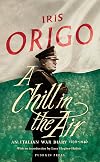
In some ways, I read Iris Origo's war diaries in the wrong order, as I have recently finished her War in the Val d'Orcia, her account from 1943 -44, whereas this earlier book covers 1939-40. Whereas the later book described the chaos and suffering of Italian civilians caught between the Allies and the Germans in 1943 and 1944, this one covers the Italian version of the Phoney War, when Italian politicians were deciding who to side with, and indeed, whether to join in at all. Mussolini show more decided to throw in the country's lot with Hitler, and became increasingly hostile towards Britain and America - Origo was Anglo-American. She looks at propaganda, fake news, the thoughts of ordinary Italians, reluctant to have their menfolk called up, and their very disparate view of Il Duce. A privileged woman, she has insights into the thoughts of the Great and the Good, and it's these that inform her book, which unlike her later work more or less ignores the couple's day to day life - even to a large extent her pregnancy. So it's just as involving as her later book, and gives an understanding that England was not, as we in the UK might imagine, always seen as the Great White Knight standing powerfully against the might of Hitler and the German army. An excellent introduction by Lucy Hughes-Hallet, and an equally informative afterword by Origo's granddaughter Katia Lypsy booked the diary. show less
The Merchant of Prato: Francesco di Marco Datini, 1335-1410 (New York Review Books Classics) by Iris Origo
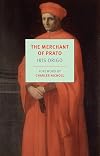
What a fascinating creature was Francesco di Marco Datini! Living in the 1300s, he created a large trading company with partnerships in Spain, France, and throughout northern Italy. Spices, wool, fine cloth, armor, slaves, banking--if Francesco thought he and his partners could make a profit, he traded in it.
Yet for all his wealth, he was an anxious, grasping man and a difficult husband. From his private letters, the sources for Iris Origo's magnificent biography, Francesco emerges as show more constantly worried, anxious about each cargo and afraid of being cheated. His private letters also give us a glimpse of his household, including his younger, spirited wife Margherita and his steady, charitable friend Ser Lapo.
The book has two parts: one devoted to his business dealings and one to his private affairs. So we can learn about the organization of trade in the trecento, complete with careful accounting and ways to mitigate risk, and later learn about the typical life of a rich man who has to manage his household, his wealth, his friends, and his family.
All together fascinating! I recommend this book to anyone who wants to live in Tuscany during the 14th century, at least in his or her mind. show less
Yet for all his wealth, he was an anxious, grasping man and a difficult husband. From his private letters, the sources for Iris Origo's magnificent biography, Francesco emerges as show more constantly worried, anxious about each cargo and afraid of being cheated. His private letters also give us a glimpse of his household, including his younger, spirited wife Margherita and his steady, charitable friend Ser Lapo.
The book has two parts: one devoted to his business dealings and one to his private affairs. So we can learn about the organization of trade in the trecento, complete with careful accounting and ways to mitigate risk, and later learn about the typical life of a rich man who has to manage his household, his wealth, his friends, and his family.
All together fascinating! I recommend this book to anyone who wants to live in Tuscany during the 14th century, at least in his or her mind. show less
The Merchant of Prato: Francesco DI Marco Datini - Daily Life in a Medieval Italian City by Iris Origo
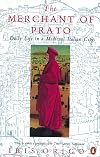
Reading this is the nearest one will ever come to actually living in a Medieaval Italian town. One gets a fantastic insight into daily life - in glorious detail. Datini - the Merchant of Prato - is not a man one would wish for a husband, he is such a control freak, lacking sensitivity towards his wife and family, and mean with his money. I suppose that is how he became a successful merchant in the first place. The times in which they all lived were crude and violent, people lived within very show more small areas, and yet life still has its pleasures. This book is a MUST for anyone interested in Italian history. Prato still exists although it has almost been absorbed into the sprawl of greater Florence, and more importantly, one can still visit the Datini house. show less
Lists
Awards


You May Also Like


Associated Authors
Statistics
- Works
- 14
- Also by
- 3
- Members
- 1,600
- Popularity
- #16,111
- Rating
- 4.1
- Reviews
- 16
- ISBNs
- 85
- Languages
- 8
- Favorited
- 6
