
Agnès Humbert (1894–1963)
Author of Resistance: A Frenchwoman's Journal of the War
About the Author
Works by Agnès Humbert
Resistance: A Frenchwoman's Journal of the War by Humbert, Agnes(September 2, 2008) paperback 1 copy
Vu et entendu en Yougoslavie 1 copy
* El impresionismo 1 copy
Henri Matisse: Dessins 1 copy
Resistance: A Frenchwoman's Journal of the War by Humbert, Agnes(September 2, 2008) Hardcover 1 copy
Resistance-războiul nostru 1 copy
Associated Works
Lapham's Quarterly - Lines of Work: Volume IV, Number 2, Spring 2011 (2011) — Contributor — 32 copies, 2 reviews
Tagged
Common Knowledge
- Canonical name
- Humbert, Agnès
- Legal name
- Humbert, Agnès
- Birthdate
- 1894-10-12
- Date of death
- 1963-09-19
- Gender
- female
- Education
- The Sorbonne
- Occupations
- art historian
resistance fighter
memoirist - Organizations
- Résistance(magazine)
Musée de l'Homme - Awards and honors
- Croix de Guerre
- Relationships
- Cassou, Jean (colleague)
Tillion, Germaine (resistance colleague)
Oddon, Yvonne (resistance colleague) - Short biography
- Agnès Humbert was the daughter of a French-English couple: her father was a French senator and her mother an English writer. In 1916, she married Georges Hanna Sabbagh, an Egyptian artist, with whom she had two sons; the couple divorced in 1934. Agnès studied art history at the Sorbonne and at the Louvre school. Her first book, on the painter Jacques-Louis David, was published in 1936. She worked as an at historian at the Musée National des Arts et Traditions Populaires and did radio commentary on art. After the Germans captured Paris in 1940, Agnès Humbert was stirred to action by an appeal by General de Gaulle on the BBC's Radio France encouraging the French people to resist their occupiers. With colleagues and friends such as Boris Vildé, Jean Cassou, and Yvonne Oddon, she formed the Groupe du Musée de l'Homme. In a few months the group had built a highly effective underground network. They created the clandestine newspaper Résistance and obtained information for the Allies. In 1941, Humbert and other members of the museum group were betrayed to the Gestapo and sentenced to death. However, she and other women were instead sent to perform slave labor in camps and factories around Germany. She survived four years under horrifying conditions and was liberated by the U.S. Army in June 1945. Agnès Humbert set up soup kitchens for refugees and helped to start the de-Nazification process. After the war, she wrote more books on art history. She was awarded the Croix de Guerre with silver gilt palm for heroism in 1946. She published her wartime diary under the title Notre Guerre in 1946; it was reissued and translated into English under the title Résistance (2008).
- Nationality
- France
- Birthplace
- Dieppe, Seine-Maritime, Normandy, France
- Places of residence
- Paris, France
Valmondois, Val-d'Oise, Île-de-France, France - Place of death
- Valmondois, France
- Burial location
- Valmondois, Val-d'Oise, Île-de-France, France
- Map Location
- France
- Associated Place (for map)
- France
Members
Reviews

Agnes Humbert was an art historian turned member of the Resistance after Paris fell to the Germans in June, 1940. She, her family and much of the population of Paris fled the city as the Germans approached. Scenes of horror unfolded as she walked with masses of people from Paris to south of Limoges. Her account of her journey is immediate and heartrending.
Humbert was languishing in the countryside and sinking into despair when she heard a broadcast by General de Gaulle exhorting the French show more soldiers and people to rally round him and carry on the struggle. She wrote of her reaction: “A feeling I thought had died forever stirs within me: hope.” Humbert was further buoyed by radio broadcasts recounting that the people of Paris were tearing down German posters as quickly as they were posted. The people of Paris were rebelling! She waded through the bureaucracy to obtain the papers that allowed her to return to Paris in August, 1940. Thus began her journal and memoir of her life as a member of the French Resistance and political prisoner subjected to forced labour in German prisons.
The book is two parts journal and one part memoir. Until two days before her arrest on April 15, 1941, Humbert maintained a journal. After she was liberated from the German prison in April, 1945, her journal commenced again. The story she told of the time in between was from memory. It was vivid.
Journal and memoir—throughout, the reader feels the author’s sense of humor, sense of the absurd, and courage. One gains an acute understanding of the strength of conviction of Humbert and of her fellows, and further, of the risks they undertook both before and after their arrests. The reader will cringe at the descriptions of the abuse and deprivation Humbert suffered while in prison, and cheer her efforts to sabotage the enemy’s war efforts in the small ways that were available to her.
I will not soon forget this book; it is incredible to me that it was published in 1946 but not published in translation until 2008.
I have only one other comment and that is about the translation. I believe the spirit of the book and the language of the book were accurately translated, so I am being a bit picky to say that the voice of the author does not come through as a French voice. The French have a certain way of expressing themselves that is different from the way we English speakers do. I would like to read it in French to see if it is just that much better. show less
Humbert was languishing in the countryside and sinking into despair when she heard a broadcast by General de Gaulle exhorting the French show more soldiers and people to rally round him and carry on the struggle. She wrote of her reaction: “A feeling I thought had died forever stirs within me: hope.” Humbert was further buoyed by radio broadcasts recounting that the people of Paris were tearing down German posters as quickly as they were posted. The people of Paris were rebelling! She waded through the bureaucracy to obtain the papers that allowed her to return to Paris in August, 1940. Thus began her journal and memoir of her life as a member of the French Resistance and political prisoner subjected to forced labour in German prisons.
The book is two parts journal and one part memoir. Until two days before her arrest on April 15, 1941, Humbert maintained a journal. After she was liberated from the German prison in April, 1945, her journal commenced again. The story she told of the time in between was from memory. It was vivid.
Journal and memoir—throughout, the reader feels the author’s sense of humor, sense of the absurd, and courage. One gains an acute understanding of the strength of conviction of Humbert and of her fellows, and further, of the risks they undertook both before and after their arrests. The reader will cringe at the descriptions of the abuse and deprivation Humbert suffered while in prison, and cheer her efforts to sabotage the enemy’s war efforts in the small ways that were available to her.
I will not soon forget this book; it is incredible to me that it was published in 1946 but not published in translation until 2008.
I have only one other comment and that is about the translation. I believe the spirit of the book and the language of the book were accurately translated, so I am being a bit picky to say that the voice of the author does not come through as a French voice. The French have a certain way of expressing themselves that is different from the way we English speakers do. I would like to read it in French to see if it is just that much better. show less
 This review was written for LibraryThing Early Reviewers.
Humbert kept a journal relating events as they happened when Paris fell to the Germans in June 1940. With few men left in the civilian population, what became known as the French Resistance was organized by women. The early entries describe the shock and dismay at what is happening to her beloved city and country, when she was inspired to do something, if only to spread information. She met others with the same goal, and together they printed a newsletter titled Résistance, the first use of show more the word that eventually gave the name to the movement. When Humbert's activities were discovered by the Gestapo in April 1941, although they had little to go on, she was arrested and immediately imprisoned.
At her trial she was given 5 years in prison and sent to a forced labour camp. From this point the book gives an account of the extraordinarily horrific experiences as a slave labourer, but written soon after her liberation in April 1945. Because this section continues in journal format, it serves to show the prolonged time of extreme, agonizing ill-treatment. During this time she maintained her resistance, sabotaging every product she worked on.
After her liberation, she again kept a journal, reprinted as the final section in the book, making only the middle section written from memory. There are many outstanding features in her account, the most noted being that she retained her positive attitude, sense of humour and consideration for other prisoners. When she was liberated, the German town of Wanfried was in chaos and Humbert took a leading part in the organization of facilities, food supply, medical treatment to the townspeople, prisoners, and huge population of army personnel, many of whom behaved like hooligans. Conditions were quite different to the idea many of us might have about liberation where everyone is suddenly free, and ready to go home. She appreciated the difference between Nazis and those who were forced into the party and used the information to form a method of identifying Nazis which led to many arrests. Humbert's contribution to the war effort, resistance, and recovery was extensive and nothing short of heroic.
Her book, one of the first about the war years in France and slave labour camps was published in January 1946 although not translated until 2008. The Afterword by Julien Blanc is of particular interest by filling in the details of Humbert's life, her process of writing the book and the Resistance movement. There is also an extensive appendix detailing documents on the Resistance, translator's notes, bibliography and index. A highly recommended five-star read. show less
At her trial she was given 5 years in prison and sent to a forced labour camp. From this point the book gives an account of the extraordinarily horrific experiences as a slave labourer, but written soon after her liberation in April 1945. Because this section continues in journal format, it serves to show the prolonged time of extreme, agonizing ill-treatment. During this time she maintained her resistance, sabotaging every product she worked on.
After her liberation, she again kept a journal, reprinted as the final section in the book, making only the middle section written from memory. There are many outstanding features in her account, the most noted being that she retained her positive attitude, sense of humour and consideration for other prisoners. When she was liberated, the German town of Wanfried was in chaos and Humbert took a leading part in the organization of facilities, food supply, medical treatment to the townspeople, prisoners, and huge population of army personnel, many of whom behaved like hooligans. Conditions were quite different to the idea many of us might have about liberation where everyone is suddenly free, and ready to go home. She appreciated the difference between Nazis and those who were forced into the party and used the information to form a method of identifying Nazis which led to many arrests. Humbert's contribution to the war effort, resistance, and recovery was extensive and nothing short of heroic.
Her book, one of the first about the war years in France and slave labour camps was published in January 1946 although not translated until 2008. The Afterword by Julien Blanc is of particular interest by filling in the details of Humbert's life, her process of writing the book and the Resistance movement. There is also an extensive appendix detailing documents on the Resistance, translator's notes, bibliography and index. A highly recommended five-star read. show less
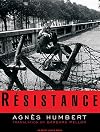
In her memoir, Resistance: A Woman’s Journal of Struggle and Defiance in Occupied France, Agnes Humbert spelled out her acts of resistance and eventual imprisonment during German-occupied France in the 1940’s. Humbert was a 43-year-old art historian when the Nazis invaded Paris, and she and her fellow intellectuals refused to be complacent with German occupation. Together, they created the short-lived Resistance newspaper – an underground publication devoted to undermining Nazi show more propaganda. After five months, the Gestapo detained Humbert and her allies, and for five years, she survived harsh imprisonment for her crimes, including serving time in a German work camp.
Through Humbert’s writing, readers learned about the interrogation and punishment of French nationalists, and how strenuous German work camp life was for its prisoners. Humbert’s style was easy and clipped, only containing the essential elements about her comrades and their activities. Humbert described her involvement in the Resistance as inconsequential, but historical sources (according to the book notes) showed that Humbert was a very important player. This inconsistency left me unsettled: was Humbert really insignificant or just humble?
It’s important to note that Resistance was written primarily after Humbert’s liberation. However, Humbert still wrote it in a diary-style (each entry was marked with a date), as if she had a journal and pen in prison with her. This was not the case. She worked feverishly on her “diary” for nine months after her release, and she had a solid memory because she recalled details such as times, dates, people’s appearances and the weather. Her eye as an art historian probably helped, but I wondered how one could remember such intricate details. For me, Humbert’s account would have been stronger if she had written it as a chapter-to-chapter memoir.
With that said, Resistance is a primary resource for readers interested in World War II history. Undoubtedly, Agnes Humbert was a brave, smart woman who loved her country (she also had a wicked sense of humor). While I disagree with the format of the book, the historical information gleaned from it was worthwhile and illuminating. show less
Through Humbert’s writing, readers learned about the interrogation and punishment of French nationalists, and how strenuous German work camp life was for its prisoners. Humbert’s style was easy and clipped, only containing the essential elements about her comrades and their activities. Humbert described her involvement in the Resistance as inconsequential, but historical sources (according to the book notes) showed that Humbert was a very important player. This inconsistency left me unsettled: was Humbert really insignificant or just humble?
It’s important to note that Resistance was written primarily after Humbert’s liberation. However, Humbert still wrote it in a diary-style (each entry was marked with a date), as if she had a journal and pen in prison with her. This was not the case. She worked feverishly on her “diary” for nine months after her release, and she had a solid memory because she recalled details such as times, dates, people’s appearances and the weather. Her eye as an art historian probably helped, but I wondered how one could remember such intricate details. For me, Humbert’s account would have been stronger if she had written it as a chapter-to-chapter memoir.
With that said, Resistance is a primary resource for readers interested in World War II history. Undoubtedly, Agnes Humbert was a brave, smart woman who loved her country (she also had a wicked sense of humor). While I disagree with the format of the book, the historical information gleaned from it was worthwhile and illuminating. show less
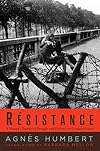
The title perfectly describes Agnes, who was working in a Paris museum when the Germans came. She became involved with the production and distribution of an underground newspaper, Resistance, was captured and imprisoned, put on trial and found guilty and sent to Germany as a factory laborer. Once American troops arrived to free her, they found her spunk and linguistic skills invaluable so they put her in charge of a soup kitchen and hospital for refugees. Later her passionate zeal and show more incredible ability to recall names, dates and facts made her an adept Nazi-hunter.
It seems odd to say that I enjoyed a book about imprisonment and slave labor but I guess what I enjoyed is how well Agnes was able to convey the details of the situation. Intellectually, we all know that the treatment German prisoners received during WWII was terrible but we are so far removed from it that it's an abstract. Agnes paints such real pictures with her words and brings you right there. Alas, my French is not good enough to read the original, but I am thankful we have an English translation.
"Between bursts of jazz, the radio broadcasts the whoops and cheers of delirious crowds, now in Paris, now in London, and we join in, shouting for joy. And then we dance. I danced on 11 November 1918, too, but in 1918 I didn't know what it was to suffer and to witness the suffering of others. Now that I know, I dance more intensely, laugh more intensely - and hate more intensely." show less
It seems odd to say that I enjoyed a book about imprisonment and slave labor but I guess what I enjoyed is how well Agnes was able to convey the details of the situation. Intellectually, we all know that the treatment German prisoners received during WWII was terrible but we are so far removed from it that it's an abstract. Agnes paints such real pictures with her words and brings you right there. Alas, my French is not good enough to read the original, but I am thankful we have an English translation.
"Between bursts of jazz, the radio broadcasts the whoops and cheers of delirious crowds, now in Paris, now in London, and we join in, shouting for joy. And then we dance. I danced on 11 November 1918, too, but in 1918 I didn't know what it was to suffer and to witness the suffering of others. Now that I know, I dance more intensely, laugh more intensely - and hate more intensely." show less
Lists
Women in War (1)
Female spies (1)
Awards

You May Also Like


Associated Authors
Statistics
- Works
- 13
- Also by
- 2
- Members
- 501
- Popularity
- #49,398
- Rating
- 4.0
- Reviews
- 46
- ISBNs
- 25
- Languages
- 7


