
Hélène Berr (1921–1945)
Author of The Journal of Hélène Berr
About the Author
Disambiguation Notice:
(yid) VIAF:7708675
(dut) VIAF:7708675
VIAF:7708675
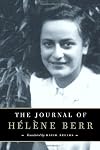
Image credit: Hélène nursing a scraped knee at Aubergenville, 1942
Works by Hélène Berr
Tagged
Common Knowledge
- Canonical name
- Berr, Hélène
- Legal name
- Berr, Hélène
- Birthdate
- 1921-03-27
- Date of death
- 1945-04-10
- Gender
- female
- Education
- Sorbonne
- Occupations
- diarist
student - Organizations
- General Organization of Jews in France (Union générale des israélites de France | UGIF)
- Short biography
- Hélène Berr was born in Paris to a Jewish family that had lived in France for generations. She was a brilliant English student at the Sorbonne when the Germans invaded France in World War II. As a Jew, she could not continue her studies at the university. She began to keep a diary in April 1942, at age 21. At first she wrote about her social life and ordinary events. Then the horror of the Nazi Occupation intensified. Hélène's close friends and colleagues were rounded up or just disappeared, and rumors reached her that Jews deported to the Polish border were being asphyxiated with gas. Hélène's intended the diary to be given to her fiancé, Jean Morawiecki, who had joined the Free French. As she wrote, Hélène gave batches of the loose pages to the family cook, Andrée Bardiau. Her final entry on February 15, 1944, ended: "Horror! Horror! Horror!" Three weeks later, the Gestapo arrested the family during the night. Hélène Berr and her parents were deported to Auschwitz on her 23rd birthday. Her parents were killed but Hélène survived for some time, including the death march from Auschwitz to Bergen-Belsen. There she was beaten to death because she was too sick and weak from typhus to get up from her bunk for the morning reveille. Five days later, the camp was liberated by the British Army. Hélène's diary did eventually reach her fiancé and remained private for more than 50 years. In 1992, Hélène's niece, Mariette Job, decided to track down the diary. Thanks to her persistence, it was published in 2008 in France and sold more than 100,000 copies.
- Cause of death
- Holocaust
- Nationality
- France
- Birthplace
- Paris, France
- Places of residence
- Parijs, Frankrijk
- Place of death
- Bergen-Belsen concentration camp
- Map Location
- France
- Disambiguation notice
- VIAF:7708675
Members
Discussions
WP:List of posthumous publications of Holocaust victims in Collaborative work (April 2012)
Reviews
La lectura del diario de Hélène Berr es una experiencia de las que dejan huella y dejan el corazón encogido. Es imposible no sentirse conmovido y hechizado por esta joven estudiante, por lo que de su vida sabemos en los breves meses durante los que escribió en su diario, pero sobre todo por ese futuro que le fue arrebatado tan atroz e injustamente.
Hélène es una chica francesa, de veintiún años, que vive en París y estudia en la Sorbona. Empieza su diario en abril de 1942, en plena show more ocupación nazi. La primera parte de su diario transcurre entre excursiones campestres, ensayos de partituras clásicas (toca el violín) con sus amigos, paseos por París, conversaciones con compañeros, invitados que vienen a comer o cenar, comprando libros. Parece que Hélène es feliz. Hasta conoce a Jean, un chico que comparte muchas de sus ideas, de su manera de ver el mundo.
La verdad es que Hélène se oculta bajo esta rutina. Es cierto que disfruta de esos momentos, pero también está muy preocupada por el porvenir de su familia, ya que son judíos, y amigos. Les obligan a llevar una estrella amarilla cosida en la ropa, y las restricciones se suceden, van a más y peor. Los arrestos van en aumento. Los deportados también. Muchos de estos horrores son cometidos por los mismos franceses, colaboracionistas de los nazis.
Parece que Hélène ya presentía esta barbarie cuando empezó su diario en 1942. Hélène se propone testimomiar todos estos horrores para futuros lectores para que la gente no los olvide. Se siente sola buena parte del tiempo y da rienda suelta a sus reflexiones en su diario.
Hélène Berr fue una chica muy valiente, alguien extraordinario. Y una chica normal, como tú o como yo. Amante de los libros, de la poesía, de las cosas bellas y sencillas, inteligente, sensible, que sufría por los demás, a los que intentó ayudar. Una persona digna de admiración y respeto. show less
Hélène es una chica francesa, de veintiún años, que vive en París y estudia en la Sorbona. Empieza su diario en abril de 1942, en plena show more ocupación nazi. La primera parte de su diario transcurre entre excursiones campestres, ensayos de partituras clásicas (toca el violín) con sus amigos, paseos por París, conversaciones con compañeros, invitados que vienen a comer o cenar, comprando libros. Parece que Hélène es feliz. Hasta conoce a Jean, un chico que comparte muchas de sus ideas, de su manera de ver el mundo.
La verdad es que Hélène se oculta bajo esta rutina. Es cierto que disfruta de esos momentos, pero también está muy preocupada por el porvenir de su familia, ya que son judíos, y amigos. Les obligan a llevar una estrella amarilla cosida en la ropa, y las restricciones se suceden, van a más y peor. Los arrestos van en aumento. Los deportados también. Muchos de estos horrores son cometidos por los mismos franceses, colaboracionistas de los nazis.
Parece que Hélène ya presentía esta barbarie cuando empezó su diario en 1942. Hélène se propone testimomiar todos estos horrores para futuros lectores para que la gente no los olvide. Se siente sola buena parte del tiempo y da rienda suelta a sus reflexiones en su diario.
Hélène Berr fue una chica muy valiente, alguien extraordinario. Y una chica normal, como tú o como yo. Amante de los libros, de la poesía, de las cosas bellas y sencillas, inteligente, sensible, que sufría por los demás, a los que intentó ayudar. Una persona digna de admiración y respeto. show less
A remarkable diary. It seems that there are so many holocaust books now that there is nothing new to be learned, but of course there is.
You might call this the French Anne Frank, but it isn't really. Helene Berr was French, lived in Paris, from a privileged family. During the German occupation of France she wrote this diary. It may seem astounding that her everyday life was not much different during this time than it had been before. She went with her family to their country estate show more frequently, to picnic, to relax. She continued to attend classes at the Sorbonne, even though as Jew she was limited in the courses of study she could take officially. She had friends, including some who became more than friends.
But she wasn't ignorant of the pain of others. She was aware that bad things were happening to Jews elsewhere and to other "classes" of Jews within France. Her father was a prominent citizen, initially exempt from seizure. As time went on, more and more people are taken, some to a nearby prison and some directly "deported". Helene did not know exactly what went on when people were deported. She seemed to have some idea that they were imprisoned for things that they had done, however slight the offense, and that they simply had to do their time. She heard of many deaths but she was not, it appears, aware of the concentration camps.
She worked as a volunteer at an organization the was formed to help Jews find their relatives or provide help with other problems. This organization was sanctioned by the German occupation as a way, it seems, to make the citizens believe all was not as bad as it seemed. However, secretly the organization found homes for Jewish children in non-Jewish families, many of them in the country and villages outside Paris. Thus a great many Jewish children were spared the fate of their counterparts who did not receive this help.
Over time Helene's family became increasingly aware that the net was drawing closer to them. They had chosen to live their lives as close to normally as possible. To escape to the "free" zone was considered cowardly (it wasn't all that free anyway). Helene in particular was less concerned about her own safety than that of others.
The diary provides a view from a a different perspective than most. It is well written, quick to read, yet of course horrifying because we know what's coming. show less
You might call this the French Anne Frank, but it isn't really. Helene Berr was French, lived in Paris, from a privileged family. During the German occupation of France she wrote this diary. It may seem astounding that her everyday life was not much different during this time than it had been before. She went with her family to their country estate show more frequently, to picnic, to relax. She continued to attend classes at the Sorbonne, even though as Jew she was limited in the courses of study she could take officially. She had friends, including some who became more than friends.
But she wasn't ignorant of the pain of others. She was aware that bad things were happening to Jews elsewhere and to other "classes" of Jews within France. Her father was a prominent citizen, initially exempt from seizure. As time went on, more and more people are taken, some to a nearby prison and some directly "deported". Helene did not know exactly what went on when people were deported. She seemed to have some idea that they were imprisoned for things that they had done, however slight the offense, and that they simply had to do their time. She heard of many deaths but she was not, it appears, aware of the concentration camps.
She worked as a volunteer at an organization the was formed to help Jews find their relatives or provide help with other problems. This organization was sanctioned by the German occupation as a way, it seems, to make the citizens believe all was not as bad as it seemed. However, secretly the organization found homes for Jewish children in non-Jewish families, many of them in the country and villages outside Paris. Thus a great many Jewish children were spared the fate of their counterparts who did not receive this help.
Over time Helene's family became increasingly aware that the net was drawing closer to them. They had chosen to live their lives as close to normally as possible. To escape to the "free" zone was considered cowardly (it wasn't all that free anyway). Helene in particular was less concerned about her own safety than that of others.
The diary provides a view from a a different perspective than most. It is well written, quick to read, yet of course horrifying because we know what's coming. show less
Although I read this book in French, it is available in English translation and I highly recommend it. My reaction is best summarized by the French word bouleversée, which means deeply moved, utterly distressed, shattered. Although I abhor any manipulation of my emotions on the part of a novelist or filmmaker, the experience of reading this young woman's journal was quite different. Perhaps it comes down to the authenticity of witness and her commitment to recording what she was thinking, show more experiencing and seeing as a young Jewish woman in a Paris subjected not only to the nightmare of occupation but also that of collaboration, as well as complicity in the form of passivity, indifference, & the closing of eyes and shutting of doors to the suffering of others. At the same time, there are many who take great risks, who act selflessly and with compassion. The journal begins just as Jews in France are ordered to wear the yellow star in public and as Hélène meets fellow-student Jean Morawiecki for the first time, the young man who will become her fiance: a love story truncated by the war (Jean leaves Paris to join the French forces in North Africa) and matured within the context of increasingly harsh restrictions imposed on Hélène. The pace of arrests and deportations picks up. First, it is the foreign Jews who are taken, then all Jews. Finally, there is no longer any safe zone, no Free France, no protected status anywhere.
Certain passages, certain of Hélène's thoughts regarding her decision to remain in Paris (not entirely her decision, since she was living with her parents throughout) and not try to escape made me think of Simone Weil, particularly certain references Berr makes to her reading of the teachings of Christ. But unlike Weil, Berr isn't obsessed with self-abnegation. And, so, her concern for the suffering of others, her refusal to turn away from that suffering, which is also hers, is both more palatable to me and more heroic. Early on, she writes "Because, even in suffering, liberty is a consolation."
Hélène's arguments with herself over staying or leaving fuel a longtime obsession of mine with this question. She resists abandoning her official life (French intellectual, student at the Sorbonne, accomplished musician) for an unofficial one. She resists accepting the identity being imposed on her by History, that of the victim and of the one apart, an identity assigned by way of an attribute (the word "Jew"). To acknowledge the label Jew, to wear the yellow star, to obey the Nazis' increasingly insane and unjust laws becomes both an act of capitulation and one of solidarity. And, it is from within this fraught and contradictory space that Hélène thinks and acts. The question she wrestles with is whether it is more courageous, more "right," to stay or to leave. In any case, it is clear that she feels she cannot leave as long as her parents and other loved ones stay. For her, compassion, being "with" in suffering, is more important than saving her own life. It remains unclear whether there were realistic opportunities for Hélène and her family to flee--at first, many deportees were apprehended attempting to cross the border into the "free" zone; later, after Germany occupied all of France, escape would have been even more difficult. Hélène doesn't discuss the possibility of hiding in Paris except when toward the end, after repeated warnings of raids, her father decides that they won't spend nights in their own home and instead take refuge in the homes of their housekeeper and other friends. It is after a night when they fail to do so and instead remain at home that they are apprehended, detained and, finally, deported to Auschwitz. After evacuation to Bergen-Belsen in November, 1944 , Hélène, sick with typhus, is murdered by a guard in May, 1945 just 5 days before liberation of the camp.
The utter absurdity of having to make impossible choices brings to mind a nightmare I once had: "I’m waiting in a car for an explosion that is set to go off in a garage in front of the car. This seems to be a group suicide, with a male “leader.” I don’t know how I became involved in this, but my adult son is also in the car, seated in the rear. A toddler with a mop of black hair is cavorting around nearby. We try to shoo him away from the car, but he doesn’t understand and is playful. Suddenly, I jump out of the car, grab the child and run. As I run uphill away from the car, the toddler morphs into a still hairless infant. I reach the limit of my uphill flight and turn to the right, hoping that I’ve gotten far enough away from the car to save the child from the blast. As I contemplate how to get through a neighbor’s hedge, I hear an explosion go off behind me and realize, horrified, that my own son has remained behind me in that car." show less
Certain passages, certain of Hélène's thoughts regarding her decision to remain in Paris (not entirely her decision, since she was living with her parents throughout) and not try to escape made me think of Simone Weil, particularly certain references Berr makes to her reading of the teachings of Christ. But unlike Weil, Berr isn't obsessed with self-abnegation. And, so, her concern for the suffering of others, her refusal to turn away from that suffering, which is also hers, is both more palatable to me and more heroic. Early on, she writes "Because, even in suffering, liberty is a consolation."
Hélène's arguments with herself over staying or leaving fuel a longtime obsession of mine with this question. She resists abandoning her official life (French intellectual, student at the Sorbonne, accomplished musician) for an unofficial one. She resists accepting the identity being imposed on her by History, that of the victim and of the one apart, an identity assigned by way of an attribute (the word "Jew"). To acknowledge the label Jew, to wear the yellow star, to obey the Nazis' increasingly insane and unjust laws becomes both an act of capitulation and one of solidarity. And, it is from within this fraught and contradictory space that Hélène thinks and acts. The question she wrestles with is whether it is more courageous, more "right," to stay or to leave. In any case, it is clear that she feels she cannot leave as long as her parents and other loved ones stay. For her, compassion, being "with" in suffering, is more important than saving her own life. It remains unclear whether there were realistic opportunities for Hélène and her family to flee--at first, many deportees were apprehended attempting to cross the border into the "free" zone; later, after Germany occupied all of France, escape would have been even more difficult. Hélène doesn't discuss the possibility of hiding in Paris except when toward the end, after repeated warnings of raids, her father decides that they won't spend nights in their own home and instead take refuge in the homes of their housekeeper and other friends. It is after a night when they fail to do so and instead remain at home that they are apprehended, detained and, finally, deported to Auschwitz. After evacuation to Bergen-Belsen in November, 1944 , Hélène, sick with typhus, is murdered by a guard in May, 1945 just 5 days before liberation of the camp.
The utter absurdity of having to make impossible choices brings to mind a nightmare I once had: "I’m waiting in a car for an explosion that is set to go off in a garage in front of the car. This seems to be a group suicide, with a male “leader.” I don’t know how I became involved in this, but my adult son is also in the car, seated in the rear. A toddler with a mop of black hair is cavorting around nearby. We try to shoo him away from the car, but he doesn’t understand and is playful. Suddenly, I jump out of the car, grab the child and run. As I run uphill away from the car, the toddler morphs into a still hairless infant. I reach the limit of my uphill flight and turn to the right, hoping that I’ve gotten far enough away from the car to save the child from the blast. As I contemplate how to get through a neighbor’s hedge, I hear an explosion go off behind me and realize, horrified, that my own son has remained behind me in that car." show less

This is a piece of writing that wasn't meant to be published... and that does make it a bit impenetrable at the beginning, all the personal references and seemingly irrelevant details that come with reading someone's private journal. But in the end it's this that makes this such a remarkable and heartbreaking read -- of *course* we weren't supposed to read this, because she wasn't supposed to die. Hélène's gradual shift in awareness of what was happening is almost impossibly painful to show more imagine -- and she never was really aware, which is a very powerful message in itself about what happened to European Jews in WW2 -- the consequences of which are still being lived out today. The version of her Journal that I read has an excellent afterword, which basically says 'don't go round thinking that if you'd been in her position, you'd have seen it coming and got out. Instead, think about what might be going on in front of your own nose that you're not seeing'. That's the message I shall take away from this book, and I thank Hélène's family for allowing its publication. show less
Awards


You May Also Like


Associated Authors
Statistics
- Works
- 2
- Members
- 500
- Popularity
- #49,492
- Rating
- 4.2
- Reviews
- 20
- ISBNs
- 39
- Languages
- 12
- Favorited
- 2
