
Daniel Mendelsohn
Author of The Lost: A Search for Six of Six Million
About the Author
Daniel Mendelsohn is an award-winning author. He received a B.A. in Classics from the University of Virginia and received his M.A. and Ph.D. in Classics from Princeton University. Upon completing his Ph.D. in 1994, Mendelsohn began a career in journalism. In 2005 Mendelsohn was the recipient of a show more Guggenheim Fellowship for a translation of Cavafy's "Unfinished" poems, with commentary. His other honors include the National Book Critics Circle Award for Excellence in Book Reviewing (2000) and the George Jean Nathan Prize for Drama Criticism (2002). Mendelsohn's academic speciality is Greek (especially Euripidean) tragedy. In 2015 his title The Lost: A Search for Six of Six Million made the New Zealand Best Seller List. (Bowker Author Biography) show less
Works by Daniel Mendelsohn
Associated Works
Tagged
Common Knowledge
- Canonical name
- Mendelsohn, Daniel
- Birthdate
- 1960-04-16
- Gender
- male
- Education
- University of Virginia (BA|1982|Classics)
Princeton University (MA|PhD|1994|Classics) - Occupations
- author
critic
journalist
lecturer (classics)
translator
memoirist - Organizations
- Princeton University
Travel + Leisure - Awards and honors
- George Jean Nathan Award (2001-02|Drama Criticism)
Mellon Fellow (Princeton University|Humanities)
Guggenheim Fellowship (2005|translation|Cavafy's "unfinished" poems)
National Book Critics Circle Award (2000|Excellence in Book Reviewing) - Nationality
- USA
- Birthplace
- Long Island, New York, USA
- Places of residence
- Old Bethpage, New York, USA
New Jersey, USA
New York, New York, USA - Associated Place (for map)
- New York, USA
Members
Reviews
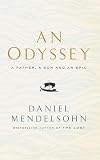
A few years ago, my read-aloud group read through Fagle's Odyssey, and it made me curious about this title. Mendelsohn is teaching a seminar on The Odyssey, and his elderly father asks to sit in, to refresh his memory from his high school days. For the reader, this becomes a dual text: fascinating notes about the Odyssey itself, and a wonderful meditation on fathers and sons, particularly this father and son, so different from each other. As the ancient story moves forward, the son reflects show more on his father's reactions as well as his own, and his students' responses, and the search for the father parallels in many ways Odysseus's journey home. Bronson Pinchot read the audiobook I listened to, and I loved every minute of it. show less
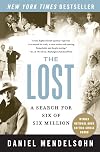
The Lost is an outstanding book that goes well beyond a family history. The extensive portrait of the extended Mendelsohn-Jäger clan living in Long Island and Florida can be at times a bit frightening to someone more used to nuclear families. This is a tale of large families (Daniel Mendelsohn himself has four siblings, one (Matt) contributing the photos of the book) living intimately together, with aunts, uncles and other relatives staying in for extended periods of time.
Woody Allen's show more portrait of a Holocaust obsessed New York Jew fits Mendelsohn to a T. Since his childhood, Daniel Mendelsohn had developed an odd obsession with genealogy, discovering the personal histories of his relatives impacted by the Holocaust. Linked to this is a creepy obsession of spending time in the company of old people, already as a teenager but also while traveling in Europe where he eschews visiting a city's highlights in order to score another interview with an often less than willing Holocaust survivor. His sightseeing is often marred by insufficient preparation. A simple Wikipedia search would have revealed that Theodor Herzl was buried in the Döbling cemetery not the Zentralfriedhof in Vienna. Vienna's Zentralfriedhof is lodged between the industrial zone, the airport and an oil refinery. No wonder that upstanding citizens such as Theodor Herzl did not want to be buried there. The Zentralfriedhof is almost situated in Vienna's equivalent of New Jersey. For marketing purposes, Vienna's administration reburied some of its heroes (such as Franz Schubert and Ludwig van Beethoven) in the Zentralfriedhof and even set up empty memorials for others (Mozart). Sometimes, the lack of a systematic approach is vexing. Serendipity often comes to the rescue.
The search quickly turns into a hunt, a mystery of a true crime. What had truly happened to Mendelsohn's grand-uncle and his daughters in 1941 and 1942? Mendelsohn unveils layer upon layer, giving faces and stories to name and places - a task better not left to the professionals: regarding his relatives, the database of Yad Vashem was filled with errors, partly due to the Galician-Polish-Ukrainian multi-linguistic environment. While the re-discovery of his relatives' life and death as well as the stories of the Holocaust survivors is a worthy endeavor in itself, Mendelsohn enriches it with a meditation and analysis of the first books of Moses. Jewish history as a tale of suffering starts early with God evicting and punishing the first humans and later wiping out most of humanity and nature in the flood. Sodom and Gomorrah only continues the story of a jealous and vengeful God. Even the God-fearing and righteous will suffer. Mendelsohn's research reveals quite a number of skeletons in the family closet. Reality is complex and non-fiction offers the best tales. Like an excellently choreographed firework, Mendelsohn's hunt pays off magnificiently, with tiny build-ups aggregating into big reveals. Given Goethe's Faust's famous agonizing over the correct translation of the first lines of Genesis, I found the discussion of its Hebrew translation issues (and its surprisingly frequent non-conventional approaches) very interesting. Another topic I have so much to learn about.
Where Mendelsohn's book could have benefited from was a more general introduction to the Eastern European area, recently labeled "Blood lands". Unfortunately for its inhabitants from Poland to Hungary to Austria to the Adria, the clashes through the centuries between the East and the West proved to be very bloody. Wiping out villages and cities used to be an all too familiar occurrence. Like Mendelsohn, I have often wondered why, for instance, the inhabitants of Hainburg, Austria, did not flee prior to the Turkish invasion of 1683. The Turks wiped out nearly all of the 8.000 inhabitants. Joseph Haydn's grand-father was one of the few survivors. While The Lost ultimately is a personal search for the history of his relatives and the Holocaust, a wider discussion of the violent nature of mankind would have been quite in order. The Holodomor, Stalin's starvation of millions of Ukrainians occurred just on the other side of the border from Bolechow. Since time immemorial, Eastern Europe has seen a lot of suffering (emigration has always been the best strategy). Homo homini lupus. Mendelsohn shies away from its full discussion and implication. This is especially bothersome in his mentioning of Abu Grhaib's "abuses said to have taken place". Call it torture and it is so amply documented that its denial or questioning is just sad. Together with mentioning Evian only as a mineral water, the continued whitewashing of US involvement in blocking Jewish emigration is not helpful in educating the next generation of Americans. Apart from this all too common blind spots, this is a spectacular achievement that is a fast-paced, revealing read. Highly recommended. show less
Woody Allen's show more portrait of a Holocaust obsessed New York Jew fits Mendelsohn to a T. Since his childhood, Daniel Mendelsohn had developed an odd obsession with genealogy, discovering the personal histories of his relatives impacted by the Holocaust. Linked to this is a creepy obsession of spending time in the company of old people, already as a teenager but also while traveling in Europe where he eschews visiting a city's highlights in order to score another interview with an often less than willing Holocaust survivor. His sightseeing is often marred by insufficient preparation. A simple Wikipedia search would have revealed that Theodor Herzl was buried in the Döbling cemetery not the Zentralfriedhof in Vienna. Vienna's Zentralfriedhof is lodged between the industrial zone, the airport and an oil refinery. No wonder that upstanding citizens such as Theodor Herzl did not want to be buried there. The Zentralfriedhof is almost situated in Vienna's equivalent of New Jersey. For marketing purposes, Vienna's administration reburied some of its heroes (such as Franz Schubert and Ludwig van Beethoven) in the Zentralfriedhof and even set up empty memorials for others (Mozart). Sometimes, the lack of a systematic approach is vexing. Serendipity often comes to the rescue.
The search quickly turns into a hunt, a mystery of a true crime. What had truly happened to Mendelsohn's grand-uncle and his daughters in 1941 and 1942? Mendelsohn unveils layer upon layer, giving faces and stories to name and places - a task better not left to the professionals: regarding his relatives, the database of Yad Vashem was filled with errors, partly due to the Galician-Polish-Ukrainian multi-linguistic environment. While the re-discovery of his relatives' life and death as well as the stories of the Holocaust survivors is a worthy endeavor in itself, Mendelsohn enriches it with a meditation and analysis of the first books of Moses. Jewish history as a tale of suffering starts early with God evicting and punishing the first humans and later wiping out most of humanity and nature in the flood. Sodom and Gomorrah only continues the story of a jealous and vengeful God. Even the God-fearing and righteous will suffer. Mendelsohn's research reveals quite a number of skeletons in the family closet. Reality is complex and non-fiction offers the best tales. Like an excellently choreographed firework, Mendelsohn's hunt pays off magnificiently, with tiny build-ups aggregating into big reveals. Given Goethe's Faust's famous agonizing over the correct translation of the first lines of Genesis, I found the discussion of its Hebrew translation issues (and its surprisingly frequent non-conventional approaches) very interesting. Another topic I have so much to learn about.
Where Mendelsohn's book could have benefited from was a more general introduction to the Eastern European area, recently labeled "Blood lands". Unfortunately for its inhabitants from Poland to Hungary to Austria to the Adria, the clashes through the centuries between the East and the West proved to be very bloody. Wiping out villages and cities used to be an all too familiar occurrence. Like Mendelsohn, I have often wondered why, for instance, the inhabitants of Hainburg, Austria, did not flee prior to the Turkish invasion of 1683. The Turks wiped out nearly all of the 8.000 inhabitants. Joseph Haydn's grand-father was one of the few survivors. While The Lost ultimately is a personal search for the history of his relatives and the Holocaust, a wider discussion of the violent nature of mankind would have been quite in order. The Holodomor, Stalin's starvation of millions of Ukrainians occurred just on the other side of the border from Bolechow. Since time immemorial, Eastern Europe has seen a lot of suffering (emigration has always been the best strategy). Homo homini lupus. Mendelsohn shies away from its full discussion and implication. This is especially bothersome in his mentioning of Abu Grhaib's "abuses said to have taken place". Call it torture and it is so amply documented that its denial or questioning is just sad. Together with mentioning Evian only as a mineral water, the continued whitewashing of US involvement in blocking Jewish emigration is not helpful in educating the next generation of Americans. Apart from this all too common blind spots, this is a spectacular achievement that is a fast-paced, revealing read. Highly recommended. show less
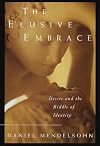
How does one resolve the mystery of his own identity? Can one understand the rest of the world if he does not know himself first? These questions and more form the themes of this rare if not unique memoir. Daniel Mendelsohn shares his own personal history through essays on the ways that he, and by reference we, defines himself. The geographies, paternities, mythologies and what he calls multiplicities lead him to a summary section that discusses identities. Concluding at the end of his show more musings that "you live in the middle voice, you are here and you are there," (p 206), and this is the cumulative result of the experiences of a life - our personal mythology. By weaving into his personal experience the lessons of classical mythology (Ovid et. al.) Mendelsohn pursues the nature of the desire. Since Plato discussed the relationship between eros and the good this question has been a critical part of human existence. The Elusive Embrace updates the search for the nature of this relationship and its part in the "riddle of identity". Beautifully written and deeply felt this is a book to return to again and again. show less
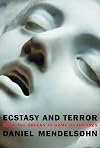
Daniel Mendelsohn is a name that whenever and wherever it appears, I will read what he has written. I know I will get a thoughtful, educated, serious examination of whatever topic, book, film, TV show, whatever it is. I will learn something new, be shown something in a new light, and will seek out new things to read or to look at. This collection comprises primarily essays previously published in the NY Review of Books or the New Yorker; so the material may not be new to subscribers, but show more many were new to me. And there is not a clinker in the bunch.
A classicist by training, Mendelsohn often manages to tie his ostensible subject (the Boston Marathon bombers, Game of Thrones, robots...) to issues and dramas plumbed back in ancient Greece or Rome, in ways that enlighten both and serve to underscore the universalities and humanity across the millennia. He is a master (and staunch defender, god love him) of the art of the negative review: even when he is critical, it is expressed with patience, serious attention, concrete examples, and careful reasoning. There is a lovely, poignant piece on his long epistolary relationship with the novelist Mary Renault, whose stories set in the ancient world lit up his attraction to the classics and his sexuality as a teenager. (Sad to say, not ONE of her books is owned by my local affluent, educated, suburban public library, so I must search farther afield.) His lengthy (necessarily...) piece on Karl Ove Knausgaard's six-volume "autofiction" oeuvre is an insightful consideration of that monument of weirdly compelling (at least some of the time) self-absorption. He concludes, pithily and brilliantly, that Knausgaard (as does Hitler in his own "Struggle") tends to focus entirely on the "I" and the "they" of his writing, leaving no room for "you"... the reader. The final piece, "A Critic's Manifesto," made me want to stand up and cheer: everything I had intuited, sought, and admired in Mendelsohn's work turns out to be exactly what he aims and strives for. Well done, sir. Please hurry up and write more. My brain is waiting for a blast of oxygen. show less
A classicist by training, Mendelsohn often manages to tie his ostensible subject (the Boston Marathon bombers, Game of Thrones, robots...) to issues and dramas plumbed back in ancient Greece or Rome, in ways that enlighten both and serve to underscore the universalities and humanity across the millennia. He is a master (and staunch defender, god love him) of the art of the negative review: even when he is critical, it is expressed with patience, serious attention, concrete examples, and careful reasoning. There is a lovely, poignant piece on his long epistolary relationship with the novelist Mary Renault, whose stories set in the ancient world lit up his attraction to the classics and his sexuality as a teenager. (Sad to say, not ONE of her books is owned by my local affluent, educated, suburban public library, so I must search farther afield.) His lengthy (necessarily...) piece on Karl Ove Knausgaard's six-volume "autofiction" oeuvre is an insightful consideration of that monument of weirdly compelling (at least some of the time) self-absorption. He concludes, pithily and brilliantly, that Knausgaard (as does Hitler in his own "Struggle") tends to focus entirely on the "I" and the "they" of his writing, leaving no room for "you"... the reader. The final piece, "A Critic's Manifesto," made me want to stand up and cheer: everything I had intuited, sought, and admired in Mendelsohn's work turns out to be exactly what he aims and strives for. Well done, sir. Please hurry up and write more. My brain is waiting for a blast of oxygen. show less
Lists
Awards


You May Also Like


Associated Authors
Statistics
- Works
- 20
- Also by
- 14
- Members
- 3,653
- Popularity
- #6,927
- Rating
- 4.0
- Reviews
- 97
- ISBNs
- 115
- Languages
- 11
- Favorited
- 11


