
Geoff Dyer (1) (1958–)
Author of Jeff in Venice, Death in Varanasi
For other authors named Geoff Dyer, see the disambiguation page.
About the Author
Geoff Dyer was born in Cheltenham in 1958. He currently lives in London.
Image credit: Author Geoff Dyer at the 2015 Texas Book Festival. By Larry D. Moore, CC BY-SA 4.0, https://commons.wikimedia.org/w/index.php?curid=44646842
Works by Geoff Dyer
Where You Are: A Collection of Maps That Will Leave You Feeling Completely Lost (2013) 58 copies, 2 reviews
Committed: Men Tell Stories of Love, Commitment, and Marriage (2005) — Contributor — 22 copies, 1 review
Associated Works
Black Lamb and Grey Falcon: A Journey through Yugoslavia (1941) — Introduction, some editions — 1,936 copies, 29 reviews
The Abundance: Narrative Essays Old and New (2016) — Introduction, some editions — 446 copies, 15 reviews
The Dylan Companion: A Collection of Essential Writing About Bob Dylan (1990) — Contributor, some editions — 103 copies
Tagged
Common Knowledge
- Birthdate
- 1958-06-05
- Gender
- male
- Education
- Corpus Christi College, Oxford
- Relationships
- Wilson, Rebecca (spouse)
- Nationality
- UK
- Birthplace
- Cheltenham, Gloucestershire, England, UK
- Places of residence
- Los Angeles, California, USA
- Associated Place (for map)
- UK
Members
Reviews

Ó céus, que delícia de livro. São oito contos cujos estilos são correlatos da vida e obra dos respectivos músicos: Lester Young, Thelonius Monk, Bud Powell, Charles Mingus, Ben Webster, Chet Baker, Art Pepper e arrematando todos eles a fragmentação de Duke Ellington e Harry Carney. Cada conto traz uma nova perspectiva do porque suas entranhas reagem diferentemente a cada um deles, por exemplo, agora me ficou completamente claro o porquê eu me identificar tanto com a música do Chet show more Baker.
Estou tirando uma estrelinha das cinco que daria a esse livro porque não há um conto que norteie vida e música de Miles Davis, não sei se por alguma razão subjetiva do autor ou por ele não ter encontrado uma forma literária que exemplifique o que venha a ser Miles Davis dentro do Jazz, mas tal frustração acaba sendo compensada pelo ótimo texto de encerramento do livro, um ensaio sobre a natureza rizômica do jazz. show less
Estou tirando uma estrelinha das cinco que daria a esse livro porque não há um conto que norteie vida e música de Miles Davis, não sei se por alguma razão subjetiva do autor ou por ele não ter encontrado uma forma literária que exemplifique o que venha a ser Miles Davis dentro do Jazz, mas tal frustração acaba sendo compensada pelo ótimo texto de encerramento do livro, um ensaio sobre a natureza rizômica do jazz. show less
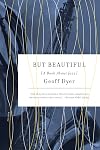
Book blurbs often seem the equivalent of movie blurbs. Skepticism seems justified when a publisher puts a blurb smack on the front cover just below the title -- especially when it says, 'May be the best book ever written about jazz.' Is this honest commentary or gratuitous puffery? With Geoff Dyer's But Beautiful: A Book About Jazz, it's the former.
The concept behind But Beautiful is not unique in and of itself. First published in 1991 and out in a new trade paper edition, it consists of show more essays about jazz greats Lester 'Pres' Young, Thelonius Monk, Bud Powell, Ben Webster, Charlie Mingus, Chet Baker and Art Pepper, with an overarching piece on Duke Ellington traveling between gigs and his songwriting. In execution, though, it is 'about jazz' unlike any other book.
The combination of technical and artistic aspects makes any genre of music hard to write about and leaves little doubt that the variously attributed statement that it's like 'dancing about architecture' is absolutely true. And it's hard to find a genre with a more complex architecture than jazz, thereby increasing the difficulty of describing it. Dyer, however, does so with sentences that are often strikingly simple yet go right to the heart of the music. For example:
These phrases exquisitely describe an aspect of each musician's style. Yet the descriptions leave the initiated nodding their head while still giving the uninitiated a sense of the nature of the music. And Dyer also provides longer expositions, such as this passage describing Pepper playing his alto sax while sitting in a prison cell:
"For a few moments he falters, oblivious to what he is playing, clutching the eight and ninth rungs of the count. Then, summoning everything, he searches for the highest note, reaches it -- just -- and soars clear. At the height of this leap, before gravity reasserts itself, there is a moment of absolute weightlessness -- bright, clear, serene -- before he is falling again, gliding in a gorgeous arc, subsiding into the deep moan of the blues. And the convicts realize that's what it's been about all along -- a dream of falling."
In a paragraph, Dyer has taken us inside a few seconds of improvisation and both the emotions that helped create it and those it itself created. This is far from the only example in But Beautiful, named after a jazz standard. Over the course of roughly a page, Dyer describes Baker's style in a way that is nearly as transcendent as its subject.
Yet this alone isn't what makes the book superb. But Beautiful is a form of literary jazz.
Jazz artists borrow, build upon and expand idioms or concepts of their predecessors and contemporaries. There's a heavy element of creativity and improvisation as they often go inside a melody to explore, deconstruct or transform it. That is what Dyer does on paper. He seeks the heart of the musicians and their music, blending anecdotes, apocrypha, books and, to a great extent, even photos although only one appears in this edition). Dyer synthesizes these elements into impressionistic essays, something he calls 'imaginative criticism.'
Each essay is an extended solo on one artist, at times heavily blues-based. There's Young awakening to grab a silent phone he thinks is ringing, 'expecting to hear someone break the news to him that he had died in his sleep.' There's Bud Powell, who was 'always potentially out of control but now that potential had been unleashed.' But Beautiful explores the toll of genius and the highs, lows and decimations of people like Powell, Pepper and Baker in ways normal storytelling cannot. But it is not all the ravages of booze, heroin and incarceration. There's Monk's inimitable style and him calling his wife Ellie in the middle of a song, leaving the phone off the hook so she can hear what he was playing for her. There's the creativity and volatility of 'Minus, Mingus, Mingus -- not a name but a verb, even thought was a form of action, of internalized momentum.' There's Ellington in a car Harry Carney, a 45-year member of Ellington's band. As Carney drives, Ellington ponders music and writes songs.
These are just a few of 'a whole bunch of guys whose stories and thoughts are not like anyone else's who wouldn't have had a chance to express all the ideas and shit they had inside them without jazz.' Dyer's evocative perceptions of them and their music make But Beautiful 'about jazz' in a way that transcends those two words.
(Originally posted at A Progressive on the Prairie.) show less
The concept behind But Beautiful is not unique in and of itself. First published in 1991 and out in a new trade paper edition, it consists of show more essays about jazz greats Lester 'Pres' Young, Thelonius Monk, Bud Powell, Ben Webster, Charlie Mingus, Chet Baker and Art Pepper, with an overarching piece on Duke Ellington traveling between gigs and his songwriting. In execution, though, it is 'about jazz' unlike any other book.
The combination of technical and artistic aspects makes any genre of music hard to write about and leaves little doubt that the variously attributed statement that it's like 'dancing about architecture' is absolutely true. And it's hard to find a genre with a more complex architecture than jazz, thereby increasing the difficulty of describing it. Dyer, however, does so with sentences that are often strikingly simple yet go right to the heart of the music. For example:
- Monk 'played each note as though astonished by the previous one,' often leaving the feeling that 'the song seemed to have turned inside out.'
- Mingus's 'bass marched everyone along like a bayonet in a prisoner's back.'
- 'Every time [Baker] played a note he waved it goodbye. Sometimes he didn't even wave.'
These phrases exquisitely describe an aspect of each musician's style. Yet the descriptions leave the initiated nodding their head while still giving the uninitiated a sense of the nature of the music. And Dyer also provides longer expositions, such as this passage describing Pepper playing his alto sax while sitting in a prison cell:
"For a few moments he falters, oblivious to what he is playing, clutching the eight and ninth rungs of the count. Then, summoning everything, he searches for the highest note, reaches it -- just -- and soars clear. At the height of this leap, before gravity reasserts itself, there is a moment of absolute weightlessness -- bright, clear, serene -- before he is falling again, gliding in a gorgeous arc, subsiding into the deep moan of the blues. And the convicts realize that's what it's been about all along -- a dream of falling."
In a paragraph, Dyer has taken us inside a few seconds of improvisation and both the emotions that helped create it and those it itself created. This is far from the only example in But Beautiful, named after a jazz standard. Over the course of roughly a page, Dyer describes Baker's style in a way that is nearly as transcendent as its subject.
Yet this alone isn't what makes the book superb. But Beautiful is a form of literary jazz.
Jazz artists borrow, build upon and expand idioms or concepts of their predecessors and contemporaries. There's a heavy element of creativity and improvisation as they often go inside a melody to explore, deconstruct or transform it. That is what Dyer does on paper. He seeks the heart of the musicians and their music, blending anecdotes, apocrypha, books and, to a great extent, even photos although only one appears in this edition). Dyer synthesizes these elements into impressionistic essays, something he calls 'imaginative criticism.'
Each essay is an extended solo on one artist, at times heavily blues-based. There's Young awakening to grab a silent phone he thinks is ringing, 'expecting to hear someone break the news to him that he had died in his sleep.' There's Bud Powell, who was 'always potentially out of control but now that potential had been unleashed.' But Beautiful explores the toll of genius and the highs, lows and decimations of people like Powell, Pepper and Baker in ways normal storytelling cannot. But it is not all the ravages of booze, heroin and incarceration. There's Monk's inimitable style and him calling his wife Ellie in the middle of a song, leaving the phone off the hook so she can hear what he was playing for her. There's the creativity and volatility of 'Minus, Mingus, Mingus -- not a name but a verb, even thought was a form of action, of internalized momentum.' There's Ellington in a car Harry Carney, a 45-year member of Ellington's band. As Carney drives, Ellington ponders music and writes songs.
These are just a few of 'a whole bunch of guys whose stories and thoughts are not like anyone else's who wouldn't have had a chance to express all the ideas and shit they had inside them without jazz.' Dyer's evocative perceptions of them and their music make But Beautiful 'about jazz' in a way that transcends those two words.
(Originally posted at A Progressive on the Prairie.) show less
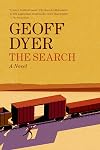
Initially, I thought this was homage to the noir genre made popular by Raymond Chandler—with the woman in distress and characters named Malory and Carver. However, it quickly morphs into a surrealistic journey through a landscape that becomes increasingly strange. The narrator is Walker, an ex-convict who used to be a tracker, but has recently retired since tracking has become a crime. He takes up the case of finding Malory for the woman for dubious reasons—possibly seeking sexual show more favors. He has few leads and his rationales become increasingly dubious as the novel progresses. In fact the search rapidly becomes secondary to his weird journey through a series of strange cities. The outcome is exciting enough but seems abrupt and leaves much unanswered (e.g., why is Carver so intent of killing Walker?). Because of its obscurity, this is not a very satisfying read. show less

This is a book about the experience of watching Andrei Tarkovsky's 'Stalker'. It is a fine example of form meeting function. The author recognises that some aspects of filmic experience will be subjective while others will be more universal and the structure and content of the book reflects that. In some areas he discusses the more generally recognised themes of time and space and he does so with diligence and poise. In others he documents his own specific reaction, for example, to a show more character smoking on screen. Dyer also reflects the realist/metaphysical duality of the film in his mixing of high and low linguistic registers. On top of that, he mirrors Tarkovsky's play with time and space by ranging across his own experiences of watching the film at different times and places.
I think this is possibly the first book I have read of any that both informs and confirms precisely my own reactions to a piece of art. Dyer pulls off the difficult task of deepening my knowledge of the more objective theories to Tarkovsky's work while affirming my own subjective responses to it. I do not imaging that reading this would be as stimulating without having watched and appreciated 'Stalker', but I suspect it would still be fun. show less
I think this is possibly the first book I have read of any that both informs and confirms precisely my own reactions to a piece of art. Dyer pulls off the difficult task of deepening my knowledge of the more objective theories to Tarkovsky's work while affirming my own subjective responses to it. I do not imaging that reading this would be as stimulating without having watched and appreciated 'Stalker', but I suspect it would still be fun. show less
Lists
Awards


You May Also Like


Associated Authors
Statistics
- Works
- 32
- Also by
- 23
- Members
- 6,109
- Popularity
- #4,030
- Rating
- 3.6
- Reviews
- 153
- ISBNs
- 266
- Languages
- 13
- Favorited
- 1

