
Patrick Modiano
Author of Missing Person
About the Author
Paul Modiano is a French writer who was born on July 30, 1945, in Boulogne-Billancourt. He won the Nobel Prize for Literature in 2014 for his lifetime body of work. He previously won the Austrian State Prize for European Literature in 2012 and the Prix mondial Cino Del Duca from the Institut de show more France for his lifetime achievement in 2010. His other awards include the Prix Goncourt in 1978 for his novel Rue des boutiques obscures and the Grand prix du roman de l'Académie française in 1972 for Les Boulevards de ceinture. Modiano's works explore the traumas of the Nazi occupation of France and the puzzle of identity. His preoccupation with the theme of identity can be seen throughout many of his works including his 2005 memoir entitled Un Pedigree. Modiano was greatly influenced by his parents' relationship. His mother and father began their clandestine relationship during occupied France. Growing up, his father was absent for most of his life and his mother was away frequently while on tour acting. He was alone much of the time and went to school because of government aid. His younger brother died of a disease at age 10 and this added to his "lost identity" feelings while growing up. Modiano first came to prominence in France when he wrote the 1968 book La Place de L'Étoile. He has published over 30 works which include novels, screenplays and children's books. His other works include: La Ronde de nuit (1969), English translation: Night Rounds; Rue des boutiques obscures (1978), English translation: Missing Person; and Quartier Perdu (1984), English translation: A Trace of Malice. Although he is well known in France, only about 12 of his works have been translated into English. (Bowker Author Biography) show less
Image credit: Patrick Modiano en 2017
Series
Works by Patrick Modiano
The Occupation trilogy | La Place de L'Étoile • The night watch • Ring roads (2012) 335 copies, 5 reviews
Huwelijksreis 3 copies
RRUGA E DYQANEVE TË ERRËTA 2 copies
Ensemble 1 copy
Những Đại Lộ Vành Đai 1 copy
LULET E RRËNIMIT 1 copy
FALJA E DËNIMIT 1 copy
RONDA DA NOITE 1 copy
Takoví hodní hoši ; Mládí 1 copy
INCHIOSTRO SIMPATICO 1 copy
Lai lịch 1 copy
Con chó mùa xuân 1 copy
Hoa của phế tích 1 copy
Kho đựng nỗi đau 1 copy
Uslovni otpust 1 copy
Associated Works
A Bookshop in Berlin: The Rediscovered Memoir of One Woman's Harrowing Escape from the Nazis (1945) — Preface, some editions — 586 copies, 30 reviews
3 Films by Louis Malle: Au Revoir Les Enfants / Murmur of the Heart / Lacombe, Lucien (1971) — Writer — 9 copies
Profil d'une oeuvre : La ronde de nuit (1969), Patrick Modiano : résumé, personnages, thèmes (1992) — Contributor — 1 copy
Tagged
Common Knowledge
- Canonical name
- Modiano, Patrick
- Legal name
- Modiano, Jean-Patrick
- Birthdate
- 1945-07-30
- Gender
- male
- Education
- Lycée Henri IV, Paris, France
- Occupations
- novelist
screenwriter
memoirist - Awards and honors
- Nobel Prize (Literature ∙ 2014)
Grand prix de littérature Paul Morand de l'Académie française (2000) - Relationships
- Queneau, Raymond (geometry teacher)
- Nationality
- France
- Birthplace
- Boulogne-Billancourt, Hauts-de-Seine, Île-de-France, France
- Places of residence
- Paris, France
- Associated Place (for map)
- France
Members
Reviews
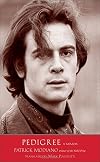
Patrick Modiano’s memoir reads like his novels. Names and addresses recited from the past, first embedded in the context of his parent’s lives – then his own – in Paris and elsewhere during the war and after.
His mother, a Belgian actress, was “a pretty girl with an arid heart.” “Beneath the theatricality and fantasy, she had a heart of stone.” His father was a French black marketer who seemed to consider his son a nuisance and pushed Modiano away throughout his life. show more Together, his parents were “two lost, heedless butterflies in the midst of an indifferent city.”
Modiano’s early life was marked by parental indifference and the loss of his younger brother – no cause is mentioned. “Apart from my brother, Rudy, his death, I don’t believe that anything I’ll relate here truly matters to me.”
The memoir concludes shortly after his first novel is published at age twenty-two. This book, more than any other writer’s that I’ve read, fosters a greater understanding of Modiano’s themes and obsessions. show less
His mother, a Belgian actress, was “a pretty girl with an arid heart.” “Beneath the theatricality and fantasy, she had a heart of stone.” His father was a French black marketer who seemed to consider his son a nuisance and pushed Modiano away throughout his life. show more Together, his parents were “two lost, heedless butterflies in the midst of an indifferent city.”
Modiano’s early life was marked by parental indifference and the loss of his younger brother – no cause is mentioned. “Apart from my brother, Rudy, his death, I don’t believe that anything I’ll relate here truly matters to me.”
The memoir concludes shortly after his first novel is published at age twenty-two. This book, more than any other writer’s that I’ve read, fosters a greater understanding of Modiano’s themes and obsessions. show less
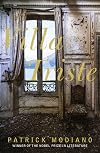
A holiday town in Haute-Savoie, near Geneva. Victor Chmara recalls the time he spent there as a young man near the start of the war in Algiers. His memory is both precise and muddled. He can recall the clothes that people were wearing in great detail, street names, the lights across the lake, but he has forgotten faces and most names and perhaps even why he had come to that town or why he lingered. Back then he took up with a local girl named Yvonne and her friend Meinthe, who may or may not show more have been a doctor. Together they skimmed the edges of high society and low farce. But mostly the past, for Chmara, is like a dream, indistinct, full of portent, yet mostly likely meaningless. Except perhaps for the vivid realization that the future was slipping out of reach for he and his friends.
This early novel by Patrick Modiano perfectly captures his signature style. There is the untrustworthiness of memory, the juxtaposition of youth and lost-youth, the vagueness of desire, and the underlying threat of violence. To describe it as atmospheric would be an understatement. And why does Victor travel with a suitcase full of telephone directories? The unexplained here is ever unexplained. Classic Modiano.
Very easy to recommend. show less
This early novel by Patrick Modiano perfectly captures his signature style. There is the untrustworthiness of memory, the juxtaposition of youth and lost-youth, the vagueness of desire, and the underlying threat of violence. To describe it as atmospheric would be an understatement. And why does Victor travel with a suitcase full of telephone directories? The unexplained here is ever unexplained. Classic Modiano.
Very easy to recommend. show less

This is a kind of detective story, with lots of Simenonish mid-20th century Paris atmosphere. An amnesiac private detective is trying to track down his own earlier life. Modiano is obviously a big fan of unanswered questions, so he never really tells us when the foreground story is set, but we are allowed to realise that the key events in the back-story took place during the German occupation. The main characters are all more-or-less from the generation of Modiano's parents, so we're show more probably somewhere in the late fifties, about twenty years before the book was written.
Of course, it turns out that every piece of information that our detective manages to discover about himself only raises more questions. The witnesses who could have given him the full story are either dead or have disappeared; his own memories, when they start to come back, are not entirely trustworthy; names and addresses turn out to be false; individual stories refuse to connect together into a closed narrative. If the past is another country, then as far as Modiano is concerned he will always be an illegal immigrant there. Obviously a lot of this is Modiano dealing with his own peculiar background, but it does also seem to be saying more general things about the - possibly misleading - ways in which memory and narrative work together. show less
Of course, it turns out that every piece of information that our detective manages to discover about himself only raises more questions. The witnesses who could have given him the full story are either dead or have disappeared; his own memories, when they start to come back, are not entirely trustworthy; names and addresses turn out to be false; individual stories refuse to connect together into a closed narrative. If the past is another country, then as far as Modiano is concerned he will always be an illegal immigrant there. Obviously a lot of this is Modiano dealing with his own peculiar background, but it does also seem to be saying more general things about the - possibly misleading - ways in which memory and narrative work together. show less
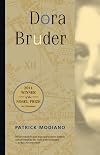
In Dora Bruder Nobel Prize winner Patrick Modiano uses the few surviving traces of a single lost life to tell the story of Paris during the German Occupation.
Little can be known about the real Dora Bruder, except that she was not much like Anne Frank. A rebellious teen from a poor Jewish refugee family, Dora inexplicably ran away from the convent school that could have been her shelter until the end of the war. She was found and returned, then she ran away again. The last mark of her show more existence was a notation on a list of Jews deported to Auschwitz in September, 1942.
Modiano, who was born in 1945, first learns about Dora through a brief "missing" notice in a wartime newspaper. He searches for the lost girl on the streets of modern-day Paris, and feels her presence still, despite France's efforts to forget about its shameful collaboration with the Nazis. Some of the streets and buildings Dora would have known still stand and some have been torn down or renamed. "They have obliterated everything in order to build a sort of Swiss village in order that nobody, ever again, would question [Paris's] neutrality." (p. 113).
This is a very sad, yet beautifully written book. I recommend it. show less
Little can be known about the real Dora Bruder, except that she was not much like Anne Frank. A rebellious teen from a poor Jewish refugee family, Dora inexplicably ran away from the convent school that could have been her shelter until the end of the war. She was found and returned, then she ran away again. The last mark of her show more existence was a notation on a list of Jews deported to Auschwitz in September, 1942.
Modiano, who was born in 1945, first learns about Dora through a brief "missing" notice in a wartime newspaper. He searches for the lost girl on the streets of modern-day Paris, and feels her presence still, despite France's efforts to forget about its shameful collaboration with the Nazis. Some of the streets and buildings Dora would have known still stand and some have been torn down or renamed. "They have obliterated everything in order to build a sort of Swiss village in order that nobody, ever again, would question [Paris's] neutrality." (p. 113).
This is a very sad, yet beautifully written book. I recommend it. show less
Lists
Awards


You May Also Like


Associated Authors
Statistics
- Works
- 84
- Also by
- 6
- Members
- 11,094
- Popularity
- #2,125
- Rating
- 3.7
- Reviews
- 367
- ISBNs
- 873
- Languages
- 31
- Favorited
- 30

