
Pierre Michon
Author of Small Lives
About the Author
Image credit: Jean-Luc Bertini
Works by Pierre Michon
Associated Works
Tagged
Common Knowledge
- Legal name
- Michon, Pierre
- Birthdate
- 1945-05-28
- Gender
- male
- Awards and honors
- Franz Kafka Prize (2019)
- Nationality
- France
- Map Location
- France
- Associated Place (for map)
- France
Members
Reviews
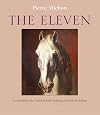
In the month of Nivôse, in Year II of the Revolution, the artist Corentin was summoned by a quartet of Sans Culottes in the middle of the night and taken to local revolutionary headquarters. After several hours of anxious contemplation, he was surprised to discover the reason for the summons: a commission to paint the eleven, the members of The Committee of Public Safety. The trio who offered this commission had two conditions: it must be kept completely secret until the completed painting show more was collected from the artist, and Robespierre, Saint-Just and Couthon must be the focal figures.
This is a beautifully written work, a meditation on art and history, on how artistic style shapes the images of History. It is the tale of Corentin as he was forged by the history of his forbearers into the artist he was to become. The language is pure imagery. The nameless narrator is speaking to a present day visitor to the Louvre, come to see its most important work, The Eleven. The narrator supplies the information that those printed descriptions in galleries never provide. He tells of Corentin and the Limousin, the Enlightenment and the proletariat, of Venetian cherubs and German princelings, weaving them all together into a fable.
Michon skilfully uses paradox and contrast to give a fictional discussion of reality, where each of us can view the same object,
This is a beautifully written work, a meditation on art and history, on how artistic style shapes the images of History. It is the tale of Corentin as he was forged by the history of his forbearers into the artist he was to become. The language is pure imagery. The nameless narrator is speaking to a present day visitor to the Louvre, come to see its most important work, The Eleven. The narrator supplies the information that those printed descriptions in galleries never provide. He tells of Corentin and the Limousin, the Enlightenment and the proletariat, of Venetian cherubs and German princelings, weaving them all together into a fable.
Michon skilfully uses paradox and contrast to give a fictional discussion of reality, where each of us can view the same object,
but it was not the same, not in the same place, because each real thing exists many times, as many times perhaps as there are individuals on this earth.If this is so, how can we have History? History in fact is its very representation and so changes constantly as we see different representations. What The Eleven represent are the powers, yet at the same time, these eleven men, "fixed in the dread and slow expectancy of beasts" eventually became the hunted.
This is Lascaux, Sir. The forces. The powers. The Commissioners.show less
And the powers... are called History.
 This review was written for LibraryThing Early Reviewers.
This book has won prizes, the English translation won a big prize, Small Lives is well-known in France, it's worth three dozen Martin Amis's, yet it seems to be little-known here.
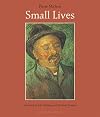
Small Lives is about eight people living in deeply rural France. There are feuds, disappearances, disappointments. A man's refusal to reveal his illiteracy leads to his death. A priest conducts services in an empty church. Happenings and doings and people about which the outside world knows nothing, cares nothing, show more but that are the world in these small lives. What Graham Robb has to say about peasant life in The Discovery of France is brought to life here, but most of the events and interactions in the book would not seem unfamiliar to inhabitants of any rural area that's kept many of its old ways.
Small Lives is beautifully written. The people seem real (well, they are to a degree) and the places, both landscape and interiors, are evocative and exquisitely drawn. Michon is able to alter his style and tone seamlessly and appropriately and he always draws the reader along with him.
Because the book is apparently highly autobiographical, some of the lives are of those of Michon's family. It's natural that we should get to know the narrator/Michon, just as it's natural that in so small a settlement each person has a strong connection with the others. Gradually it's he who becomes the main character in the book, and that's the only quibble I have. The change in focus is smooth, the literary and personal reasons for the change are easy to understand, but I would rather have learned more about Father Bandy than Michon's broken love affair, more about Claudette than Michon's addiction, more about the field gone back to the wild than Michon's dead sister. Although the writer's life has been eventful and turbulent and the lives of his other subjects were so only in quiet ways Michon is more interesting when delineating other peoples's small lives.rather than his own. show less
Small Lives is about eight people living in deeply rural France. There are feuds, disappearances, disappointments. A man's refusal to reveal his illiteracy leads to his death. A priest conducts services in an empty church. Happenings and doings and people about which the outside world knows nothing, cares nothing, show more but that are the world in these small lives. What Graham Robb has to say about peasant life in The Discovery of France is brought to life here, but most of the events and interactions in the book would not seem unfamiliar to inhabitants of any rural area that's kept many of its old ways.
Small Lives is beautifully written. The people seem real (well, they are to a degree) and the places, both landscape and interiors, are evocative and exquisitely drawn. Michon is able to alter his style and tone seamlessly and appropriately and he always draws the reader along with him.
Because the book is apparently highly autobiographical, some of the lives are of those of Michon's family. It's natural that we should get to know the narrator/Michon, just as it's natural that in so small a settlement each person has a strong connection with the others. Gradually it's he who becomes the main character in the book, and that's the only quibble I have. The change in focus is smooth, the literary and personal reasons for the change are easy to understand, but I would rather have learned more about Father Bandy than Michon's broken love affair, more about Claudette than Michon's addiction, more about the field gone back to the wild than Michon's dead sister. Although the writer's life has been eventful and turbulent and the lives of his other subjects were so only in quiet ways Michon is more interesting when delineating other peoples's small lives.rather than his own. show less
Except for the usual first book problems (we get it, you're an artist, you've suffered, you've made others suffer, go ahead, express it all), this is outstanding. I have no way to describe why Michon is so much more interesting than so many people writing today, but he is. Density, I think, if that helps.
About three quarters of the way through this very short novel, I was ready to shrug my shoulders and write a three-star, "great writing, but really, do we need another novel about the author's penis?" review. It turns out, this is not that book. 'Spoiler' alert ahead, I guess.
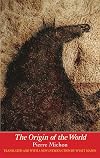
Michon depicts the squalor of lust (particularly male lust) in an extraordinarily intelligent way. The title, of course, refers to the Courbet painting, and to the origins of art in the caves of Lascaux (and other show more sites around the world). In both cases--lust and art--what you want to see as something pure and lovely is in fact a kind of revolting vandalism, a fact brought out perfectly when the violent, successful lover shows the pathetic, violent-only-in-his-dreams, unsuccessful lover (and his girlfriend!) around an immaculate cave near the painted caves of Lascaux.
We're encouraged to think the story is about a pure, natural desire; in the end, that pure, natural desire is revealed for what it is. Also, the writing is great. show less
Michon depicts the squalor of lust (particularly male lust) in an extraordinarily intelligent way. The title, of course, refers to the Courbet painting, and to the origins of art in the caves of Lascaux (and other show more sites around the world). In both cases--lust and art--what you want to see as something pure and lovely is in fact a kind of revolting vandalism, a fact brought out perfectly when the violent, successful lover shows the pathetic, violent-only-in-his-dreams, unsuccessful lover (and his girlfriend!) around an immaculate cave near the painted caves of Lascaux.
We're encouraged to think the story is about a pure, natural desire; in the end, that pure, natural desire is revealed for what it is. Also, the writing is great. show less
Lists
Awards


You May Also Like


Associated Authors
Statistics
- Works
- 38
- Also by
- 2
- Members
- 1,343
- Popularity
- #19,158
- Rating
- 3.6
- Reviews
- 59
- ISBNs
- 119
- Languages
- 10
- Favorited
- 8
