
Annie Ernaux
Author of The Years
About the Author
Annie Ernaux was born in 1940 in Normandy. She is the winner of numerous prizes including the Prix Renaudot. Her "A Woman's Story", "A Man's Place", and "Simple Passion" were all "New York Times" Notable Books. "A Woman's Story" was also a "Los Angeles Times" Fiction Prize finalist and "A Man's show more Place" was a French-American Foundation Award finalist. Her Previous book "Shame", was named a Best Book of 1998 by "Publishers Weekly". Her books are taught in schools throughout France as contemporary classics. Ernaux lives outside Paris. (Bowker Author Biography) show less
Image credit: Hélie Gallimard
Works by Annie Ernaux
Os armários vazios 1 copy
Işıklara Bak Canım 1 copy
Paměť dívky 1 copy
Eine Leidenschaft: Über die kleinen Demütigungen und Erniedrigungen der Besessenheit und des Verlassenseins (2025) 1 copy
Ernaux, Annie Archive 1 copy
Cơn cuồng si 1 copy
記憶無非徹底看透的一切 1 copy
Dogodek in druga besedila 1 copy
L'Herne Ernaux 1 copy
Ernaux Annie 1 copy
Associated Works
Tagged
Common Knowledge
- Canonical name
- Ernaux, Annie
- Legal name
- Duchesne, Annie
- Birthdate
- 1940-09-01
- Gender
- female
- Education
- University of Rouen, France
University of Bordeaux - Occupations
- writer
teacher
novelist
memoirist - Awards and honors
- Nobel Prize (Literature, 2022)
Prix de la langue française (2008) - Short biography
- Annie Ernaux, née Duchesne, was born to a working-class family in Lillebonne, in Normandy, France, and grew up in Yvetot. She attended a private Catholic school and then went for primary teacher training in Rouen. Later she studied modern literature at the universities of Rouen and Bordeaux, graduating in 1971.
In the early 1970s, she passed the agrégation (state teaching exam) and taught at the College of Évire in Annecy-le-Vieux and other schools before joining the Centre national d'enseignement à distance (National Center for Distance Learning).
In 1974, she began her literary career with Les Armoires vides (Cleaned Out), an autobiographical novel. In 1984, she won the Prix Renaudot for another autobiographical work about her father, La Place (A Man's Place). Other works have explored her life experiences and those of her parents over four decades, such as her adolescence, marriage, passionate affair, abortion, death of her mother, and breast cancer. Her historical memoir Les Années (The Years, 2008) is considered by many to be her magnum opus. Les Années won the 2008 Prix Françoise-Mauriac of the Académie française, the 2008 Prix Marguerite Duras, and the 2016 Premio Strega Europeo Prize, among others.
Her 2016
book Mémoire de fille (A Girl’s Story) recounts her early life.
In 2022 she was the winner of the Nobel prize for Literature - Nationality
- France
- Birthplace
- Lillebonne, France
- Places of residence
- Lillebonne, France
Yvetot, Normandy, France
Annecy, Savoy, France
Cergy, Val-d'Oise, France - Associated Place (for map)
- France
Members
Reviews

A short, beautifully clear and (superficially) simple analysis by a daughter of the way she perceives and perceived her father's life, across the generation- and class- gap that divides them.
The father was a Normandy peasant boy, born before the First World War, who has managed to work his way up to become the proud owner of a small café-grocery; the daughter has grown up in the forties and fifties to go to university and become a teacher of literature, and thus automatically middle-class, show more with quite different tastes and values from her working-class parents. Her obvious admiration for her father's toughness and determination is mixed up with her guilt about the patronising element that comes into her view of his attitudes and aspirations. And of course it's all complicated by her memory of the affectionate moments they shared in her childhood, and her sadness at witnessing his illness and death. Superb writing, and a topic I found very interesting because there are so many echoes there of the way people of my parents' generation related to their working-class parents. show less
The father was a Normandy peasant boy, born before the First World War, who has managed to work his way up to become the proud owner of a small café-grocery; the daughter has grown up in the forties and fifties to go to university and become a teacher of literature, and thus automatically middle-class, show more with quite different tastes and values from her working-class parents. Her obvious admiration for her father's toughness and determination is mixed up with her guilt about the patronising element that comes into her view of his attitudes and aspirations. And of course it's all complicated by her memory of the affectionate moments they shared in her childhood, and her sadness at witnessing his illness and death. Superb writing, and a topic I found very interesting because there are so many echoes there of the way people of my parents' generation related to their working-class parents. show less

Letteratura per adulti. Solo chi ha vissuto un po' comprende appieno, a mio parere, il significante della scrittura della Ernaux. Come per Gli Anni, la prosa è a-emozionale, scevra da qualsiasi sentimentalismo, una cronaca. Ma, nonostante questo, arriva come un coltello conficcato in un panetto di burro, fino in fondo all'anima.
In questo racconto, la Ernaux parla di suo padre, della sua vita costantemente volta all'essere all'altezza, a non essere da meno, al non trovarsi in situazioni di show more disagio nei confronti di chi sa e ha di più e racconta il rapporto con questa figlia che già da subito saprà di più e con il tempo avrà anche di più.
Un ritratto senza giudizi apparenti, senza affetti strappalacrime, ma di una verità e purezza che non ho ancora incontrato in altri scrittori. show less
In questo racconto, la Ernaux parla di suo padre, della sua vita costantemente volta all'essere all'altezza, a non essere da meno, al non trovarsi in situazioni di show more disagio nei confronti di chi sa e ha di più e racconta il rapporto con questa figlia che già da subito saprà di più e con il tempo avrà anche di più.
Un ritratto senza giudizi apparenti, senza affetti strappalacrime, ma di una verità e purezza che non ho ancora incontrato in altri scrittori. show less
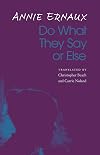
The Publisher Says: Originally published in 1977, Do What They Say or Else is the second novel by French author Annie Ernaux. Set in a small town in Normandy, France, the novel tells the story of a fifteen-year-old girl named Anne, who lives with her working-class parents. The story, which takes place during the summer and fall of Anne’s transition from middle school to high school, is narrated in a stream-of-consciousness style from her point of view. Ernaux captures Anne’s adolescent show more voice, through which she expresses her keen observations in a highly colloquial style.
As the novel progresses, and Anne’s feelings about her parents, her education, and her sexual encounters evolve, she grows into a more mature but also more conflicted and unhappy character, leaving behind the innocence of her middle school years. Not only must she navigate the often-confusing signals she receives from boys, but she also finds herself moving further and further away from her parents as she surpasses their educational level and worldview.
I RECEIVED A DRC FROM THE PUBLISHER VIA EDELWEISS+. THANK YOU.
My Review: In this early and seemingly often overlooked entry into Nobel Laureate Ernaux's œuvre, I found a lot to wonder about. I think the entirety of an author's career is often set by the earliest works, either in action or reaction. In this case, Author Ernaux never moved her focus away from her Self, her essential project becoming refining and redacting and recalibrating the instrument of her creativity as she maintained a solid lock on what she knew best.
A woman writing in a cultural space wherein a man's wife is "sa femme"..."his woman"...is going to see her sex as a defining quality. Author Ernaux's fifteen-year-old protagonist, Anne, is...bewildered. She's reading The Stranger, and thinking of how she would create her own feminine take on the subject...teenagers and fanfiction go back a long, long way, but I am really hard-pressed to see how Meursault could be portrayed as female...she's trying to interpret her male cohort's weird, contradictory actions and words, she's trying to find some context into which her parents, the eternal enemies of our self-defining selves, fit recognizably. In short, she's fifteen.
Mme Ernaux delves into this maelstrom of bewildered and beleaguered self-ness with refreshing honesty, in that she doesn't overlay an adult's re-vision of the whole horrible mishegas of being fifteen. What happens as a result...keeping in mind the author was thirty-seven when the book came out...is what I'd call a sociology of adolescent femaleness in flux. Everything, necessarily, is related to Anne's Self in this book, since the project adolescents are engaged in is defining the Self in opposition to some Other, "I AM this" requiring "therefore I am NOT that," or it loses its solidity. It's Anne's frustratingly true-to-life Self-formation that makes me want to scream at the pages. I am not an adolescent and haven't been in a good long time. I do want to restate, though, that Anne is involved in the central project of adolescence and therefore gets her space to create only as and when afforded it. My adult(ish) male impatience is directed at my memories of the emotional devastation of the project on me, as called forth whole and entire from my own adolescence.
This is how one knows Author Ernaux was wise to stick to her focus, set so early in her writing career. A journeyman effort, decades old, brings an experienced reader into a powerfully emotional state by evoking uncertainty and angst and confusion.
The translators of this edition are to be lauded for their near-invisible work. The separate phrases are impressively wrought, the cumulative effect that Author Ernaux's writing is famous for is never out of their view:
The act of self-definition's agonies are limpidly clear. The course Anne will take is set. The problems are already present and the solutions are, to her, as yet unknowable. By the end of this under-150-page story, she's not clear but she knows clarity exists:
That evergreen of young life, the "come-here-go-away" approach avoidance dance! It's never more than that, though. This is an early work, and as such lacks some of the whole-brain fineness of resolution that would, eg I Remain in Darkness (an account of her mother's descent into Alzheimer's), Getting Lost (the diary of a passionate love affair she had with a married man), characterize the more recent work from her pen. None of it is ever less than personal. None of it is ever less than brutal, honestly, in it effects on the unsuspecting. But it all became more deft, less observational and intellectual, as her métier became her mind.
Starting here, with a teenaged girl's life still inchoate but sensed and sought within her mind and life, will ground you in the enormous pleasures to come. I think anyone who reads an Ernaux story and doesn't want more is simply and sadly missing out. show less
As the novel progresses, and Anne’s feelings about her parents, her education, and her sexual encounters evolve, she grows into a more mature but also more conflicted and unhappy character, leaving behind the innocence of her middle school years. Not only must she navigate the often-confusing signals she receives from boys, but she also finds herself moving further and further away from her parents as she surpasses their educational level and worldview.
I RECEIVED A DRC FROM THE PUBLISHER VIA EDELWEISS+. THANK YOU.
My Review: In this early and seemingly often overlooked entry into Nobel Laureate Ernaux's œuvre, I found a lot to wonder about. I think the entirety of an author's career is often set by the earliest works, either in action or reaction. In this case, Author Ernaux never moved her focus away from her Self, her essential project becoming refining and redacting and recalibrating the instrument of her creativity as she maintained a solid lock on what she knew best.
A woman writing in a cultural space wherein a man's wife is "sa femme"..."his woman"...is going to see her sex as a defining quality. Author Ernaux's fifteen-year-old protagonist, Anne, is...bewildered. She's reading The Stranger, and thinking of how she would create her own feminine take on the subject...teenagers and fanfiction go back a long, long way, but I am really hard-pressed to see how Meursault could be portrayed as female...she's trying to interpret her male cohort's weird, contradictory actions and words, she's trying to find some context into which her parents, the eternal enemies of our self-defining selves, fit recognizably. In short, she's fifteen.
Mme Ernaux delves into this maelstrom of bewildered and beleaguered self-ness with refreshing honesty, in that she doesn't overlay an adult's re-vision of the whole horrible mishegas of being fifteen. What happens as a result...keeping in mind the author was thirty-seven when the book came out...is what I'd call a sociology of adolescent femaleness in flux. Everything, necessarily, is related to Anne's Self in this book, since the project adolescents are engaged in is defining the Self in opposition to some Other, "I AM this" requiring "therefore I am NOT that," or it loses its solidity. It's Anne's frustratingly true-to-life Self-formation that makes me want to scream at the pages. I am not an adolescent and haven't been in a good long time. I do want to restate, though, that Anne is involved in the central project of adolescence and therefore gets her space to create only as and when afforded it. My adult(ish) male impatience is directed at my memories of the emotional devastation of the project on me, as called forth whole and entire from my own adolescence.
This is how one knows Author Ernaux was wise to stick to her focus, set so early in her writing career. A journeyman effort, decades old, brings an experienced reader into a powerfully emotional state by evoking uncertainty and angst and confusion.
The translators of this edition are to be lauded for their near-invisible work. The separate phrases are impressively wrought, the cumulative effect that Author Ernaux's writing is famous for is never out of their view:
Céline is going out with a guy from our high school, a junior. He's waiting to meet her at four o'clock on the corner next to the post office. At least it's clear what her secret is. If I was her I wouldn't even hide it. But the person who I am has no shape. Just thinking about it makes me feel heavy, like a real fatso. I'd like to sleep until a time when I could understand myself better—maybe when I'm eighteen or twenty-one. There must come a day when everything is clear, when everything falls into place.
The act of self-definition's agonies are limpidly clear. The course Anne will take is set. The problems are already present and the solutions are, to her, as yet unknowable. By the end of this under-150-page story, she's not clear but she knows clarity exists:
I have nothing to say about the topic the teacher gave us, just disordered thoughts. If I let myself go, I'd write about whatever I wanted, I would write about blood and cries, and there would be a red dress too, and jeans. People don't suspect the importance of clothes in what happens to us. And there would be meals in the kitchen. My father would say something he had heard somewhere, and my mother would stretch out a tired leg. I would write about anything, as long as it made a tight knot around me.
That evergreen of young life, the "come-here-go-away" approach avoidance dance! It's never more than that, though. This is an early work, and as such lacks some of the whole-brain fineness of resolution that would, eg I Remain in Darkness (an account of her mother's descent into Alzheimer's), Getting Lost (the diary of a passionate love affair she had with a married man), characterize the more recent work from her pen. None of it is ever less than personal. None of it is ever less than brutal, honestly, in it effects on the unsuspecting. But it all became more deft, less observational and intellectual, as her métier became her mind.
Starting here, with a teenaged girl's life still inchoate but sensed and sought within her mind and life, will ground you in the enormous pleasures to come. I think anyone who reads an Ernaux story and doesn't want more is simply and sadly missing out. show less
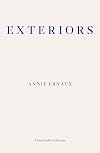
Fragments of writing, like the ones in this book, arouse in me a feeling of frustration. Or contemplation, analysis, deconstruction, reverie, recognition.
Reading this short collection/selection of (mainly) impersonal journal entries, I am reminded of Joan Didion’s famous quote “We tell ourselves stories in order to live...We look for the sermon in the suicide, for the social or moral lesson in the murder of five. We interpret what we see, select the most workable of the multiple choices. show more We live entirely, especially if we are writers, by the imposition of a narrative line upon disparate images, by the "ideas" with which we have learned to freeze the shifting phantasmagoria which is our actual experience.”
In reading these entries by Ernaux, seemingly objective and observational, I cannot help but extrapolate narratives. But also, reading this in 2022, I marvel at how the mundanity of the incidents recorded makes me recall similar incidents experienced when visiting London and other large cities in the past.
Occasionally the entries are personal, although we cannot be certain that the “I” is Ernaux, and whether the subjective opinions are fact or fiction.
But that doesn’t matter. It’s all part of the overall observational impersonality. show less
Reading this short collection/selection of (mainly) impersonal journal entries, I am reminded of Joan Didion’s famous quote “We tell ourselves stories in order to live...We look for the sermon in the suicide, for the social or moral lesson in the murder of five. We interpret what we see, select the most workable of the multiple choices. show more We live entirely, especially if we are writers, by the imposition of a narrative line upon disparate images, by the "ideas" with which we have learned to freeze the shifting phantasmagoria which is our actual experience.”
In reading these entries by Ernaux, seemingly objective and observational, I cannot help but extrapolate narratives. But also, reading this in 2022, I marvel at how the mundanity of the incidents recorded makes me recall similar incidents experienced when visiting London and other large cities in the past.
Occasionally the entries are personal, although we cannot be certain that the “I” is Ernaux, and whether the subjective opinions are fact or fiction.
But that doesn’t matter. It’s all part of the overall observational impersonality. show less
Lists
Awards


You May Also Like


Associated Authors
Statistics
- Works
- 60
- Also by
- 7
- Members
- 8,993
- Popularity
- #2,671
- Rating
- 3.8
- Reviews
- 333
- ISBNs
- 603
- Languages
- 30
- Favorited
- 18