
Édouard Louis
Author of The End of Eddy
About the Author
Works by Édouard Louis
Canviar: Metode (No Ficció) 1 copy
Kollaps 1 copy
Associated Works
Tagged
Common Knowledge
- Canonical name
- Louis, Édouard
- Legal name
- Louis, Édouard
- Other names
- Bellegueule, Eddy
- Birthdate
- 1992-10-30
- Gender
- male
- Nationality
- France
- Birthplace
- Hallencourt, France
- Map Location
- France
Members
Reviews
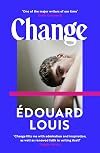
There are many people who are quick to criticise Édouard Louis for merely repeating the events of his life across several novels, but that is what poverty is - the unbreakable cycle of a curse, as once described by Louis in Combats et métamorphoses d'une femme. In Change, the scars of poverty repeat itself long after Louis' supposed break from Hallencourt. Only his class is marked, he had a "classed" childhood. In one particularly violent moment, Louis' friend, Elena, teaches him to eat show more like a gentleman and not a "peasant." Maybe this was out of the goodness of her heart, but Louis lays bare the shame that such a condenscending gesture inflicts in a young boy who has not yet learnt the cruelty in such differences. Louis would spend most of his life running away from this shame.
What is most harrowing about Change, however, is the relentless performance required of Louis to assimilate into the upper echelons of Parisan society - at one point, he even spends many painful and agonizing months fixing his broken and yellowed teeth. He dedicates years and sleepless nights to reading up on literature, philosophy and culture when others seamlessly inherit such knowledge from their upbringing. This is the humiliating price he has to pay to escape the fate of his family members - his father broke his back from factory work and is permanently disabled, his brother was an alcoholic who died at 38, the list goes on. In the face of a truncated life, Louis chooses to leave his village.
But still, the guilt of "making it" when his family is still imprisoned by an oppressive system beyond their control is palpable; this indescribable sadness permeates everything Louis does. Oftentimes, Louis concedes that he had been arrogant, insensitive and opportunistic in the bid for success, an elusive achievement that he has come to question in recent years for its moral trappings and false promises. This novel is not the first time that Louis has written about his mother, and the ongoing confession that she must have been hurt by his actions is imbued with deep regret, and perhaps, the wish that he had the clarity of foresight.
This is the beauty of Louis' writing - you feel his deep rage at the state of France, but also his overwhelming tenderness for his parents. There's a graceful understanding that their imperfections, while inexcusable, have been cruelly determined even before they were born. This careful balance is what makes all of Louis' novels so life-affirming in their existence. That he even "made it" at all feels sour and tinged with bittersweetness, but for now, there is language for the feelings that we cannot name. show less
What is most harrowing about Change, however, is the relentless performance required of Louis to assimilate into the upper echelons of Parisan society - at one point, he even spends many painful and agonizing months fixing his broken and yellowed teeth. He dedicates years and sleepless nights to reading up on literature, philosophy and culture when others seamlessly inherit such knowledge from their upbringing. This is the humiliating price he has to pay to escape the fate of his family members - his father broke his back from factory work and is permanently disabled, his brother was an alcoholic who died at 38, the list goes on. In the face of a truncated life, Louis chooses to leave his village.
But still, the guilt of "making it" when his family is still imprisoned by an oppressive system beyond their control is palpable; this indescribable sadness permeates everything Louis does. Oftentimes, Louis concedes that he had been arrogant, insensitive and opportunistic in the bid for success, an elusive achievement that he has come to question in recent years for its moral trappings and false promises. This novel is not the first time that Louis has written about his mother, and the ongoing confession that she must have been hurt by his actions is imbued with deep regret, and perhaps, the wish that he had the clarity of foresight.
This is the beauty of Louis' writing - you feel his deep rage at the state of France, but also his overwhelming tenderness for his parents. There's a graceful understanding that their imperfections, while inexcusable, have been cruelly determined even before they were born. This careful balance is what makes all of Louis' novels so life-affirming in their existence. That he even "made it" at all feels sour and tinged with bittersweetness, but for now, there is language for the feelings that we cannot name. show less
If endlessly relitigating the circumstances of your upbringing were illegal, Louis would be in jail for life.
I have, up until this point, enjoyed Louis' autofiction. A History Of Violence is fantastic and raw and full of empathy. This isn't. There's a sinister quality to Louis' interpersonal relationships which I couldn't help but take issue with here. Naturally as he's hyper-self-aware, I'm sure it's all intentional but there is an accusation to be levied at him that he is in fact (as the show more semi-anonymous social media posts he references state) a bit of a social parasite. He seems to subsist on handouts from the wealthy and connected within whose lives he ingratiates himself.
Louis here comes across as someone deeply unhappy with himself; even now as he writes almost two decades divorced from those circumstances. The book feels borderline spiteful and dismissive, painting a picture of an individual so desperate to clamber out of the pits of social deprivation that he would quite happily suck the blood out of another's neck if he thought it might get him into the Sorbonne.
Je sais pas. Je ne le connais pas comme ça. Mais je suis sûr qu'on ne le voudrait pas comme un ami. show less
I have, up until this point, enjoyed Louis' autofiction. A History Of Violence is fantastic and raw and full of empathy. This isn't. There's a sinister quality to Louis' interpersonal relationships which I couldn't help but take issue with here. Naturally as he's hyper-self-aware, I'm sure it's all intentional but there is an accusation to be levied at him that he is in fact (as the show more semi-anonymous social media posts he references state) a bit of a social parasite. He seems to subsist on handouts from the wealthy and connected within whose lives he ingratiates himself.
Louis here comes across as someone deeply unhappy with himself; even now as he writes almost two decades divorced from those circumstances. The book feels borderline spiteful and dismissive, painting a picture of an individual so desperate to clamber out of the pits of social deprivation that he would quite happily suck the blood out of another's neck if he thought it might get him into the Sorbonne.
Je sais pas. Je ne le connais pas comme ça. Mais je suis sûr qu'on ne le voudrait pas comme un ami. show less

The End of Eddy, the first autobiographical novel by Édouard Louis published in 2014, was an account of the extreme poverty and homophobic violence he experienced growing up in a village in northern France. Change, which starts where Eddy ended, might well have been called the revenge of Eddy.
It’s about ambition as a desire to become someone else, success as revenge on those who abused and excluded him; as revenge on fate itself. Young Eddy is sent to a Lycée in Amiens specialising in show more the performing arts after a teacher in his village school discovers that he has a gift for acting. Hardly surprising given that he had been acting all his short life in a desperate attempt to fit in. He continues to display his theatrical skills after meeting a middle-class fellow student called Elena and her cultured family, consciously aping her manners, habits and interests. He begins to systematically change every aspect of himself: his accent, the way he walks, how he laughs, the clothes he wears, the food he eats and even how he holds cutlery, his hairline, his crooked teeth, and his name. He finances his reinvention by working as a rent boy. He determines to become famous to show his tormentors that he is better than them (famous for what is less important to him).
Change is a dream of revenge which comes true, but the victory is pyrrhic. Louis triumphs only at the cost of eradicating himself and his history. He moves on in the world but neglects to take his past with him. When he leaves Amiens for Paris, having been accepted as a student at the École Normale Supérieure, Elena accuses him of having used her and her family to his advantage. He is attacked by friends on social media as egotistical, manipulative and a social climber. His education estranges him from his family. Constantly moving on, in flight from his past as much as in pursuit of the future, he leaves behind him a trail of broken relationships. He finds himself in a sort of no man’s land; self-exiled from his own class and not fully accepted or at ease in the bourgeois world he has entered. His first book becomes a bestseller but the revenge of success turns out to be not so sweet or liberating as he imagined.
I’m making Change sound like an old-fashioned morality tale, beware of what you wish for and all that, and perhaps it is. Eddy effectively turns himself into a persona rather than a person. A deep ambivalence about the concept of social mobility in class societies runs through this novel. A hard-won scepticism which provides a healthy corrective to all those facile ‘change your life’ books.
Louis’ prose is spare, intimate, and as clear as a windowpane. His superb narrative ability draws the reader in and makes the book hard to put down (admittedly I read him in translation, I expect he is even better in the original French). He has a rare gift for extrapolating sociological and political argument from precise observation of experience. He writes about his emotions and his desire for revenge, his sometimes appallingly insensitive behaviour towards his mother, and his opportunism, with a frankness that is often quite chilling. I read Change quickly, swept up by the power and urgency of the story, but will certainly read it again. Its deceptively simple style contains immense complexity of thought about how we live now. Rather like Orwell, another master of self-transformation whose work blurred the boundaries of fact and fiction, Louis is a politically committed writer yet highly nuanced, even conflicted, and that makes reading him a fascinating but slippery business.
The great B.S. Johnson, who also obsessively told his life story and working-class family history in the form of novels, once said that novelists should write ‘as though it mattered, as though they meant it, as though they meant it to matter’. Édouard Louis is certainly doing that. He is a writer of profound moral seriousness whose apparently solipsistic narratives illuminate the whole of society. show less
It’s about ambition as a desire to become someone else, success as revenge on those who abused and excluded him; as revenge on fate itself. Young Eddy is sent to a Lycée in Amiens specialising in show more the performing arts after a teacher in his village school discovers that he has a gift for acting. Hardly surprising given that he had been acting all his short life in a desperate attempt to fit in. He continues to display his theatrical skills after meeting a middle-class fellow student called Elena and her cultured family, consciously aping her manners, habits and interests. He begins to systematically change every aspect of himself: his accent, the way he walks, how he laughs, the clothes he wears, the food he eats and even how he holds cutlery, his hairline, his crooked teeth, and his name. He finances his reinvention by working as a rent boy. He determines to become famous to show his tormentors that he is better than them (famous for what is less important to him).
Change is a dream of revenge which comes true, but the victory is pyrrhic. Louis triumphs only at the cost of eradicating himself and his history. He moves on in the world but neglects to take his past with him. When he leaves Amiens for Paris, having been accepted as a student at the École Normale Supérieure, Elena accuses him of having used her and her family to his advantage. He is attacked by friends on social media as egotistical, manipulative and a social climber. His education estranges him from his family. Constantly moving on, in flight from his past as much as in pursuit of the future, he leaves behind him a trail of broken relationships. He finds himself in a sort of no man’s land; self-exiled from his own class and not fully accepted or at ease in the bourgeois world he has entered. His first book becomes a bestseller but the revenge of success turns out to be not so sweet or liberating as he imagined.
I’m making Change sound like an old-fashioned morality tale, beware of what you wish for and all that, and perhaps it is. Eddy effectively turns himself into a persona rather than a person. A deep ambivalence about the concept of social mobility in class societies runs through this novel. A hard-won scepticism which provides a healthy corrective to all those facile ‘change your life’ books.
Louis’ prose is spare, intimate, and as clear as a windowpane. His superb narrative ability draws the reader in and makes the book hard to put down (admittedly I read him in translation, I expect he is even better in the original French). He has a rare gift for extrapolating sociological and political argument from precise observation of experience. He writes about his emotions and his desire for revenge, his sometimes appallingly insensitive behaviour towards his mother, and his opportunism, with a frankness that is often quite chilling. I read Change quickly, swept up by the power and urgency of the story, but will certainly read it again. Its deceptively simple style contains immense complexity of thought about how we live now. Rather like Orwell, another master of self-transformation whose work blurred the boundaries of fact and fiction, Louis is a politically committed writer yet highly nuanced, even conflicted, and that makes reading him a fascinating but slippery business.
The great B.S. Johnson, who also obsessively told his life story and working-class family history in the form of novels, once said that novelists should write ‘as though it mattered, as though they meant it, as though they meant it to matter’. Édouard Louis is certainly doing that. He is a writer of profound moral seriousness whose apparently solipsistic narratives illuminate the whole of society. show less

Is this a memoir or a work of fiction? If it is the former, it presents a pitiful person who is self-serving and ultimately unreliable as a narrator. If it is the latter, it represents a convincing portrait of the evils of self-promotion and the unrelenting search for status at all costs. Even calling it autofiction seems to be a stretch because Louis believes that memories are fungible commodities that can be exchanged depending on his current needs. This may be the case for fiction but show more seems ill-suited for a memoir.
A persistent theme of this work is the role that class plays in social mobility. If people are clever enough, they can mimic and adapt to the expectations of more prized social classes. Of course, this also entails shedding the skin of what is left behind, including friends and acquaintances. (I hesitate to use the phrase “loved ones” here since Louis doesn’t seem to love anyone but himself.)
The narrative follows Louis through his late teens and early twenties partially in the form of conversations with his alcoholic, homophobic and brutal father, and his upper middle-class female friend, Elena. The former represents what Louis is trying to escape and the latter what he is attempting to achieve. The story begins in the rural village of Hallencourt, moves to the provincial town of Amiens and finally ends in Paris. Along the way Louis morphs aesthetically, intellectually, and morally into the person he envisions. To his credit, he achieves this through a lot of hard work but one can’t discount the roles played by various generous sponsors.
Louis readily acknowledges his intentional stretching of the truth in this unsentimental and direct narrative. Of course, his focus is himself, so the other characters take a back seat, most of whom are not developed enough to appreciate their intentions or nuances. Louis’ unrelenting self-promotion imparts a mood of desperation to the book. In the end, however, he seems to be more exhausted than victorious. show less
A persistent theme of this work is the role that class plays in social mobility. If people are clever enough, they can mimic and adapt to the expectations of more prized social classes. Of course, this also entails shedding the skin of what is left behind, including friends and acquaintances. (I hesitate to use the phrase “loved ones” here since Louis doesn’t seem to love anyone but himself.)
The narrative follows Louis through his late teens and early twenties partially in the form of conversations with his alcoholic, homophobic and brutal father, and his upper middle-class female friend, Elena. The former represents what Louis is trying to escape and the latter what he is attempting to achieve. The story begins in the rural village of Hallencourt, moves to the provincial town of Amiens and finally ends in Paris. Along the way Louis morphs aesthetically, intellectually, and morally into the person he envisions. To his credit, he achieves this through a lot of hard work but one can’t discount the roles played by various generous sponsors.
Louis readily acknowledges his intentional stretching of the truth in this unsentimental and direct narrative. Of course, his focus is himself, so the other characters take a back seat, most of whom are not developed enough to appreciate their intentions or nuances. Louis’ unrelenting self-promotion imparts a mood of desperation to the book. In the end, however, he seems to be more exhausted than victorious. show less
Lists
Books in English (2)
Review 3 (1)
Awards


You May Also Like


Associated Authors
Statistics
- Works
- 15
- Also by
- 1
- Members
- 2,626
- Popularity
- #9,778
- Rating
- 3.9
- Reviews
- 88
- ISBNs
- 218
- Languages
- 18
- Favorited
- 2