
Garth Greenwell
Author of What Belongs to You
About the Author
Works by Garth Greenwell
Petite pluie: Roman 1 copy
Associated Works
Tagged
Common Knowledge
- Legal name
- Greenwell, Garth
- Birthdate
- 1978-03-19
- Gender
- male
- Education
- Iowa Writers' Workshop
- Occupations
- dichter
- Organizations
- Iowa Writers' Workshop
- Awards and honors
- "Miami University Press Novella Prize" (2016),
- Nationality
- USA
- Birthplace
- Louisville, Kentucky, USA
- Places of residence
- Iowa City, Iowa, USA
- Associated Place (for map)
- USA
Members
Reviews
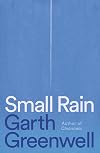
Set in the COVID-19 era, this novel explores the physicality of suffering as its protagonist, an unnamed poet, is admitted to the intensive care unit after suffering a serious medical crisis. The book focuses on an examination of the American healthcare system, the nature of pain, and the search for meaning and connection amidst suffering. It is both a meditation on mortality and a love story, highlighting the unexpected intimacies that can develop in such extreme circumstances.
Because of show more its lyrical quality, philosophical asides, and ability to convey the narrator's consciousness, I thought Greenwell's prose was unique. The narrative style is introspective, focusing on the internal experience of the protagonist, which contrasts with the external environment of the hospital. His prose style had a unique aspect in that he referred to characters with merely the first letter of their name.
"Small Rain" pushed the limits of narrative structure by emphasizing the internal rather than the external, and I found it to have a complex depiction of illness and an intriguing character study. I enjoyed it's departure from and extension of Greenwell's earlier works, focusing on different aspects of human experience but with the same meticulous and poetic prose. show less
Because of show more its lyrical quality, philosophical asides, and ability to convey the narrator's consciousness, I thought Greenwell's prose was unique. The narrative style is introspective, focusing on the internal experience of the protagonist, which contrasts with the external environment of the hospital. His prose style had a unique aspect in that he referred to characters with merely the first letter of their name.
"Small Rain" pushed the limits of narrative structure by emphasizing the internal rather than the external, and I found it to have a complex depiction of illness and an intriguing character study. I enjoyed it's departure from and extension of Greenwell's earlier works, focusing on different aspects of human experience but with the same meticulous and poetic prose. show less
CW: non-con, under-negotiated kink, ignoring a safeword, shame, attempted/near-rape, ignoring SSC/risk-aware kink practices with abandon and ignorance. Probably more? I dunno. It was a lot. Of stories. And kink. Just. Be careful and take care of you while reading this.
*drums fingers* So. In general, I am not the biggest fan of short stories. They just tend not to be my bag. I've also been reading, very deliberately, about human sexuality, including kink, in both fiction and nonfiction, in show more both traditionally published and nontraditionally published forms, for my entire adult life. So I'd say I both was and was not the audience for this anthology of short stories all having something to do with kink. Do with that information what you will when I say that I really, really didn't care for it.
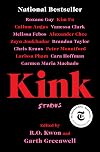
A handful of the stories here, while I might not have loved them, I thought were doing something really interesting and were successful as examples of the form. (I'll list at the end of my review which ones those were.) And I think the whole anthology suffered from the framing it was given, from being packaged in this book with this black cover with the forbidding red "Kink" as a title and from coming under a two-page introduction from the editors that makes claims of providing something needed and new in this collection ("a book like this hasn't been published in a long time") but fails to make any real argument as to why we do or to prove that we don't already have it. The introduction ignores (or worse (?), is unaware of) the vast array of kink writing in fiction that has been happening in fandom spaces, in romance, and, yes, in long-form literary fiction for... well, forever, really. The introduction, which points to the editors' desire to produce "the kind of book that could sit on artists' residencies' library shelves" and wants to push back against a perceived "flattening" and "simplification" of kink in popular culture, including popular books*, reads like the worst kind of elitist nonsense. There is so much good writing out there already about this subject. Is there room for more? Of course! Is there room for an anthology of literary short stories on this subject? Of course! Is it good to have writing on this subject in all manner of genres, including literary fiction? Of course! But this suggestion that this anthology has finally given us something that was just tragically missing before, that it has rolled in and filled some kind hole that desperately needed filling, seriously chapped my ass. (Heh.) So. Are there some stories in here that I might have been happier about if I had come across them in a magazine or a collection of an author's work or some other anthology? Yeah, maybe. 'Cause after that intro, I went in mad.
Now, as to the stories themselves. Always, always, in an anthology, some things will float your boat while others don't. For sure that was the case for me here. But I genuinely didn't *really* like any of them. And some of that is the literary-short-story-ness of them. No judgement. (Okay, mild judgement. But only mild!). This genre (it *is* a genre, with conventions and expectations and weaknesses, just like any other) just isn't the genre that really rolls down my socks. But on the whole, there's an awful lot of miscommunication and shame and obfuscation in these stories. And very little of that miscommunication and obfuscation and shame gets resolved or cleared up or transformed into self-acceptance. And, fair? I guess? I mean, it's not romance. No one promised me any happy endings. And it's not terribly fair to judge any one of these stories about miscommunication or obfuscation or shame just because it happens to be in company with fifteen others also about those things. But I was kind of chanting to myself by the end: "please, please, *please* don't let this be the first (or floggers and crosses, please not the last) thing someone first trying to figure out their kinky tendencies reads." Because I really feel that the chances of coming away from reading this anthology with negative feelings and associations about kink is really high. One might argue (even *I* might argue), that it is neither the job nor the responsibility of a short story anthology to be a steward of its readers in that way. But the introduction seems to argue that it is? Or at least that it wants to give readers an image of kink that is broad and more positive and more nuanced than the popular perception. And I'm just not sure it succeeds.
Have I just made an argument that this anthology's biggest flaw is a shitty introduction? Maybe. If you love literary short stories, you will almost certainly enjoy Kink more than I did. And if you've never read fiction about kink, I encourage you to start elsewhere.
*This is where I point out that romance, as a genre, is the most popular of all popular books, right? This is where I point out that romance consistently makes up just shy of half of all popular paperbacks sold yearly? And over a third of *all* popular fiction?
The Stories in Kink I Would Recommend
"The Cure," Melissa Febos
"Oh, Youth," Brandon Taylor
"The Lost Performance of the High Priestess of the Temple of Horror," Carmen Maria Machado
"The Voyeurs," Zeyn Joukhadar show less
*drums fingers* So. In general, I am not the biggest fan of short stories. They just tend not to be my bag. I've also been reading, very deliberately, about human sexuality, including kink, in both fiction and nonfiction, in show more both traditionally published and nontraditionally published forms, for my entire adult life. So I'd say I both was and was not the audience for this anthology of short stories all having something to do with kink. Do with that information what you will when I say that I really, really didn't care for it.
A handful of the stories here, while I might not have loved them, I thought were doing something really interesting and were successful as examples of the form. (I'll list at the end of my review which ones those were.) And I think the whole anthology suffered from the framing it was given, from being packaged in this book with this black cover with the forbidding red "Kink" as a title and from coming under a two-page introduction from the editors that makes claims of providing something needed and new in this collection ("a book like this hasn't been published in a long time") but fails to make any real argument as to why we do or to prove that we don't already have it. The introduction ignores (or worse (?), is unaware of) the vast array of kink writing in fiction that has been happening in fandom spaces, in romance, and, yes, in long-form literary fiction for... well, forever, really. The introduction, which points to the editors' desire to produce "the kind of book that could sit on artists' residencies' library shelves" and wants to push back against a perceived "flattening" and "simplification" of kink in popular culture, including popular books*, reads like the worst kind of elitist nonsense. There is so much good writing out there already about this subject. Is there room for more? Of course! Is there room for an anthology of literary short stories on this subject? Of course! Is it good to have writing on this subject in all manner of genres, including literary fiction? Of course! But this suggestion that this anthology has finally given us something that was just tragically missing before, that it has rolled in and filled some kind hole that desperately needed filling, seriously chapped my ass. (Heh.) So. Are there some stories in here that I might have been happier about if I had come across them in a magazine or a collection of an author's work or some other anthology? Yeah, maybe. 'Cause after that intro, I went in mad.
Now, as to the stories themselves. Always, always, in an anthology, some things will float your boat while others don't. For sure that was the case for me here. But I genuinely didn't *really* like any of them. And some of that is the literary-short-story-ness of them. No judgement. (Okay, mild judgement. But only mild!). This genre (it *is* a genre, with conventions and expectations and weaknesses, just like any other) just isn't the genre that really rolls down my socks. But on the whole, there's an awful lot of miscommunication and shame and obfuscation in these stories. And very little of that miscommunication and obfuscation and shame gets resolved or cleared up or transformed into self-acceptance. And, fair? I guess? I mean, it's not romance. No one promised me any happy endings. And it's not terribly fair to judge any one of these stories about miscommunication or obfuscation or shame just because it happens to be in company with fifteen others also about those things. But I was kind of chanting to myself by the end: "please, please, *please* don't let this be the first (or floggers and crosses, please not the last) thing someone first trying to figure out their kinky tendencies reads." Because I really feel that the chances of coming away from reading this anthology with negative feelings and associations about kink is really high. One might argue (even *I* might argue), that it is neither the job nor the responsibility of a short story anthology to be a steward of its readers in that way. But the introduction seems to argue that it is? Or at least that it wants to give readers an image of kink that is broad and more positive and more nuanced than the popular perception. And I'm just not sure it succeeds.
Have I just made an argument that this anthology's biggest flaw is a shitty introduction? Maybe. If you love literary short stories, you will almost certainly enjoy Kink more than I did. And if you've never read fiction about kink, I encourage you to start elsewhere.
*This is where I point out that romance, as a genre, is the most popular of all popular books, right? This is where I point out that romance consistently makes up just shy of half of all popular paperbacks sold yearly? And over a third of *all* popular fiction?
The Stories in Kink I Would Recommend
"The Cure," Melissa Febos
"Oh, Youth," Brandon Taylor
"The Lost Performance of the High Priestess of the Temple of Horror," Carmen Maria Machado
"The Voyeurs," Zeyn Joukhadar show less
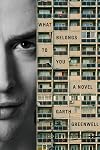
Garth Greenwell’s elegant, vivid and evocative writing makes this a stand-out novel. The novel engages the reader in strong emotions, sometimes of passion and longing, and other times of despair, hopelessness, aversion and regret.
The novel is written in first person, and the name of its narrator is never revealed, an accomplishment seldom achieved in first-person narratives.
The story is set in Bulgaria,a pathetic yet sometimes beautiful country which has been dominated and ruled by foriegn show more nations throughout most of its existence. This setting itself serves as a sort of character in the novel. The various locales and surroundings of each of the novel’s episodes impact what occurs in the setting as well as the moods and behaviors of the characters. In fact, Bulgaria itself is a country that has not yet achieved its own sovereignty, its own national identity, just as the two primary characters in this book cannot fully achieve their fullness, their independence from one another.
The narrator of the book finds a young man, Mitko in a rest room frequented by men looking to hook up with other men. It is the reason the narrator was in the rest room and Mitko is the one to sell his services to the older man.
The business relationship between the two men quickly grows into something bigger, yet is doomed to never be the deep and meaningful relationship the narrator longs for, even though he himself does not recognize that longing.
It is a powerful book, an emotional journey into desire, obsession and yearning, where neither man can admit his own desire for commitment to and feelings for the other man.
To say that the book ends on a tragic way is not to spoil or reveal its ending because the book is a tragic story all along. The two meet in tragic desperation, one for money, the other for companionship. The affair and relationship is misbegotten from the outset and can never grows beyond each man’s inability to be other than who they are.
This is not a standard romance, nor a tragic love story. It is a deep psychological exploration of two very different characters and their impacts on each other’s lives.
Most books about male relationships with other men are, surprisingly, both written by and read by women. As such, the stories they portray can only be what the female authors imagine a homosexual relationship to be. When an author is both male and gay himself, he is able to portray a mood, feeling tone and level of authenticity not possible from authors lacking those qualifications.
Greenwell is qualified to tell a story like this, not just because he a a gay male writer himself, but also because he is an extremely talented writer with the skill and experience only an experienced poet is able to display. show less
The novel is written in first person, and the name of its narrator is never revealed, an accomplishment seldom achieved in first-person narratives.
The story is set in Bulgaria,a pathetic yet sometimes beautiful country which has been dominated and ruled by foriegn show more nations throughout most of its existence. This setting itself serves as a sort of character in the novel. The various locales and surroundings of each of the novel’s episodes impact what occurs in the setting as well as the moods and behaviors of the characters. In fact, Bulgaria itself is a country that has not yet achieved its own sovereignty, its own national identity, just as the two primary characters in this book cannot fully achieve their fullness, their independence from one another.
The narrator of the book finds a young man, Mitko in a rest room frequented by men looking to hook up with other men. It is the reason the narrator was in the rest room and Mitko is the one to sell his services to the older man.
The business relationship between the two men quickly grows into something bigger, yet is doomed to never be the deep and meaningful relationship the narrator longs for, even though he himself does not recognize that longing.
It is a powerful book, an emotional journey into desire, obsession and yearning, where neither man can admit his own desire for commitment to and feelings for the other man.
To say that the book ends on a tragic way is not to spoil or reveal its ending because the book is a tragic story all along. The two meet in tragic desperation, one for money, the other for companionship. The affair and relationship is misbegotten from the outset and can never grows beyond each man’s inability to be other than who they are.
This is not a standard romance, nor a tragic love story. It is a deep psychological exploration of two very different characters and their impacts on each other’s lives.
Most books about male relationships with other men are, surprisingly, both written by and read by women. As such, the stories they portray can only be what the female authors imagine a homosexual relationship to be. When an author is both male and gay himself, he is able to portray a mood, feeling tone and level of authenticity not possible from authors lacking those qualifications.
Greenwell is qualified to tell a story like this, not just because he a a gay male writer himself, but also because he is an extremely talented writer with the skill and experience only an experienced poet is able to display. show less
Reading this book was an amazing experience of seeing my country through the eyes of an outsider (they were even in my hometown!). The juxtaposition of being gay and being in Bulgaria is one that is so rarely spoken about, I really appreciated how raw and open the fragments were. The book touched me and would have been an absolute 5* read if not for the last story and how strongly I disagree with what happened there and the way it was presented.
Lists
LGBTQIA+ TBR (2)
Guilty Pleasures (1)
Awards


You May Also Like


Associated Authors
Statistics
- Works
- 9
- Also by
- 2
- Members
- 1,961
- Popularity
- #13,110
- Rating
- 4.1
- Reviews
- 64
- ISBNs
- 69
- Languages
- 9
- Favorited
- 2