
Alexander Chee
Author of The Queen of the Night
About the Author
Image credit: Author Alexander Chee at the 2018 Texas Book Festival in Austin, Texas, United States. By Larry D. Moore - Own work, CC BY-SA 4.0, https://commons.wikimedia.org/w/index.php?curid=74032374
Works by Alexander Chee
Associated Works
What My Mother and I Don't Talk About: Fifteen Writers Break the Silence (2019) — Contributor — 359 copies, 7 reviews
Men on Men 2000: Best New Gay Fiction for the Millennium (2000) — Contributor — 161 copies, 2 reviews
Eat Joy: Stories and Comfort Food from 31 Celebrated Writers (2019) — Contributor — 84 copies, 3 reviews
A Fictional History of the United States with Huge Chunks Missing (2006) — Contributor — 78 copies, 2 reviews
Mentors, Muses & Monsters: 30 Writers on the People Who Changed Their Lives (2009) — Contributor — 71 copies, 2 reviews
Everyday People: The Color of Life--a Short Story Anthology (2018) — Contributor — 52 copies, 1 review
Tagged
Common Knowledge
- Birthdate
- 1967-08-21
- Gender
- male
- Education
- Wesleyan University
Iowa Writers' Workshop - Occupations
- Associate Professor of Creative Fiction and Non-fiction
magazine editor - Organizations
- Dartmouth College
- Awards and honors
- Whiting Writers' Award (2003)
- Nationality
- USA
- Birthplace
- South Kingston, Rhode Island, USA
- Places of residence
- Kauai, Hawaii, USA
Chuuk Lagoon, Micronesia
Guam, USA Possessions
Brooklyn, New York, USA
South Korea - Associated Place (for map)
- USA
Members
Reviews
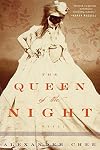
OH MY GOD this man can write. His writing is so beautiful I found myself reading passages out loud to people and looking forward to every page.
On the other hand, I lost the plot a little about halfway through, and it took both me and the book a second to grab it back. At times it was so hyper-nuanced I wasn't entirely sure what kind of interactions were happening between characters and got very confused. This, thankfully, was brief, and then we all returned to intrigue.
I'm a crazy sucker show more for historical fiction and period pieces, especially with a little love and scandal. I would LOVE to see this adapted to film as I suspect the clothing and costumes would also be pretty spectacular, as would the scenery.
(Update 2025: I was OVERJOYED to find that this book had become an audiobook sometime between the time I read it and now - until I started listening to it. The narrator fell so completely flat it was depressing. DO OVER! Julia Whalen, get on this). show less
On the other hand, I lost the plot a little about halfway through, and it took both me and the book a second to grab it back. At times it was so hyper-nuanced I wasn't entirely sure what kind of interactions were happening between characters and got very confused. This, thankfully, was brief, and then we all returned to intrigue.
I'm a crazy sucker show more for historical fiction and period pieces, especially with a little love and scandal. I would LOVE to see this adapted to film as I suspect the clothing and costumes would also be pretty spectacular, as would the scenery.
(Update 2025: I was OVERJOYED to find that this book had become an audiobook sometime between the time I read it and now - until I started listening to it. The narrator fell so completely flat it was depressing. DO OVER! Julia Whalen, get on this). show less
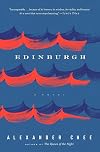
This remarkable novel lines up with Ocean Vuong's later On Earth We Are Briefly Gorgeous as a most empathetic book about growing up as a gay male adolescent, and the author is also of Asian descent. It's like a many-chambered seashell, with the early chapters a painful look at pedophilia, which is not generally considered as directly connected to same sex love. It's also a tribute to friendship and to risk-taking, and to the positive influence of loving parents and grandparents and the awful show more results when those same relatives cause irreparable damage. The language and structure are deeply executed and memorable. show less
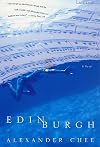
Alexander Chee's novel Edinburgh deals with some difficult issues, as the book's main character, Fee, struggles to deal first with the sexual abuse meted out by his choir master, Big Eric, and then, as he grows up, with his own identity as a homosexual man. Such problems, as one might imagine, run deep, and there is a repeated desire on Fee's part to destroy himself, just as so many others in his life have done.
As I was reading Edinburgh, I wanted to be moved by these themes. After all, if show more these issues were being told to me directly, by a friend, then I would certainly be touched. But the more I read, the more I wondered about Chee's choices as a novelist. The so-called "dirty realism" of the 1980s - think Charles Bukowski and Raymond Carver - is a clear influence on Chee's style in this novel, which remains detached and economical, as if to counterbalance the melodrama of the story's content. The subject matter also occupies the familiar territory of dirty realism: sex, drugs, perversion, all the emotional fabric of everyday life filtered through the lens of the novelist.
There is always a twin danger when treading along the borders of transgression. The first danger, which Chee successfully avoids for the most part, is becoming too emotional, either through hysteria or sentimentality. The second, however, he does not, and that is the feeling that the reader is being blackmailed into an attachment with the story at hand. This feeling of emotional blackmail tells me that I ought to care about Fee because of his struggles simply because they are so weighty, that I somehow "owe" him something as a reader for this pain. But the truth is, I don't. He's a fictional character, and his difficulties are, in the end, made up. I would bestow my compassion on a real-life friend in Fee's situation because their pain is real, stemming as it does from the weight of experience. In the case of a novel, however, the burden lies with the author to make me care by drawing me into the story. That requires a certain level of narrative skill and seduction that Chee, presuming on my pity, does not enact.
The reality is that, in fiction, the heaviest misery comes cheaply. Writers can destroy cities, unleash plagues, wipe out worlds in the blink of an eye, all with a few strokes of the pen. Suffering - that is, imaginary suffering - is cheap because, without the sparkle of narrative interest, any reader can see that it's counterfeit, fake, made-up. The fact is that Alexander Chee is a product of the great MFA sausage factory of empty fiction writing. The writing thus sparkles with meaningless, "poetic" phrases that sound pretty when you read them but reveal absolutely nothing. Take these sentences, for instance:
"Blue. Blue because it's the color people turn in the dark. Because it's the color of the sky, of the center of the flame, of a diamond hit by an X ray. Blue is the knife edge of lightning. Blue is the color, a rose grower tells you, that a rose never quite reaches. Because when you feel threatened by a demon you are supposed to imagine around you a circle of blue light. You do this because the demon cannot cross blue light." (pp.191-2)
What on earth does that mean? Passages like these are fool's gold: they promise some kind of profundity, but the more closely you examine them the more you realize that they are nothing but decorative nonsense.
The greatest weakness in the novel, though, is the flatness of its narrative voice. There is nothing but surface in Edinburgh, no playful sense that our first-person narrator may be lying or mistaken or biased (he is too transparent, too insipid for that), no desire to explore alternative viewpoints or other voices. There was a moment - the advent, in the middle of the book, of another narrator - when I thought we were going to see inside the mind of Fee's abuser, but instead it turns out to be Warden, the abuser's son, who, in keeping with the novel's Narcissus references, is as dully monological in his admiration of Fee as the rest of the narrative.
So let's just say that Chee's attempt at blackmail didn't work on me. It's not that I'm heartless - but in the realm of fiction, where pain comes cheaply, you have to demonstrate some deeper reason to make me care. show less
As I was reading Edinburgh, I wanted to be moved by these themes. After all, if show more these issues were being told to me directly, by a friend, then I would certainly be touched. But the more I read, the more I wondered about Chee's choices as a novelist. The so-called "dirty realism" of the 1980s - think Charles Bukowski and Raymond Carver - is a clear influence on Chee's style in this novel, which remains detached and economical, as if to counterbalance the melodrama of the story's content. The subject matter also occupies the familiar territory of dirty realism: sex, drugs, perversion, all the emotional fabric of everyday life filtered through the lens of the novelist.
There is always a twin danger when treading along the borders of transgression. The first danger, which Chee successfully avoids for the most part, is becoming too emotional, either through hysteria or sentimentality. The second, however, he does not, and that is the feeling that the reader is being blackmailed into an attachment with the story at hand. This feeling of emotional blackmail tells me that I ought to care about Fee because of his struggles simply because they are so weighty, that I somehow "owe" him something as a reader for this pain. But the truth is, I don't. He's a fictional character, and his difficulties are, in the end, made up. I would bestow my compassion on a real-life friend in Fee's situation because their pain is real, stemming as it does from the weight of experience. In the case of a novel, however, the burden lies with the author to make me care by drawing me into the story. That requires a certain level of narrative skill and seduction that Chee, presuming on my pity, does not enact.
The reality is that, in fiction, the heaviest misery comes cheaply. Writers can destroy cities, unleash plagues, wipe out worlds in the blink of an eye, all with a few strokes of the pen. Suffering - that is, imaginary suffering - is cheap because, without the sparkle of narrative interest, any reader can see that it's counterfeit, fake, made-up. The fact is that Alexander Chee is a product of the great MFA sausage factory of empty fiction writing. The writing thus sparkles with meaningless, "poetic" phrases that sound pretty when you read them but reveal absolutely nothing. Take these sentences, for instance:
"Blue. Blue because it's the color people turn in the dark. Because it's the color of the sky, of the center of the flame, of a diamond hit by an X ray. Blue is the knife edge of lightning. Blue is the color, a rose grower tells you, that a rose never quite reaches. Because when you feel threatened by a demon you are supposed to imagine around you a circle of blue light. You do this because the demon cannot cross blue light." (pp.191-2)
What on earth does that mean? Passages like these are fool's gold: they promise some kind of profundity, but the more closely you examine them the more you realize that they are nothing but decorative nonsense.
The greatest weakness in the novel, though, is the flatness of its narrative voice. There is nothing but surface in Edinburgh, no playful sense that our first-person narrator may be lying or mistaken or biased (he is too transparent, too insipid for that), no desire to explore alternative viewpoints or other voices. There was a moment - the advent, in the middle of the book, of another narrator - when I thought we were going to see inside the mind of Fee's abuser, but instead it turns out to be Warden, the abuser's son, who, in keeping with the novel's Narcissus references, is as dully monological in his admiration of Fee as the rest of the narrative.
So let's just say that Chee's attempt at blackmail didn't work on me. It's not that I'm heartless - but in the realm of fiction, where pain comes cheaply, you have to demonstrate some deeper reason to make me care. show less
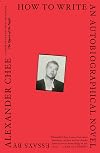
Describing this book to someone, I had said "you can tell that he is a really good person". His voice was so transparent, so lacking in artifice, & vulnerable in a way that felt both dignified & elementary. Stepping into an essay of Chee's feels like stepping into the water for a swim at the beach. It's simple, even banal. Then you keep swimming & realise bit by bit the sparkling water & how beautiful, deep & even terrifying it is. You thought you were stepping into the water without show more realising you were stepping into an ocean. That's what his essays felt like. The minute made magnificent.
I can't believe the things he has managed to make me care about. Reading his essay on tarot cards ended up making me have two tarot decks of my own. Reading his essay on his roses, so lovingly tended, I got intensely jealous of his discipline & googled how to grow plants. His essays documenting his activism during the thick of the AIDs crisis made me feel like I had to be fiercer with my own activism, so pure was this proof of his commitment. His essay confronting childhood sexual abuse had me putting down the book several times, lost in my own feelings & had me breathless by the end of it.
His essay on that perpetual question "what is the point of writing?" married to the question of "how many times did I think the world was going to end?" should be read in every creative writing & literature department. Then maybe they could finally be satisfied & stopped asking students for the answer. I had written an answer to this question myself, like some of my other coursemates. I had dug logically for an answer, so practical. But this one line by Chee answered everything in that question, & it says everything about him that this was what he thought of as part of the answer:
"The point is in the widow of Osip Mandelstam memorizing her husband's poetry while in the camps with him in the Soviet Union, determined that his poems make it to readers."
The point is love continued, devotion undead, the reminder of humanity in the face of systems so large it forgets something as precious as a human life. show less
I can't believe the things he has managed to make me care about. Reading his essay on tarot cards ended up making me have two tarot decks of my own. Reading his essay on his roses, so lovingly tended, I got intensely jealous of his discipline & googled how to grow plants. His essays documenting his activism during the thick of the AIDs crisis made me feel like I had to be fiercer with my own activism, so pure was this proof of his commitment. His essay confronting childhood sexual abuse had me putting down the book several times, lost in my own feelings & had me breathless by the end of it.
His essay on that perpetual question "what is the point of writing?" married to the question of "how many times did I think the world was going to end?" should be read in every creative writing & literature department. Then maybe they could finally be satisfied & stopped asking students for the answer. I had written an answer to this question myself, like some of my other coursemates. I had dug logically for an answer, so practical. But this one line by Chee answered everything in that question, & it says everything about him that this was what he thought of as part of the answer:
"The point is in the widow of Osip Mandelstam memorizing her husband's poetry while in the camps with him in the Soviet Union, determined that his poems make it to readers."
The point is love continued, devotion undead, the reminder of humanity in the face of systems so large it forgets something as precious as a human life. show less
Lists
Awards


You May Also Like


Associated Authors
Statistics
- Works
- 7
- Also by
- 25
- Members
- 2,547
- Popularity
- #10,087
- Rating
- 3.8
- Reviews
- 91
- ISBNs
- 47
- Languages
- 1
- Favorited
- 1