
Philippe Besson
Author of Lie With Me
About the Author
Image credit: Philippe Besson (né en 1967), lors de la présentation de son roman Retour parmi les hommes, le 22 janvier 2011 à la FNAC Montparnasse (Paris) by Siren-Com.
Works by Philippe Besson
Les amants — Author — 7 copies
Associated Works
La bibliothèque des écrivains: Le livre qui a changé leur vie (2021) — Contributor — 4 copies, 1 review
Tagged
Common Knowledge
- Canonical name
- Besson, Philippe
- Birthdate
- 1967-01-29
- Gender
- male
- Occupations
- writer
- Nationality
- France
- Birthplace
- Barbezieux-Saint-Hilaire, Charente, France
- Places of residence
- France
- Associated Place (for map)
- Charente, France
Members
Reviews
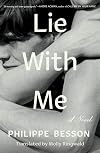
The Publisher Says: The award-winning, bestselling French novel by Philippe Besson about an affair between two teenage boys in 1984 France, translated with subtle beauty and haunting lyricism by the iconic and internationally acclaimed actress/writer Molly Ringwald.
We drive at high speed along back roads, through woods, vineyards, and oat fields. The bike smells like gasoline and makes a lot of noise, and sometimes I’m frightened when the wheels slip on the gravel on the dirt road, but the show more only thing that matters is that I’m holding on to him, that I’m holding on to him outside.
Just outside a hotel in Bordeaux, Philippe chances upon a young man who bears a striking resemblance to his first love. What follows is a look back at the relationship he’s never forgotten, a hidden affair with a gorgeous boy named Thomas during their last year of high school. Without ever acknowledging they know each other in the halls, they steal time to meet in secret, carrying on a passionate, world-altering affair.
Dazzlingly rendered in English by Ringwald in her first-ever translation, Besson’s powerfully moving coming-of-age story captures the eroticism and tenderness of first love—and the heartbreaking passage of time.
My Review: I've spoken in previous reviews about the power of the (mostly) French art form, the récit, an ill-defined, "you'll know it when you see it" form of literary tale-telling. And all those ambiguous layers of the latter phrase, from straightforward "telling a story" to "tattling on someone" to "inventing a lie" are each present in the récit itself. The qualities I can suss out as being sine qua non for a work to be a récit are length—brevity is the soul of wit, lingerie, and récits—and interiority. Nothing describable as a récit can take place in "real time" or include voices not mediated by the narrator and/or author through a single tightly focused lens. If you've read Camus's [The Fall], you've read a peak-experience récit. If you didn't like reading it, I venture to suggest that you not pay a lot of attention to the genre.
Brevity this book has: In 148pp, Besson tells the oldest gay love story there is: Boy meets boy; boy loves boy, is loved by boy; neither one says the right "wrong" thing to his belovèd to make the "forbidden" connection happen; and they go their separate, unequal, always intertwined ways. Interiority it simply is: All the words we read are Philippe's or Philippe's reports of conversations recently or distantly past. Philippe-the-narrator tells us several times that, as a novelist, he makes stuff up; he implies that he's done that habitually; so we're left to our own devices to decide about his honesty, his accuracy, and his intentions in telling us this tale.
I'm going to let you read Philippe-the-author and Philippe-the-narrator's words unmediated by my own commentary on them. In my own way, I want to honor the form of the récit as a review. The book is beautiful for many reasons. Translator Ringwald has made a beautiful thing in this book. I haven't read the French text, but I know enough from previous Besson encounters to believe this is a deft and charming rendering of his original. As to Besson's tale told...well..."is it autobiographical" is the first line of defense against immersion into the unreliability of Memory that this, a beautiful and moving and elegiac récit, invites its readers to experience. I recommend reading it, experiencing it, absorbing its beauties and funnies and rawnesses, without any additional removes from immediacy. Don't, then, place harsh lights on it or look for factual details in it; let it become the limpid waters of Monet's water-lily pond for your inner reader's delight and refreshment.
Chapter One (1984)
Chapter Two (2007)
Chapter Three (2016)
We drive at high speed along back roads, through woods, vineyards, and oat fields. The bike smells like gasoline and makes a lot of noise, and sometimes I’m frightened when the wheels slip on the gravel on the dirt road, but the show more only thing that matters is that I’m holding on to him, that I’m holding on to him outside.
Just outside a hotel in Bordeaux, Philippe chances upon a young man who bears a striking resemblance to his first love. What follows is a look back at the relationship he’s never forgotten, a hidden affair with a gorgeous boy named Thomas during their last year of high school. Without ever acknowledging they know each other in the halls, they steal time to meet in secret, carrying on a passionate, world-altering affair.
Dazzlingly rendered in English by Ringwald in her first-ever translation, Besson’s powerfully moving coming-of-age story captures the eroticism and tenderness of first love—and the heartbreaking passage of time.
My Review: I've spoken in previous reviews about the power of the (mostly) French art form, the récit, an ill-defined, "you'll know it when you see it" form of literary tale-telling. And all those ambiguous layers of the latter phrase, from straightforward "telling a story" to "tattling on someone" to "inventing a lie" are each present in the récit itself. The qualities I can suss out as being sine qua non for a work to be a récit are length—brevity is the soul of wit, lingerie, and récits—and interiority. Nothing describable as a récit can take place in "real time" or include voices not mediated by the narrator and/or author through a single tightly focused lens. If you've read Camus's [The Fall], you've read a peak-experience récit. If you didn't like reading it, I venture to suggest that you not pay a lot of attention to the genre.
Brevity this book has: In 148pp, Besson tells the oldest gay love story there is: Boy meets boy; boy loves boy, is loved by boy; neither one says the right "wrong" thing to his belovèd to make the "forbidden" connection happen; and they go their separate, unequal, always intertwined ways. Interiority it simply is: All the words we read are Philippe's or Philippe's reports of conversations recently or distantly past. Philippe-the-narrator tells us several times that, as a novelist, he makes stuff up; he implies that he's done that habitually; so we're left to our own devices to decide about his honesty, his accuracy, and his intentions in telling us this tale.
I'm going to let you read Philippe-the-author and Philippe-the-narrator's words unmediated by my own commentary on them. In my own way, I want to honor the form of the récit as a review. The book is beautiful for many reasons. Translator Ringwald has made a beautiful thing in this book. I haven't read the French text, but I know enough from previous Besson encounters to believe this is a deft and charming rendering of his original. As to Besson's tale told...well..."is it autobiographical" is the first line of defense against immersion into the unreliability of Memory that this, a beautiful and moving and elegiac récit, invites its readers to experience. I recommend reading it, experiencing it, absorbing its beauties and funnies and rawnesses, without any additional removes from immediacy. Don't, then, place harsh lights on it or look for factual details in it; let it become the limpid waters of Monet's water-lily pond for your inner reader's delight and refreshment.
Chapter One (1984)
I'm not beautiful, but I get attention; that I know. Not because of my appearance, but because of my {good} grades. "He is brilliant," they whisper, "much more advanced than the others, he will go far, like his brother, this family is one to be reckoned with." We are in a place, in a moment, where nearly everyone goes nowhere; it garners me equal parts sympathy and antipathy.(pp8–9)
Upstairs, after climbing a makeshift staircase, you would enter a room full of anything and everything. There was even a mattress. It was on this mattress where I rolled around in {his first love}'s embrace for the first time. We had not gone through puberty yet, but we were curious about each other's bodies. His was the first male sex I held in my hand, other than my own. My first kiss was the one he gave me. My first embrace, skin against skin, was with him. ... Today I'm struck by our creativity because at the time, there was no internet, not even videocassettes or cable TV. We had never seen any porn, and( yet we still knew how to do it. There are things one knows how to do even as a child. By puberty, we would be even more imaginative. That would come fast(p13)
A million questions flash through my mind: How did it begin for him? How and at what age did it reveal itself? How is it that no one can see it on him? Yes, how can it be so undetectable? And then: Is it about suffering? Only suffering? And again: Will I be the first? Or were there others before me? Others who were also secret? And: What does he imagine exactly? I don't ask any of these questions, of course. I follow his lead, accepting the rules of the game.(p28)
He says: I know a place.
I discover that absence has a consistency, like the dark water of a river, like oil, some kind of sticky dirty liquid that you can struggle and perhaps drown in. It has a thickness like night, an indefinite space with no landmarks, nothing to bang against, where you search for a light, some small glimmer, something to hang on to and guide you. But absence is, first and foremost, silence. A vast, enveloping silence that weighs you down and puts you in a state where any unforeseeable, unidentifiable sound can make you jump.(p37)
He says that for me things are simple, that everything will be fine, that I will get out of it, it's already written, that there's nothing to worry about, the world will greet me with open arms. Whereas for him there's a barrier, an impenetrable wall, forbidding him to deviate from what has been predetermined.(pp46–47)
Whenever he mentions this question of the forbidden I will try in vain to show him that he's wrong.
A few weeks later he'll take me for a ride. He'll pick me up at the edge of town, with a helmet this time. I don't know if it's as a precaution, to respect the law, or so that we won't be recognized, but I get on the back of the bike and hold on to him. We drive at high speed along back roads, through woods, vineyards, and oat fields. The bike smells like gasoline and makes a lot of noise, and sometimes I'm frightened when the wheels slip on the gravel on the dirt road, but the only thing that matters is that I'm holding on to him, that I'm holding on to him outside.(p65)
...there is often a staggering intimacy between us, a closeness beyond imagining, but the rest of the time our separateness is absolute. Such schizophrenia could bring even those with the strongest equilibrium to the edge of reason, and let's admit it, I didn't have much equilibrium to begin with.(p77)
There is the insanity of not being able to be seen together. An insanity that is aggravated in this case by the unprecedented situation of finding ourselves in the middle of a crowd and having to act like strangers. It seems crazy not to be able to show our happiness. Such an impoverished word. Others have this right, and they exercise it freely. Sharing their happiness makes them even more happy, makes them expand with joy. But we're left stunted, compromised, by the burden of having to always lie and censor ourselves.
This passion that can't be talked about, that has to be concealed, gives way to the terrible question: if it isn't talked about, how can one know that it really exists? One day, when it's over, when it finally comes to an end, no one will be able to attest to what took place.
...I hurry to get what I want before he changes his mind. I take the picture. In it, he's wearing jeans, a plaid shirt with rolled-up sleeves. He has the blade of grass between his fingers and he's smiling, a slight, complicit smile, almost tender. This smile devastated me for a long time after, whenever I happened to look at this photograph. It upsets me even now as I write these lines and contemplate the image, resting on my desk, right next to my keyboard. Because now I know. I know that {he} consented to this single picture only because he knew (had decided) that it was our last moment together. He smiled so that I could take his smile with me.(pp89–90)
Chapter Two (2007)
I know that there are those who will object to my refusal to accept that he changed course, switched orientation, simply succumbed to a feeling that was previously unknown to him. I could be seen as upset, jealous, or even obtuse, and yet I persist in thinking that he put the same stubborn application into this as he did to his work. The same desire to forget himself, to return to the righteous path set out by his mother, the only one permissible. Does he end up believing it himself? That's the fundamental question. If the answer is yes, then moving forward in life would be possible. If the answer is no, then it is a life condemned to interminable misery.(p106)
(I correct myself because I've just been lying. Of course, it took time, a lot of time, before I admitted that everything was lost, before I decided to say goodbye forever. I kept hoping for a sign. I thought of initiating another meeting, I started letters that I never sent. Desire does not go out like a match, it extinguishes slowly as it burns into ash. In the end I gave up on all possibility of a reunion.)(p112)
...I live with a man with a man who is fifteen years younger than me and doesn't like boys but loves me. Who knows why? It's a vulnerable relationship, and I will be scared to disturb this precarious equilibrium. Calling {him}, talking to him, asking to see him again, would be anything but innocuous. I cannot say: This is only a phone call. I know it's more than that. Even if I were granted immunity, the act of calling him has the allure of betrayal (we come back to that, always we come back to it) or without going to that extreme, a gesture toward {him} would be a gesture of mistrust toward the man I live with—a decision to put distance between us, to admit to a love that is not enough.(p120)
Chapter Three (2016)
In that first moment, when he heard me say that I had seen you, he didn't move, but I swear he lost his balance. At that exact moment I was certain that he had been in love with you. That such a thing had existed—my father in love with a boy. I didn't need to ask him the question. I couldn't have found the courage anyway. Afterward, I said to myself: Maybe it was just a phase. Okay, yes, it existed, but it ended. He moved on to something else—to a life, a woman, a child...that must happen often, these things. I told myself: when he saw you on TV, it brought back the memory, but it was just nostalgia. A secret from the past...everyone has secrets; besides, it's good to have things that belong only to you. I could have stayed there. It should have stayed there. Except that two days after our conversation, my father brought us together to announce he was leaving.(p142–143) show less
Rating: 4.5* of five
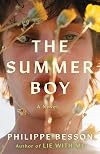
The Publisher Says: On an island off the coast of France, six teenagers come together for a summer of desire and discovery until one of them vanishes forever, leaving the rest with an enduring mystery.
Tell me, do you know why the most beautiful love stories must always end badly?
In the summer of 1985, on a scruffy resort island off the coast of France, six teenagers—five boys and one girl—band together for a final golden season before adulthood. Their days are show more drenched in sun and freedom, and their nights simmer with secrets, jealousy, and longing. Philippe is drawn to Nicolas, the quiet new boy who sees him in a way that no one else does. As their bond deepens, part of Nicolas remains unreachable—until a sudden tragedy brings their summer to a brutal end.
The Summer Boy is a lush and unforgettable autobiographical tale, capturing the ineffable summers of youth in amber. Celebrated novelist Philippe Besson has shaped his memories into an aching meditation on how one summer night—and one fierce connection—can echo across a lifetime.
I RECEIVED A DRC FROM THE PUBLISHER VIA NETGALLEY. THANK YOU.
My Review: Author Besson, a mere stripling of fifty-nine, recalls That One Summer. We've all had it: the moment when all the boundaries and all the relationships change, whether at eighteen or forty-two or in winter, in Louisville, Kentucky, on vacation, or waiting for your bus to come. Falling in love often does the trick. Getting a crush can, too, but so can the ordinary murkiness of passing time in good company. It's a defining moment. It can, usually does in my own lived experience, change you and your thinking about the whole rest of your life.
Where Lie With Me was a récit about Philippe's very first true love, this is a récit about how love is not plot armor and no matter how it ends, love is always going to wind bonds and webs and fetters around among between the people in your life. Philippe, as in Lie With Me, is both author and character in equal measure. Here he is eighteen and having that magical last summer of childhood freedom before adulthood tightens around him. François is a close friend whom Philippe is a rival of without being in any way deliberate about it; Alice, a new friend of both boys, is enamored of Phillipe and by François, in that eternal tangle that (depressingly enough) persists in happening over and over during one's lifetime. Nicolas, a friend of François', is fascinating to Philippe, but he's sexually interested by Alice's brother Marc. And that soap opera is where we stay all story long as events unfold.
That sounds more kinetic than this story is. Events are, in this context, mostly off-screen/page; we're here for the feels or else we're in the wrong book. As it's Philippe's récit the feelings are all his but he's astute so he reports on others' lives and feelings with acuity and compassion. Of course Author Philippe is discussing the past so it's the adult who evokes those feelings for his long-ago companions, but I felt as though character-Philippe was empathetic enough to have experienced his friends' feelings with interest and compassion.
Regret for things ill-done or, worse, un-done is one of the most maturing experiences in a person's life. It's truly a before-and-after moment to realize you have seen signs of a looming disaster but done nothing to affect its outcome. Philippe did not understand that he *could* impact Nicolas' fate. He, as Author Philippe, is coming to terms with the emotional scars and the unbearably sad realization that we possess the power to alter history...if we choose to.
It sobers a person up to know for certain that another person has their life altered because of our own in/action. No wonder Author Philippe is working this seam in the story-mine of gay coming-of-age stories. He does it beautifully and with palpable emotional honesty. In under two hundred pages he brings we-the-reader into full contact with the summer everything changed for him. It was a wrenching thing that changed his life. It's not sensationalized but it's not like there was room to do that in this page count...yet I got the impression there was little self-protecting editing of his personal memories. He was honest, our author, and gave us true biz about his life.
It made for a very good story to start my #PrideMonth reviewing with. show less
The Publisher Says: On an island off the coast of France, six teenagers come together for a summer of desire and discovery until one of them vanishes forever, leaving the rest with an enduring mystery.
Tell me, do you know why the most beautiful love stories must always end badly?
In the summer of 1985, on a scruffy resort island off the coast of France, six teenagers—five boys and one girl—band together for a final golden season before adulthood. Their days are show more drenched in sun and freedom, and their nights simmer with secrets, jealousy, and longing. Philippe is drawn to Nicolas, the quiet new boy who sees him in a way that no one else does. As their bond deepens, part of Nicolas remains unreachable—until a sudden tragedy brings their summer to a brutal end.
The Summer Boy is a lush and unforgettable autobiographical tale, capturing the ineffable summers of youth in amber. Celebrated novelist Philippe Besson has shaped his memories into an aching meditation on how one summer night—and one fierce connection—can echo across a lifetime.
I RECEIVED A DRC FROM THE PUBLISHER VIA NETGALLEY. THANK YOU.
My Review: Author Besson, a mere stripling of fifty-nine, recalls That One Summer. We've all had it: the moment when all the boundaries and all the relationships change, whether at eighteen or forty-two or in winter, in Louisville, Kentucky, on vacation, or waiting for your bus to come. Falling in love often does the trick. Getting a crush can, too, but so can the ordinary murkiness of passing time in good company. It's a defining moment. It can, usually does in my own lived experience, change you and your thinking about the whole rest of your life.
Where Lie With Me was a récit about Philippe's very first true love, this is a récit about how love is not plot armor and no matter how it ends, love is always going to wind bonds and webs and fetters around among between the people in your life. Philippe, as in Lie With Me, is both author and character in equal measure. Here he is eighteen and having that magical last summer of childhood freedom before adulthood tightens around him. François is a close friend whom Philippe is a rival of without being in any way deliberate about it; Alice, a new friend of both boys, is enamored of Phillipe and by François, in that eternal tangle that (depressingly enough) persists in happening over and over during one's lifetime. Nicolas, a friend of François', is fascinating to Philippe, but he's sexually interested by Alice's brother Marc. And that soap opera is where we stay all story long as events unfold.
That sounds more kinetic than this story is. Events are, in this context, mostly off-screen/page; we're here for the feels or else we're in the wrong book. As it's Philippe's récit the feelings are all his but he's astute so he reports on others' lives and feelings with acuity and compassion. Of course Author Philippe is discussing the past so it's the adult who evokes those feelings for his long-ago companions, but I felt as though character-Philippe was empathetic enough to have experienced his friends' feelings with interest and compassion.
Regret for things ill-done or, worse, un-done is one of the most maturing experiences in a person's life. It's truly a before-and-after moment to realize you have seen signs of a looming disaster but done nothing to affect its outcome. Philippe did not understand that he *could* impact Nicolas' fate. He, as Author Philippe, is coming to terms with the emotional scars and the unbearably sad realization that we possess the power to alter history...if we choose to.
It sobers a person up to know for certain that another person has their life altered because of our own in/action. No wonder Author Philippe is working this seam in the story-mine of gay coming-of-age stories. He does it beautifully and with palpable emotional honesty. In under two hundred pages he brings we-the-reader into full contact with the summer everything changed for him. It was a wrenching thing that changed his life. It's not sensationalized but it's not like there was room to do that in this page count...yet I got the impression there was little self-protecting editing of his personal memories. He was honest, our author, and gave us true biz about his life.
It made for a very good story to start my #PrideMonth reviewing with. show less
A beautifully straightforward coming-of-age story. A teen romance taking place in suburban France against the backdrop of the music and culture of the mid-80s, and culminating in a tragedy today, so many years later. That it was a love story of two teenage boys didn't bother me; any teen romance is about the joy and excitement of discovery, exploration, and the possibilities inherent in our bodies. Wonder expressed with skin, mouths, hands and all those pleasure receptors we are blessed show more with. Despite my being on the hetero end of the spectrum, I found the sex scenes recognizable and erotic and always in furtherance of this story of boys becoming men. And then men aging, fading, succeeding, failing, forgetting remembering, dying... Molly Ringwald, herself an icon of the 80s, does a fantastic job with Besson's novel, bringing it to English with simple, sparkling language that carries the story along like a blown-glass bubble created in a different era, carrying its simple atmosphere into today. show less
Rating: 4.5* of five
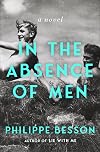
The Publisher Says: From the author of the international bestseller Lie with Me comes the tale of an affair between an aristocratic teenager and a soldier, as they discover the possibilities and perils of first love.
Summer, 1916. With German Zeppelins on the skyline, the men of Paris are off at war. For Vincent, sixteen and still too young to fight, this moment of dread is also a moment of possibility. An electrifying encounter with Marcel, an enigmatic middle-aged show more writer, draws Vincent’s desires out into the light. As he’s taken under Marcel’s wing, Vincent begins a dangerous affair with Arthur, the son of his governess and a young soldier on leave. Together, they share a secret that everyone seems to know and yet everyone remains silent about.
In this stunning portrait of young love, Philippe Besson depicts a young man who plays by his own rules and is not afraid of who he is. In the afternoons, Vincent is mentored by Marcel, the great novelist, in the city’s opulent cafés as they draw the judgment of society. And at night, he hides Arthur in his bedroom as the two risk everything to be together. Their affair initiates them into a world of pleasure and shields them from the encroaching war. During this magical week away from the trenches, Vincent shelters Arthur with happiness, reassuring him, “Nothing will happen to you.”
Tender and harrowing, In the Absence of Men captures how exhilarating and heart-crushing it is to fall in love for the first time.
I RECEIVED A DRC FROM THE PUBLISHER VIA EDELWEISS+. THANK YOU.
My Review: Tragedies hardest to endure, that produce the most emotional stress in me, are stories whose endings we know are coming while the characters do not, and we can do nothing to stop their devastation. This is that story writ tight and tart.
I'll say now that it takes a giant pair to use Marcel Proust...In Search of Lost Time Marcel Proust!...as a character guiding and mentoring, in a platonic way, your PoV character. It could, you know from the off, go horribly wrong, end up derailing your story, cause the beau ideal of a reader for your story to scoff, nitpick, judge, and tut his way through it because—well—hubris much?
That was me as I approached the read. I left it without the tutting, but with reservations.
I loved the setting, Paris during the Great War as they knew it, and will always resonate favorably with first gay love stories. I'm glad Author Besson did not make Proust more than a controlling mentor, I think that would've overpowered any positive feelings anyone could've developed for the story. As it was, Marcel's controlling side wasn't foregrounded, but was there in story-appropriate places. It's up to you how you feel about an older man leading a teen through the terrifying, obscure, all-consuming first experience of Love by a man for a man. I know I wish to gawd he'd been there for me to consult and be guided by!
I think most of what takes place in the under two hundred pages of the story is defined by brokenness, by change that can't be slowed or processed therefore controlled, by the absolute certainty of war: nothing survives unscathed. Arthur, Vincent's governess's son, is the love of Vincent's young life. He is sexually attracted to Vincent, he is just enough older...and rougher...to make their love passionate and fulfilling, and he is away to war amid all the changes accumulating in their lives.
Herein my half-star off's origin. The wartime separation means a good deal of what's happening is epistolary. I'm sad to say that, despite the words being lovely and the device being central to the story's core of reality, this shift in mode brought the momentum of the read too far down. It is undeniable that this is a feature not a bug...how could a war-set love story not separate its lovers?...and represents the most natural and logical evolution of this pair's inevitable trajectory, but it still just stopped me in my tracks. Recalibrating my pace cost me some emotional investment in the men's love story.
The twist did not surprise me, but did affect me profoundly. Some sniffling and a modest dampening of my pillow might have occurred. I'll never tell.
I'm very, very glad I read the story; I think Translator Wynne rendered the French he found into seamlessly readable English that feels almost as though it's not translated; but there's that botched downshift from fifth to second that juddered me a hair too much, caused a bit of excessive mental transmission wear, for me to get all the way to five stars.
Definitely a read I recommend all the same. show less
The Publisher Says: From the author of the international bestseller Lie with Me comes the tale of an affair between an aristocratic teenager and a soldier, as they discover the possibilities and perils of first love.
Summer, 1916. With German Zeppelins on the skyline, the men of Paris are off at war. For Vincent, sixteen and still too young to fight, this moment of dread is also a moment of possibility. An electrifying encounter with Marcel, an enigmatic middle-aged show more writer, draws Vincent’s desires out into the light. As he’s taken under Marcel’s wing, Vincent begins a dangerous affair with Arthur, the son of his governess and a young soldier on leave. Together, they share a secret that everyone seems to know and yet everyone remains silent about.
In this stunning portrait of young love, Philippe Besson depicts a young man who plays by his own rules and is not afraid of who he is. In the afternoons, Vincent is mentored by Marcel, the great novelist, in the city’s opulent cafés as they draw the judgment of society. And at night, he hides Arthur in his bedroom as the two risk everything to be together. Their affair initiates them into a world of pleasure and shields them from the encroaching war. During this magical week away from the trenches, Vincent shelters Arthur with happiness, reassuring him, “Nothing will happen to you.”
Tender and harrowing, In the Absence of Men captures how exhilarating and heart-crushing it is to fall in love for the first time.
I RECEIVED A DRC FROM THE PUBLISHER VIA EDELWEISS+. THANK YOU.
My Review: Tragedies hardest to endure, that produce the most emotional stress in me, are stories whose endings we know are coming while the characters do not, and we can do nothing to stop their devastation. This is that story writ tight and tart.
I'll say now that it takes a giant pair to use Marcel Proust...In Search of Lost Time Marcel Proust!...as a character guiding and mentoring, in a platonic way, your PoV character. It could, you know from the off, go horribly wrong, end up derailing your story, cause the beau ideal of a reader for your story to scoff, nitpick, judge, and tut his way through it because—well—hubris much?
That was me as I approached the read. I left it without the tutting, but with reservations.
I loved the setting, Paris during the Great War as they knew it, and will always resonate favorably with first gay love stories. I'm glad Author Besson did not make Proust more than a controlling mentor, I think that would've overpowered any positive feelings anyone could've developed for the story. As it was, Marcel's controlling side wasn't foregrounded, but was there in story-appropriate places. It's up to you how you feel about an older man leading a teen through the terrifying, obscure, all-consuming first experience of Love by a man for a man. I know I wish to gawd he'd been there for me to consult and be guided by!
I think most of what takes place in the under two hundred pages of the story is defined by brokenness, by change that can't be slowed or processed therefore controlled, by the absolute certainty of war: nothing survives unscathed. Arthur, Vincent's governess's son, is the love of Vincent's young life. He is sexually attracted to Vincent, he is just enough older...and rougher...to make their love passionate and fulfilling, and he is away to war amid all the changes accumulating in their lives.
Herein my half-star off's origin. The wartime separation means a good deal of what's happening is epistolary. I'm sad to say that, despite the words being lovely and the device being central to the story's core of reality, this shift in mode brought the momentum of the read too far down. It is undeniable that this is a feature not a bug...how could a war-set love story not separate its lovers?...and represents the most natural and logical evolution of this pair's inevitable trajectory, but it still just stopped me in my tracks. Recalibrating my pace cost me some emotional investment in the men's love story.
The twist did not surprise me, but did affect me profoundly. Some sniffling and a modest dampening of my pillow might have occurred. I'll never tell.
I'm very, very glad I read the story; I think Translator Wynne rendered the French he found into seamlessly readable English that feels almost as though it's not translated; but there's that botched downshift from fifth to second that juddered me a hair too much, caused a bit of excessive mental transmission wear, for me to get all the way to five stars.
Definitely a read I recommend all the same. show less
Lists
Five Star Novels (1)
First Novels (1)
Awards


You May Also Like


Associated Authors
Statistics
- Works
- 35
- Also by
- 1
- Members
- 2,037
- Popularity
- #12,617
- Rating
- 3.8
- Reviews
- 76
- ISBNs
- 183
- Languages
- 9
- Favorited
- 3