
Philippe Claudel
Author of By a Slow River
About the Author
Works by Philippe Claudel
Tous les soleils 7 copies
Carnets cubains 1 copy
j ábandonne 1 copy
Mains et merveilles, suivi de Pierrot Lunaire: deux nouvelles pour dénoncer la guerre (2016) 1 copy, 1 review
Il nipote del signor Lihn 1 copy
Associated Works
Tagged
Common Knowledge
- Canonical name
- Claudel, Philippe
- Legal name
- Claudel, Philippe
- Birthdate
- 1962-02-02
- Gender
- male
- Occupations
- writer
film director
professor of literature - Organizations
- University of Nancy, France
- Nationality
- France
- Birthplace
- Dombasle-sur-Meurthe, France
- Places of residence
- Lorraine, France
- Associated Place (for map)
- France
Members
Reviews
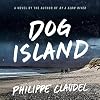
A Volcanic Constellation
Translated by Euan Cameron
Read by: Nicholas Guy Smith
Length: 6 hrs and 7 mins
Seven people discover the washed-up bodies of three black men on the shores of a dog-shaped island in the southern Mediterranean.
In the centre of the island is a semi-dormant volcano which gushes out putrid fumes when it’s angry. It’s like a god, warning the humans on the island of their wrong-doing, and embodying the ever-present menace that is the book’s background atmosphere.
Of the show more seven people who discovered the bodies only four are significan in this parable of the heartlessness of humanity. The three insignificant islanders are an elderly woman who first notices the bodies - the observer, and the workers - two nondescripts who do the work of hiding the bodies under the direction of the other four.
The four are the island’s mayor, priest, doctor and school teacher. Why do they need to hide the bodies? It’s a matter of self-interest for all but the teacher, who objects both to the bodies being hidden, and to the inhumane method by which they are disposed.
The teacher decides to find out where the three black men came from, and why they died. He’s met with opposition from the mayor, the doctor and the priest. When he persists he’s the subject of vilification, and false information is spread about him. The volcano’s activity accelerates.
After being falsely accused of rape, teacher is imprisoned by the mayor and dies in custody as a result of neglect. The volcano rumbles.
The teacher’s wife and children leave the island. But all is not well for the for the mayor et al who have to account for themselves to an outsider who arrives on the island presenting himself as an inspector. The mayor, the doctor and the priest all lie to the inspector who knows the truth but doesn’t care. The story unravels.
The parable presents no real mystery. We all know of bodies being washed-up on the shores of Mediterranean islands. We’ve seen the photos and read the news reports. We know about human-trafficking. And it’s obvious that the mayor, the doctor and the priest are at a minimum, complicit in the deaths of the three black men and the white teacher.
As the mouth of the dog constellation spews out putrid fumes we are not surprised. And it is this, the fact that we are not surprised, that shows that Claudel has succeeded in telling us so vividly what we really already know, but who like the priest, the doctor and the mayor, prefer to hide from.
Highly recommended show less
Translated by Euan Cameron
Read by: Nicholas Guy Smith
Length: 6 hrs and 7 mins
Seven people discover the washed-up bodies of three black men on the shores of a dog-shaped island in the southern Mediterranean.
In the centre of the island is a semi-dormant volcano which gushes out putrid fumes when it’s angry. It’s like a god, warning the humans on the island of their wrong-doing, and embodying the ever-present menace that is the book’s background atmosphere.
Of the show more seven people who discovered the bodies only four are significan in this parable of the heartlessness of humanity. The three insignificant islanders are an elderly woman who first notices the bodies - the observer, and the workers - two nondescripts who do the work of hiding the bodies under the direction of the other four.
The four are the island’s mayor, priest, doctor and school teacher. Why do they need to hide the bodies? It’s a matter of self-interest for all but the teacher, who objects both to the bodies being hidden, and to the inhumane method by which they are disposed.
The teacher decides to find out where the three black men came from, and why they died. He’s met with opposition from the mayor, the doctor and the priest. When he persists he’s the subject of vilification, and false information is spread about him. The volcano’s activity accelerates.
After being falsely accused of rape, teacher is imprisoned by the mayor and dies in custody as a result of neglect. The volcano rumbles.
The teacher’s wife and children leave the island. But all is not well for the for the mayor et al who have to account for themselves to an outsider who arrives on the island presenting himself as an inspector. The mayor, the doctor and the priest all lie to the inspector who knows the truth but doesn’t care. The story unravels.
The parable presents no real mystery. We all know of bodies being washed-up on the shores of Mediterranean islands. We’ve seen the photos and read the news reports. We know about human-trafficking. And it’s obvious that the mayor, the doctor and the priest are at a minimum, complicit in the deaths of the three black men and the white teacher.
As the mouth of the dog constellation spews out putrid fumes we are not surprised. And it is this, the fact that we are not surprised, that shows that Claudel has succeeded in telling us so vividly what we really already know, but who like the priest, the doctor and the mayor, prefer to hide from.
Highly recommended show less
Claudel is very good at parables and this, like many others he has written, fits that definition: “a short fictitious narrative of something which might really occur in life or nature, by means of which a moral is drawn.” Claudel has an extraordinary talent for telling what at first seems to be an uncomplicated story only to have the reader suddenly realize how layered, how subtle, and how impossibly complex that “simple” story truly is; tug on any one element and the entire edifice show more shakes. Nothing is unrelated. The bodies of three black men wash up on the shore of an isolated island in the Mediterranean. The small group of villagers who learn of this fact decide to dispose of the bodies, hoping to bury whatever secrets the men had with their bodies. Of course, it can’t work. The bodies aren’t discovered; they don’t need to be. The villagers themselves create mayhem unintentionally. Claudel is an absolute master of the chilling—not “chilling” as in causing you to be scared but “chilling” as in creating a fear for the future of us all. The characters are or could be Everyman; each embodying an aspect of our shared humanity--mostly by simply showing what we may all be capable of. We read along, recognizing, criticizing, even condemning the faults and flaws of the characters until suddenly it dawns on us: that’s us. show less
I have thought for a very long time about how to describe this book and I cannot do so at all easily. That is, in fact, a tribute to just how extraordinary this book is. A dark allegory about fear and tolerance and guilt...almost fable-like. I have liked every book by Claudel I have read but this one is exceptional. There are some very brief incidents/stories within the novel that are so indelible that I will remember them forever. His ability to create real people with real psychologies is show more remarkable. The adjective "chilling" is often used to describe a work that is exceptionally horrifying. The word is inadequate to Claudel's achievement which is all the more successful for being written in such low-key, modest--almost lyrical--language.
And I think one reason it is successful (or so successful) is that Claudel is extremely careful to strip the narrative of identifiying references, though it is abundantly clear that this story recounts a Holocaust experience. But even its setting, though likely to be eastern France, is disguised and never named. I don’t believe the word “Nazi” or “Jew” ever appears. Nor, indeed, do “German” or “French” or “Russian.” Claudel indeed goes to great lengths to universalize his story. (I think it is one small measure of his success that the five-star reviews on Goodreads are in so many languages, from Dutch to Arabic, Lithuanian to Portuguese, French and Spanish to Hebrew and Vietnamese.)
The story, and it’s an extraordinary one, is simple: Brodeck must write a report for the authorities about the Anderer (the “Other”), a stranger who came to their little town and was murdered. In fact, the story is about Brodeck and it is Brodeck who is the “Other,” as is made clear by his own story. I have not read many novels in fifty-plus years of reading fiction that forced me to think about the questions and issues Claudel raises. But this is one of them. Claudel is merciless and if you read this book, you cannot avoid thinking about these questions. show less
And I think one reason it is successful (or so successful) is that Claudel is extremely careful to strip the narrative of identifiying references, though it is abundantly clear that this story recounts a Holocaust experience. But even its setting, though likely to be eastern France, is disguised and never named. I don’t believe the word “Nazi” or “Jew” ever appears. Nor, indeed, do “German” or “French” or “Russian.” Claudel indeed goes to great lengths to universalize his story. (I think it is one small measure of his success that the five-star reviews on Goodreads are in so many languages, from Dutch to Arabic, Lithuanian to Portuguese, French and Spanish to Hebrew and Vietnamese.)
The story, and it’s an extraordinary one, is simple: Brodeck must write a report for the authorities about the Anderer (the “Other”), a stranger who came to their little town and was murdered. In fact, the story is about Brodeck and it is Brodeck who is the “Other,” as is made clear by his own story. I have not read many novels in fifty-plus years of reading fiction that forced me to think about the questions and issues Claudel raises. But this is one of them. Claudel is merciless and if you read this book, you cannot avoid thinking about these questions. show less
I often love Philippe Claudel. I think Brodeck is little short of a masterpiece. I very much enjoyed By A Slow River (a/k/a Gray Souls) and Monsieur Linh and His Child. Dog Island is excellent. The Tree of the Toraja, on the other hand, felt like a waste of time and I wasn’t particularly enamored of the linked stories in German Fantasia. So I came to The Investigation with high hopes. Honestly, I simply don’t know what to think of it. It is a dystopian nightmare using Kafka’s Castle as show more its jumping-off point. It starts out strange and gets stranger and stranger. Approaching the end, when you think it can’t get anymore bizarre, it gets worse. Well, perhaps not “worse.” It turns more bizarre than ever. Poking around the internet, it seems to be a remarkably divisive work: some reviewers loved it; some hated it; many just scratched their heads and didn’t know what to make of it. The dictionary defines “surreal” as “marked by the intense irrational reality of a dream.” That’s a good description, particularly as the novel starts out with a few tethers to reality which, the more the story progresses, the fewer the ties that exist. The philosophical “message” is undeniable and becomes more and more overt as the book proceeds but Claudel has made the novel so…unsympathetic…to read that I can’t help but wonder how many people will finish it. show less
Lists
Awards


You May Also Like


Associated Authors
Statistics
- Works
- 50
- Also by
- 7
- Members
- 4,806
- Popularity
- #5,227
- Rating
- 3.8
- Reviews
- 248
- ISBNs
- 338
- Languages
- 20
- Favorited
- 19


