
Stefan Hertmans
Author of War and Turpentine
About the Author
Image credit: Stefan Hertmans in 2010 [credit: Michiel Hendryckx]
Works by Stefan Hertmans
Ademzuil 5 copies
Jan Fabre: The Years of the Hour Blue. Drawings & Sculptures 1977-1992 (French Edition) (2012) 2 copies
Maen Florin / Sculptures 1 copy
De elfde deur — Author — 1 copy
Quel présent vivons-nous ? 1 copy
Winden 1 copy
Essays 1 copy
Associated Works
De Nederlandse poëzie van de negentiende en twintigste eeuw in duizend en enige gedichten (1979) — Contributor, some editions — 209 copies, 1 review
De Nederlandse en Vlaamse literatuur vanaf 1880 in 250 verhalen (2005) — Contributor — 79 copies, 2 reviews
The Dedalus Book of Flemish Fantasy (Dedalus European Literary Fantasy Antholgies) (2011) — Contributor — 27 copies
Transit : Oostenrijkse lyriek van de twintigste eeuw = Österreichische Lyrik des zwanzigsten Jahrhunderts. I: 1988 (1989) — Translator — 3 copies
Vlaanderen & Co : poëten in het parlement : bloemlezing 2002 (2002) — Contributor, some editions — 3 copies
In het spoor van de raaf : zeventien dichters over een gedicht — Author, some editions — 1 copy
Over X-jes, de zandloper en de herenbobbel. Een handleiding tot de kunsten voor Maarten Asscher (1998) — Contributor — 1 copy
Tagged
Common Knowledge
- Canonical name
- Hertmans, Stefan
- Legal name
- Hertmans, Stefan
- Birthdate
- 1951-03-31
- Gender
- male
- Occupations
- writer
novelist
essayist
poet - Organizations
- University College Ghent
University of Ghent - Awards and honors
- Ferdinand Bordewijk Prijs (2002)
- Nationality
- Belgium
- Birthplace
- Ghent, Belgium
- Associated Place (for map)
- Ghent, Belgium
Members
Reviews

The Emperor and the Gardener--a gripping title for this book, it seemed to me, but I settled on something closer to home, to the house in Drongenhof; I found all the space I needed in those rooms where the walls breathed out stories that settled on the floor like a thick layer of dust, where the pale garlands on the musty wallpaper inspired me, that first day as Mr. De Potter led me on my ascent through the house.
In 1979, in the quiet Belgian city of Ghent, Stefan Hertmans buys a near show more derelict house in a run-down part of town and lives in it for twenty years. Later, he discovers that the house was previously lived in by a high-ranking member of the SS and his family. This is his telling of Willem Verhulst's story, focusing on the WWII years, when the Verhulst family lived in the house. It's a compelling story--Verhulst married a devout Dutch woman who didn't like his involvement with the Germans, yet remained with him out of a sense of duty, while he had a mistress, with whom he fled to Germany as the end of the war neared. The Belgians drawn to the Nazis were largely from the Dutch-speaking Flemish population who felt that the French-speaking Walloons treated them badly. Joining with the Nazis gave them a sense of power and, indeed, they formed the bulk of the Belgian collaborators. Verhulst went from being an unsuccessful salesman to being in charge of a large department, compiling lists of people for the Nazis to question and reveling in being a member.
Hertmans was lucky in that Verhulst's wife and two of his children wrote memoirs about that time and that there were many records of his words and activities. Nevertheless, it's an impressive accomplishment and Hertmans's writing and how he structures this book is very good. He calls it a novel, which is to say that this is narrative non-fiction. show less
In 1979, in the quiet Belgian city of Ghent, Stefan Hertmans buys a near show more derelict house in a run-down part of town and lives in it for twenty years. Later, he discovers that the house was previously lived in by a high-ranking member of the SS and his family. This is his telling of Willem Verhulst's story, focusing on the WWII years, when the Verhulst family lived in the house. It's a compelling story--Verhulst married a devout Dutch woman who didn't like his involvement with the Germans, yet remained with him out of a sense of duty, while he had a mistress, with whom he fled to Germany as the end of the war neared. The Belgians drawn to the Nazis were largely from the Dutch-speaking Flemish population who felt that the French-speaking Walloons treated them badly. Joining with the Nazis gave them a sense of power and, indeed, they formed the bulk of the Belgian collaborators. Verhulst went from being an unsuccessful salesman to being in charge of a large department, compiling lists of people for the Nazis to question and reveling in being a member.
Hertmans was lucky in that Verhulst's wife and two of his children wrote memoirs about that time and that there were many records of his words and activities. Nevertheless, it's an impressive accomplishment and Hertmans's writing and how he structures this book is very good. He calls it a novel, which is to say that this is narrative non-fiction. show less
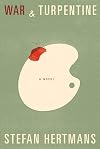
I hadn't heard of Stefan Hertmans' memoir-fiction about his amateur artist grandfather Urbain Martien (1891-1981) until it showed up on the New York Times 10 Best Books of 2016 year-end list. The description there of "a masterly book about memory, art, love and war," intrigued me immediately.
I have to say honestly that the Part I Pre-1914 Section didn't really grab me and I found myself plodding through it for a long time. I mention this as I suspect there may be others with the same show more experience who may be tempted to give up on the book due to this seemingly rambling first half where often it is the story of Hertmans' great-grandfather that is being told. Don't give up on the book early.
The Part II 1914-1918 Section plunges you along with the young Urbain Martien into the face of the German Army's August 1914 "blitzkrieg" (the word apparently wasn't invented until 1935, but Hertmans uses it here on pg. 144 to describe the "shock and awe" tactics used) on Belgium in its roundabout path to attacking France. Suddenly I was totally swept up in the story as now it is being delivered as a first-person account as if in the voice of Urbain himself. The sheer terrors faced by the Flemish speaking Walloon soldiers in the middle between the ruthless German advance and their own contemptuous French-speaking officers. This is among the best on-the-ground description of war that I've ever read, certainly as good as, if not better than, Hemingway's "The Retreat from Caporetto" section in A Farewell to Arms.
The final Part III is a post-1918 section where we return to Hertmans' point-of-view as he describes his grandfather's post-war years and the copies that the elderly Urbain made of classic paintings as his hobby. But now the seemingly rambling style of Part I feels completely engrossing as Hertmans tries to piece together the story of his grandfather's life from the few clues that he has. I should probably re-read Part I with this hindsight as it wasn't until the Part II Section that I suddenly totally identified with Urbain and his life.
Still I don't hesitate to call this a 5 out of 5 based on the 2nd half alone. show less
I have to say honestly that the Part I Pre-1914 Section didn't really grab me and I found myself plodding through it for a long time. I mention this as I suspect there may be others with the same show more experience who may be tempted to give up on the book due to this seemingly rambling first half where often it is the story of Hertmans' great-grandfather that is being told. Don't give up on the book early.
The Part II 1914-1918 Section plunges you along with the young Urbain Martien into the face of the German Army's August 1914 "blitzkrieg" (the word apparently wasn't invented until 1935, but Hertmans uses it here on pg. 144 to describe the "shock and awe" tactics used) on Belgium in its roundabout path to attacking France. Suddenly I was totally swept up in the story as now it is being delivered as a first-person account as if in the voice of Urbain himself. The sheer terrors faced by the Flemish speaking Walloon soldiers in the middle between the ruthless German advance and their own contemptuous French-speaking officers. This is among the best on-the-ground description of war that I've ever read, certainly as good as, if not better than, Hemingway's "The Retreat from Caporetto" section in A Farewell to Arms.
The final Part III is a post-1918 section where we return to Hertmans' point-of-view as he describes his grandfather's post-war years and the copies that the elderly Urbain made of classic paintings as his hobby. But now the seemingly rambling style of Part I feels completely engrossing as Hertmans tries to piece together the story of his grandfather's life from the few clues that he has. I should probably re-read Part I with this hindsight as it wasn't until the Part II Section that I suddenly totally identified with Urbain and his life.
Still I don't hesitate to call this a 5 out of 5 based on the 2nd half alone. show less
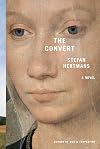
I read Hertmans’s War and Turpentine a year or two ago, a remarkable combination of history (World War I) and supposition about the life of Hertmans’s grandfather, a painter. Speaking as a professionally trained historian, both that work and this one—which tells the imagined story of a marriage between a Christian woman and a Jewish man in late 11th century France—are extraordinary works of historical reconstruction. This book is based on fragments of documents nearly 10 years old show more and rediscovered in Cairo in the last century. Hertmans has not only undertaken immense research but he has the rare gift of being able to tell a captivating story that is filled with academic history in the shape of a novel. He wears his learning very lightly indeed and is a terrific storyteller. It may not be “serious” literature but it’s beautifully done (though, personally, I preferred War and Turpentine, this is a great achievement). (P.S. I should note that Hertmans--at least in both these books--weaves the "story" he is telling with his own story. In The Convert, that means his own (part-time?) residence in France and his driving through the country to follow where his researches lead him in telling the novelistic recreation.) show less
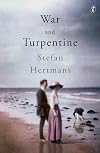
I think this may be my first 5-star review. A book I read slowly, even skipping a day now and then, so I would not finish too quickly. Through my years-long fascination with World War I, I've read a LOT of books, fiction and non-fiction, on that horrific conflict, contemporaneous and not, and this is one of the best. Is it a memoir? Partly. Is it a novel? Sort of. The brilliance is in the way Stefan Hertmans, a Belgian poet (and it shows) mingles the genres and turns it into something more show more like life itself. Based on the two notebooks painfully filled by the narrator's grandfather, Urbain Martien, the first third is a narration of Urbain's life as a boy and a young man, son of an impecunious painter, as the narrator understands it (and at the same time does not - he calls it his "unforgivable innocence") - the poverty, the illness, the miserably hard work, the abiding love, and his own discovery of art. And then comes the war. The middle portion is as written (maybe? has the writer transformed it?) by the young man in the foulest depths of the war, and Belgium saw some of the worst. Harrowing, appalling...a place where men fling themselves out of line toward the enemy screaming, "All right, you fucking Bosch, go ahead and kill me!" Which of course, they do. And other men who survive because they stop caring whether they will live out the next hour or not. The final part uncovers the story and tragedy of Urbain's great love, the stunning young woman next door. And how he lives out the rest of his life, painting splendid copies of other people's paintings. And how the narrator tries to understand it all. Moving, beautifully written, humane, just a wondrous piece of work. show less
Lists
Awards


You May Also Like


Associated Authors
Statistics
- Works
- 77
- Also by
- 11
- Members
- 2,470
- Popularity
- #10,379
- Rating
- 3.8
- Reviews
- 88
- ISBNs
- 169
- Languages
- 12
- Favorited
- 1
