
Erwin Mortier
Author of While the Gods Were Sleeping
About the Author
Erwin Mortier was born on November 28, 1965. He is a Dutch-language Belgian author. He became city poet in Ghent in 2005. He wrote as a columnist for newspapers like De Morgen. He also wrote several novels including Marcel, My Fellow Skin, Shutter Speed, and While the Gods Were Sleeping. In 2002 he show more won the C. Buddingh' prize for his debut in poetry, and in 2009 the AKO Literatuurprijs for While the Gods Were Sleeping. He also made the shortlist for the Independent Foreign Fiction Prize 2015 with this same title. (Bowker Author Biography) show less
Works by Erwin Mortier
Associated Works
The Backwash of War: The Classic Account of a First World War Field-Hospital Nurse (1916) — Translator, some editions — 109 copies, 13 reviews
De Nederlandse en Vlaamse literatuur vanaf 1880 in 250 verhalen (2005) — Contributor — 79 copies, 2 reviews
Tagged
Common Knowledge
- Canonical name
- Mortier, Erwin
- Legal name
- Mortier, Erwin
- Birthdate
- 1965-11-28
- Gender
- male
- Education
- History of the Arts
- Occupations
- art historian
journalist
novelist
poet - Organizations
- De Morgen
- Awards and honors
- AKO literatuurprijs (2009)
Tzumprijs (2009) - Nationality
- Belgium
- Birthplace
- Nevele, Belgium
- Places of residence
- Nevele, Belgium
Ghent, Belgium - Associated Place (for map)
- Belgium
Members
Reviews
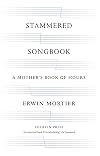
We don't have here a medical case narrated by an objective observer. We do not have a consistent description of the disease, its progression, its horrifying stages. We do not have a stoic witness of a disintegration, a caregiver who despite all his love and devotion cannot take it any longer. We've heard these stories elsewhere...
What we have here are fragments, snippets of anguish, broken pieces of song, an ode to a person who is gradually receding until no soul is left but only a shell. show more This is a love poem from a son to his mother, to her memories, to her painful disappearing act that lasts years and wrecks havoc on anyone close.
What we have here is a book that will prominently feature on my shelf and to which I will often return for an exquisite turn of phrase, a precise remark on the nature of aging, dying, coping, on the nature of life itself, a word we sometimes spell differently. A reminder that life=love.
What we have here is something that perhaps touches so deeply because I see my parents embarking on their own descent into personal darkness, brought on by old age, hastened by war. My mom - still at the beginning of this sad journey, my dad - much further along the steepening decline. show less
What we have here are fragments, snippets of anguish, broken pieces of song, an ode to a person who is gradually receding until no soul is left but only a shell. show more This is a love poem from a son to his mother, to her memories, to her painful disappearing act that lasts years and wrecks havoc on anyone close.
What we have here is a book that will prominently feature on my shelf and to which I will often return for an exquisite turn of phrase, a precise remark on the nature of aging, dying, coping, on the nature of life itself, a word we sometimes spell differently. A reminder that life=love.
What we have here is something that perhaps touches so deeply because I see my parents embarking on their own descent into personal darkness, brought on by old age, hastened by war. My mom - still at the beginning of this sad journey, my dad - much further along the steepening decline. show less
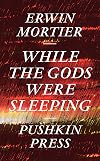
My first meeting with Erwin Mortier. While reading I had conflicting responses to the book ranging from fascination with the prose to disdain for characters and situations. I had to take some time after reading before attempting this review as I wanted my opinion to congeal into something remotely coherent.
On the surface the book presents an account of the events of the First World War from a perspective of a bystander, a young woman living relatively close to but not in the direct proximity show more of the frontline. The point of view is unusual as the account is predominantly introspective, it is not so much about the war as it is about the person who happens to be there on the verge of entering her adulthood. The story is fragmented, sometimes drawn out, interspersed with the calamities that the war is only too likely to provide, but quite lyrical at the same time. What presents another twist is that the story is told by a cantankerous old woman as she puts it on paper having nobody to share her memories with.
Although the styles are not similar I can't help but draw a parallel with Banville and some of his works, especially the latest I read "The Blue Guitar". The protagonists of both books come out as quite unlikable characters, they are pedantic, snobbish, self-centered, their moral choices are questionable, their interactions with others are flawed. They are not somebody a reader would want to be close to in real life. But they are also erudite, capable of a wide range of emotions, endowed with attention to detail, critical thinking, and uncommon powers of observation. These protagonists can be self-deprecating and ironic, their literary references can be eclectic. In short, it is better to read about them than to meet them in person, which is incidentally what we are doing.
I find that this creates a new method of delivery, which transcends the well-known posture of an unreliable narrator of post-modernist lore. The narrators of Banville and Mortier are very reliable, they are brutally honest and do not aim to present themselves in a better light. We could call them pedantic narrators or egotistic narrators or simply unlikable narrators and it seems that many readers would really have an issue with such a form of storytelling. However, this method gives a writer several weapons, and both John and Erwin use some of these weapons quite effectively. Banville presses readers to recognize some of the character traites in themselves, to reflect on their own introverted choices and ivory towers and then he takes the smug little world of his protagonist apart, the ivory tower crashes down, and the egotistic creature is left floundering in despair, comically clutching at straws.
This weapon of self-reflection imposed on the reader is used by Mortier as well but not in such an obvious way. Erwin instead targets his own storytelling - a convoluted multilayered discourse full of reflections, descriptions, cinematic collages from the memories of the protagonist. All this is contrasted with a simple story of "Said with lovely eyes", which beautifully concludes the book with an almost Camusesque message.
I need to thank Erwin Mortier, his weapon was effective on this reader. In homage to the writer I will conclude with several quotes on writing that I jotted down:
"... writing is the only way of answering the world back with silence"
"... knowledge infected my writing, impoverished my thoughts till they became nothing but sociology set to music"
"... I regarded words as compact, stable units, intriguing stones that I collected so as not to be empty-handed in the face of the world"
I intend to return for other books of the author when I am ready to subject myself to more of his flying stones. show less
On the surface the book presents an account of the events of the First World War from a perspective of a bystander, a young woman living relatively close to but not in the direct proximity show more of the frontline. The point of view is unusual as the account is predominantly introspective, it is not so much about the war as it is about the person who happens to be there on the verge of entering her adulthood. The story is fragmented, sometimes drawn out, interspersed with the calamities that the war is only too likely to provide, but quite lyrical at the same time. What presents another twist is that the story is told by a cantankerous old woman as she puts it on paper having nobody to share her memories with.
Although the styles are not similar I can't help but draw a parallel with Banville and some of his works, especially the latest I read "The Blue Guitar". The protagonists of both books come out as quite unlikable characters, they are pedantic, snobbish, self-centered, their moral choices are questionable, their interactions with others are flawed. They are not somebody a reader would want to be close to in real life. But they are also erudite, capable of a wide range of emotions, endowed with attention to detail, critical thinking, and uncommon powers of observation. These protagonists can be self-deprecating and ironic, their literary references can be eclectic. In short, it is better to read about them than to meet them in person, which is incidentally what we are doing.
I find that this creates a new method of delivery, which transcends the well-known posture of an unreliable narrator of post-modernist lore. The narrators of Banville and Mortier are very reliable, they are brutally honest and do not aim to present themselves in a better light. We could call them pedantic narrators or egotistic narrators or simply unlikable narrators and it seems that many readers would really have an issue with such a form of storytelling. However, this method gives a writer several weapons, and both John and Erwin use some of these weapons quite effectively. Banville presses readers to recognize some of the character traites in themselves, to reflect on their own introverted choices and ivory towers and then he takes the smug little world of his protagonist apart, the ivory tower crashes down, and the egotistic creature is left floundering in despair, comically clutching at straws.
This weapon of self-reflection imposed on the reader is used by Mortier as well but not in such an obvious way. Erwin instead targets his own storytelling - a convoluted multilayered discourse full of reflections, descriptions, cinematic collages from the memories of the protagonist. All this is contrasted with a simple story of "Said with lovely eyes", which beautifully concludes the book with an almost Camusesque message.
I need to thank Erwin Mortier, his weapon was effective on this reader. In homage to the writer I will conclude with several quotes on writing that I jotted down:
"... writing is the only way of answering the world back with silence"
"... knowledge infected my writing, impoverished my thoughts till they became nothing but sociology set to music"
"... I regarded words as compact, stable units, intriguing stones that I collected so as not to be empty-handed in the face of the world"
I intend to return for other books of the author when I am ready to subject myself to more of his flying stones. show less
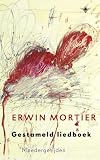
Mortier describes his mother's struggle with dementia, and his family's attempts to deal with this.
In short chapters we are given short scenes of the life of a patient with dementia. We see the struggles to make sense of the world, the confusion and fear, but also the good moments. We also see the ways in which the family tries to deal with the loss of a loved one, who isn't dead yet, but who also isn't really there anymore.
Mortier writes in a way that gives a very powerful image of the show more disease and it's consequences. His descriptions of his mother are sometimes funny and sometimes sad, but always loving and caring. His descriptions of his father's concerns and problems are beautiful and heartbreaking.
A lovely portrait, and a great image of what dementia is really like, and what it's like for the next of kin of patients. show less
In short chapters we are given short scenes of the life of a patient with dementia. We see the struggles to make sense of the world, the confusion and fear, but also the good moments. We also see the ways in which the family tries to deal with the loss of a loved one, who isn't dead yet, but who also isn't really there anymore.
Mortier writes in a way that gives a very powerful image of the show more disease and it's consequences. His descriptions of his mother are sometimes funny and sometimes sad, but always loving and caring. His descriptions of his father's concerns and problems are beautiful and heartbreaking.
A lovely portrait, and a great image of what dementia is really like, and what it's like for the next of kin of patients. show less
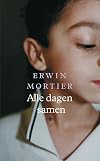
Mortier beschrijft vakkundig en met geniale precisie de wereld van een zeven jaar oude, fantasievolle knul, die voor het eerst met de dood in aanraking komt. het hele werk is als één ademhaling: een continue stroom van associaties, gedachtes en fantasieën, die alledrie door elkaar lopen in de werkelijkheid van een zeven jarige. het leest als één groot gedicht dat de menselijkheid zo juist beschrijft dat het zowel ontroerend als als adembenemend is. een erg onderschat meesterwerk.
Lists
Awards


You May Also Like


Associated Authors
Statistics
- Works
- 37
- Also by
- 3
- Members
- 1,690
- Popularity
- #15,204
- Rating
- 3.6
- Reviews
- 78
- ISBNs
- 97
- Languages
- 8
- Favorited
- 7
