
Tommy Wieringa
Author of Joe Speedboot
About the Author
Works by Tommy Wieringa
Bovenwereld 2 copies
Pleidooi voor de potscherf 2 copies
මුරාට්ගේ මරණය 1 copy
Ова се имињата 1 copy
Niets gaat voorbij. Drie verhalen — Contributor — 1 copy
Ballon 1 copy
Zwaan schuif aan 1 copy
De boom 1 copy
Mister 1 copy
Het beste van NightWriters 1 copy
Beatnik Glorie 1 copy
Associated Works
De Nederlandse en Vlaamse literatuur vanaf 1880 in 250 verhalen (2005) — Contributor — 79 copies, 2 reviews
Leve de boekhandel! nieuwe verhalen over het theater van de literatuur (2021) — Contributor — 14 copies
Nederland leest : de mooiste korte verhalen - Utrecht leest (2015) — Contributor — 8 copies, 1 review
Nederland leest : de mooiste korte verhalen - Noord-Holland leest (2015) — Contributor — 7 copies, 1 review
Tagged
Common Knowledge
- Canonical name
- Wieringa, Tommy
- Birthdate
- 1967-5-20
- Gender
- male
- Education
- University of Groningen
Utrecht University - Occupations
- writer
- Awards and honors
- Halewijn-literatuurprijs
Ferdinand Bordewijk Prijs (2006)
Tzumprijs (2006) - Nationality
- Netherlands
- Birthplace
- Goor, Netherlands
- Places of residence
- Goor, Netherlands
Aruba
Geesteren, Netherlands - Associated Place (for map)
- Netherlands
Members
Reviews

Tommy Wieringa’s 2014 Boekenweek novella feels oddly like a pastiche Maarten ‘t Hart story, and not just because the central character is a biology professor who falls for a much younger woman, but also because of the way it rambles off into an ethical discussion about ageing, the nature of pain and the limits of empathy. It looks as though Wieringa decided to write something “safe” for a book with such a high exposure, but this forced him into the boring viewpoint of a straight show more middle-aged white professor, and didn’t give him the chance to show off the kind of narratorial fireworks we expect from him. Workmanlike and occasionally thought-provoking, but disappointingly dull. show less
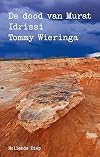
Little gem of a novella with a natural kind of suspense. Two Dutch Moroccan girls with a rather spoilt lifestyle, who broke free from the suffocating chains of their traditional immigrant Berber parents, go on a holiday in Morocco in a hired audi 4. A small accident costs them their money. Penniless, and eager to get back home, they reluctantly agree to smuggle a village boy into Spain in the boot of their car. A Moroccan fixer promises them it can’t go wrong.
That’s when you know show more everything will go wrong. Thouraya is a wild, party girl; Ilham is shy and reluctant. When the ferry berths in Spain, they discover the boy in the booth has died, suffocated. Their fixer takes off. Now what? The situation in the car is tense, the smell becomes overwhelming and suffocating. Seemingly clueless, the girls stumble into some form of resolution. Thouraya uses her beauty and cunning, Ilham suffers from her consciousness and finds out that bodies in rigor mortis can not be taken out of a boot by a girl on her own. Three smart Dutch-Moroccan guys offer a way out. Thouraya makes the most of it. With a credit card the world looks up, and another corpse finds its way into some barren, sun baked field along the highway.
The language is contemporary, the atmosphere apt and at times erotic, the imagery auburn or sun-bleached, the tension is subcutaneous, the drive slow but relentless… Tommy, we want more! show less
That’s when you know show more everything will go wrong. Thouraya is a wild, party girl; Ilham is shy and reluctant. When the ferry berths in Spain, they discover the boy in the booth has died, suffocated. Their fixer takes off. Now what? The situation in the car is tense, the smell becomes overwhelming and suffocating. Seemingly clueless, the girls stumble into some form of resolution. Thouraya uses her beauty and cunning, Ilham suffers from her consciousness and finds out that bodies in rigor mortis can not be taken out of a boot by a girl on her own. Three smart Dutch-Moroccan guys offer a way out. Thouraya makes the most of it. With a credit card the world looks up, and another corpse finds its way into some barren, sun baked field along the highway.
The language is contemporary, the atmosphere apt and at times erotic, the imagery auburn or sun-bleached, the tension is subcutaneous, the drive slow but relentless… Tommy, we want more! show less

A quirky coming-of-age novel set in an archetypically shut-in small community behind the dyke of one of the Great Rivers that cross the middle of the Netherlands. Lomark is a place so obscure that when Rijkswaterstaat finally decide to build a bypass around it, they don't bother to provide the villagers with a connection, and it seems their only way out in future will be over Piet Honing's ferry.
The chronicler of Lomark life is Frans, who has lost the use of both legs and one arm in an show more accident in his mid-teens, and doesn't hesitate to see the worst in those around him. But he does form a bond with another outsider in the village, the boy who insists on being called Joe Speedboat, and with a couple of other slightly less marginal teens. Where Frans is necessarily someone who spends most of his time sitting in his wheelchair and watching, Joe takes life in both hands, committing himself to projects that should be well beyond his skill level, quite apart from being things no sane adult would allow him to do. Wieringa allows himself a bit of Tom Sawyerish bending of realism here to demonstrate how Joe's absolute conviction that he can do something usually permits him to achieve it, even if the results aren't always what he might wish. Joe's Egyptian stepfather Mahfouz ("Papa Africa") is credited with a similar semi-magical ability to complete projects.
This isn't exactly an escapist fantasy about adolescence, though. We're always being pulled down to earth by Frans's darkly cynical realism, and we are shown that these kids don't live happily ever after — they suffer the same fate as all the rest of us, and turn into adults who have to deal with the pointlessness, mediocrity and arbitrary pain of real life.
Wieringa is very good at what he does, there are a lot of sharp observations of provincial, working-class Dutch culture and some good jokes. But it's a bit hard to say whether there's any more than that. show less
The chronicler of Lomark life is Frans, who has lost the use of both legs and one arm in an show more accident in his mid-teens, and doesn't hesitate to see the worst in those around him. But he does form a bond with another outsider in the village, the boy who insists on being called Joe Speedboat, and with a couple of other slightly less marginal teens. Where Frans is necessarily someone who spends most of his time sitting in his wheelchair and watching, Joe takes life in both hands, committing himself to projects that should be well beyond his skill level, quite apart from being things no sane adult would allow him to do. Wieringa allows himself a bit of Tom Sawyerish bending of realism here to demonstrate how Joe's absolute conviction that he can do something usually permits him to achieve it, even if the results aren't always what he might wish. Joe's Egyptian stepfather Mahfouz ("Papa Africa") is credited with a similar semi-magical ability to complete projects.
This isn't exactly an escapist fantasy about adolescence, though. We're always being pulled down to earth by Frans's darkly cynical realism, and we are shown that these kids don't live happily ever after — they suffer the same fate as all the rest of us, and turn into adults who have to deal with the pointlessness, mediocrity and arbitrary pain of real life.
Wieringa is very good at what he does, there are a lot of sharp observations of provincial, working-class Dutch culture and some good jokes. But it's a bit hard to say whether there's any more than that. show less

In this short, bleak snapshot of immigration and the refugee crisis, Wieringa follows two young Dutch women, both daughters of Moroccan immigrants, on holiday in Morocco. They run into a Dutch acquaintance, Saleh, and allow him to pressure them into helping him smuggle a young man, Murat, across the Strait of Gibraltar in the boot of their hire-car. Everything goes horribly wrong, Saleh disappears with their money, and the two women are left stranded in Spain with a dead man in the back of show more the car.
It's all very neatly and efficiently done, Wieringa pins down the problems faced by second-generation immigrants who feel Dutch when they are with Moroccans and Moroccan when they are with Dutch people, and he turns his point-of-view character Elhan into a very interesting and believable person — her hairdresser-friend Thouraya is maybe a little bit more of a cardboard cutout. In any case, it's their background that has got them into the situation, but once in it they are ordinary people faced with the sort of problem no-one is prepared for, and they react in exactly the sort of distressed and confused way any of us might.
I didn't really see the point of the little essay on the geo-history of the Mediterranean basin Wieringa sticks in as a prologue: it is a very nice piece of writing, but it doesn't really add anything to the story except a rather incongruously academic tone. He could just as well have put in an essay on the design history of Audi cars and the way the spare-tyre well is manufactured, for all the good it does. show less
It's all very neatly and efficiently done, Wieringa pins down the problems faced by second-generation immigrants who feel Dutch when they are with Moroccans and Moroccan when they are with Dutch people, and he turns his point-of-view character Elhan into a very interesting and believable person — her hairdresser-friend Thouraya is maybe a little bit more of a cardboard cutout. In any case, it's their background that has got them into the situation, but once in it they are ordinary people faced with the sort of problem no-one is prepared for, and they react in exactly the sort of distressed and confused way any of us might.
I didn't really see the point of the little essay on the geo-history of the Mediterranean basin Wieringa sticks in as a prologue: it is a very nice piece of writing, but it doesn't really add anything to the story except a rather incongruously academic tone. He could just as well have put in an essay on the design history of Audi cars and the way the spare-tyre well is manufactured, for all the good it does. show less
Lists
Awards


You May Also Like


Associated Authors
Statistics
- Works
- 42
- Also by
- 19
- Members
- 3,726
- Popularity
- #6,798
- Rating
- 3.6
- Reviews
- 138
- ISBNs
- 179
- Languages
- 13
- Favorited
- 12
