
Tonino Benacquista
Author of Malavita
About the Author
Series
Works by Tonino Benacquista
Associated Works
La bibliothèque des écrivains: Le livre qui a changé leur vie (2021) — Contributor — 4 copies, 1 review
Tagged
Common Knowledge
- Canonical name
- Benacquista, Tonino
- Legal name
- Benacquista, Tonino
- Birthdate
- 1961
- Gender
- male
- Occupations
- Écrivain
- Awards and honors
- Sur mes lèvres : César du meilleur scénario; De battre mon cœur s'est arrêté : César de la meilleure adaptation
- Nationality
- France
- Birthplace
- Vitry-sur-Seine
- Map Location
- France
Members
Reviews
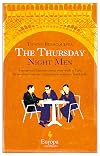
Men getting together to talk about their problems with women…do we really want to go there? Actually, yes. My opinion right up front is that this story is amusing and lively and occasionally strikes a note of insight that rings quite true.
Every Thursday night, a quiet meeting of a hundred or so men is held amongst long-time regulars and those to whom someone whispered, "You might find this helpful." The rules of the meeting are quite simple: one time, and one time only, you may stand up show more and tell your story in whatever detail and fashion you choose. It's not a counseling session; no one in the audience may respond or even ask questions. Three of the newer participants decide that, rather than go home afterwards, they will go out together and let the other two—and the reader—more fully into their tales.
It's very much a story about men. The women in the story exist as roles rather than people: the lover who has moved on, the kind-hearted prostitute, the straying wife, the mysterious woman who won't reveal anything but her name, the glamorous-but-shallow supermodel. It might be tempting to call them stereotypes but I think it's more accurate in this case to call them symbols since much of this novel is clearly symbolic. They exist to give the men life choices to explore rather than to breathe on their own.
With this general theme and setup, you might fear a great deal of misogyny in the story, but it isn't there. I found it easy to like most of the women Benacquista has created, despite their two-dimensional nature, and even the lone exception evoked sadness rather than dislike. As for the male characters, with few exceptions they like women; they are simply struggling in some way in their relationships with them.
The problem with this book is that some people are going to expect it to be something that it doesn't try to be. It would be wrong, I believe, to consider this as an assessment of inter-gender reality, saying that men and women will not communicate directly. It would also be wrong to consider this as a blanket summation of men's attitudes toward women. Nothing in Benacquista's writing gives me the impression that he meant to do either. Instead, I felt he was saying to the reader, "Here are some questions men ask in their lives. What do you, the reader, think?"
With its focus on themes of modern masculine experience, in some ways this is the male equivalent of chick lit, but the general class of chick lit about which Sara Nelson said in Publishers Weekly, "[is becoming a] little more accomplished and grown-up and literary than what that term used to mean." If you focus on that kind of qualifier rather than on any negative connotations to the term, you open yourself up to a pleasant and, occasionally, resonant read. Is this a book that will appeal more to men than to women? I haven't any idea, but it worked for me. show less
Every Thursday night, a quiet meeting of a hundred or so men is held amongst long-time regulars and those to whom someone whispered, "You might find this helpful." The rules of the meeting are quite simple: one time, and one time only, you may stand up show more and tell your story in whatever detail and fashion you choose. It's not a counseling session; no one in the audience may respond or even ask questions. Three of the newer participants decide that, rather than go home afterwards, they will go out together and let the other two—and the reader—more fully into their tales.
It's very much a story about men. The women in the story exist as roles rather than people: the lover who has moved on, the kind-hearted prostitute, the straying wife, the mysterious woman who won't reveal anything but her name, the glamorous-but-shallow supermodel. It might be tempting to call them stereotypes but I think it's more accurate in this case to call them symbols since much of this novel is clearly symbolic. They exist to give the men life choices to explore rather than to breathe on their own.
With this general theme and setup, you might fear a great deal of misogyny in the story, but it isn't there. I found it easy to like most of the women Benacquista has created, despite their two-dimensional nature, and even the lone exception evoked sadness rather than dislike. As for the male characters, with few exceptions they like women; they are simply struggling in some way in their relationships with them.
The problem with this book is that some people are going to expect it to be something that it doesn't try to be. It would be wrong, I believe, to consider this as an assessment of inter-gender reality, saying that men and women will not communicate directly. It would also be wrong to consider this as a blanket summation of men's attitudes toward women. Nothing in Benacquista's writing gives me the impression that he meant to do either. Instead, I felt he was saying to the reader, "Here are some questions men ask in their lives. What do you, the reader, think?"
With its focus on themes of modern masculine experience, in some ways this is the male equivalent of chick lit, but the general class of chick lit about which Sara Nelson said in Publishers Weekly, "[is becoming a] little more accomplished and grown-up and literary than what that term used to mean." If you focus on that kind of qualifier rather than on any negative connotations to the term, you open yourself up to a pleasant and, occasionally, resonant read. Is this a book that will appeal more to men than to women? I haven't any idea, but it worked for me. show less

Okay bear with me for a minute because this gets a little complicated. Malavita was originally released in English as Badfellas, (a homage to the main characters love of the movie Goodfellas,) and is now being re-released under its original French name due to a movie version coming out, which is called The Family.
The author is Italian-French, and has a British translator which leads to a novel about Americans from New Jersey that doesn’t feel like an accurate portrayal. It feels more like show more a thoughtful look at a family long away from home with some small stereotypes thrown in. This is pleasant read but is not a typical gangster story.
Free review copy. show less
The author is Italian-French, and has a British translator which leads to a novel about Americans from New Jersey that doesn’t feel like an accurate portrayal. It feels more like show more a thoughtful look at a family long away from home with some small stereotypes thrown in. This is pleasant read but is not a typical gangster story.
Free review copy. show less

The blurb on the cover of Badfellas asks readers to imagine that the FBI’s witness protection programme has moved the Soprano family to Normandy. Having only ever watched three-quarters of an episode of the tv show that everyone but me loves I couldn’t quite manage that but I got the general idea. Giovanni Manzoni was a major Mafia boss who snitched on just about everyone in his organisation, ensuring many of them would be incarcerated for decades. What’s left of the Mafia are show more determined to kill him (and if honour isn’t reason enough there’s a $20million reward on offer) and the FBI is just as determined to keep him alive so that others will be tempted to become snitches. Manzoni and his family have been moved several times for their protection and as this book opens they are now known as the Blake family and are settling in the small town of Cholong-sur-Avre in France.
Given I generally avoid books and movies featuring mafia/organised crime as a central plot element I’m sure I missed loads of references to other works on this theme though even I picked up a few. But even without this intimate knowledge I could appreciate the satire and dark humour of Badfellas which is due to clever, quite sparse writing and an excellent translation by Emily Read. I especially liked the entire sections of the book which have little to do with things-Mafia, such as the parallels drawn between the present-day circumstances in the Region and Normandy’s WWII ‘invasion’ by Americans which are very amusingly done. There’s also a brilliant passage describing how the presence of the Blake/Manzoni family in France finally gets back to the head of the Cosa Nostra in his New York prison cell that’s almost worth the price of the book alone.
For me the most interesting aspect of the novel was the depiction of the impact of the exile on all the characters, including the repugnant Fred/Giovanni. In some ways he is the most affected, having lost his status and his raison d’être, but I couldn’t summon an ounce of sympathy for him and in fact his general attitude still makes me cranky enough that I shan’t talk about him any more. Maggie, whose real name is Livia, is his wife and she is also deeply affected by the exile. She misses her friends and family, but also feels such guilt over her circumstances and the part she played in her husband’s actions that she develops an almost unstoppable zeal for doing good to redeem herself. She cooks wonderful food for the poor FBI agents who assigned as their guardians because they too have to live away from their families for long periods of time and she becomes heavily involved in charitable pursuits in the town. Their two children Belle and Warren are also deeply affected by their father’s actions, though in Warren’s case it has a particularly surprising result as the 14-year old plots how he will recapture the place in the organisation that his father lost by his cowardly actions.
Overall I loved the writing and the way Badfellas is constructed and would recommend it based on these terrific attributes. But I am, like Norman at Crime Scraps, still a little conflicted about the content of the book. Because although Fred Blake/Giovanni Manzoni is revealed as a repellent human being with no redeeming qualities that I could discern he does, essentially, get away with murder. Repeatedly. And something about that irks me. I can deal with a book that has no morality to it at all, but I struggle just a bit harder to deal with a book which seems to suggest, however subtly, that crime pays. And that hideous, murderous crime pays a villa in the French countryside.
My rating 3.5/5 show less
Given I generally avoid books and movies featuring mafia/organised crime as a central plot element I’m sure I missed loads of references to other works on this theme though even I picked up a few. But even without this intimate knowledge I could appreciate the satire and dark humour of Badfellas which is due to clever, quite sparse writing and an excellent translation by Emily Read. I especially liked the entire sections of the book which have little to do with things-Mafia, such as the parallels drawn between the present-day circumstances in the Region and Normandy’s WWII ‘invasion’ by Americans which are very amusingly done. There’s also a brilliant passage describing how the presence of the Blake/Manzoni family in France finally gets back to the head of the Cosa Nostra in his New York prison cell that’s almost worth the price of the book alone.
For me the most interesting aspect of the novel was the depiction of the impact of the exile on all the characters, including the repugnant Fred/Giovanni. In some ways he is the most affected, having lost his status and his raison d’être, but I couldn’t summon an ounce of sympathy for him and in fact his general attitude still makes me cranky enough that I shan’t talk about him any more. Maggie, whose real name is Livia, is his wife and she is also deeply affected by the exile. She misses her friends and family, but also feels such guilt over her circumstances and the part she played in her husband’s actions that she develops an almost unstoppable zeal for doing good to redeem herself. She cooks wonderful food for the poor FBI agents who assigned as their guardians because they too have to live away from their families for long periods of time and she becomes heavily involved in charitable pursuits in the town. Their two children Belle and Warren are also deeply affected by their father’s actions, though in Warren’s case it has a particularly surprising result as the 14-year old plots how he will recapture the place in the organisation that his father lost by his cowardly actions.
Overall I loved the writing and the way Badfellas is constructed and would recommend it based on these terrific attributes. But I am, like Norman at Crime Scraps, still a little conflicted about the content of the book. Because although Fred Blake/Giovanni Manzoni is revealed as a repellent human being with no redeeming qualities that I could discern he does, essentially, get away with murder. Repeatedly. And something about that irks me. I can deal with a book that has no morality to it at all, but I struggle just a bit harder to deal with a book which seems to suggest, however subtly, that crime pays. And that hideous, murderous crime pays a villa in the French countryside.
My rating 3.5/5 show less
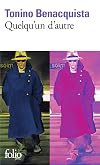
Qui n'a jamais fait le rêve d'être quelqu'un d'autre ? D'imaginer sa conscience prendre place derrière les rétines d'un autre, plus beau, plus fort, plus malin. Qui n'a jamais conçu l'expérience, simplement par jeu, en utilisant le si facile vecteur de l'évocation secrète, de se vêtir de la peau d'un autre comme l'on revêt une veste qui n'est pas la sienne. Comme on lui connaît maintenant l'habitude et le talent, Tonino Benacquista recueille dans sa main cette petite idée du show more quotidien et la pousse aussi loin qu'il le peut. C'est-à-dire très loin. Deux individus insatisfaits de leur existence, Thierry Blin et Nicolas Gredzinski se rencontrent sur un court de tennis pour échanger quelques balles. Ce qui, à priori, n'était qu'un petit exercice sur terre battue devient bientôt une bataille acharnée de deux lions en cage bien décidés à l'emporter. On ne cessera de compter tout au long du livre les petits cyclones que libèrera cette partie effrénée. La bataille ayant rapproché les deux hommes, après plusieurs heures d'une activité alcoolique forcenée, voilà qu'ils signent un pacte aux relents de souffre : trois ans pour devenir quelqu'un d'autre, le gagnant pourra exiger ce qu'il veut de l'autre.
On apprendra que pour atteindre ce but, mille choses sont possibles, des radicales aux plus pernicieuses. On apprendra de la plume d'un Tonino Benacquista en très grande forme qu'il peut nous mener assez loin quand il dispose sur les vies de personnages effacés, blessures à vif, le sel d'une révolution totale : biffer les êtres et les choses qui trahissent notre histoire, jeter loin de soi un passé devenu trop lourd comme l'on jette une pierre dans un courant violent. Refermer le livre de nous-même pour en ouvrir un autre, encore vierge et à écrire. Et si le roman de Tonino Benacquista est passionnant, le changement d'identité ne nous tente plus du tout : devenir un autre qui n'aurait jamais l'idée d'ouvrir Quelqu'un d'autre, quel dommage ! --Hector Chavez show less
Lists
Awards


You May Also Like


Associated Authors
Statistics
- Works
- 40
- Also by
- 3
- Members
- 2,136
- Popularity
- #12,044
- Rating
- 3.6
- Reviews
- 45
- ISBNs
- 174
- Languages
- 16
- Favorited
- 7
