
Jean-Claude Izzo (1945–2000)
Author of Total Chaos
About the Author
Image credit: www.unionsverlag.com
Series
Works by Jean-Claude Izzo
Viure cansa 1998 1 copy
El sol dels moribuns 1999 1 copy
Associated Works
Gefährliche Ferien - Südfrankreich: mit Martin Walker und vielen anderen (detebe) (2016) — Contributor — 3 copies
Tagged
Common Knowledge
- Canonical name
- Izzo, Jean-Claude
- Legal name
- Izzo, Jean-Claude
- Birthdate
- 1945-06-20
- Date of death
- 2000-01-26
- Gender
- male
- Occupations
- rédacteur en chef du journal La Marseillaise (communiste)
- Awards and honors
- Trophée 813 (1995)
Prix sang d'encre (1996) - Nationality
- France
- Birthplace
- Marseille, Bouches-du-Rhône, Provence-Alpes-Côte d'Azur, France
- Places of residence
- Marseille, Bouches-du-Rhône, Provence-Alpes-Côte d'Azur, France
- Place of death
- Marseille, Bouches-du-Rhône, Provence-Alpes-Côte d'Azur, France
- Associated Place (for map)
- Marseille, Bouches-du-Rhône, Provence-Alpes-Côte d'Azur, France
Members
Reviews
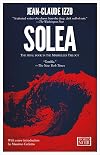
The final volume of Izzo's Marseilles Trilogy goes so far beyond typical noir that it defies labeling. For one thing, it takes on the pervading presence of evil and corruption in the whole world--not just in a town (as in Hammett's Red Harvest) or in the hearts of a few individuals, as in most noir novels, where the atmosphere can be pretty claustrophobic. Izzo achieves the same effect with Solea's cast of characters, most of whom are familiar from the first two volumes of the series, but show more the forces of evil have multiple layers--of most immediate concern, of course, being the heartless killers who are preying on Fabio Montale's friends in the pursuit of information about the mafia's infiltration into every aspect of western business and politics--the second layer. Obviously, don't jump in here. If you have read the first two books, you'll be compelled to read this one. Izzo was a fabulous writer, who weaves the sights and sounds and smells of Marseilles into almost every paragraph. In true noir fashion, the characters consume untold quantities of alcohol--pastis being the favorite of Montale--but they also partake of local food, described in loving detail. In the face of such evil, food and drink seem to be one way of salvaging a little joy out of a hard, sometimes hopeless life. The other way of course, is love, and that is a central part of this remarkable trilogy as well. No spoilers, but read the trilogy, and prepare to feel something in your gut you rarely get from literature. And then ponder that since Izzo died in 2000, things have only gotten worse. show less
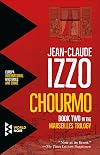
The second book in Izzo's Marseilles trilogy is even better and harder-hitting than the first. The ending is perfect. The protagonist, Fabio's, ability to navigate through all the pain in the world, with a background soundtrack of jazz, gypsy music, tango, etc. etc. etc.--and ZZ Topp for the climax, fueled by wine, cassis, and Scotch Whisky, make this a journey you won't forget. And you'll probably want to enjoy it with your choice of beverage. Sure, this is noir at its best, but it is also show more dark and true. As good as Chandler and Hammett were, they didn't deal with real people the way Izzo did. Read this. Read this. Read this. show less

Third and blackest of Izzo's Marseille novels. Fabio Montale is in an impossible position: a mafia killer is looking for Fabio's friend, the investigative journalist Babette, who has gone into hiding after finding out more than is good for her about money laundering systems and the political links of organised crime. The killer wants Fabio to lead him to Babette, and proposes to murder Fabio's friends one by one until he finds her. Meanwhile, Fabio's despair about the departure of his show more girlfriend Lole is only getting worse.
Not a cheerful, optimistic book, by any means, and the sunny passages in the earlier books about Mediterranean food and music have largely been replaced by excerpts from official reports and newspaper articles about the growth of organised crime in Europe. The message is essentially that if we don't confront the problem, it will destroy our society; but anyone who does try to do something about it had better be prepared to see their own life and everything they hold dear destroyed. I guess Izzo knew he was dying when he wrote this one. show less
Not a cheerful, optimistic book, by any means, and the sunny passages in the earlier books about Mediterranean food and music have largely been replaced by excerpts from official reports and newspaper articles about the growth of organised crime in Europe. The message is essentially that if we don't confront the problem, it will destroy our society; but anyone who does try to do something about it had better be prepared to see their own life and everything they hold dear destroyed. I guess Izzo knew he was dying when he wrote this one. show less
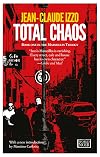
Fabio Montale is a cop in Marseilles languishing in the Neighborhood Surveillance Squad, “just a neighborhood cop who didn’t get any important cases,” and “less of a cop and more of a youth counselor or social worker.” He grew up as a bit of a delinquent in Marseilles and escaped to the police and Paris before eventually returning.
Two of his childhood friends, Manu and Ugo, have been killed and Montale feels compelled by loyalty to find out why. He has to contend with various show more criminal factions and even elements within his own department. His own life is also in danger.
Jean-Claude Izzo, a native of Marseilles himself, paints the port city as Montale the cop sees it; full of racial, cultural, and moral complexity, good food, and inherent racism, with Arabs bearing the brunt. The city is as much of a character here as are the people. show less
Two of his childhood friends, Manu and Ugo, have been killed and Montale feels compelled by loyalty to find out why. He has to contend with various show more criminal factions and even elements within his own department. His own life is also in danger.
Jean-Claude Izzo, a native of Marseilles himself, paints the port city as Montale the cop sees it; full of racial, cultural, and moral complexity, good food, and inherent racism, with Arabs bearing the brunt. The city is as much of a character here as are the people. show less
Lists
Awards


You May Also Like


Associated Authors
Statistics
- Works
- 18
- Also by
- 2
- Members
- 2,682
- Popularity
- #9,574
- Rating
- 3.9
- Reviews
- 95
- ISBNs
- 153
- Languages
- 10
- Favorited
- 5