

Jean-Patrick Manchette (1942–1995)
Author of Fatale
About the Author
Image credit: Courtesy of Serpent's Tail Press
Works by Jean-Patrick Manchette
Associated Works
Tagged
Common Knowledge
- Birthdate
- 1942-12-19
- Date of death
- 1995-06-03
- Gender
- male
- Relationships
- Manchette, Mélissa (wife)
- Nationality
- France
- Birthplace
- Marseille, Bouches-du-Rhône, Provence-Alpes-Côte d'Azur, France
- Places of residence
- Marseille, Bouches-du-Rhône, Provence-Alpes-Côte d'Azur, France
- Place of death
- Paris, Île-de-France, France
- Associated Place (for map)
- Provence-Alpes-Côte d'Azur, France
Members
Reviews
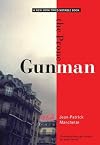
The cover of my edition of "The Prone Gunman" told me that it is "soon to be a major motion picture." I'm not surprised. The book's protagonist, Martin Terrier, is a hitman who displays the same impossibly cool, unperturbable mein as John Wick and should fit in well with a cinematic trend that seems to want to show how little some humans are bothered by hurting others. Patrick, a former soldier, soldier of fortune, and now a killer-for-hire is preternaturally good at his job and successful show more in his field, as it were. Manchette, not merely content to depict his character's mastery of spycraft and assassination, also lovingly describes the specific armaments that each of his characters employ. In this, I fear to report that Manchette might be considered a precursor to technologically obsessed writers such as Tom Clancy, who never fail to describe exactly what armaments their paper-thin characters are carrying. The author doesn't spare us the gory details, but neither does he take much time to examine anyone's feelings. "The Prone Gunman" glides along swiftly, and its major characters leave a pile of corpses in their wake.
Martin, who also goes by Christopher, is so emotionally detached that I couldn't read this one without thinking of Camus's "The Stranger," whose main character, Meursault, killed a nameless Arab in a haze of confusion and then went on to seek some sort of moral and emotional clarity afterwards, if only through the smallest, most seemingly insignificant life experiences. Martin, on the other hand, seems to grow further from humanity and the world as the book goes on, becoming less communicative and shedding any limited abilities he might have had to connect to his world. This book's tone throughout is both gruesome and disconcertingly chilly. There are, of course, lots of young, male readers and moviegoers who enjoy watching this kind of character, and so I wouldn't be surprised if the movie version of "The Prone Gunman" finds a niche of sorts. But super-competence and silence is not hugely interesting to this reader on the page, though I do feel that the author, by making his character more and more of a cipher as the plot moves on, is trying to make some postmodernist point about the freedom that Martin might find in this sort of erasure.
There is a payoff of sorts at the end when this little book's last pages during which its scope and potential meaning seems to open up quite suddenly, and while I do appreciate the author's lithe plot and controlled tone, I suppose I've seen too much of this sort of emotionally blank, consequence-free killing on the screen to want to actually sit down and read about it. This one's brief, effective, but ultimately unsatisfying, a provocative little book that I don't feel goes to too many places. Or, at least, not to any places I'd want to go anywhere near. show less
Martin, who also goes by Christopher, is so emotionally detached that I couldn't read this one without thinking of Camus's "The Stranger," whose main character, Meursault, killed a nameless Arab in a haze of confusion and then went on to seek some sort of moral and emotional clarity afterwards, if only through the smallest, most seemingly insignificant life experiences. Martin, on the other hand, seems to grow further from humanity and the world as the book goes on, becoming less communicative and shedding any limited abilities he might have had to connect to his world. This book's tone throughout is both gruesome and disconcertingly chilly. There are, of course, lots of young, male readers and moviegoers who enjoy watching this kind of character, and so I wouldn't be surprised if the movie version of "The Prone Gunman" finds a niche of sorts. But super-competence and silence is not hugely interesting to this reader on the page, though I do feel that the author, by making his character more and more of a cipher as the plot moves on, is trying to make some postmodernist point about the freedom that Martin might find in this sort of erasure.
There is a payoff of sorts at the end when this little book's last pages during which its scope and potential meaning seems to open up quite suddenly, and while I do appreciate the author's lithe plot and controlled tone, I suppose I've seen too much of this sort of emotionally blank, consequence-free killing on the screen to want to actually sit down and read about it. This one's brief, effective, but ultimately unsatisfying, a provocative little book that I don't feel goes to too many places. Or, at least, not to any places I'd want to go anywhere near. show less
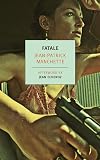
I never thought I’d be rooting for a killer-for-hire woman--and a psychopathic one at that--but, the beautiful, sexy Aimee is one of those unforgettable characters who’s very rare in noir fiction. I’ve never read anything quite like this brilliant novella. The writing is tight and it flies by. I couldn’t put it down.
The best line was delivered by the baron when he was showing Aimee around his home.
“My bedroom,” he said. “I’m not going to invite you in there to copulate; we show more are not well enough acquainted for that.”
If you are a fan of crime fiction in the James M. Cain tradition, this one's for you.
And, what a fantastic cover on the paperback edition! show less
The best line was delivered by the baron when he was showing Aimee around his home.
“My bedroom,” he said. “I’m not going to invite you in there to copulate; we show more are not well enough acquainted for that.”
If you are a fan of crime fiction in the James M. Cain tradition, this one's for you.
And, what a fantastic cover on the paperback edition! show less

Ex-cop Eugène Tarpon is on the point of giving up his ailing private eye business in Paris and going home to mother when … yes, you guessed it, a beautiful young woman appears in his office late at night, seeking his help. But this is a second-generation French noir story, so he tells her to go away and talk to the cops instead. Needless to say, he reconsiders a few hours later, and soon finds himself mixed up in a colourful and confusing story involving starlets, would-be urban show more guerrillas, foreign agents and American gangsters. And a fair assortment of corpses, as the title implies.
Manchette provides a fast-moving narrative that refuses to take itself seriously, simultaneously exploiting the conventions of classic noir and making fun of them. Tarpon is an uncharacteristic private eye, by fictional standards: a former rank-and-file gendarme who couldn‘t face staying in the force after inadvertently killing a protester during a demonstration, he seems to spend a lot of his time overwhelmed by the mess he’s fallen into. Without his chance sidekick, the retired journalist Haymann, it’s hard to imagine him investigating anything more serious than a straying spouse. But then occasionally his reflexes seem to lead him lightning fast out of difficult situations. Good fun, despite the piles of corpses. show less
Manchette provides a fast-moving narrative that refuses to take itself seriously, simultaneously exploiting the conventions of classic noir and making fun of them. Tarpon is an uncharacteristic private eye, by fictional standards: a former rank-and-file gendarme who couldn‘t face staying in the force after inadvertently killing a protester during a demonstration, he seems to spend a lot of his time overwhelmed by the mess he’s fallen into. Without his chance sidekick, the retired journalist Haymann, it’s hard to imagine him investigating anything more serious than a straying spouse. But then occasionally his reflexes seem to lead him lightning fast out of difficult situations. Good fun, despite the piles of corpses. show less
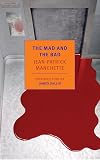
Dashiell Hammett’s 1929 novel “Red Harvest” features a California town turned into a bullet-riddled blood bath. One prime French counterpart to this bloody harvest of corpses is Jean-Patrick Manchette’s 1972 “The Mad and the Bad,” a novel featuring a host of ultra-violent characters, among others, super-wealthy architect, hired killer and gal fresh from the mental hospital. In keeping with the author’s rat-tat-tat hard-edged cinema-like prose, below are eight bullets fresh from show more my ThinkPad Helix 3698-4SU:
Detail of objects
Cars, guns, desks, chairs, clothing are labeled and described crisply. “Cupboards and shelves were covered by a fine-grained white plastic laminate. Likewise the bed, which had a red blanket. There was no bedspread. A white table and a white chair in the middle of the room completed the décor.” All that whiteness reminds me of the old people’s home in Albert Camus’ “The Stranger.” Alienation, anyone?
Violence as a mode of being
Like that diner scene in the film “Pulp Fiction?” If so, you are in for a treat as in:
“The man grabbed him by the collar of his safari jacket, jerked him out of the Lincoln, and threw him to the ground.
“Stop! Stop!” shouted Julie.
The brute paid her no mind, took a run-up and kicked Hartog in the ribs. Hartog groaned. The blood drained from his face. Julie got back in the Lincoln and opened the compartment with the revolver. She trained the weapon on White Raincoat through the car’s open door.”
Firearms and violence as the unquestioned baseline of how life is lived; the novel’s characters breath and act in the raw with none of those irksome reflections or philosophic musing, thank you.
Alcohol, coffee, cigarettes and pills
But having to contend with and defend yourself from alienating objects and coarse, loathsome people pushes architect, hired killer, gal and their supporting cast to a constant imbibing; I mean, who could ever think of living for a minute without booze, caffeine, nicotine, uppers, downers, stomach soothers? Get with it, gang - sure, you are reading descriptions of sickness and vomiting on every other page, but you have to admit, these people are hip.
They’re Maoists!
At one point during an outbreak of public violence, someone shouts, “They’re Maoists!” And there are several other oblique references to the political, very much in keeping with the author’s direct involvement with Marxism and politics prior to becoming a novelist. This political dimension is one we do not encounter in Jean-Patrick Manchette’s American forerunners: Chandler, Hammett, Cain, Thompson.
All the blood and killing is exciting!
And speaking of Marxism, recall the Marxist dictum: ‘Be happy in your work.” Well, hired killer Thomson is very happy in his work as per this snippet when he is in the middle of his job:
“He bounded down an aisle, knocking over an old woman who began to wail in terror. He trotted by Boys Apparel, his mouth full of bile. He heard a deafening explosion and assumed that Coco had decided to open up. Fragments of plastic flew from a display. The store was filled by an immense tumult. This is exciting. I am enjoying this, Thompson told himself as he spat gastric juice on the ground.” Ah, enjoyment! What life is all about.
Life imitates art
One character observes how what they are doing is exactly what a film star did in one of their favorite movies. Funny, reading this novel, I had the distinct feeling the author was filtering life through an action film – art imitating art imitating life; or is it art imitating art imitating life imitating art?
Duel Plot in minimalist mode
Unlike the other 2 novels I read by the author, where every chapter following the one main character, “The Mad and the Bad” features parallel plots, alternating between hired killer Thompson and hunted gal, Julia -- a most effective narrative technique, especially at the end when the chapters pop back and forth, culminating in a, you guessed it, hyper-violent conclusion.
If you think New York Review Books (NYRB) is publishing nothing but stuffy classics, here is a gem that will take your misguided notion and shoot it full of holes. In the mood for a juiced-up fast read? This J-P M is your book. show less
Lists
Awards


You May Also Like


Associated Authors
Statistics
- Works
- 41
- Also by
- 2
- Members
- 3,039
- Popularity
- #8,402
- Rating
- 3.8
- Reviews
- 107
- ISBNs
- 207
- Languages
- 11
- Favorited
- 11