
Derek Raymond (1931–1994)
Author of He Died with His Eyes Open
About the Author
Disambiguation Notice:
In France, his books were published under his real name, Robin Cook. In England, some of the early ones were, but his later books were published as "Derek Raymond" to avoid confusion with the much better known author of books such as COMA. On LibraryThing, I have combined Derek Raymond with one of the Robin Cooks. There are at least three when you add the former British Foreign Secretary.
Series
Works by Derek Raymond
The legacy of the stiff upper lip; or, The astonishing social hinterland of a lapse (1966) 21 copies
Bombe Surprise 1 copy
Associated Works
The Graphic Canon of Crime & Mystery, Vol. 2: From Salome to Edgar Allan Poe to The Silence of the Lambs (2021) — Contributor — 14 copies
Tagged
Common Knowledge
- Canonical name
- Raymond, Derek
- Legal name
- Cook, Robert William Arthur
- Other names
- Cook, Robin
- Birthdate
- 1931-06-12
- Date of death
- 1994-07-30
- Gender
- male
- Nationality
- UK
- Birthplace
- London, England, UK
- Places of residence
- London, England, UK
Paris, France
New York, New York, USA - Place of death
- London, England, UK
- Disambiguation notice
- In France, his books were published under his real name, Robin Cook. In England, some of the early ones were, but his later books were published as "Derek Raymond" to avoid confusion with the much better known author of books such as COMA. On LibraryThing, I have combined Derek Raymond with one of the Robin Cooks. There are at least three when you add the former British Foreign Secretary.
- Associated Place (for map)
- UK
Members
Reviews

It has been more than a while since I read a book as good as this one. It begins with Raymond’s writing style, which grabs you from the start and just keeps getting better as the book proceeds. By about the last third of the novel, it turns into sheer poetry. It became one of those all-too-rare totally absorbing reading experiences.
Second, are the story and the characters. In one sense, the plot is just something to hang Raymond’s eloquence and wide-ranging observations on, but it is show more essential to the success of the story. A never-named police sergeant, condemned to a life of solving the murders of nonentities, investigates a brutal killing and begins to identify with the victim. This is possible, because the victim, who was a writer among other things, left a series of tapes where he mused about his life and philosophy. These passages are sometimes stunning, and they give us more than a little insight (I presume) into Raymond’s own view of literature. For example, “Anyone who conceives of writing as an agreeable stroll towards a middle-class life-style will never write anything but crap.”
The atmosphere of the books is grimy and intense. It is not really a police procedural, despite the fascination of seeing the sergeant relentlessly track down the murderers. He operates completely alone, except for occasional interactions with a detective from the important part of the police department, whom he dislikes intensely (the feeling is mutual.) Nevertheless, there is a level of cooperation that occurs throughout the novel. The real action takes place in the sergeant’s head, however, as he listens to the tapes and begins to identify with them. Then he shows he will do whatever takes, even putting his own life into danger, to solve the crime. But although we are introduced through the tapes to the victim’s family, and though the detective meets his estranged wife in person, there is no sense that he is solving the crime for their benefit—only for his own personal satisfaction, and perhaps redemption. He is the essence of Raymond Chandler’s definition of a detective hero, “…a man of honor—by instinct, by inevitability, without thought of it….” The rest of Chandler’s definition applies as well, but Raymond’s nameless sergeant is far more alone than Chandler’s Philip Marlowe, who at least has a secretary!
This is powerful, powerful stuff, and I can’t wait to read the other novels in the “Factory” series, as well as the rest of everything the author wrote under various names. Crime fiction in general is under-appreciated and unfairly relegated to “genre” status by lots of so-called serious readers. I wonder how many of the ones reading the latest best seller are ready for the ultimate truths about human existence in “He Died with His Eyes Open”? By any standard, this is great literature. show less
Second, are the story and the characters. In one sense, the plot is just something to hang Raymond’s eloquence and wide-ranging observations on, but it is show more essential to the success of the story. A never-named police sergeant, condemned to a life of solving the murders of nonentities, investigates a brutal killing and begins to identify with the victim. This is possible, because the victim, who was a writer among other things, left a series of tapes where he mused about his life and philosophy. These passages are sometimes stunning, and they give us more than a little insight (I presume) into Raymond’s own view of literature. For example, “Anyone who conceives of writing as an agreeable stroll towards a middle-class life-style will never write anything but crap.”
The atmosphere of the books is grimy and intense. It is not really a police procedural, despite the fascination of seeing the sergeant relentlessly track down the murderers. He operates completely alone, except for occasional interactions with a detective from the important part of the police department, whom he dislikes intensely (the feeling is mutual.) Nevertheless, there is a level of cooperation that occurs throughout the novel. The real action takes place in the sergeant’s head, however, as he listens to the tapes and begins to identify with them. Then he shows he will do whatever takes, even putting his own life into danger, to solve the crime. But although we are introduced through the tapes to the victim’s family, and though the detective meets his estranged wife in person, there is no sense that he is solving the crime for their benefit—only for his own personal satisfaction, and perhaps redemption. He is the essence of Raymond Chandler’s definition of a detective hero, “…a man of honor—by instinct, by inevitability, without thought of it….” The rest of Chandler’s definition applies as well, but Raymond’s nameless sergeant is far more alone than Chandler’s Philip Marlowe, who at least has a secretary!
This is powerful, powerful stuff, and I can’t wait to read the other novels in the “Factory” series, as well as the rest of everything the author wrote under various names. Crime fiction in general is under-appreciated and unfairly relegated to “genre” status by lots of so-called serious readers. I wonder how many of the ones reading the latest best seller are ready for the ultimate truths about human existence in “He Died with His Eyes Open”? By any standard, this is great literature. show less

The dissonance between the fine writing and a bleak mid-1980s London setting of dank streets, dark bars, and broken people gave me the kind of psychic tingle I read for.
A man is found beaten to death on the side of the road, and his sordid story is revealed through a cache of cassette tapes recovered from a dingy boarding-house room. The copper investigating the crime develops a begrudging affinity for the dead man and his eloquent desolation. By the end, I was reading the title show more idiomatically, as in “He Died with a Grim Comprehension Roughly Acquired.”
From the tapes: What I suffer isn’t self-pity; it is my coming up against the absolute. The ordeal the writer sets himself is to track down existence and then, both stripped naked, fight it out. Everyone experiences this in the end, somehow or other. But often the contest is short and sharp—the last seconds of a motor crash, a fall from a roof, a heart attack, being rolled and beaten to death in a dark street.
But I wonder if the agony of unreturned love that becomes the sick, eating sweetness of jealousy isn't by far the worst?
oof show less
A man is found beaten to death on the side of the road, and his sordid story is revealed through a cache of cassette tapes recovered from a dingy boarding-house room. The copper investigating the crime develops a begrudging affinity for the dead man and his eloquent desolation. By the end, I was reading the title show more idiomatically, as in “He Died with a Grim Comprehension Roughly Acquired.”
From the tapes: What I suffer isn’t self-pity; it is my coming up against the absolute. The ordeal the writer sets himself is to track down existence and then, both stripped naked, fight it out. Everyone experiences this in the end, somehow or other. But often the contest is short and sharp—the last seconds of a motor crash, a fall from a roof, a heart attack, being rolled and beaten to death in a dark street.
But I wonder if the agony of unreturned love that becomes the sick, eating sweetness of jealousy isn't by far the worst?
oof show less
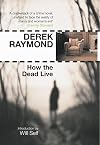
Remarkable. One of the darkest, saddest, and yet funniest books I have ever read. In the third book of the Factory series, Raymond's Nameless Detective is more relentless than ever in his no-compromises pursuit of justice as he travels to a town outside London to investigate the disappearance of a woman after the local police have failed to do so. There is a compelling mystery at the heart of the book, and it has all the noir trappings a reader could ask for, but that isn't the point. The show more most important parts of the book take place in the Nameless Detective's head as he spins soliloquies about life, death, loss, and redemption and in the long quotations from the husband of the missing woman. The Detective's basic methodology for resolving the case is to hilariously insult everybody he meets--with a few notable exceptions--and to reject the help of anyone, except for his trusted reporter friend who shows up halfway through the book. He is like Hammett's Continental Op in his ability to stir a whole town up for his own purposes.
But this book doesn't take place in the real world at all. It is just as fantastic an atmosphere as Poe's Fall of the House of Usher, which it closely resembles in many ways. The descriptions of the decaying mansion at the center of the book, and, just as fantastically, the way the Detective stares down death at the hands of a rifle toting mother or a hired killer, are something out of a fever dream. On top of the noir and the Poe, there is also the poetry--poems, songs, and prose--that runs throughout the book, often as part of dreams the Detective, as first-person narrator, recounts. So the equation here might best be described as Dashiell Hammett + Edgar Allan Poe + Thomas Wolfe = Derek Raymond. But even that can't do justice to what Raymond has achieved here. For all of its influences, it emerges as a unique, visionary argument that, in the midst of corruption and chaos, one man's unalterable quest for justice can still mean something.
If you try to read this as a regular mystery or piece of detective fiction, you are doomed to miss the point. And if you fall into sync with Raymond's and the Nameless Detective's way of thinking? Then maybe you are just plain doomed. But we don't have to go down without breaking a jaw or two. show less
But this book doesn't take place in the real world at all. It is just as fantastic an atmosphere as Poe's Fall of the House of Usher, which it closely resembles in many ways. The descriptions of the decaying mansion at the center of the book, and, just as fantastically, the way the Detective stares down death at the hands of a rifle toting mother or a hired killer, are something out of a fever dream. On top of the noir and the Poe, there is also the poetry--poems, songs, and prose--that runs throughout the book, often as part of dreams the Detective, as first-person narrator, recounts. So the equation here might best be described as Dashiell Hammett + Edgar Allan Poe + Thomas Wolfe = Derek Raymond. But even that can't do justice to what Raymond has achieved here. For all of its influences, it emerges as a unique, visionary argument that, in the midst of corruption and chaos, one man's unalterable quest for justice can still mean something.
If you try to read this as a regular mystery or piece of detective fiction, you are doomed to miss the point. And if you fall into sync with Raymond's and the Nameless Detective's way of thinking? Then maybe you are just plain doomed. But we don't have to go down without breaking a jaw or two. show less
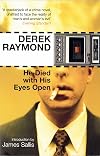
He Died With His Eyes Open is the first of what became known as the Factory series of detective novels where the Factory is the ugly grey police station in London that houses the anonymous narrator.
The book starts, like all good detective stories, with the discovery of a body. It's 1984 and London is an unforgiving landscape of unemployment and violence. Our detective is physically sickened by the amount of violence that has been perpetrated against this particular victim who appears to have show more endured it all without closing his eyes.
The case is not a promising one and several times the detective is mocked by his superior, Inspector Bowman, for not wrapping things up quickly and seeking promotion with easy to solve headline cases.
Instead the detective devotes hours to a set of recordings left behind by the murdered Charles Locksley Alwin Staniland. The recordings tell of a disappointing man who has been abandoned by his wife and child and left to drink too much and seek love and companionship in places he had better left undiscovered.
The detective chases down all the available leads and immerses himself deeper into Staniland's life that is healthy. Rather than being solved the crime seems to fester like an untreated boil until lanced.
Throughout the telling there is an oppressive sense of despair, futility and menace which rings true from my own memories of the 80s. In this week of the death of Margaret Thatcher, I have been trying to out into words the sense of hopelessness that she presided over. This grim novel written contemporaneously perfectly captures the spirit of the time.
It's a hard book to like. It's frequently foulmouthed and brutally frank about sex. The violence is appalling and simultaneously detached. I think it's a great snapshot of its time and I may well dig up the subsequent Factory books just to see where the no-name detective goes from here. show less
The book starts, like all good detective stories, with the discovery of a body. It's 1984 and London is an unforgiving landscape of unemployment and violence. Our detective is physically sickened by the amount of violence that has been perpetrated against this particular victim who appears to have show more endured it all without closing his eyes.
The case is not a promising one and several times the detective is mocked by his superior, Inspector Bowman, for not wrapping things up quickly and seeking promotion with easy to solve headline cases.
Instead the detective devotes hours to a set of recordings left behind by the murdered Charles Locksley Alwin Staniland. The recordings tell of a disappointing man who has been abandoned by his wife and child and left to drink too much and seek love and companionship in places he had better left undiscovered.
The detective chases down all the available leads and immerses himself deeper into Staniland's life that is healthy. Rather than being solved the crime seems to fester like an untreated boil until lanced.
Throughout the telling there is an oppressive sense of despair, futility and menace which rings true from my own memories of the 80s. In this week of the death of Margaret Thatcher, I have been trying to out into words the sense of hopelessness that she presided over. This grim novel written contemporaneously perfectly captures the spirit of the time.
It's a hard book to like. It's frequently foulmouthed and brutally frank about sex. The violence is appalling and simultaneously detached. I think it's a great snapshot of its time and I may well dig up the subsequent Factory books just to see where the no-name detective goes from here. show less
Lists
Awards


You May Also Like


Associated Authors
Statistics
- Works
- 18
- Also by
- 3
- Members
- 1,799
- Popularity
- #14,302
- Rating
- 3.6
- Reviews
- 52
- ISBNs
- 137
- Languages
- 6
- Favorited
- 8