
Michel Houellebecq
Author of The Elementary Particles
About the Author
Michel Houellebecq's first novel, Whatever, was followed by two collections of poetry and a book of essays. He lives in Dublin. (Bowker Author Biography)
Image credit: Michel Houellebecq en juillet 1998, France
Works by Michel Houellebecq
Michel Houellebecq : Extension du domaine de la lutte - Les particules élémentaires - Plateforme (Coffret 3 volumes) (2002) 27 copies
Michel Houellebecq, coffret 3 volumes : Extension du domaine de la lutte ; Les particules élémentaires ; Poésies (2000) 6 copies
Kortið og landið 2 copies
THËRRMIJAT ELEMENTARE 1 copy
Annientare la nave di Teseo 1 copy
En Patagonie 1 copy
Europski glasnik 6//2001 1 copy
Prodigal prodigy 1 copy
الخريطة والأرض 1 copy
Stridszonen 1 copy
Mở rộng phạm vi đấu tranh 1 copy
Öreindirnar 1 copy
Associated Works
Collapse: Philosophical Research and Development. Volume IV: Concept Horror (2008) — Contributor — 44 copies
Tagged
Common Knowledge
- Legal name
- Thomas, Michel
- Birthdate
- 1958-02-26
- Gender
- male
- Education
- Institut national agronomique Paris-Grignon (Diplom|Landwirtschaftsingenieur)
- Occupations
- novelist
screenwriter
poet - Nationality
- France (birth)
- Birthplace
- La Reunion, France
- Places of residence
- La Reunion, France (birth)
Algeria
Ireland
Spain - Map Location
- France
Members
Discussions
Lovecraftian Criticism in The Weird Tradition (November 2017)
Reviews
"People never listen to the advice you give them, and when they ask for advice it's specifically with a view to not following it, and have it confirmed by an external voice that they are stuck in a spiral of annihilation and death…" (pg. 221)
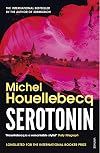
For all its indulgence and seediness, Michel Houellebecq's previous novel, Submission, was a valuable satire; its cynical view of Western decline and its brazen critique of Islam the perfect environment for its author's groping and black-dog show more personality. But where Submission had a tightly acidic theme and spilled its excess through its seams, Serotonin, Houellebecq's encore, is only loose and scrambled and interminably disappointing.
Like Submission, Serotonin follows an author-avatar as he navigates his way through a collapsing French/Western civilisation, indulging in depressive thoughts and depraved sexual acts. Unlike Submission, this does not provide a useful counterpoint to the novel's literary merits. Whereas the decadence and guilt of Submission's protagonist made him cravenly susceptible to the appeal of the story's Islamic imperialists – to great satirical success – Serotonin doesn't really get round to addressing its comparable theme – the collapse of French agriculture and traditional rustic values – until its final third. Consequently, the book seems insincere and half-hearted, its sex crude and little more than a tatty shock factor.
There is an appeal to the story, in the successful representation of a post-Christian Western man who is hollow and unfulfilled, but there's also the trap we perhaps fall into sometimes of thinking that someone who speaks cynically speaks the truth. Though its protagonist is ageing, Serotonin is adolescent and non-reflective. There are some good passages of prose in the murk, though they are few, and they are reminders that Houellebecq can write when he wants to ("the possibility of happiness had to exist if only as bait" (pg. 157)). He can even provide, however fitfully, that solace which is the artist's exclusive gift: a different perspective that turns you as you read it ("even when one has personally lost the game, when one has played one's last card, for some people – not all, not all – the idea remains that something in heaven will pick up the hand, will arbitrarily decide to deal again, to throw the dice again" (pg. 270)). But then again, Houellebecq is much happier – if word count is any indicator – to shun literary insight in favour of writing about bestiality and paedophilia, scenes which in Serotonin are shallow, pointless and disturbingly detailed. It means that when the writer chooses to touch upon a greater world, it is with a weak grip and grimy hands. show less
For all its indulgence and seediness, Michel Houellebecq's previous novel, Submission, was a valuable satire; its cynical view of Western decline and its brazen critique of Islam the perfect environment for its author's groping and black-dog show more personality. But where Submission had a tightly acidic theme and spilled its excess through its seams, Serotonin, Houellebecq's encore, is only loose and scrambled and interminably disappointing.
Like Submission, Serotonin follows an author-avatar as he navigates his way through a collapsing French/Western civilisation, indulging in depressive thoughts and depraved sexual acts. Unlike Submission, this does not provide a useful counterpoint to the novel's literary merits. Whereas the decadence and guilt of Submission's protagonist made him cravenly susceptible to the appeal of the story's Islamic imperialists – to great satirical success – Serotonin doesn't really get round to addressing its comparable theme – the collapse of French agriculture and traditional rustic values – until its final third. Consequently, the book seems insincere and half-hearted, its sex crude and little more than a tatty shock factor.
There is an appeal to the story, in the successful representation of a post-Christian Western man who is hollow and unfulfilled, but there's also the trap we perhaps fall into sometimes of thinking that someone who speaks cynically speaks the truth. Though its protagonist is ageing, Serotonin is adolescent and non-reflective. There are some good passages of prose in the murk, though they are few, and they are reminders that Houellebecq can write when he wants to ("the possibility of happiness had to exist if only as bait" (pg. 157)). He can even provide, however fitfully, that solace which is the artist's exclusive gift: a different perspective that turns you as you read it ("even when one has personally lost the game, when one has played one's last card, for some people – not all, not all – the idea remains that something in heaven will pick up the hand, will arbitrarily decide to deal again, to throw the dice again" (pg. 270)). But then again, Houellebecq is much happier – if word count is any indicator – to shun literary insight in favour of writing about bestiality and paedophilia, scenes which in Serotonin are shallow, pointless and disturbingly detailed. It means that when the writer chooses to touch upon a greater world, it is with a weak grip and grimy hands. show less
This was a disgusting read.
And a beautiful read.
I felt I was reading pornography, but then there was a decent and engaging story, and like a person of culture I was 'watching it for the plot'. But slowly and gradually, the characters started to develop; feeling disgusted in their acts, feeling hopeless and lost, unable to make friends at/after work. The pornography started morphing into erotica, becoming more stylised and sensual from the initial burning mess.
After some time the book became show more the equivalent of a 'post-nut' clarity, but as the book goes, that clarity explores so much: the mess, the horror and the lonliness.
Towards the ends the sex, the drugs, the infedility, the crass hedonism was not crass but the actuality that life is: there is degradation and that isnt 90% of of (most) of our lives, but becomes background noise that is sometimes is heard (feels like an unsinkable advert which lasts a short 30sec ) was we feel drowned by the drudgery of waking up, going to work, and coming back home: we forget the things that make us human. The headaches and the mellow warm cups of coffee. The Yin and the Yang. The honesty of this books is disgusting yet refreshing.
The novel is a fantastic read. show less
And a beautiful read.
I felt I was reading pornography, but then there was a decent and engaging story, and like a person of culture I was 'watching it for the plot'. But slowly and gradually, the characters started to develop; feeling disgusted in their acts, feeling hopeless and lost, unable to make friends at/after work. The pornography started morphing into erotica, becoming more stylised and sensual from the initial burning mess.
After some time the book became show more the equivalent of a 'post-nut' clarity, but as the book goes, that clarity explores so much: the mess, the horror and the lonliness.
Towards the ends the sex, the drugs, the infedility, the crass hedonism was not crass but the actuality that life is: there is degradation and that isnt 90% of of (most) of our lives, but becomes background noise that is sometimes is heard (feels like an unsinkable advert which lasts a short 30sec ) was we feel drowned by the drudgery of waking up, going to work, and coming back home: we forget the things that make us human. The headaches and the mellow warm cups of coffee. The Yin and the Yang. The honesty of this books is disgusting yet refreshing.
The novel is a fantastic read. show less

This is a dark and in several places disgusting book - of course that isn’t necessarily a bad thing. I’ve always appreciated an artist that tells the truth, even when the truth is a despicable feeling or opinion or action. Houellebecq’s reputation most certainly precede him, so I expected something of this sort from this book. But there still was a scene towards the end of the book (those who read it know the one) that had me tense with anxiety, feeling the vertigo one feels when show more dealing with an artist and an art work where you truly don’t know what will happen next. However you might criticize this book as grumpy, depressive, narcissistic, the fact that the writer could incite that kind of reaction speaks to the power of his book. One thing I will always respect is a powerful work of art.
But, this book is kind of annoying, and the person we are forced to listen to for it’s duration is empty, occasionally boring, detestable, and nihilistic. He can’t even bring himself to hate others, despite his pitiful state, even hate requires too much energy to muster. Strangely it didn’t become clear to me that this is a memoir of depression and specifically antidepressants until the very end, when it is explicitly stated. I think I was too blinded by the narrators identity as a well-off, well-educated, cologne scented yuppie to pity him in any meaningful way, though to be fair he also seems blinded himself but the very same things. He is, however in a pitiful state. The medication he takes is something like a hidden main character, possibly contributing to the course of the plot as much as any kind of desire or will on the part of our narrator.
As someone who has struggled with depression and also taken medication to “treat” it, I sympathize with the idea that Houellebecq seems to be putting forward here: our world and society has degenerated to a point where depression and induced mental illness is almost endemic. We need medication to carry on, to “treat” our (in many cases, well founded) melancholia and various anxieties. Yet in this medicated state we are neutered (literally and spiritually) and though our suffering is deadened so are so many of the other stimulations that make up a life. The novel presents us with two options: a violent death in the search for a cause, or withering away in a stifled, stunted state. show less
But, this book is kind of annoying, and the person we are forced to listen to for it’s duration is empty, occasionally boring, detestable, and nihilistic. He can’t even bring himself to hate others, despite his pitiful state, even hate requires too much energy to muster. Strangely it didn’t become clear to me that this is a memoir of depression and specifically antidepressants until the very end, when it is explicitly stated. I think I was too blinded by the narrators identity as a well-off, well-educated, cologne scented yuppie to pity him in any meaningful way, though to be fair he also seems blinded himself but the very same things. He is, however in a pitiful state. The medication he takes is something like a hidden main character, possibly contributing to the course of the plot as much as any kind of desire or will on the part of our narrator.
As someone who has struggled with depression and also taken medication to “treat” it, I sympathize with the idea that Houellebecq seems to be putting forward here: our world and society has degenerated to a point where depression and induced mental illness is almost endemic. We need medication to carry on, to “treat” our (in many cases, well founded) melancholia and various anxieties. Yet in this medicated state we are neutered (literally and spiritually) and though our suffering is deadened so are so many of the other stimulations that make up a life. The novel presents us with two options: a violent death in the search for a cause, or withering away in a stifled, stunted state. show less

Exceptional storytelling and narrative. Houellebecq dissects the post-baby-boom generation ruthlessly in a novel about a future genius and his brother, who are essentially two sides of the same person. Often brilliantly funny, sometimes affectionate, occasionally grim, always crass. Houellebecq has been criticised for chauvinist attitudes in his books but I felt this one worked as a valuable artifact of feminism (and a criticism of the coarser elements of male identity), as well as being a show more brilliantly spun yarn. show less
Lists
. (1)
Summer Books (1)
Best Dystopias (1)
Allie's Wishlist (1)
Awards


You May Also Like


Associated Authors
Statistics
- Works
- 58
- Also by
- 4
- Members
- 23,209
- Popularity
- #909
- Rating
- 3.6
- Reviews
- 494
- ISBNs
- 784
- Languages
- 38
- Favorited
- 112


