
Virginie Despentes
Author of King Kong Theory
About the Author
Image credit: Credit: Georges Biard
Series
Works by Virginie Despentes
Vernon Subutex 1 5 copies
Vernon Subutex, 2 2 copies
Vernon Subutex Three 2 copies
Vernon subutex 1 1 copy
Vernon Subutex T1 1 copy
Vernon Subutex 1 copy
Associated Works
Tagged
Common Knowledge
- Birthdate
- 1969-06-13
- Gender
- female
- Relationships
- Preciado, Beatriz
- Nationality
- France
- Birthplace
- Nancy, Meurthe-et-Moselle, Grand-Est, France
- Places of residence
- Lyon, France
Paris, France - Map Location
- France
Members
Reviews

Como cinéfila, bibliófila e feminista, considero Despentes uma voz fundamental para o feminismo do século XXI, pelo menos o feminismo que não flerta com o conservadorismo. Neste livro biográfico com vastas colheradas de filosofia feminista, além de ser um libelo à condição da mulher é uma parte importantíssima para o entendimento estético e político para a obra cinematográfica e literária de Despentes.
Na primeira parte, Eu te fodo ou você me fode, Despentes discorre sobre o show more estar à margem do que que se padronizou como condição feminina - socialmente, esteticamente e maternalmente.
Na segunda parte, Impossível estuprar essa mulher cheia de vícios, fala do conteúdo político do estupro e de como a ameça de morte é ainda mais traumática do que o estupro em si.
Na terceira parte, Dormindo com o Inimigo, Despentes fala de sua experiência como prostituta e um paralelo entre a mesma com sua vida como escritora, além de situar essa condição mais uma vez como um jogo político entre homens e mulheres.
Na quarta parte, Pornofeiticeiras, a autora analisa o pornô e os seus estranhamentos.
Na quinta parte, King Kong Girl, a autora traça finalmente a teoria feminista que usa como paralelo com o filme de Peter Jackson.
Na sexta e última parte, Boa sorte meninas, Despentes declara as agruras em que mesmo a literatura feminista passou no século XX. show less
Na primeira parte, Eu te fodo ou você me fode, Despentes discorre sobre o show more estar à margem do que que se padronizou como condição feminina - socialmente, esteticamente e maternalmente.
Na segunda parte, Impossível estuprar essa mulher cheia de vícios, fala do conteúdo político do estupro e de como a ameça de morte é ainda mais traumática do que o estupro em si.
Na terceira parte, Dormindo com o Inimigo, Despentes fala de sua experiência como prostituta e um paralelo entre a mesma com sua vida como escritora, além de situar essa condição mais uma vez como um jogo político entre homens e mulheres.
Na quarta parte, Pornofeiticeiras, a autora analisa o pornô e os seus estranhamentos.
Na quinta parte, King Kong Girl, a autora traça finalmente a teoria feminista que usa como paralelo com o filme de Peter Jackson.
Na sexta e última parte, Boa sorte meninas, Despentes declara as agruras em que mesmo a literatura feminista passou no século XX. show less
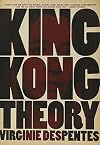
Despentes' is scattered but incendiary, frank but illuminating, concise but wide ranging. Even though it is composed of what one might call short essays, the themes running through it are carried and executed with grit, vitality, and insight. It's tone isn't necessarily scholarly, but there are plenty of books like that, and the bibliography here would serve as a decent enough guide for a novice to feminist theory. Many might see the tone and structure of this book as a drawback, but that is show more also a benefit. For example, Despentes's reframing (through tone) of Camille Paglia's arguments about rape made them much more digestible. Perhaps because, unlike Paglia, Despentes' is a rape survivor herself.
I think this book would serve as a good primer for guerrilla girls in training, aspiring radical queers, and other deviants with a bent for awareness. It's accessible, it's transgressive, it's a punch in the gut and a knife jab into the patriarchal smokescreen of systems of male power. show less
I think this book would serve as a good primer for guerrilla girls in training, aspiring radical queers, and other deviants with a bent for awareness. It's accessible, it's transgressive, it's a punch in the gut and a knife jab into the patriarchal smokescreen of systems of male power. show less

Wow she did it! Virginie Despentes brings her story of urban life; Parisien style to a suitable climax; in this the final part of the trilogy. The Christ like figure of Vernon Subutex who communicates only through his presence and his work at the mixing desk manages to become a cult figure for future generations. However this is not a novel about the future, but about contemporary life in Paris France.
In Tome 1 we met Vernon just as his life was changed by the death of a famous french show more chanteur Alex Bleach. Vernon managed a record/disc shop in town, but also worked in some capacity looking after the wayward pop star. When Alex died maybe from an overdose, but under suspicious circumstances he left Vernon three cassettes. Vernon found himself suddenly homeless and the lease had expired on his record shop. He had plenty of hangers on in his shop and managed to lodge with some of them for a while, but when favours ran out he found himself living on the streets of Paris. A film producer connected to the criminal underworld sets out to steal the cassettes and a journalist is putting together a biography of Alex Bleach and a search is on to track down Vernon who at the end of Tome 1 suffers a vicious beating.
Tome 2 finds Vernon at deaths door, but he manages to find somewhere in one of the Parisien Parks to heal. He is befriended by a couple of other homeless people in the park and then by staff of a restaurant that backs onto the park. Vernon's suffering has resulted in him being an ethereal like figure, but gradually more people gather around his makeshift home including some of the people who frequented his record shop and or knew Alex Bleach. The violent incident in this book does not involve Vernon, but the film producer is assaulted in his home by two of Vernon's female camp followers. Vernon is talked into running disco nights at the restaurant which soon become popular. His followers arrange for out of town "convergences" rave like events with Vernon mixing the music.
At the start of Tome 3 Vernon's rave events are turning into gatherings of like minded people. Some of the old crowd are with him, but he is attracting new people. They bliss out at the drug and alcohol free events dancing the weekend away to Vernon's mixing of the music. A follower of Vernon dies leaving Vernon a considerable sum of money. The close knit group around the DJ cannot decide what to do with it and when Vernon suggests they make a zombie film using the actresses from the porn industry that are part of his group, nobody is enthusiastic and the idea of getting hold of the money breaks up the circle. Vernon goes off with his latest girlfriend/manager earning a living as a DJ for hire. It is 2015 the year of the Bataclan terrorist attack in Paris. There is also a violent incident in the circle that had gathered around Vernon. He drifts back to Paris.................
Vernon is sometimes a catalyst, but more often a sort of cipher, a hollowness at the centre of this group, that whirl around him. Despentes uses the back stories of her characters to raise issues about modern life, with Paris as the contemporary backdrop. Racism, homelessness, prostitution, violence, politics, religion, criminality, terrorism, immigration, relationships and gender awareness are all subjects raised and experienced by the characters that people the book. Vernon has no views on any of this, letting everything happen to him, while he concerns himself with making lists of music to play. The introduction of new characters and the development of their lives, their views and interactions are used by Despentes to paint a vivid picture of issues facing characters living on the fringe of urban society. The hollow centre of the book works, because Despentes is looking to examine the figures, motifs, developments and myths around the periphery. I wondered if Despentes would be able, somehow bring this all together in this final book; she does triumphantly. I rate this novel at 5 stars. show less
In Tome 1 we met Vernon just as his life was changed by the death of a famous french show more chanteur Alex Bleach. Vernon managed a record/disc shop in town, but also worked in some capacity looking after the wayward pop star. When Alex died maybe from an overdose, but under suspicious circumstances he left Vernon three cassettes. Vernon found himself suddenly homeless and the lease had expired on his record shop. He had plenty of hangers on in his shop and managed to lodge with some of them for a while, but when favours ran out he found himself living on the streets of Paris. A film producer connected to the criminal underworld sets out to steal the cassettes and a journalist is putting together a biography of Alex Bleach and a search is on to track down Vernon who at the end of Tome 1 suffers a vicious beating.
Tome 2 finds Vernon at deaths door, but he manages to find somewhere in one of the Parisien Parks to heal. He is befriended by a couple of other homeless people in the park and then by staff of a restaurant that backs onto the park. Vernon's suffering has resulted in him being an ethereal like figure, but gradually more people gather around his makeshift home including some of the people who frequented his record shop and or knew Alex Bleach. The violent incident in this book does not involve Vernon, but the film producer is assaulted in his home by two of Vernon's female camp followers. Vernon is talked into running disco nights at the restaurant which soon become popular. His followers arrange for out of town "convergences" rave like events with Vernon mixing the music.
At the start of Tome 3 Vernon's rave events are turning into gatherings of like minded people. Some of the old crowd are with him, but he is attracting new people. They bliss out at the drug and alcohol free events dancing the weekend away to Vernon's mixing of the music. A follower of Vernon dies leaving Vernon a considerable sum of money. The close knit group around the DJ cannot decide what to do with it and when Vernon suggests they make a zombie film using the actresses from the porn industry that are part of his group, nobody is enthusiastic and the idea of getting hold of the money breaks up the circle. Vernon goes off with his latest girlfriend/manager earning a living as a DJ for hire. It is 2015 the year of the Bataclan terrorist attack in Paris. There is also a violent incident in the circle that had gathered around Vernon. He drifts back to Paris.................
Vernon is sometimes a catalyst, but more often a sort of cipher, a hollowness at the centre of this group, that whirl around him. Despentes uses the back stories of her characters to raise issues about modern life, with Paris as the contemporary backdrop. Racism, homelessness, prostitution, violence, politics, religion, criminality, terrorism, immigration, relationships and gender awareness are all subjects raised and experienced by the characters that people the book. Vernon has no views on any of this, letting everything happen to him, while he concerns himself with making lists of music to play. The introduction of new characters and the development of their lives, their views and interactions are used by Despentes to paint a vivid picture of issues facing characters living on the fringe of urban society. The hollow centre of the book works, because Despentes is looking to examine the figures, motifs, developments and myths around the periphery. I wondered if Despentes would be able, somehow bring this all together in this final book; she does triumphantly. I rate this novel at 5 stars. show less

Apocalypse bébé is set up as a fairly straightforward crime story - the narrator, Lucie Tolédo, is a plodding private detective who finds herself out of her depth when Valentine, the teenage subject of a routine surveillance job, suddenly goes missing. To help find her, she enlists a legendary Big Scary Lesbian Detective known in the trade as "La Hyène", happily switching to the Dr Watson role for herself.
Lucie's first-person narrative, with its noir affectation of detachment and show more superficiality, is intercut with third-person chapters from the point of view of other characters in the story, where we bore down at leisure into the depths of their personalities, with an airy disregard for the strict timekeeping requirements that normally apply to crime fiction. And we get to see the author's supreme contempt for just about everybody: Valentine's bourgeois novelist father, her dim but well-meaning stepmother, her beautiful but vain and selfish birth-mother, her pointlessly aggressive Muslim cousin, the various people on the right and left who try to take advantage of her whilst pretending to help. Even the superb Hyène turns out to have an untouchable dark spot in her background. And, just before it happens, we realise that all this bad stuff is piling up on top of a fifteen-year-old girl who, remarkable though she is, isn't in the least equipped to deal with it. And something really bad is going to happen as a result.
The very black message of the plot is, however, destabilised in turn by the lively rhythms of Despentes's prose, which turn the flatfooted profanities and clichés of street French into something that feels incongruously subversive and funny. As long as humans can turn a handful of words into a gesture of rebellion, we are meant to feel, all hope for our society can't be entirely lost. show less
Lucie's first-person narrative, with its noir affectation of detachment and show more superficiality, is intercut with third-person chapters from the point of view of other characters in the story, where we bore down at leisure into the depths of their personalities, with an airy disregard for the strict timekeeping requirements that normally apply to crime fiction. And we get to see the author's supreme contempt for just about everybody: Valentine's bourgeois novelist father, her dim but well-meaning stepmother, her beautiful but vain and selfish birth-mother, her pointlessly aggressive Muslim cousin, the various people on the right and left who try to take advantage of her whilst pretending to help. Even the superb Hyène turns out to have an untouchable dark spot in her background. And, just before it happens, we realise that all this bad stuff is piling up on top of a fifteen-year-old girl who, remarkable though she is, isn't in the least equipped to deal with it. And something really bad is going to happen as a result.
The very black message of the plot is, however, destabilised in turn by the lively rhythms of Despentes's prose, which turn the flatfooted profanities and clichés of street French into something that feels incongruously subversive and funny. As long as humans can turn a handful of words into a gesture of rebellion, we are meant to feel, all hope for our society can't be entirely lost. show less
Lists
Awards


You May Also Like


Associated Authors
Statistics
- Works
- 28
- Also by
- 4
- Members
- 3,453
- Popularity
- #7,360
- Rating
- 3.7
- Reviews
- 98
- ISBNs
- 263
- Languages
- 22
- Favorited
- 9
