On This Page
Description
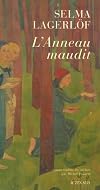
A tale of courageous, persisten women, and their encounter with the potent ring of the title, which brings suffering and violent death in its wake.Tags
Recommendations














Member Reviews
I read this more than 20 years ago, and had vaguely remembered it as a rather standard ghost story; poor farmer in the deep woods of 18th century Värmland is possessed by greed in a weak moment, steals a priceless ring off the corpse of an old nobleman, and death and misfortune follow those to whom the ring passes until it's returned. Gollum, gollum.
Re-reading it now, I feel a bit bad about dismissing it. Not that that's not the plot; like many of Lagerlöf's more accomplished novels, it presents itself as just an old story told around campfires at night, with the names of people and manors only slightly changed to protect the guilty. And it is rather short (she later wrote two sequels, which I haven't read but must get around to some show more day), since well, there's really not a whole lot more to it plotwise than the bare bones of the above story. The ending, too, is... well, again, it was written with a sequel in mind, but it still feels a bit sudden in its blatant unfairness.
What makes it more than worth reading, though, is that much like in her earlier novels, Lagerlöf is clever - not to mention compassionate. There's the way she describes the crimes committed, how people justify them, how people hang on to grudges when they have nothing else. There's the recurring little asides about respect of power; king Charles XII passed through here on his way to his death, everyone lost someone they loved in his wars, but they love him all the more for it - because what else can you do when the powerful are never accountable? Life in the woods was hard, especially for women, and virtually every person here is born - or certainly dies - with "good credit with Our Lord", as the priest puts it at one point. At the same time, the quiet lyricism of the storytelling - as if we're really sitting there with her as she muses on the story, questions some details, looks deep into the fire, pauses and thinks about what it means.
It is a ghost story, and I'm almost a bit disappointed by that; not because I have anything against those, but because the ghost and his is the least interesting part of it - I want more of how the people react, how they hide from themselves, how they try to hope and go on regardless. Lagerlöf tells simple stories of simple people; her greatness was how simple she made them without sacrificing the complex parts that the characters themselves can hardly put words to, but which occasionally cause them to stand up after decades of abuse and bitterness and do something anyway. show less
Re-reading it now, I feel a bit bad about dismissing it. Not that that's not the plot; like many of Lagerlöf's more accomplished novels, it presents itself as just an old story told around campfires at night, with the names of people and manors only slightly changed to protect the guilty. And it is rather short (she later wrote two sequels, which I haven't read but must get around to some show more day), since well, there's really not a whole lot more to it plotwise than the bare bones of the above story. The ending, too, is... well, again, it was written with a sequel in mind, but it still feels a bit sudden in its blatant unfairness.
What makes it more than worth reading, though, is that much like in her earlier novels, Lagerlöf is clever - not to mention compassionate. There's the way she describes the crimes committed, how people justify them, how people hang on to grudges when they have nothing else. There's the recurring little asides about respect of power; king Charles XII passed through here on his way to his death, everyone lost someone they loved in his wars, but they love him all the more for it - because what else can you do when the powerful are never accountable? Life in the woods was hard, especially for women, and virtually every person here is born - or certainly dies - with "good credit with Our Lord", as the priest puts it at one point. At the same time, the quiet lyricism of the storytelling - as if we're really sitting there with her as she muses on the story, questions some details, looks deep into the fire, pauses and thinks about what it means.
It is a ghost story, and I'm almost a bit disappointed by that; not because I have anything against those, but because the ghost and his is the least interesting part of it - I want more of how the people react, how they hide from themselves, how they try to hope and go on regardless. Lagerlöf tells simple stories of simple people; her greatness was how simple she made them without sacrificing the complex parts that the characters themselves can hardly put words to, but which occasionally cause them to stand up after decades of abuse and bitterness and do something anyway. show less
In 1909 Selma Lagerlöf was the first woman ever to receive the Nobel Prize for literature (back in the days when the Academy wasn’t shy about awarding it’s own members), but in most of the world I suppose she’s considered obscure at best. Here in Sweden, however, she’s very much a part of the living canon. Everybody reads at least a few of her works in school, she’s featured on our 20 kronor bill and a writer like John Ajvide Lindqvist mentions her as a big influence.
It’s easy to see why. Lagerlöf’s writing is a link between popular storytelling traditions (like fairytales, ballads and ghost stories), gothic sentiments and early psychological realism. It’s old fashioned in a way, for it’s times too, but very readable show more and likeable.
This book, the first in a trilogy, is a very straight ghost story that seems made to be told in front of a big old open fire. From the opening, where a farming couple go to a country graveyard at night to make sure nobody steals the demi-godlike general Löwensköld’s precious ring from his family grave (re-opened to bury a dead child in it) – and then almost to their surprise stealing it themselves, this story hooks you. What follows is a tale straight as an arrow, about a curse, a ghost and injustices suffered, which perhaps isn’t that unique. But it’s effective, it’s gripping and there are enough tension and unexpected twists to keep me eagerly turning pages. And the final, bitter turn of events prompts me towards the following parts. show less
It’s easy to see why. Lagerlöf’s writing is a link between popular storytelling traditions (like fairytales, ballads and ghost stories), gothic sentiments and early psychological realism. It’s old fashioned in a way, for it’s times too, but very readable show more and likeable.
This book, the first in a trilogy, is a very straight ghost story that seems made to be told in front of a big old open fire. From the opening, where a farming couple go to a country graveyard at night to make sure nobody steals the demi-godlike general Löwensköld’s precious ring from his family grave (re-opened to bury a dead child in it) – and then almost to their surprise stealing it themselves, this story hooks you. What follows is a tale straight as an arrow, about a curse, a ghost and injustices suffered, which perhaps isn’t that unique. But it’s effective, it’s gripping and there are enough tension and unexpected twists to keep me eagerly turning pages. And the final, bitter turn of events prompts me towards the following parts. show less
I think this book would have been more interesting as an audio book, as I couldn't quite make myself believe in this ghost story. The right reader might have more easily convinced me.
The consequences for the country folk who handled the ring were in almost all instances tragic. If there was a moral to the story it was hard to discern since all the characters in the story suffered in one way or another even when it appeared they were trying to do the honorable thing. Maybe this is where the true horror of the story occurred; the ring would leave no one untouched.
The consequences for the country folk who handled the ring were in almost all instances tragic. If there was a moral to the story it was hard to discern since all the characters in the story suffered in one way or another even when it appeared they were trying to do the honorable thing. Maybe this is where the true horror of the story occurred; the ring would leave no one untouched.
Primo approccio con Selma Lagerlöf. Molto positivo.
Intorno alla "maledizione" dell'anello rubato dalla tomba del Generale, si sviluppa una storia che racchiude in sé la vendetta, la giustizia, le superstizione e il tutto condito con sottile ironia e freschezza che non mi sarei immaginata di trovare in una scrittrice svedese di fine '800.
Intorno alla "maledizione" dell'anello rubato dalla tomba del Generale, si sviluppa una storia che racchiude in sé la vendetta, la giustizia, le superstizione e il tutto condito con sottile ironia e freschezza che non mi sarei immaginata di trovare in una scrittrice svedese di fine '800.
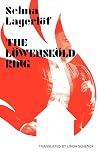
This is a new edition of Linda Schenck's 1991 translation of
Nobel Prize winner Lagerlöf's book (the first of a trilogy, her last work of prose fiction). I seldom say this, but I think I enjoyed the introduction, translator's afterword, and translator's addendum to the afterword, as much as I enjoyed the book. I usually read all introductions after I have read the book for I don't like to be told how I should enjoy a book and what I should take away from it before I experience it. This book was no different.
The Lowensköld Ring is a deceptively simple tale that attempts to put folk tale from oral tradition onto paper. It tells the tale of a ring, once given to General Lowensköld by the king, but stolen from the General's tomb, and show more follows it through a succession of owners who suffer terrible consequences for having it in their possession. It's a tale of murder and ghosts, not unlike The Turn of the Screw, as the translator, Linda Schenck, points out. It also can be read, Ms. Schenck mentions later in the afterword, as metafiction, for when the narrator inserts herself into the story, it's clear Lagerlöf is commenting on more than just the tale, but also herself as a writer and her "variable status in the predominantly male literary establishment." This latter bit jives nicely with a well-done introduction, less for the book, than for its intriguing author.
Linda Schenck, also talks about translation itself, quoting others who feel that translation should not be definitive, but ephemeral and argue for frequent re-translation to update work for contemporary audiences. What I take away from this is that a translation carries with it the baggage of its current culture, so thus a 1928 English tradition may not now best serve this 1925 work.
Like I said, the additional material is an interesting as the short novel itself. Note: This book was original published in English in the 1920s under the title The General's Ring. show less
Nobel Prize winner Lagerlöf's book (the first of a trilogy, her last work of prose fiction). I seldom say this, but I think I enjoyed the introduction, translator's afterword, and translator's addendum to the afterword, as much as I enjoyed the book. I usually read all introductions after I have read the book for I don't like to be told how I should enjoy a book and what I should take away from it before I experience it. This book was no different.
The Lowensköld Ring is a deceptively simple tale that attempts to put folk tale from oral tradition onto paper. It tells the tale of a ring, once given to General Lowensköld by the king, but stolen from the General's tomb, and show more follows it through a succession of owners who suffer terrible consequences for having it in their possession. It's a tale of murder and ghosts, not unlike The Turn of the Screw, as the translator, Linda Schenck, points out. It also can be read, Ms. Schenck mentions later in the afterword, as metafiction, for when the narrator inserts herself into the story, it's clear Lagerlöf is commenting on more than just the tale, but also herself as a writer and her "variable status in the predominantly male literary establishment." This latter bit jives nicely with a well-done introduction, less for the book, than for its intriguing author.
Linda Schenck, also talks about translation itself, quoting others who feel that translation should not be definitive, but ephemeral and argue for frequent re-translation to update work for contemporary audiences. What I take away from this is that a translation carries with it the baggage of its current culture, so thus a 1928 English tradition may not now best serve this 1925 work.
Like I said, the additional material is an interesting as the short novel itself. Note: This book was original published in English in the 1920s under the title The General's Ring. show less
Selma Lagerlof's The Lowenskold Ring is a ghost story of death and revenge following the theft of a ring from the coffin of General Lowenskold -- brief, but intriguing.
An interesting psychological ghost story.
Members
- Recently Added By
Lists

500 Great Books by Women
507 works; 60 members

For Further Reading: A List of 160 Novels from 15 Literatures
160 works; 4 members
Author Information

530+ Works 7,938 Members
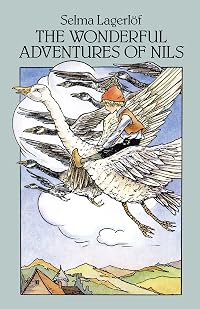
Selma Lagerlöf, winner of the Nobel Prize in 1909, was the first woman to be elected a member of the Swedish Academy. Her first novel, The Story of Gosta Berling (1891), assured her position as Sweden's greatest storyteller. She retold the folk tales of her native province, Varmland, in an original and poetic prose. As a woman writer, Lagerlöf show more gained a reputation as a naive purveyor of native traditions, but she herself compared writing a novel to solving a mathematical problem. Her artistry entails making her stories seem simple, but they are told with great attention to symbolism, psychology, and narrative technique. The Wonderful Adventures of Nils (1906) is a delightful fantasy written to teach children about Swedish geography, but it has found an international audience. Her third novel and masterpiece, Jerusalem (1901--02), the story of farmers from Dalarna who follow their faith to the Holy City, was widely praised for its insights into the lives of peasants searching for a spiritual ideal. During World War II, Lagerlöf helped many German artists and intellectuals escape the Nazis, even donating her gold Nobel Prize medal to a benefit fund to help Finland. She died of a stroke on March 16, 1940. (Bowker Author Biography) show less
Awards and Honors
Notable Lists
Series

Belongs to Publisher Series
Sammlung Hofenberg (Lagerlöf)
Work Relationships
Common Knowledge
- Canonical title
- The Löwensköld Ring
- Original title
- Löwensköldska ringen
- Alternate titles
- The General's Ring
- Original publication date
- 1925
Classifications
- Genres
- Fiction and Literature, General Fiction
- DDC/MDS
- 839.73 — Literature & rhetoric German & related literatures Other Germanic literatures Swedish literature Swedish fiction
- LCC
- PT9767 .L6 .E5 — Language and Literature German, Dutch and Scandinavian literatures Swedish literature Individual authors or works 19th century Lagerlöf, Selma
- BISAC
Statistics
- Members
- 164
- Popularity
- 200,191
- Reviews
- 9
- Rating
- (3.85)
- Languages
- 12 — Danish, Dutch, English, French, German, Italian, Norwegian (Bokmål), Norwegian, Portuguese, Russian, Spanish, Swedish
- Media
- Paper, Audiobook, Ebook
- ISBNs
- 22
- ASINs
- 6